wayground logo

Free Printable Worksheets

Font size

S
M
L
XL
Worksheets

Biology Exam Practice

Total questions: 92

Worksheet time: 2hrs 3mins

Name
Class
Date
1.
What is one of the reactants of cellular respiration?
a)
energy
b)
glucose
c)
carbon dioxide
d)
water
2.
What are the two reactants of cellular respiration?
a)
C6H12O6 & 6CO2
b)
6 CO2 & 6H2O
c)
C6H12O& 6O2
d)
6CO2 & 6O2
3.
What are the products in cellular respiration?
a)
water and carbon dioxide
b)
water and glucose
c)
carbon dioxide and oxygen
d)
glucose and oxygen
4.

Which of the following organelles is responsible for cellular respiration?

a)

Mitochondria

b)

Nucleus

c)

Endoplasmic Reticulum

d)

Ribosome

5.
Which gas is removed from the atmosphere during photosynthesis?
a)
hydrogen
b)
oxygen
c)
nitrogen
d)
carbon dioxide
6.
 Which of the following are the reactants of photosynthesis?
a)
water and glucose
b)
glucose and carbon dioxide
c)
 carbon dioxide and water
d)
 oxygen and water
7.
Find the slope of the line that passes through the points (2, 4) and (6, 12)
a)
1/2
b)
-1/2
c)
2
d)
-2
8.
Find the slope of the line that passes through
(10, 1) and (5, 2)
a)
1/5
b)
-1/5
c)
5
d)
-5
9.
What is the slope in the picture?
a)
Positive
b)
Negative
c)
Zero
d)
Undefined
10.
What is the slope in the picture?
a)
Positive
b)
Negative
c)
Zero
d)
Undefined
11.
What is the slope in the picture?
a)
Positive
b)
Negative
c)
Zero
d)
Undefined
12.
Find the slope of the line.
a)
1/4
b)
-1/4
c)
-4
d)
4
13.
Find the slope
a)
-5/3
b)
-3/5
c)
5/3
d)
3/5
14.
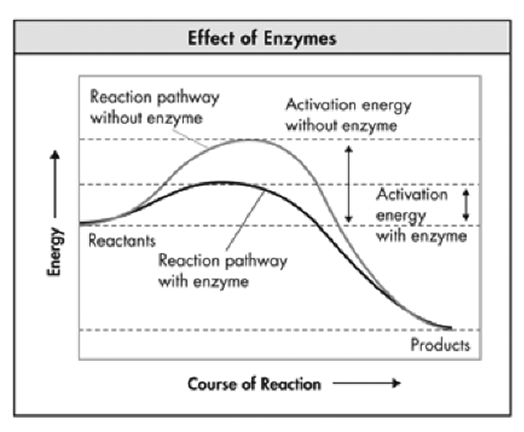
The graph shows how enzymes affect reactions in cells. Which statement best summarizes the information shown in the graph?
a)
Enzymes increase the energy of the reactants.
b)
Enzymes decrease the energy level of the products.
c)
Enzyme decrease the activation energy of the reaction.
d)
Enzymes reverse the direction of the reaction.
15.
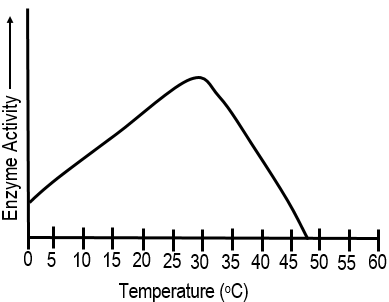
Based on the graph, what is the optimal temperature for this enzyme? 
a)
15oC
b)
40oC
c)
30oC
d)
35oC
16.
Enzymes are...
a)
nucleic acids
b)
proteins
c)
lipids
d)
carbohydrates
17.
What is the function of an enzyme?
a)
enzymes break themselves into small pieces
b)
enzymes slow down chemical reactions
c)
enzymes speed up chemical reactions
d)
enzymes combine products to form reactants 
18.

What happens when enzymes are heated to a high temperature?

a)

The enzymes die.

b)

The shapes of the enzyme are altered (denatured)

c)

The enzymes' amino acid sequence changes.

d)

The enzymes remain the same

19.
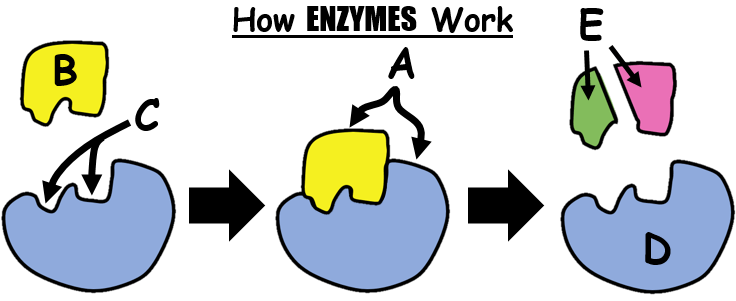
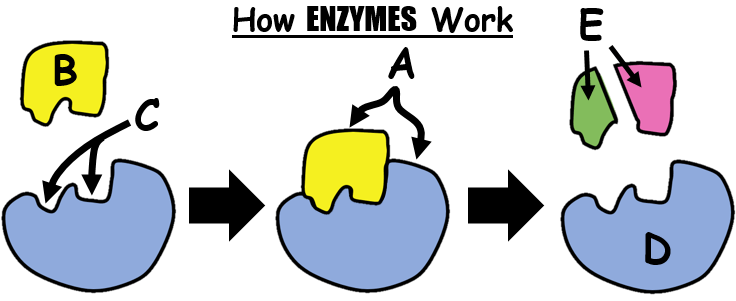
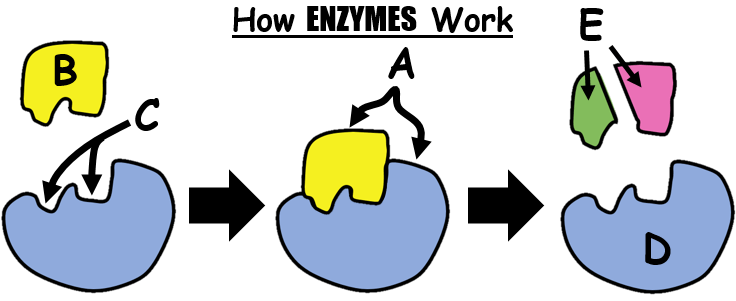
Letter B...
a)
active site
b)
enzyme
c)
substrate
d)
products
20.
Letter C...
a)
active site
b)
enzymes
c)
substrate
d)
products
21.
Letter E...
a)
active site
b)
enzyme
c)
substrate
d)
products
22.

The diagram below demonstrates what type of cell?

a)

Eukaryotic Cells

b)

Prokaryotic Cells

c)

Bacterial Cells

d)

None of These

23.

Anthony designed an experiment to answer the following question: How does the temperature of water affect the time it takes for a sugar cube to dissolve?


Multiple answers!!! Which things should Anthony keep the same in his experiment?

a)

the amount of water

b)

the size of the sugar cubes

c)

the temperature of the water

24.
Students used various temperatures of water to see which one dissolved candy faster. 
What was the Independent Variable?
a)
Amount of Candy
b)
Amount of Water
c)
Temperature of Water
d)
Time for Candy to Dissolve
25.
A scientist hypothesizes the the temperature at which an alligator's egg is incubated will determine whether the alligator will be male or female. The independent variable is
a)
the male alligators
b)
the incubator
c)
the gender of the alligator
d)
the temperature
26.
A scientist hypothesizes the the temperature at which an alligator's egg is incubated will determine whether the alligator will be male or female. The dependent variable is
a)
the size of the baby alligators
b)
the gender of the baby alligators
c)
the incubator
d)
the temperature
27.
In this graph, what is the independent variable? 
a)
Population
b)
Day
c)
Species 5
28.
In this graph, what is the dependent variable? 
a)
Walla Walla Island
b)
Time
c)
Number of Deer
29.

Does temperature affect heart rate in daphnia? Name the dependent variable.

a)

Temperature

b)

Type of organism

c)

Heart Rate

d)

Number of daphnia in each group

30.
Which kingdoms are prokaryotic?
a)
Archaebacteria and Animalia
b)
Eubacteria and Archaebacteria
c)
Fungi and Protista
d)
Plantae and Eubacteria
31.
 You would find mushrooms and molds in which kingdom?
a)
Plantae
b)
Protists
c)
Fungi
d)
Animalia
32.
In which kingdom do I belong if I am unicellular, autotrophic, and eukaryotic?
a)
Archaebacteria
b)
Protista
c)
Animalia
d)
Plantae
33.
All of the following have a nucleus except...
a)
bacteria
b)
animals
c)
plants
d)
protists
34.
Which kingdom contains multicellular, heterotrophic organisms whose cells have NO cell walls?
a)
Protista
b)
Fungi
c)
Plantae
d)
Animalia
35.
When DNA is contained in a nucleus, the cell is...
a)
eukaryotic
b)
prokaryotic
c)
unicellular
d)
multicellular
36.
Animals must eat other organisms for food, so they are classified as...
a)
heterotrophs
b)
autotrophs
c)
eukaryotic
d)
prokaryotic
37.
This organism is best classified as...
a)
prokaryotic, unicellular, and heterotrophic
b)
eukaryotic, unicellular, heterotrophic
c)
eukaryotic, unicellular, autotrophic
d)
prokaryotic, unicellular, autotrophic
38.
Identify the kingdom...
Multicellular organism with cell walls made of chitin found growing on a decomposing manure pile.
a)
Archaebacteria
b)
Eubacteria
c)
Protista
d)
Fungi
39.

Living things are made up of units called

a)

DNA

b)

Cells

c)

Homeostasis

d)

Seeds

40.
What is the most basic unit of life?
a)
cell
b)
tissue
c)
organ
d)
organ system
41.

How do heterotrophs get the energy they need to survive?

a)

photosynthesis

b)

eating other organisms

c)

decomposing dead materials

d)

chemosynthesis

42.
When a baby kitten becomes an adult cat, this is an example of...
a)
energy metabolism
b)
growth and development
c)
response to stimuli
d)
having cells
43.

Maintaining a stable internal

environment is called

a)

homeostasis

b)

equilibrium

c)

balance

d)

evenness

44.

Identify the characteristic: Green plants produce their own food through the process of photosynthesis.

a)

All living things use energy

b)

All living things contain cells

c)

All living things maintain homeostasis

d)

All living things grow

45.
The dismissal bell rings and you pack up your belongings. In this scenario, what is the stimulus?
a)
The bell ringing
b)
You packing up your belongings
c)
More information is needed
46.
Which of the following is NOT a characteristic shared by all living organisms?
a)
Ability to move
b)
Ability to grow and develop
c)
Made up of one or more cells
d)
Responds to stimuli
47.
Energy is required for all life processes. How do AUTOTROPHIC organisms obtain energy?
a)
They make their own food through the process of photosynthesis.
b)
They consume other organisms for energy.
c)
They break down dead and decaying materials.
d)
They absorb energy through osmosis.
48.
Which of the following characteristics of living things best explains why your legs and arms get longer and stronger as you get older?
a)
You grow and develop.
b)
You maintain homeostasis.
c)
Your cells contain genetic information.
d)
You display organization.
49.

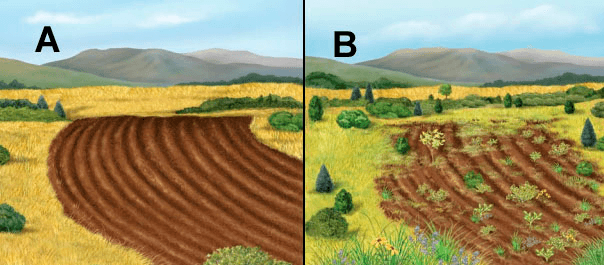
What type of succession is shown going from figure A to figure B?

a)

primary succession

b)

ecological succession

c)

secondary succession

d)

intermediate species

50.

The picture shows what type of succession?

a)

primary

b)

secondary

c)

tertiary

d)

quadanary

51.

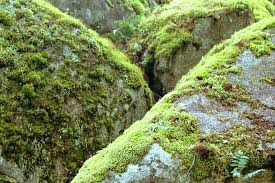
What are examples of pioneer species in a primary succession?

a)

Bushes and Shrubs

b)

Oak trees

c)

Mossess and Lichens

d)

A rose Bush

52.

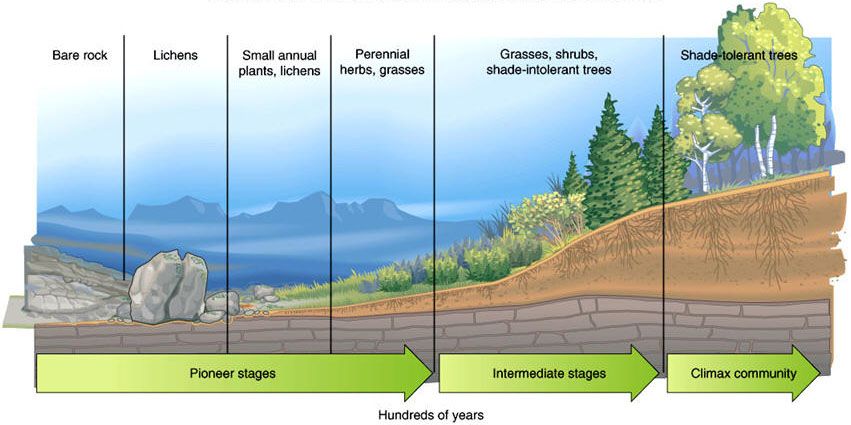
After a volcanic eruption, lava covers the land. What is the order that plants grow to repopulate the area?

a)

Lichens → Shrubs → Grasses → Trees

b)

Lichens → tree → shrubs→Grasses

c)

Grasses → Lichens → Shrubs → Trees

d)

Lichens → Grasses → Shrubs → Trees

53.

The forest in panel #8 is a...

a)

pioneer species

b)

climax community

c)

tertiary community

d)

intermediate species

54.

Succession type?

a)

primary succession

b)

secondary succession

c)

tertiary succession

d)

variable succession

55.

Starts with BARE ROCK followed by lichen

a)

primary succession

b)

secondary succession

c)

both types of succession

56.

The end result of ecological succession is usually a(n)

a)

A.land biome.

b)

B.aquatic biome.

c)

C.unstable community.

d)

D.climax community.

57.
Day & night are caused by the ______________ of earth on its axis
a)
revolution
b)
orbit
c)
rotation
d)
tilt of the axis
58.
How long does it take earth to make one revolution around the sun?
a)
12 hours
b)
24 hours 
c)
365 days
d)
30 days
59.
What happens when the area in which you live tilts away from the sun?
a)
It is summer.
b)
It is spring.
c)
It is winter.
d)
It is fall.
60.
Why does the area around the equator stay the same temperature all year?
a)
The equator rotates slower than the poles 
b)
The equator remains the same distance from the sun.
c)
The equator always receives direct sunlight.
d)
The equator has 18 hour days.
61.
Which season is taking place in the Southern Hemisphere in Position 1?
a)
Winter
b)
Spring
c)
Summer
d)
Fall
62.
Which season is taking place in the Northern Hemisphere in Position 2?
a)
Winter
b)
Spring
c)
Summer
d)
Fall
63.
Which season is taking place in the Northern Hemisphere in Position 3?
a)
Winter
b)
Spring
c)
Summer
d)
Fall
64.
At position A, which hemisphere would have summer?
a)
Northern hemisphere
b)
Southern hemisphere
65.
At position C, which hemisphere would have winter?
a)
Northern hemisphere
b)
Southern hemisphere
66.
Where on Earth can you experience entire days of darkness?
a)
The equator
b)
The poles
c)
The Tropic of Cancer
d)
The Tropic of Capricorn
67.
The efficiency of energy transfer from a lower trophic level to the next highest level is roughly
a)
1%
b)
10%
c)
100%
d)
1000%
68.
In the energy pyramid here, how much of the energy in each level gets lost as heat or used by the organism for survival?
a)
80%
b)
90%
c)
10%
d)
20%
69.
An organism that gets energy from breaking down dead organisms, non-living material or waste is a(an) ___________.
a)
producer
b)
consumer
c)
decomposer
d)
autotroph
70.
Water temperature would be an example of ...
a)
 biotic factor
b)
 abiotic factor
71.
Which of the following would provide the most energy in an ecosystem?
a)
Producers
b)
Herbivore
c)
Omnivore
d)
Carnivore
72.
A wolf eats a rabbit, that just ate some berries.  What would you call the rabbit?
a)
Producer
b)
Omnivore
c)
Primary Consumer
d)
2nd order Heterotrph
73.
Why are decomposers located to the side of the pyramid?
a)
They recycle dead material from all levels
b)
The eat living things from all levels
c)
They are not a living organisms
d)
They are too large to fit on the pyramid
74.

What is the carrying capacity of the graph?

a)

1000

b)

8000

c)

800

d)

600

75.
What is the process of combining nitrogen gas with other elements to make nitrogen into usable compounds?
a)
nitrogen composition
b)
ammonia 
c)
nitrogen fixation
d)
denitrification
76.
_____ is the conversion of organic nitrogen into ammonia
a)
Nitrogen Fixation
b)
Ammonification
c)
Denitrification
d)
Assimilation 
77.
What converts nitrogen gas into a useable form for plants and animals?
a)
bacteria
b)
fungi
c)
rain
d)
car exhaust 
78.
Plants and animals need nitrogen to make __________.
a)
Protein
b)
Carbohydrates
c)
Lipids
d)
Minerals
79.
The process where excess nutrients enter a body of water causing overgrowth of aquatic plants and algae...
a)
Eutrophication
b)
Acid Precipitation
c)
Nitrogen Fixation
d)
Decomposition
80.
Organisms that convert fixed nitrogen back into nitrogen gas and release nitrogen gas back into atmosphere...
a)
 denitrifying bacteria
b)
fungi
c)
maggots 
d)
all of the above
81.
Bacteria fix nitrogen on plant roots. Plant roots provide sugar to bacteria. This is an example of
a)
mutualism
b)
parasitism
c)
commensalism
d)
competition
82.

This is NOT a part of the phosphorus cycle.

a)

Phosphate is incorporated into sedimentary rocks

b)

Phosphate bound to soil

c)

Atmospheric phosphate

d)

Phosphate is absorbed from the soil by plants

83.
_____ brings phosphorous into our waterways. .
a)
precipitation
b)
runoff
c)
transpiration
d)
condensation
84.
Which of the following statements is true of the phosphorus cycle?
a)
Phosphorus enters the atmosphere as phosphates.
b)
The phosphorus cycle utilizes the processes of erosion, and weathering.
c)
Phosphates are used in carbohydrate and glucose storage.
d)
The phosphorus cycle utilizes bacteria to breakdown phosphates and make them available for plants.
85.
What are the four biological molecules?
a)
proteins, carbohydrates, lipids, nucleic acids
b)
A, T, C, G
c)
water, air, earth, and fire
d)
Joe, Nick, and Kevin Jonas
86.
What is the primary function of carbohydrates in your body?
a)
Speed up chemical reactions.
b)
Give immediate energy.
c)
Help to store energy.
d)
Build cell walls in plants.
87.
A group of organic molecules that includes sugars, starch, and cellulose care called...
a)
proteins
b)
carbohydrates
c)
nucleic acids
d)
lipids
88.
What are the monomers of a polysaccharides?
a)
Amino Acids
b)
Nucleotides
c)
Triglycerides
d)
Monosaccharides
89.
A large, folded chain of amino acids.
a)
protein
b)
steroid
c)
monosaccharide
d)
enyzme
90.
Organelles inside nucleus function is to make ribosomes
a)
Golgi Body
b)
Lysosome
c)
Rough E.R.
d)
Nucleolus
91.
This organelle's function is to make protein.
a)
Rough E.R.
b)
Smooth E.R.
c)
Ribosome
d)
Nucleus
92.

Which organism in the food web would

contain the highest concentration of chemical pollutants?

a)

producers

b)

primary consumers

c)

secondary consumers

d)

tertiary consumers