
 Worksheets
Ch. 4 Tissues Test Super Review
Total questions: 90
Worksheet time: 45mins
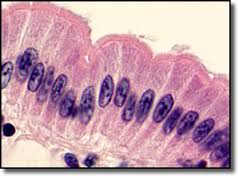
Identify:
Simple Columnar
Simple Cuboidal
Pseudostratified
Transitional

Identify:
Pseudostratified
Simple Squamous
Transitional
Stratified Squamous

Identify:
Simple Cuboidal
Simple Columnar
Transitional
Pseudostratified

Identify:
Simple Columnar
Simple Cuboidal
Transitional
Simple Squamous

Identify:
Stratified squamous
Simple cuboidal
Transitional
Simple squamous
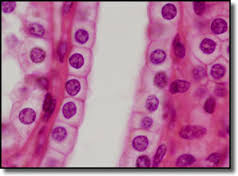
Identify:
Pseudostratified
Simple cuboidal
Transitional
Simple Squamous

Identify this elastic epithelium:
Pseudostratified
Stratified columnar
Transitional
Stratified squamous

Identify:
Stratified squamous
Simple columnar
Transitional
Pseudostratified

Identify:
Simple cuboidal
Simple columnar
Stratified columnar
Pseudostratified

Identify this urinary bladder tissue:
Pseudostratified
Simple columnar
Transitional
Stratified squamous

Identify:
Simple squamous
Stratified squamous
Transitional
Pseudostratified
Absorbs nutrients in the digestive tract
Simple columnar
Simple cuboidal
Simple squamous
Pseudostratified
Used in places where diffusion needs to occur, such as blood vessels and air sacs in the lungs
Simple cuboidal
Simple columnar
Simple squamous
Stratified squamous
Used in places needing protection from scrapes and abrasions such as the skin and esophagus
Simple cuboidal
Pseudostratified
Simple Squamous
Stratified Squamous
Secretes mucus in the respiratory tract, specifically the trachea
Transitional
Pseudostratified
Simple squamous
Stratified squamous
Cells that produce mucus
Goblet
Microvilli
Cilia
Endocrine
Increase the surface area for absorption
Goblet
Microvilli
Cilia
Endocrine
Move substances like mucus
Goblet
Microvilli
Cilia
Endocrine
Secrete substances to the body's surface or hollow organs.
Exocrine glands
Microvilli
Cilia
Endocrine glands
Secrete hormones into the blood stream.
Exocrine glands
Microvilli
Cilia
Endocrine glands
The lining of the heart and blood vessels
Endothelium
Exothelium
Mesothelium
Perithelium
The covering of all internal organs
Endothelium
Exothelium
Mesothelium
Perithelium
A tissue that does not contain blood vessels
Avascular
Innervated
Apical
Basal
A tissue that contains nerve endings
Avascular
Innervated
Apical
Basal
The bottom surface of an epithelial cell that touches the basement membrane.
Endocrine
Lateral
Apical
Basal
The side surface of an epithelial cell that touches another epithelial cell.
Avascular
Lateral
Apical
Basal
A membrane that lines the inside of an open body cavity.
synovial
serous
cutaneous
mucous
How many types of membranes are there?
1
2
3
4
The type of tissue that responds to a stimuli
Connective
Nervous
Muscle
Epithelial
A mucous membrane is found on the ______ of the stomach.
Parietal
Covering
Joints
Lining
Which membrane is another name for your skin?
Mucous
Serous
Cutaneous
Synovial
The lining of the abdominal cavity is a _____ membrane.
Mucous
Synovial
Serous
Cutaneous
A membrane lining the joints of the body.
Mucous
Synovial
Serous
Cutaneous
The part of a serous membrane that is attached to an organ.
parietal
visceral
synovial
mucous
Nervous system "helper" cells
neurons
neuroglia
neutrophils
myocytes
Cells that are capable of generating and conducting nerve impulses are _____.
neurons
neuroglia
neutrophils
myocytes
Muscle cells
neurons
neuroglia
neutrophils
myocytes
Serous membranes are made of 2 layers:
mesothelium and areolar CT
endothelium and dense irregular CT
epidermis and dermis
simple columnar and areolar CT
Mucous membranes are made of 2 layers:
mesothelium and areolar CT
endothelium and dense irregular CT
epidermis and dermis
simple columnar and areolar CT
Another name for smooth muscle
visceral
reticular
skeletal
cardiac
Striated, multinucleated, voluntary muscle fibers.
skeletal
cardiac
smooth
nervous
Striated, single nucleated, intrinsic muscle fibers.
skeletal
cardiac
smooth
nervous
Non-striated, single nucleated, involuntary muscle fibers.
skeletal
cardiac
smooth
nervous
The functions of nervous tissue
communication and integration
movement and heat
covering and lining
support and protection
The functions of muscle tissue
communication and integration
movement and heat
covering and lining
support and protection
These keep cardiac muscle cells from ripping apart under pressure
intercalated disks
microvilli
astrocytes
striations
Connective tissue....
Protects, supports, and binds together other body tissue
Is the lining, covering, and glandular tissue of the body
Contracts and shortens to produce movement
Provides communication through the body
Which is NOT one of the 3 components that make up connective tissue?
Extracellular matrix
Protein fibers
Cells
Basement membrane

This protein fiber forms strong, rope-like structures such as tendons and ligaments.
Elastin
Collagen
Reticular
Keratin
This type of cartilage forms a strong, cushion-like disk between the vertebrae.
Fibrocartilage
Elastic cartilage
Hyaline cartilage
This type of tissue loosely connects membranes to the underlying tissue.
Areolar
Adipose
Blood
Cartilage
Which connective tissue contains a gel-like matrix and is found in the nose, rib cage, and at the end of bones.
Bone
Hyaline cartilage
Elastic cartilage
Fibrocartilage
Forms tendons and ligaments
Dense regular
Dense irregular
Cartilage
Areolar
This type of tissue is composed of tightly packed, thick, collagenous fibers, a network of elastic fibers, and some fibroblasts.
Osseous
Cartilage
Dense connective
Loose connective
This type of connective tissue provide elasticity to the spinal column, large arteries, and the heart.
Elastic connective
Dense irregular
Dense regular
Fibrocartilage
This type of cartilage plays a major role in the development and growth of bones.
Hyaline
Elastic
Fibrocartilage
Osseous
This type of cartilage provides the framework of the external ears and the epiglottis.
Hyaline
Elastic
Fibrocartilage
Osseous
Osteoblasts are a type of cell which would be found in which type of tissue?
Blood
Hyaline cartilage
Dense connective
Osseous
Collagen fibers running in all directions give this tissue strength in all directions.
Dense regular
Dense irregular
Hyaline cartilage
Blood
Cells that consume pathogens and dead cells.
Adipocytes
Macrophages
Mast cells
Fibroblasts
Cells that release histamine to trigger allergic reactions.
Adipocytes
Macrophages
Mast cells
Fibroblasts
This branched protein fiber forms a net-like structure.
Elastin
Collagen
Reticular
Keratin
This protein fiber allows tissues to stretch and return to their original size.
Elastin
Collagen
Reticular
Keratin
Epithelium that consists of two or more layers of cells is ____ epithelium.
simple
stratified
squamous
cuboidal
The science that deals with the study of tissues is called ____.
anatomy
histology
pathology
physiology
The epithelium lining the urinary bladder is ____ epithelium.
transitional
pseudostratified
keratinized
vascular
The pituitary gland produces hormones, so it is a(n) _____ gland.
exocrine
endocrine
heterocrine
epicrine
Exocrine glands are made out of ________ tissue.
epithelial
connective
nervous
muscle
Blood vessels are lined by ___________.
mucous membranes
endothelium
mesothelium
serous membranes
A matrix and a cellular component are characteristics of ____ tissue.
epithelial
muscle
nervous
connective
The cells producing fibers in connective tissue are ____.
macrophages
chondrocytes
fibroblasts
osteoblasts
Blood is classified as ____ tissue.
epithelial
connective
muscle
nervous
Cells that are specialized for fat storage are ____.
adipocytes
neuroglia
goblet cells
myocytes
A tissue where bundles of collagen fibers have an orderly parallel arrangement is ____ connective tissue.
dense regular
dense irregular
dense elastic
areolar
The cells of cartilage tissue are ____.
chondrocytes
osteoblasts
neuroglia
myocytes
The type of cartilage that reduces friction at the joints is ____.
hyaline cartilage
fibrocartilage
elastic cartilage
osseous cartilage
Bone tissue is also called ____ tissue.
osseous
cartilage
dense irregular
hyaline
The chemical that causes inflammation and is released by mast cells is _________.
histamine
histology
serous fluid
collagen
The type of membrane that does not contain epithelium is a(n) ____ membrane.
cutaneous
serous
synovial
mucous
The part of a serous membrane attached to the wall of the body cavity is the ____ portion
parietal
visceral
serous
mucous
The type of connective tissue that contains plasma is ____.
osseous
blood
dense
cartilage

