
 Worksheets
Slutions, mixtures, and separation techniques
Total questions: 161
Worksheet time: 2hrs 30mins
What is the basis of separation for chromatography?
Boiling point
Speed
Speed and particle size
Density
What is the basis of separation for distillation?
Boiling point
Speed
Particle size
Density
What is the basis of separation for evaporation and crystallisation?
Boiling point
Speed
Particle size
Density
What is the basis of separation for sedimentation and decantation?
Boiling point
Speed
Particle size
Density

This method is used in separating soluble solid from a liquid such as salt from water.
evaporation
distillation
decantation
filtration

This method is useful in a pharmaceutical industry in determining the amount of each chemical in each product.
distillation
chromatography
sieving
decantation

This method is used to separate metals from non metals.
use of magnet
physical manipulation
sieving
chromatography

This involves using a strainer or a big screen to separate the components of solid mixtures.
chromatography
distillation
sieving
physical manipulation

This technique is based on the differences of the boiling point of the substance in the mixture.
decantation
distillation
filtration
chromatography

Decantation is used to separate...
a heavy insoluble solid from a liquid.
a light insoluble solid from a suspension.
a soluble solid from a solution
puppies from kittens
If a solid doesn't dissolve in a liquid we say that it is
Soluble
A solvent
Insoluble
Undissolveable
A solution is a mixture that is made up of
2 solids mixed together
A solid mixed with a gas
A solid dissolved in a liquid
None of the above
In a solution the liquid that dissolves a solvent is called the
Solvent
Solute
Dissolver
Water
Mixtures can be separated .......................
Physically
Chemically
Which of the following is a correct statement about distillation
The components of the mixture have different densities
The components of the mixture have different melting points
The components of the mixture have different boiling points
The components of the mixture form a heterogeneous mixture

A solution of salt and water was put over heat. What will happen next?
The salt will evaporate
the salt and water evaporate
the water will evaporate

This type of paper allows liquid to pass through it. What tool is it?
sieve
filter

Dry ice is solid. When it is left under room temperature it gives off gas. What process is this?
evaporation
distillation
decantation
sublimation

How are you going to separate the iron filings from sulfur powder?
by sieving
by using magnet
by decantation process
by dissolving sulfur to water
Which solution is the most concentrated?
200 mL water
1 scoop sugar
100 mL water
2 scoops sugar
200 mL water
2 scoops sugar
100 mL water
1 scoop sugar
The word QUANTITY means HOW MUCH of something.
Which solution contains the greatest QUANTITY of solvent?
100 mL water
20 g sugar
200 mL water
30 g sugar
300 mL water
10 g sugar
150 mL water
25 g sugar
The word QUANTITY means HOW MUCH of something.
Which solution contains the greatest QUANTITY of solute?
100 mL water
20 g sugar
200 mL water
30 g sugar
300 mL water
10 g sugar
150 mL water
25 g sugar

Which bowl can be separated by using filtration?
Bowl 1
Bowl 2
Bowl 3
Bowl 4

Sugar and sand were added to water, then stirred. The mixture was then poured through the filter paper. Which statement correctly tells what happened?
the sugar and the sand both stayed on the filter paper and the water went through the filter into the beaker
the sand stayed on the filter paper and the sugar and water went through the filter into the beaker
the water, sand, and sugar all went through the filter paper and into the beaker
the water, sand, and sugar all stayed on the filter paper, and nothing went into the beaker
Which bowl can be separated by using magnetism?
Bowl 1
none of them
Bowls 2 and 3
Bowl 4

The beaker contains water and salt Which method can be used to separate the mixture?
evaporation
filtration
floatation
sifting

The beaker contains sugar and pebbles. Which method can be used to separate the mixture?
magnetism
filtration
floatation
sifting

The beaker contains water and rubber pellets. Which method can be used to separate the mixture?
magnetism
filtration
floatation
This method is used in separating soluble solid from a liquid such as salt from water.
evaporation
distillation
decantation
filtration
This method is used to separate metals from non metals.
use of magnet
physical manipulation
sieving
chromatography
This involves using a strainer or a big screen to separate the components of solid mixtures.
chromatography
distillation
sieving
physical manipulation
Decantation is used to separate...
a heavy insoluble solid from a liquid.
a light insoluble solid from a suspension.
a soluble solid from a solution
puppies from kittens
If a solid doesn't dissolve in a liquid we say that it is
Soluble
A solvent
Insoluble
Undissolveable
A solution is a mixture that is made up of
2 solids mixed together
A solid mixed with a gas
A solid dissolved in a liquid
None of the above
In a solution the liquid that dissolves a solvent is called the
Solvent
Solute
Dissolver
Water
Mixtures can be separated .......................
Physically
Chemically
Which of the following is a correct statement about distillation
The components of the mixture have different densities
The components of the mixture have different melting points
The components of the mixture have different boiling points
The components of the mixture form a heterogeneous mixture
A solution of salt and water was put over heat. What will happen next?
The salt will evaporate
the salt and water evaporate
the water will evaporate
This type of paper allows liquid to pass through it. What tool is it?
sieve
filter
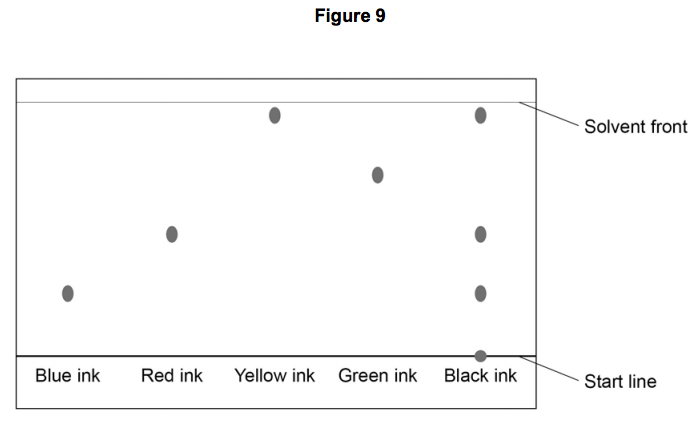
Which ink is most soluble?
Blue
Red
Yellow
Green
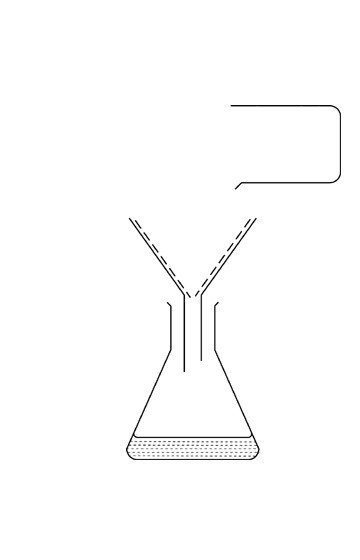
What is the name of this separation technique?
distillation
filtration
evaporation
chromatography
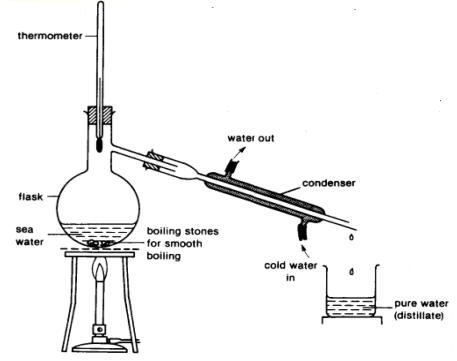
What is the name of this separation technique?
Simple distillation
Fractional distillation
Boiling
Evaporation
Bonus:
What are the components of a cup of bubble milk tea?
(Select all that apply)
Tapioca pearls
Milk
Water
Tea
Which one of the following is a disadvantage of evaporation to dryness?
It always requires heat
It cannot be used for insoluble solids
All of the solute is recovered
The solvent (liquid part) is not recovered
What method is used to obtain copper(II) sulfate crystals from its solution?
Crystallisation
Evaporation to dryness
Paper chromatography
Fractional distillation
During filtration, the liquid that has passed through the filter paper is called the (a)
During filtration, the solid that is retained by the filter paper is called the (a)
For paper chromatography to work,
the dyes must have different boiling points.
the dyes must have different solubilities in the solvent.
the starting line on the chromatogram must be drawn using pen.
the starting line must be below the level of the solvent.
What is the physical property that fractional distillation depends on?
different boiling points
different melting points
different solubilities
different densities
Which separation technique is used to obtain pure water from seawater?
Simple distillation
Filtration
Chromatography
Evaporation
Select all the examples of mixtures.
Air
Salt water
Pure honey
Calcium carbonate
Which of the following statements tells us that a sample of liquid is pure water?
It is colourless.
It leaves no residue when filtered.
It boils at 100oC.
It is odourless.
True or False: Separation by crystallisation yields a purer product than heating to dryness
True
False
True or False: Filtration can be used to separate solutions
True
False
True or False: If a mixture contains 2 substances, I need only one separating technique to separate the substances into their components.
True
False
What is the purpose of Filtration?
Separating and insoluble solid from a liquid
Separation of a mixture of 2 solids
Separates heavier substances from a suspension
Are all magnet attracted Substances Recyclable
Yes
No
What is an example of gravity separation?
Gold panning
A pool filter
Vaccum cleaners
Seperating iron chips from sand
magnetic separation allows the separation of a mixture of how many solids
11
3
5
2
Which separation technique is used to separate solids?
Gravity seperation
Magnetic seperation
Filteration
All of the above
In the process of gravity separation what do the heavier particles do?
Sink to the bottom
Rise to the top
Float around the container
Using a filter to separate substances is called
filtered
Filitration
filtration
What is the definition an insoluble substance?
a substance that cannot dissolve
a substance that can dissolve
What is the most used way to separate Recycling?
Filtration
Distillation
Magnetic Separation
Evaporation
What method of separation would you use to separate salt and water
Magnetic Separation
Evaporation
Gravity Separation
Filtration
which one of these is usually used in household products?
decanting
magnetic separation
filtration
distillation
Which insoluble separation techniques involve gravity as a major tool?
magnetic separation
filtration
decanting
evaporation
Which are the three ways to separate insoluble substances?
magnetic separation, filtration and evaporation
filtration, decanting and pouring
decanting, filtration and magnetic separation
magnetic separation, filtration and distillation
What is a sediment?
a type of wood
a type of rock
a bone
Which drink doesn't use the separation technique Filtration?
Coffee
Tea
Instant coffee
Which of these metals can't be separated by the separation technique Magnetic separation?
Copper
Cobalt
Nickel
is nickel magnetic?
yes
no
What is an example of filtration:
Vacuum Cleaner
Panning for gold
Recycling
Synonym for gravity separation is:
Distillation
Decanting
Filtration

No matter what you do, sand will not dissolve in water, because sand is _________.
dissolved
soluble
insoluble
aqueous
Dyes in a felt-tip pen may be separated by....
Distillation
Decanting
Chromatography
Centrifuge
What method would you use to separate a mixture of salt and water so that you can get keep the salt AND the water?
sorting by hand
distillation
chromatography
During filtration, the solid that is trapped in the filter paper is called ..A.. and the liquid that has passed through the filter paper is called ..B..
A: residue B: filtrate
A: residue B: filterate
A: filtrate B: residue
A: filterate B: residue
Referring to the chromatogram, black ink contains
Blue, red and yellow ink only
Blue, red, yellow and green ink
Blue and yellow ink
Black ink only
Which ink is a mixture?
Blue
Red
Yellow
Black
Which separation technique is used to obtain salt from seawater?
Simple distillation
Filtration
Chromatography
Evaporation
How to separate iron filings from flour?
Distillation
Evaporation
Filtration
Magnetic Attraction
How to separate coffee beans and coffee liquid?
Distillation
Filtration
Evaporation
Sieving
How to separate tea leaves and tea liquid?
Decantation
Evaporation
Sieving
Magnetic Attraction
How to separate sugar and water?
Decantation
Distillation
Filtration
Evaporation
How to separate needles and toothpicks?
Decantation
Distillation
Magnetic Attraction
Sieving
How to separate cooked noodles and water?
Decantation
Filtration
Evaporation
Sieving
How to separate salt and water?
Decantation
Filtration
Evaporation
Sieving
How to separate pebbles and water?
Decantation
Filtration
Evaporation
Sieving
How are suspensions and colloids different?
Suspensions settle out and colloids do not settle.
Colloids settle out and suspensions do not settle.
Suspensions dissolve and colloids do not.
Colloids dissolve and suspensions do not.
Which statement below does NOT describe a colloid?
A colloid is a type of heterogeneous mixture
A colloid is a type of solution.
The particles in a colloid do not settle like they do in a suspension.
The particles in a colloid do not dissolve – they are just too small to be seen.

In a solution, it is the dissolving substance.
solvent
suspension
colloid
solution
In a solution, it is the substance that is being dissolved.
Solute
Suspension
Colloid
Solvent

What is a mixture?
elements chemically combined
a combination of different substances
composed of one atom only
it is made of chemical

The separation technique being used is
Decanting
Filtering
Evaporation
Distillation
Which tool could you use to separate large and small particles?
A sieve
A distillation flask
Chromatography
Evaporating basin
Which is not a separation technique?
Filtrating
Distillating
Evaporating
Dissolving

The image shows a mixture of concrete nails and saw dusts. What technique is best to use to separate the nails from the saw dusts?
sieving
chromatography
decantation
magnetic separation
True or false: Decanting is a technique that can be used to separate a salt water solution
True
False
True or false: Magnets can be used to separate iron filings from sand
True
False

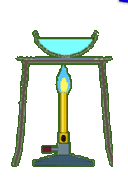
Name the separation technique
Filtration
Evaporation
Distillation
Separation

Name the separation technique
Distillation
Crystallisation
Evaporation
Condensation

Name the separation technique
Centrifuge
Crystallisation
Distillation
Evaporation
No matter what you do, sand will not dissolve in water, because sand is _________.
dissolved
soluble
insoluble
aqueous
Which separation technique is used to obtain salt from seawater?
Simple distillation
Filtration
Chromatography
Evaporation
What is the name of this separation technique?
distillation
filtration
evaporation
chromatography
What is the name of this separation technique?
Simple distillation
Fractional distillation
Boiling
Evaporation
A mixture is a combination of two or more substances that cannot be physically separated.
True
False
Colloids are the same as suspensions in that particles of one component are suspended in the other component, but in colloids the particles stay suspended.
True
False
Neither
Which two features identify suspensions?
The components separate out if left to stand
The components do not separate out if left to stand
They are transparent
Particles of one component are suspended in the other component
Which of the following ingredients are soluble in water?
Cork
Glass
Sugar
Oil
A particular soil is a mixture of sand, dead plant matter, water and air. The states of matter in this mixture are:
Solid only
Solid and liquid only
Liquid and gas only
Solid , liquid and gas
The best method of separating a solution from a suspension is
Filtration
Settling
Decanting
Sieving
Which of the following is not an example of a mixture?
Lemonade
Sodium chloride
Fruit salad
Food colouring and water
Which statement about mixtures is FALSE?
A mixture contains more than one ingredient.
A mixture can be separated.
The ingredients of a mixture keep their physical properties.
All mixtures are food or drink.
Which part of the following mixture (sugar, sand and water) would pass through filter paper?
Sugar and water
Sand
Water
Sugar
What is the correct order for obtaining salt from a mixture of sand and salt?
Dissolving in water - filtration - evaporation
Evaporation - filtration - dissolving in water
Filtration - dissolving in water - evaporation
Dissolving in water-sieving- decanting
Which is the best separation technique to get salt from salty water?
Evaporation
Filtration
Distillation
Sieving
A soluble substance will
Form small particles to form a clear suspension
Dissolve to form a cloudy solution
Dissolve to form a clear solution
Form small particles to form a cloudy suspension
Pure substances contain:
Only one type of substance
Substances that cannot be chemically separated
A solvent and a solute
All of the above
A suspension contains:
A bridge hanging over a valley
A solvent and a solute
A solvent and suspended particles
A solution and a solvent
In chemistry, a solution contains
An answer to a problem
A solvent and a solute
A solvent and suspended particles.
A solution and a solvent
HARD: In what week will your investigation take place?
Week 6
Week 7
Week 8
Week 9
HARD: Which of the following is NOT a Solute that is added to soft drink
Carbon dioxide Gas
Food colouring
Flavouring
Water
HARD: What is the gas that is added to soft drink to give it the FIZZ
Carbon dioxide
Oxygen
Nitrogen
Argon
HARD: We looked at dry ice in a previous lesson, Which state of matter does dry ice not exist in
Solid
Liquid
Gas
HARD: In the air we breathe, which gas is in the largest quantity?
Nitrogen
Oxygen
carbon dioxide
argon

When foods are dissolved in our stomach through acids. Are the stomach acids the solvent or solute?
Solvent
Solute
Which two state of matter fill the shape of a container?
Solid and liquid
Solid and gas
Liquid and gas
none of the above
two pure substances are added together this is known as a (a) .

This diagram represents the particles of which state of matter
Solid
Liquid
Gas
How could you seperate salt that has dissolved in water?
FIltration
Evaporation
Sieving
Magnetic separation
Which of the following properties do all the states of matter share?
Incompressible
usually invisible
fills the shape of a container
Expands when heated
Which of the following is not a property of a gas
Usually invisible
fills a container
Incompressible
Expands when heated

What separation technique is shown here?
Sieving
Magnetic separation
Filtration
Evaopration
Which separation technique is used for trash recycling?
Filtration
Sieving
Magnetic separation
Evaporation
The image shows a mixture of concrete nails and saw dusts. What technique is best to use to separate the nails from the saw dusts?
sieving
chromatography
decantation
magnetic separation
Which of the following substances are Insoluble?
Salt
Sugar
Sand
Coffee
When a Gas goes to a liquid this is known as ___________
Evaporation
Condensation
Freezing
Melting
What will a liquid change states to if you take away heat?
Gas
Stay a liquid
solid
solution
What separation technique did you use to separate the iron filings?
Sieving
Filtration
Magnetic separation
When sugar dissolves in a glass of warm water, the sugar is the_________
Solute
Solvent
The air around us is an example of a mixture
True
False
True or false: Sieving can be used to separate a mixture with two solid components of different sizes
True
False
True or false: Magnets can be used to separate iron filings from sand
True
False

This process allows the fine flour particles to pass through the holes of the strainer while the bigger impurities remain on the strainer. What is this process called?
(a)
Which one of these are solvents?
Salt
Water
Sugar
Grass

