wayground logo

Free Printable Worksheets

Font size

S
M
L
XL
Worksheets

Chemistry G6

Total questions: 84

Worksheet time: 58mins

Name
Class
Date
1.

The symbol for Calcium is:

a)

C

b)

Ca

c)

Cl

d)

Cm

2.

The name of the element that has the symbol B is:

a)

Beryllium

b)

Bismuth

c)

Boron

3.

The element that has the symbol Na is:

a)

Natium

b)

Sodium

c)

Nitrogen

d)

Nihonium

4.

True or false: hydrogen has the symbol H and is the first element

a)

True

b)

False

5.

What is the symbol for Carbon?

a)

C

b)

Ca

c)

Cb

d)

Cn

6.

The correct symbol for Beryllium is:

a)

B

b)

Be

c)

Bm

d)

By

7.

S, is the symbol for:

a)

Silicon

b)

Sulfur

c)

Strontium

d)

Tin

8.

Helium has the symbol:

a)

H

b)

He

c)

Hm

d)

Hl

9.

Li is the symbol for:

a)

Lithium

b)

Lanthanide

c)

Listerine

10.

Nitrogen has the symbol:

a)

Ni

b)

Nt

c)

N

d)

Ng

11.

True or false: The symbol for Oxygen is Ox

a)

True

b)

False

12.

Fluorine has the symbol:

a)

Fl

b)

Fe

c)

Fn

d)

F

13.

The element with the symbol, Ne is:

a)

Nitrogen

b)

Nihonium

c)

Neon

d)

Neodymium

14.

Magnesium has the symbol:

a)

M

b)

Mm

c)

Mg

d)

Ma

15.

The symbol, Al, belongs to:

a)

Argon

b)

Aspartame

c)

Arsenic

d)

Aluminium

16.

Silicon has the symbol:

a)

S

b)

Si

c)

Sn

d)

Sc

17.

P, is the symbol for:

a)

Platinum

b)

Palladium

c)

Phosphorus

d)

Plutonium

18.

Chlorine has the symbol:

a)

C

b)

Ch

c)

Cl

d)

Ce

19.

Ar is the symbol for:

a)

Arsenic

b)

Gold

c)

Argon

d)

Astatine

20.

The symbol, K, belongs to:

a)

Potassium

b)

Kryptonite

c)

Krypton

21.

H

(a)  

22.

He

(a)  

23.

Li

(a)  

24.

Be

(a)  

25.

B

(a)  

26.

C

(a)  

27.

N

(a)  

28.

O

(a)  

29.

F

(a)  

30.

Ne

(a)  

31.

Na

(a)  

32.

Mg

(a)  

33.

Al

(a)  

34.

Si

(a)  

35.

P

(a)  

36.

S

(a)  

37.

Cl

(a)  

38.

Ar

(a)  

39.

K

(a)  

40.

Ca

(a)  

41.
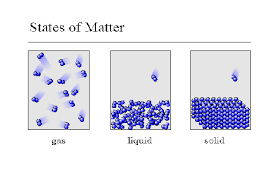
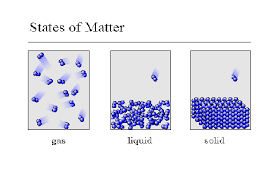
Particles in this state of matter are moving the fastest.
a)
solid
b)
liquid
c)
gas
42.

This state of matter takes ONLY the shape of its container.

a)

liquid

b)

gas

c)

solid

43.
This state of matter keeps its shape and volume.
a)
gas
b)
solid
c)
liquid
44.
In this state of matter, there is a strong attraction between molecules and they cannot break away from each other. 
a)
solid
b)
liquid
c)
gas
45.
What is matter?
a)
Anything that has mass and volume
b)
The shape of an object
c)
How much an object weighs
d)
The pull of objects on one another
46.
Mass is
a)
the amount of matter in an object
b)
the shape of an object
c)
measured using l x w x h
d)
the amount of space an object takes up
47.
Liquids....
a)
have a definite shape
b)
are always clear
c)
take the shape of their container
d)
are not matter
48.
When we describe the size, shape, smell, feel of an object, we are describing its _______________________________.. 
a)
mass
b)
properties
c)
volume
d)
matter
49.
The following are examples of liquids except 
a)
water
b)
oxygen
c)
soda
d)
koolaid
50.
All of these are examples of gases except
a)
oxygen
b)
carbon dioxide
c)
helium
d)
shampoo
51.

What is the state of matter that is tightly packed together?

a)

Plasma

b)

Solid

c)

Liquid

d)

Gas

52.

When given heat energy, which state of matter would liquid turn into?

a)

Gas

b)

Solid

c)

It stays the same

53.

What are all the properties of a solid?

a)

It's packed tightly together

b)

They can't be compressed

c)

They have the same volume

d)

They are free

e)

They have huge gaps between them

54.

Gases can be squashed easily.

a)

True

b)

False

c)

Sometimes

55.
What are the states of matter?
a)
solid, liquid, and juice
b)
solid and liquid
c)
solid and gas
d)
solid, liquid, and gas
56.
Matter that has its own shape and takes up space.
a)
solid
b)
liquid
c)
gas
57.
Matter that always fills the shape in a container, such as air.
a)
solid
b)
liquid
c)
gas
58.
Which object is a solid that keeps it's shape when it changes containers? 
a)
Chocolate milk
b)
Gravel
c)
Oxygen
59.
Which is a property of matter that you CANNOT observe just by looking at an object?
a)
temperature
b)
shape
c)
color
60.
At higher temperatures
a)
particles in an object have less energy
b)
particles in an object move faster
c)
a gas contracts
61.
What happens when my glass of water is sitting in the sun and disappears into a gas?
a)
evaporation
b)
burning
c)
melting
d)
freezing
62.
Molecules are closest together in a 
a)
Solid
b)
Liquid
c)
Gas
d)
plasma
63.
Which state of matter does ice start as (before you cool it)?
a)
liquid
b)
solid
c)
gas
64.
A gas
a)
has a definite shape but no definite volume
b)
has a definite volume but no definite shape
c)
has fast-moving particles
65.
What are the two structures found in the atom's nucleus?
a)
Electrons and Neutrons
b)
Protons and Electrons
c)
Protons and Neutrons
d)
Neutrons and Electrons
66.
What does the atomic number tell you?
a)
Number of Protons
b)
Number of Neutrons
c)
Sum of protons and neutrons
67.

How many neutrons are in the element shown?

a)

4

b)

9

c)

5

d)

13

68.
The modern periodic table of elements is arranged by 
a)
Number of neutrons
b)
State of matter
c)
Atomic number
d)
Atomic Mass
69.
What subatomic particle is found outside of the nucleus?
a)
Isotope
b)
Electron
c)
Neutron
d)
Mass
70.

Use your periodic table to find which element has 5 protons.

a)

Lithium

b)

Calcium

c)

Boron

d)

Neon

71.
Which one of the following items can found on the periodic table of elements?
a)
Location of element
b)
Number of Protons
c)
Element's Isotopes
d)
Number of Nucleus
72.
What is matter composed of?
a)
Atoms
b)
Space
c)
Electrons
d)
Ions
73.

The neutron has a ________________ charge.

a)

negative

b)

neutral

c)

positive

d)

low

74.

What subatomic particle has a positive charge?

a)

electron

b)

neutron

c)

proton

d)

nucleus

75.

How many elements are in their liquid state at room temperature? (Use your periodic table)

a)

1

b)

2

c)

12

d)

28

76.

The number of protons is equal to the number of

a)

electrons

b)

neutrons

c)

isotopes

d)

nucleus

77.

Which element has an atomic mass of 19?

a)

Hydrogen

b)

Argon

c)

Fluorine

d)

Potassium

78.

How do you find the number of neutrons in an atom?

a)

Atomic Number

b)

Atomic Mass

c)

Atomic Mass - Atomic Number

d)

Atomic Number + Atomic Mass

79.

How many electrons does the element in the picture have?

a)

19

b)

39

c)

20

d)

58

80.

What is the atomic mass of the element shown?

a)

14

b)

28

c)

42

81.
Which of these is not a noble gas?
a)
Helium
b)
Argon
c)
Nitrogen
d)
Krypton
82.

Are atomic mass and atomic number the same thing?

a)

Yes

b)

No

c)

Sort of

83.

How many elements are there on the Periodic table?

a)

101

b)

99

c)

118

d)

125

84.

Which element was the first discovered?

a)

Copper

b)

Oganesson

c)

Hydrogen

d)

Iodine