
 Worksheets
Unit 1 Test
Total questions: 50
Worksheet time: 3595secs


Which of the following displays the levels of organization INCORRECTLY from smallest to largest?
Atom, Molecule, Organelle, Cell
Organelle, Cell, Tissue, Organ
Community, Ecosystem, Biome, Biosphere
Organ System, Organ, Organism, Population

A collection of organisms that make up a community as well as all of the nonliving components of the environment.
Population
Community
Habitat
Ecosystem
What are the FOUR most common elements in living things?
Carbon
Silicon
Nitrogen
Hydrogen
Oxygen
Your friend is really irritable while sitting in class. He feels lightheaded and dizzy. He is also feeling a bit of confusion and brain fog.
What inferences are most realistic to make about the biomolecules in your friend's body?
He is running low on fast sources of energy
Proteins are being broken down or reshaped
The coding information in the cell is incorrect or incomplete
There is not enough insulation or energy storage
Your friend is really irritable while sitting in class. He feels lightheaded and dizzy. He is also feeling a bit of confusion and brain fog.
What biomolecule does your friend need?
Carbohydrates
Lipids
Proteins
Nucleic Acids
Dystrophin is a molecule that holds muscle fibers together. In people with muscular dystrophy, a genetic disease that causes people to lose the ability to walk at a young age, dystrophin molecules never develop.
What can you infer about the biomolecules of affected individuals? (select all correct answers)
There is a lack of sources of fast energy
A biomolecule is missing
The coding information in the cell is incomplete or incorrect
If removes insulation and long term energy storage
Dystrophin is a molecule that holds muscle fibers together. In people with muscular dystrophy, a genetic disease that causes people to lose the ability to walk at a young age, dystrophin molecules never develop.
What biomolecule is this person missing?
Carbohydrates
Lipids
Proteins
Nucleic Acids
Bowhead whales can have a specialized layer of blubber up to 30 cm’s thick. This acts as a special insulation that traps the heat their muscles create from movement.
What biomolecule is the blubber primarily made of?
Carbohydrates
Lipids
Proteins
Nucleic Acids
Helicase is an example of a biomolecule that can destroy bonds between DNA strands during DNA replication.
What biomolecule is helicase?
Carbohydrate
Lipid
Protein
Nucleic Acid
A scientist discovers new life on a distant planet. While watching the alien species live on the planet, scientists begin to notice that in order to hunt this species will attack another smaller species and inject them with some sort of liquid. After a short time, the smaller organism develops a sort of necrosis which is when a small portion of the organism's flesh begins to break down. Soon after necrosis begins the smaller organism dies.
What can you infer about the function of the poison?
It decreases fast sources of energy
Proteins are being broken down or reshaped
The coding information in the cell is altered
If removes insulation and long term energy storage
A scientist discovers new life on a distant planet. While watching the alien species live on the planet, scientists begin to notice that in order to hunt this species will attack another smaller species and inject them with some sort of liquid. After a short time, the smaller organism develops a sort of necrosis which is when a small portion of the organism's flesh begins to break down. Soon after necrosis begins the smaller organism dies.
What biomolecule are the aliens injecting?
Carbohydrates
Lipids
Proteins
Nucleic Acids
There is a person with Albinism. This individual does not produce melanin. Melanin allows for people to be protected from the sun. Since Albinos do not produce this protein they are prone to getting sunburns.
What inferences are most realistic to make about the biomolecules in this individual's body?
He is running low on fast sources of energy
Proteins are being broken down or reshaped
The coding information in the cell is incorrect or incomplete
There is not enough insulation or energy storage
There is a person with Albinism. This individual does not produce melanin. Melanin allows for people to be protected from the sun. Since Albinos do not produce this protein they are prone to getting sunburns.
What biomolecule results in the individual having albinism?
Carbohydrates
Lipids
Proteins
Nucleic Acids
Carbs and lipids are similar because they...
Are a source of energy for living organisms
Help with immune response
build structures such as cellulose and chitin
Contain the same elements (CHO)
Match the following functions to the biomolecule
Act as hormones
Lipid
Build muscle
Protein
Carry genetic information
Nucleic acid
Energy source (cellular respiration)
Carbohydrate
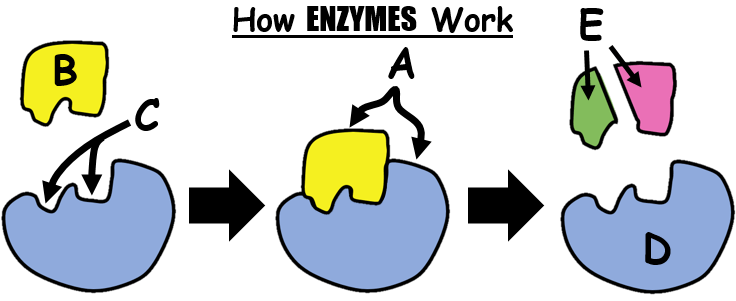
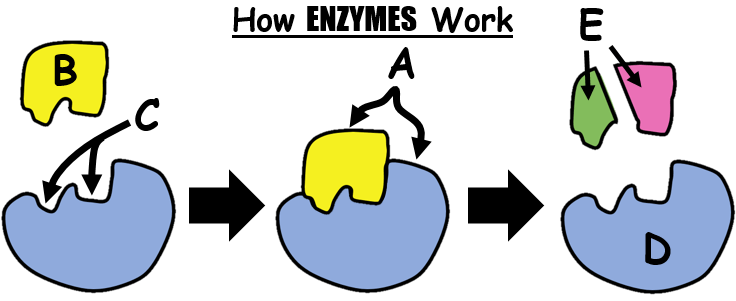
Label the parts of the enzyme model
Click on the temperature that this enzyme is having optimum activity.
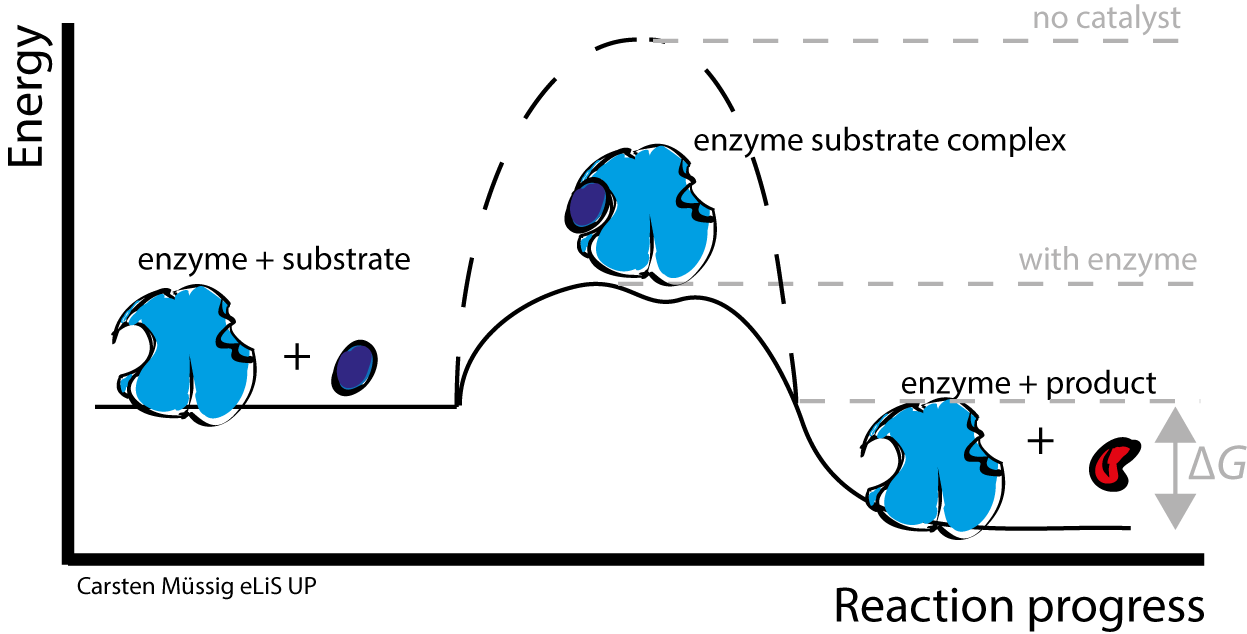

Enzymes are (a) that (b) chemical reactions by (c) the amount of activation energy required to start the reaction.
Match the following Macromolecules to its structure

Carbohydrate

Lipid

Nucleic Acids

Protein
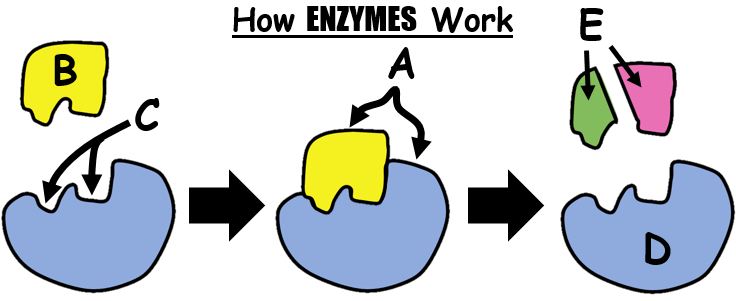
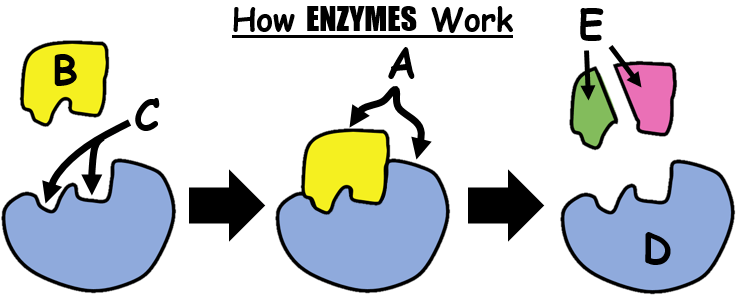
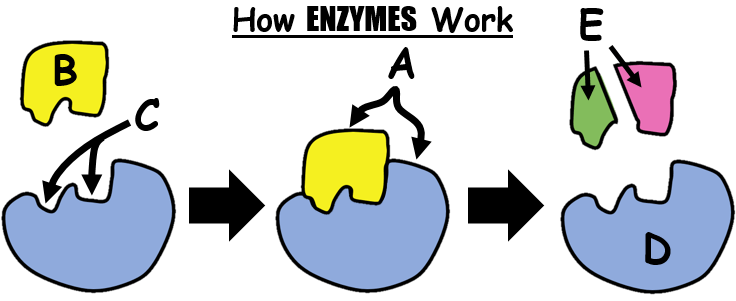
What are two factors that can affect an enzymes ability to function?
No changing
temperature and pH
night and day
hot and cold

How many servings are contained in this food item?
1
15
8
5

How many grams of protein are contained in the entire jar?
3
15
2.5
5

How many calories would you get from protein in ONE serving?
3
15
90
12

What percent of your daily value of carbohydrates would you consume if you ate the entire can?
1
3
4
10

If you only were to consume one granola bar, how many calories would you conusme?
190
90
60
30

What is the main ingredient in these granola bars?
Whole grain oats
Sugar
Canola Oil
Soy Flour

A recipe calls for an entire jar of honey. How many calories would be added to your recipe using this jar of honey?
60 calories
960 calories
660 calories
1340 calories

What percent of your recommended daily value of IRON is contained in a medium order of fries?
0%
14%
2%
6%
How many calories are contained in a gram of fat?
1
3
4
9
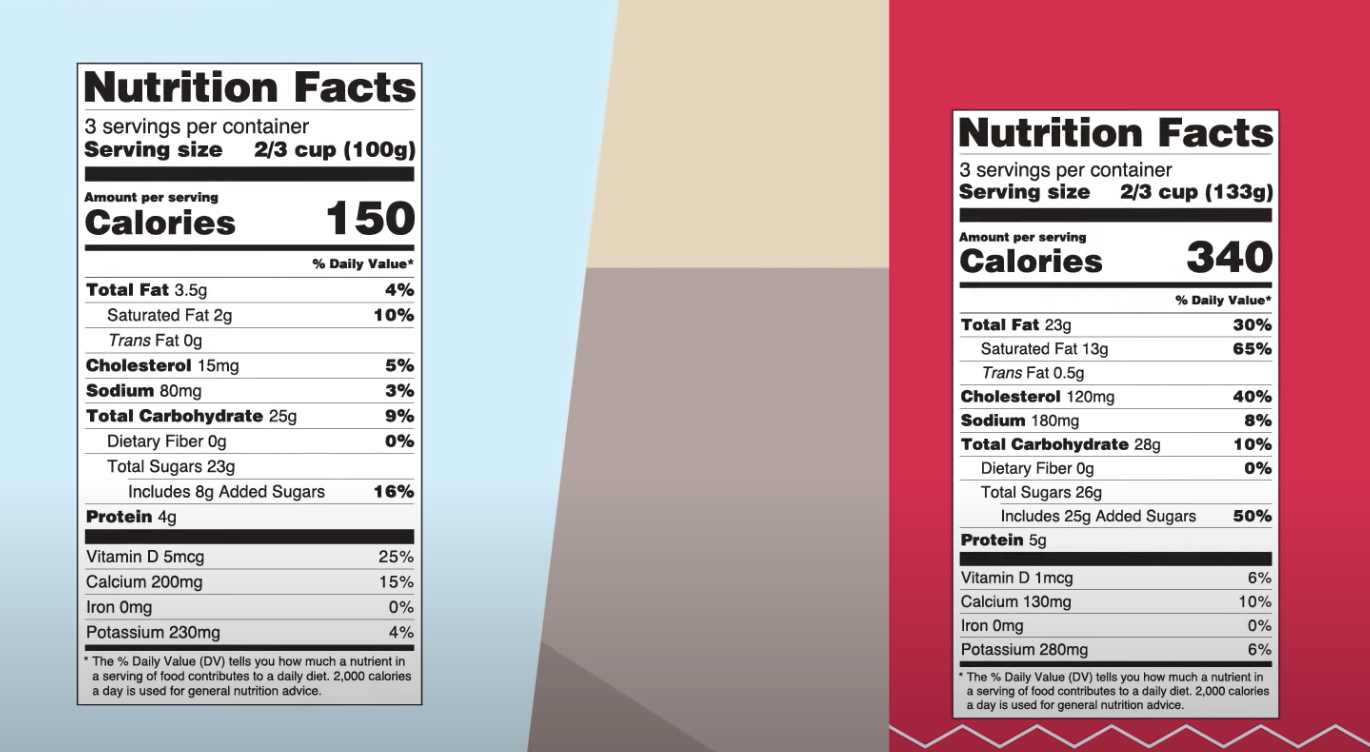
Including added sugars, the _____ food has less sugar.
Incluyendo los azúcares añadidos, el alimento _____ tiene menos azúcar.

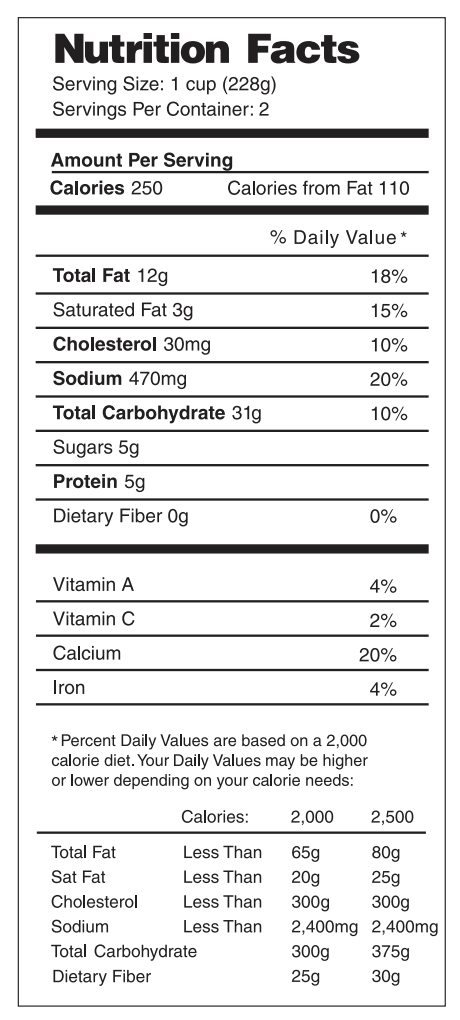
Some labels tell you how many calories of food came from fat. It is listed as "Calories from Fat." How many calories from fat does this food have?
Algunas etiquetas le dicen cuántas calorías de los alimentos provienen de la grasa. Está catalogado como "Calorías de grasa". ¿Cuántas calorías de grasa tiene este alimento?
250
110
1
228
MATH TIME! 👀 Of the 250 calories, 110 calories of this food are calories from fat. What percentage of calories of this food are from fat?
use this equation → 110 ÷ 250 = _____ (move decimal 2x to the right)
¡HORA DE MATEMÁTICAS! 👀 De las 250 calorías, 110 calorías de este alimento son calorías de grasa. ¿Qué porcentaje de calorías de este alimento proviene de la grasa?
usa esta ecuación → 110 ÷ 250 = _____ (mueve el decimal 2x a la derecha)
360%
44%
22%
18%

