
Font size
 Worksheets
SCSHS Biology Unit 2 revision
Total questions: 80
Worksheet time: 53mins


What number(s) on the graph represents the THRESHOLD level of stimulus?
1 and 5
2
3
6


What is the region where nerve cells meet called?
Synapse
Cleft
Junction
Axon terminal

Another name for a nerve impulse is
Electrical signal
Action potential
Neurotransmitter
Axon terminal
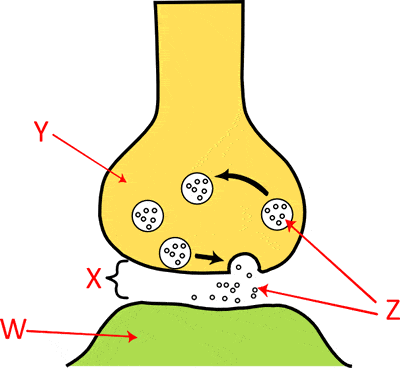
Z
Axon Terminal Button
Neurotransmitters
Dendrite
Synapse

5 shows ____ diffusing across the synaptic cleft.
neurotransmitters
calcium ions
sodium ions

X is .....
Na+
Ca2+
neurotransmitter
K+
A 3 month old baby contracts a virus called whooping cough (pertussis) after receiving the first of a sequence of 3 necessary DPT vaccines designed to prevent 3 diseases (diphtheria, pertussis, and tetanus). The vaccines are given at 2, 4, and 6 months of age to allow the body to develop specific immunity against these diseases. After the infant recovered from the disease, the doctor informed the parents that from now on the infant would only need the DT (diphtheria, tetanus) part of the vaccine. Why does the infant only need the DT vaccine?
The infant had the first of a series of vaccines which caused the disease
The infant had the pertussis disease and has already produced antibodies against the disease.
The infant had the first of a series of vaccines which protected him from getting the disease.
The infant had the pertussis disease and will get diphtheria in the future.

An immune response that occurs in the human body is shown above. This activity helps to do which of the following?
Produce antibiotics to control disease
Provide protection against a specific pathogen
Provide protection against all types of pathogens
Eliminate harmful gene alterations
After an initial infection, B-cells recognize the measles virus. How is this helpful in human immune response?
The B-cells use this recognition to defend the body against other pathogens, such as bacteria.
The B-cells more quickly recognize and respond to any other virus that invades the body.
The B-cells produce antibodies more quickly if the measles virus is encountered again.
The B-cells transfer this recognition to T-cells, which will then devour the viruses.
What is the body's first line (non-specific) of defense against infection by foreign organisms?
antibodies
lymph nodes
white blood cells
the skin
White blood cells are an important part of the human immune response. Two types of white blood cells, neutrophils and macrophages, act as phagocytes. Phagocytes perform which of the following functions in the human body?
They produce antibodies.
They bind to antigens and develop into plasma cells
They form a barrier against pathogens.
They engulf and destroy bacteria
Although vaccines cannot be used to treat a person who is sick, they can help to prevent infections. Vaccinations tell the body to create "memory cells", which will function later to create antibodies against certain pathogens. When a person is vaccinated, what are they injected with?
antibodies to a disease bacterium
live, inactive viruses
weakened viruses or antigens from the virus
blood from a person who has had the disease
This type of immunity can be called nonspecific and refers to the bodies defenses that are present since birth.
resistance
adaptive immunity
acquired immunity
innate immunity
This type of immunity is acquired during one's lifetime. It is induced by antigens that invade the body.
innate immunity
adaptive immunity
nonspecific immunity
normal microbiota
A part of the innate immunity. The bodies defensive response caused by microbial infection, physical damage or chemical agents.
phagocytosis
edema
cytotoxicity
Inflammation
The response to an infection. Causes the area to redden, swell, and feel warm.
Fever
Mucus
Dilation
Inflammation
Which of the following is NOT a type of phagocyte
Macrophage
Dendritic Cell
T Cell
A phagocyte has what capability:
Detect specific antigens
Produce antibodies
Engulf any materials considered 'non-self'
Produce mucous
B cells are:
Erythrocytes that detect antigens
Lymphocytes that mature in the thymus
Lymphocytes that begin in the bone marrow and mature in the thymus
Lymphocytes that begin in the bone marrow and mature in the bone marrow

Which of the following is found on the surface of pathogens causing an immune response
Antibody
Antigen-binding site
Prostaglandin
Antigen
What are antibodies
Y-shaped protein used by the immune system to identify and neutralize foreign objects such as pathogenic bacteria and viruses.
Y-shaped cells used by the immune system to identify and neutralize foreign objects such as pathogenic bacteria and viruses.
Y-shaped antigens used by the immune system to identify and neutralize foreign objects such as pathogenic bacteria and viruses.
Y-shaped protein used by the immune system to identify and neutralize objects that are considered 'self'
How do cytotoxic T cells destroy infected/cancerous cells?
Release free radicals onto the cell
Insert pore like structures called Perforins into their membranes
Engulf the cell by phagocytosis
Release antibodies which cause the cell to burst.
Which type of cells listed below have antibodies on their cell surface?
B cells
T cells
dendritic cells
macrophages
Specialized proteins that attach to specific antigens
Innate Immunity
Antigen
Antibodies
Leukocytes
Foreign substances that invade the body
Neutrophils
Innate Immunity
Antigen
Phagocytes
Lymphocytes that travel to the thymus gland to mature
Antigen
T- Lymphocytes
B- Lymphocytes
Phagocytes
Cells that chew up invading organisms
Phagocytes
Leukocytes
Neutrophils
Antiobodies
Phagocytes that primarily attack bacteria
Phagocytes
Antigen
Neutrophils
Antibodies
An immune response that occurs in the human body is shown above. This activity helps to do which of the following?
Produce antibiotics to control disease
Provide protection against a specific pathogen
Provide protection against all types of pathogens
Eliminate harmful gene alterations
After an initial infection, B-cells recognize the measles virus. How is this helpful in human immune response?
The B-cells use this recognition to defend the body against other pathogens, such as bacteria.
The B-cells more quickly recognize and respond to any other virus that invades the body.
The B-cells produce antibodies more quickly if the measles virus is encountered again.
The B-cells transfer this recognition to T-cells, which will then devour the viruses.
Which of these is an example of acquired immunity? (TWO correct answers, select both)
Macrophages
T-Cells
Antibodies
Antigens
B-lymphochytes...
Actively destroy pathogens
Secrete antibodies
Act as markers for T-cells to identify foreign particles
Create new lymph
what is osmoregulation?
Control of water and salt in the body
Control of blood pressure in the body
Control of blood glucose in the body
What is Homeostasis ?
is the maintenance of a constant internal environment
is the maintenance of a constant external environment
is the maintenance of a constant living environment
High body temperature in humans is regulated by all these except
sweating
falling of skin hairs
vasodilation
vasoconstriction
Insulin and glucagon are produced by
the liver
the pancreas
the kidneys
When you are hot, your body sweats to cool you down. This means your temperature went above normal and your body sweats to counteract that change to bring you back to normal. What kind of feedback loop would this be?
Negative Feedback Loop
Positive Feedback Loop
Neutral Feedback Loop
Linear Feedback Loop
These detect changes in the environment
Control Center
Sensors
Communication System
Target
Thermoregulation means?
Maintain temperature
Maintain water levels
Maintain heart rate
Maintain breathing
Positive Feedback loops are...
Counteract changes that move above or below set values.
more common
regulate body temp
Purposeful pushes above normal set values.
Negative Feedback loops are...
Purposeful pushes above normal set values.
Counteract a change to bring it back to normal set values
Are rare
Help with childbirth
receives the message and coordinates a response
control center
effector
glucagon
homeostasis

Which component of homeostasis does this image represent?
Receptor (sensor)
Control Center
Effector

This graph shows an example of...
Blood sugar regulation
Homeostasis
Negative feedback
Positive feedback
What is the role of a sensor (sometimes called a receptor) in helping an organism maintain homeostasis?
Receives messages sent by the control center
carries out a response to restore internal conditions
detects stimuli and sends information to the control center
compares current conditions with ideal values for those conditions
What are the 3 components "players" of the feedback loop/system
Hormones
Receptor
Effector
Controlled conditions
Control center
The presence of large thorns on roses is what type of defence?
Chemical
Mechanical
Physical
Mimicry
The plant cell has a cellulose cell wall which acts as another barrier against infection. Identify this type of defence.
Physical
Chemical
Mimicry
Mechanical

Identify the type of defence provided by the berries of the deadly nightshade plant.
Mechanical
Chemical
Physical
Mimicry
Which of the following is NOT an example of a plant structure for defense?
bitter taste and sap
hard bark and surface wax
closing its stomata
sharp spines and thorns
Which defense structure would best discourage animals from eating or landing on a plant?
Fruits
Pistil
Thorns
Stamen
Plants have adaptations to protect them from animals.
True
False
Poison is an a plant defense that _____________.
attracts pollinators to the plant
makes animals sick or itchy
pollinates the plant
helps with photosynthesis
What is an example of a plant defense?
spikes and thorns
poisonous fruits and bitter taste
waxy oils and sap
All of the above
Which best describes structures of flowering plant that helps in its defense?
leaves and pistils can grow thorns that injure attackers
Anthers and stamens can secrete waxes to lure attackers
petals and leaves make oils that harm predators
stems and anthers release scents to attract predators
What is one way a plant protects itself?
colorful flowers to attract pollinators
poisonous leaves that can cause itchyness or sickness
by releasing carbon dioxide
releasing excess water out of their stomata

The main function of stomata is to
capture sunlight
protect leaves from insects
allow gases to move rapidly in/out of leaves
release sugars into the atmosphere
What would make a plant open its stomata?
too much water in the soil
not enough water in the soil
too much sun
It is a bright sunny day and it has not rained in 3 weeks. The stomata on plants will be:
open
closed

