
 Worksheets
Chapter 1 Review: Imperialism/Scramble for Africa
Total questions: 63
Worksheet time: 32mins
Which of these best describes the Scramble for Africa?
Imperialist powers sliced Africa amongst themselves by drawing borders on a map
Diplomats worked with tribal leaders to determine how to colonize countries in Africa
European countries worked to finance capital expansion in African nations through loans.
The United States used the Roosevelt Corollary to prevent nations from colonizing Africa.
Define "exploit."
To give someone their fair share of the credit or pay.
To clearly define something.
To treat unfairly by using someone’s work or ideas and giving them very little in return
A secret agreement or cooperation especially for an illegal or deceitful purpose
Which of these was NOT a reason European powers colonized Africa and Asia?
They wanted to acquire power and prestige
They wanted to gain access to natural resources such as gold, rubber, timber, and metals
They had a mission to civilize "inferior races"
They wanted to protect weaker nations from other foreign influences
Define "imperialism."
the policy of extending the rule or authority of an empire or nation over foreign countries, or of acquiring and holding colonies.
loyalty and devotion to a nation
the power to do as one pleases
an area of land under the jurisdiction (rule) of a ruler or state.
The following would have followed what motive: Control Trade
Economic Interest
Political and Military Interest
Exploratory
Religious Goals
Social Darwinism/ Ideological/ Humanitarian
The following would have followed what motive: Find investments
Economic Interest
Political and Military Interest
Exploratory
Religious Goals
Social Darwinism/ Ideological/ Humanitarian
The following would have followed what motive: Desire to make money
Economic Interest
Political and Military Interest
Exploratory
Religious Goals
Social Darwinism/ Ideological/ Humanitarian
The following would have followed what motive: Desire to make money
Economic Interest
Political and Military Interest
Exploratory
Religious Goals
Social Darwinism/ Ideological/ Humanitarian
The following would have followed what motive: Hire cheap labor
Economic Interest
Political and Military Interest
Exploratory
Religious Goals
Social Darwinism/ Ideological/ Humanitarian
The following would have followed what motive: Create New Markets
Economic Interest
Political and Military Interest
Exploratory
Religious Goals
Social Darwinism/ Ideological/ Humanitarian
The following would have followed what motive: Gain power in comparison to other countries
Economic Interest
Political and Military Interest
Exploratory
Religious Goals
Social Darwinism/ Ideological/ Humanitarian
The following would have followed what motive: Territorial Expansion
Economic Interest
Political and Military Interest
Exploratory
Religious Goals
Social Darwinism/ Ideological/ Humanitarian
The following would have followed what motive: Nationalism (Pride in one’s country)
Economic Interest
Political and Military Interest
Exploratory
Religious Goals
Social Darwinism/ Ideological/ Humanitarian
The following would have followed what motive: Increased Competition and political tension
Economic Interest
Political and Military Interest
Exploratory
Religious Goals
Social Darwinism/ Ideological/ Humanitarian
The following would have followed what motive: Spread Christianity through missionary work
Economic Interest
Political and Military Interest
Exploratory
Religious Goals
Social Darwinism/ Ideological/ Humanitarian
The following would have followed what motive: Assimilate European values and beliefs into other cultures
Economic Interest
Political and Military Interest
Exploratory
Religious Goals
Social Darwinism/ Ideological/ Humanitarian
The following would have followed what motive: End slave trade in Africa
Economic Interest
Political and Military Interest
Exploratory
Religious Goals
Social Darwinism/ Ideological/ Humanitarian
The following would have followed what motive: Based on the belief that the white race was superior and other cultures were primitive
Economic Interest
Political and Military Interest
Exploratory
Religious Goals
Social Darwinism/ Ideological/ Humanitarian
The following would have followed what motive: "White race had the duty to civilize or modernize the rest of the world"
Economic Interest
Political and Military Interest
Exploratory
Religious Goals
Social Darwinism/ Ideological/ Humanitarian
The following would have followed what motive: Social Darwinism- Only the strongest nations will survive
Economic Interest
Political and Military Interest
Exploratory
Religious Goals
Social Darwinism/ Ideological/ Humanitarian
The following would have followed what motive: Disrupts the current way of life for indigenous people
Economic Interest
Political and Military Interest
Exploratory
Religious Goals
Social Darwinism/ Ideological/ Humanitarian
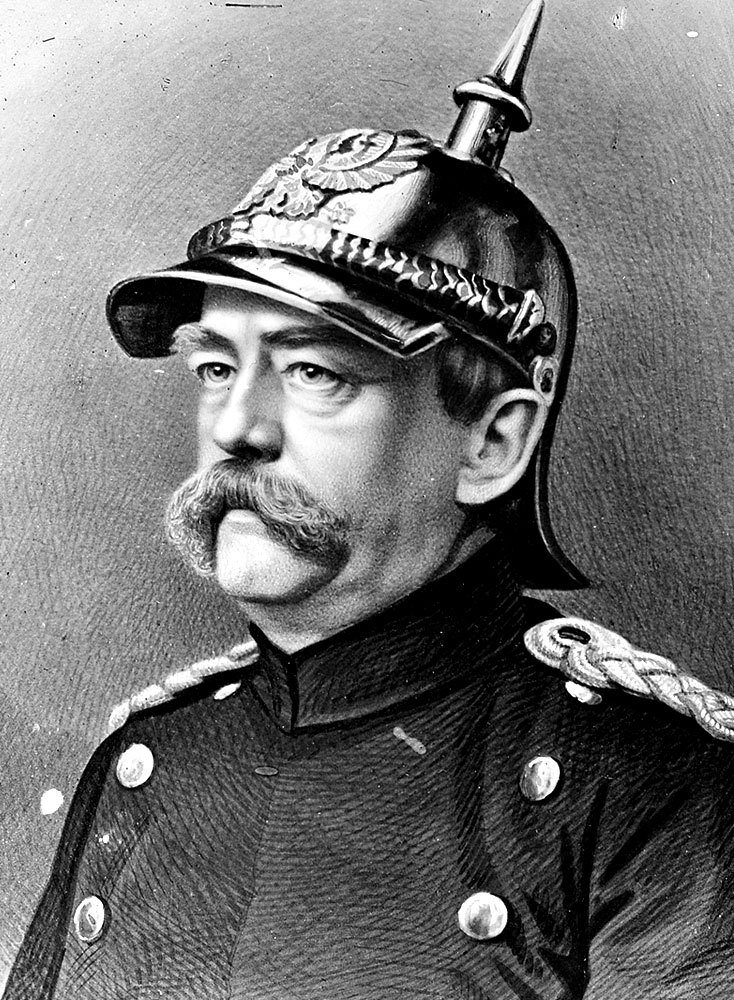
Who is this?
Herr Partenheimer
Adolf Hitler
Napoleon Bonaparte
Otto von Bismarck
Who was Otto von Bismarck?
He invaded Germany in the early 19th century.
He was responsible for starting World War I.
He was responsible for uniting Germany and was its first chancellor.
He wrote the Federalist Papers.
What did Germany look like before unification?
It was a loose collection of various German-speaking states, kingdoms and principalities.
It looks exactly like it does today.
The Kingdom of Baden-Württemberg was the biggest military power.
It shared land with Finland.
What was the Franco-Prussian War?
War between Bavaria and Prussia
War between Prussia and France
War between America and Germany
War between Prussia and the Austro-Hungarian Empire
What year did Germany unify?
1806
1871
1990
2019
Which map represents Germany at the time of unification?
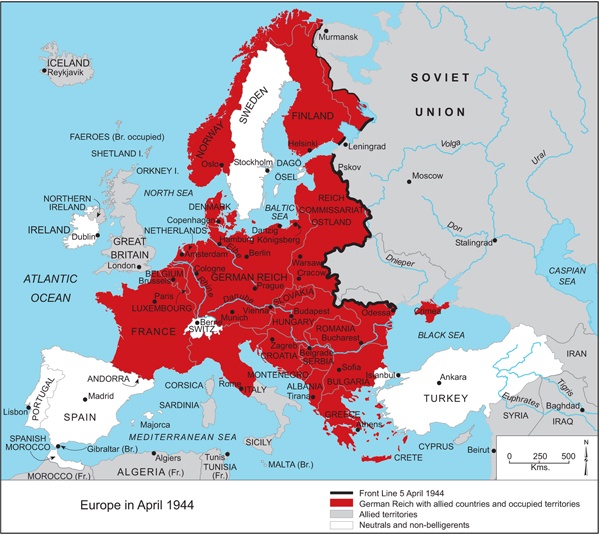
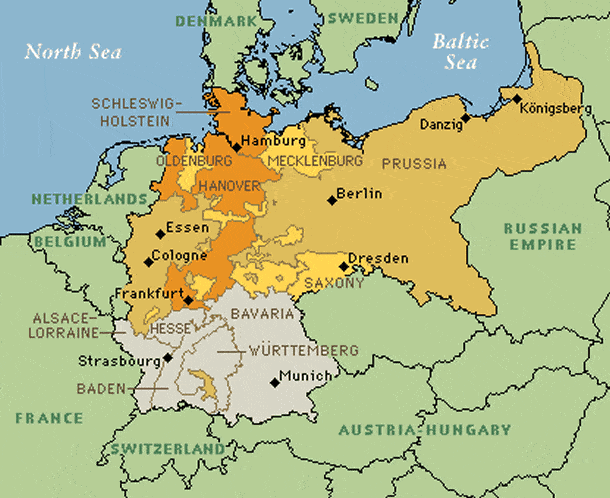
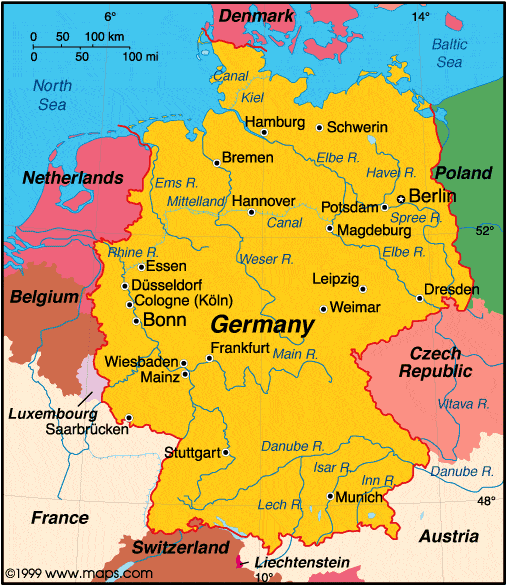
This is the name of the last war that Germany engages in before their unification:
Franco-Prussian War
Austro-Prussian War
World War I
Korean Conflict
Who most likely said the following: "it is not by speeches and majority resolutions that the great questions of the time are decided – that was the big mistake of 1848 and 1849 – but by iron and blood."
Garibaldi
Cavour
Simon Bolivar
Bismarck
This is the title of the leader of Germany:
Chancellor
King
Kaiser
Prime Minister
What does Kulturkampf mean?
Conflict between government and church
Conflict between the people and government
Conflict with another nation
None of the above
The Prussian king ______ was announced as the German Emperor.
Kaiser William I
Kaiser William II
Victor Immanuel
• Appointment of Otto von Bismarck as Chancellor
• Austro-Prussian War, 1866
• Franco-Prussian War, 1870–1871
These events led directly to
the unification of Germany
foreign rule in Italy
the rebellion of the Sepoys
an alliance between Serbs and Russians
Who was one of the most famous authors of the day that saw Imperialism as a mission to "Civilize Non-Europeans?"
John Green
Henry Stanley
David Livingstone
Rudyard Kipling
What country was the economic leader in the 1800's?
Great Britain
Germany
United States
Japan
Imperialism started because of which of the following reasons?
Nationalism - Empire Building
Economic - desire for new markets and resources
Western belief in cultural superiority
None of the options are a reason the policy of Imperialism was adopted
David Livingstone was a Scottish minister that went to what continent to spread Christianity?
Europe
North America
South America
Africa
What was the name of the journalist that was hired to find David Livingstone?
Henry Stanley
Joseph Kipling
John Cabot
Ryan Bunnell
In the late 1800's, what were European's eager to read about?
adventure in far off lands
life on the frontier
large battles at sea
space travel
How many countries were present at the Berlin Conference?
10
14
50
39
Britain took over Egypt to ensure access to this canal
Suez
Panama
Philipine
Spanish
Who benefited most from imperialism?
European nations
Native Americans
African Kingdoms
Indian Kingdoms
Which two African countries were the only to remain independent throughout the era of Imperialism?
Angola & Egypt
Cape Colony & Rhodesia
Nigeria & German Southwest Africa
Liberia & Ethiopia
This water route drastically saved time for Europeans when trading with the East. It was controlled by both the French and then the British.
The Nile River
The Tigris River
The Suez Canal
The Panama Canal
Who controlled the Congo Free State?
Queen Victoria
The Qing Dynasty
Benito Mussolini
King Leopold II
True or False: Most of Africa was undiscovered from until the 1800s because of difficult and unknown geography and tropical disease.
True
False

Which statement best reflects an effect of Imperialism in Africa?
Land was distributed equally between social classes.
Territorial divisions were primarily established using tribal boundaries.
Timbuktu became the center of great learning.
Natural resources were exploited for the benefit of European powers.

All of the headlines above refer to-
Causes of the Boer War
Motives for Imperialism
Actions of Nationalism
Effects of the Crimean War
Which was not a reason for European imperialism in the 1800s?
Nationalistic pride and competition
Economic competition for new markets
Belief in superiority of the European way of life
Desire to increase the number of soldiers for their armies

What does the phrase "White Man's Burden: in this excerpt refer to?
The belief that Europeans had a duty to "civilize" primitive people.
The challenge of opening up trade with remote regions.
The advantage non-Europeans would gain by trading with Europeans.
The idea that bigger, stronger Europeans could carry more baggage.


What is Social Darwinism?
Survival of the fittest in society
The idea that some races are better than others
The idea that you need to "civilize" other cultures
all of these options

What imperialism motive is being shown by this image?
Ideological
Political
Economic
Religious

This cartoon suggests that political power is often acquired through
the inheritance of land
market demands
religious conversion
the use of technology

What was the motive for Belgium and King Leopold to take over the Congo?
Rubber
Oil
Cotton
Iron

What revolution made France and Great Britain want to colonize Africa? 1815-1875.
U.S.A.
Industrial
French

King Leopold represented which European power?
Spain
Belgium
Austria
Romania

The Suez Canal opened in ______ in 1869?
Egypt
Ethiopia
Zimbabwe
Morroco

