wayground logo

Free Printable Worksheets

Font size

S
M
L
XL
Worksheets

Chemistry II Unit 3 Review

Total questions: 110

Worksheet time: 4hrs 27mins

Name
Class
Date
1.

Name this molecule:

a)

methane

b)

ethane

c)

propane

d)

butane

2.

What is the name of this hydrocarbon?

a)

1 - butane

b)

1 - butene

c)

2 - butane

d)

2 - butene

3.

What chemical is this? (C5H10)

a)

Pentene

b)

Pentane

c)

Hexane

d)

Heptene

4.
Give the name of this compound...
C3H8
a)
Propene
b)
Butyne
c)
Butene
d)
Propane
5.
Which of the following compounds is an example of hydrocarbon?
a)
CO2
b)
C2H6
c)
C2H5OH
d)
CH3COOH
6.
Which of the following elements must be present in any organic compound?
a)
Carbon
b)
Oxygen
c)
Potassium
d)
Hydrogen
7.
Hydrocarbons are compounds that contain
a)
  Carbon and Nitrogen
b)
Carbon and Hydrogen 
c)
  Carbon, and Oxygen
d)
Carbon, Oxygen, and  Hydrogen 
8.

What is the correct name for the alkyne shown?

a)

butyne

b)

1-butyne

c)

2-butyne

d)

1-methyl-1-propyne

9.

is the alkene with 3 carbons in its chain.

a)

Ethene

b)

Propene

c)

Methene

d)

Decene

10.

Is the name of triple bonded, unsaturated hydrocarbons.

a)

Alkanes

b)

Alkenes

c)

Alkynes

d)

Tanins

11.

Is the name of doubled bonded, unsaturated hydrocarbons.

a)

Alkanes

b)

Alkenes

c)

Allkynes

d)

Tanins

12.

Is the name of single bonded, saturated hydrocarbons.

a)

Alkanes

b)

Alkenes

c)

Alkynes

d)

Tanins

13.

If an alkane has 10 carbon atoms, how many hydrogen atoms will it have?

a)

20

b)

22

c)

40

d)

42

14.

Name this molecule:

a)

pentane

b)

hexane

c)

heptane

d)

octane

15.

Name this molecule:

a)

methane

b)

ethane

c)

propane

d)

butane

16.

Name this molecule:

a)

methane

b)

ethane

c)

propane

d)

butane

17.

Name this molecule:

a)

methane

b)

ethane

c)

propane

d)

butane

18.

Which property of carbon is important in the forming of many types of organic compounds

a)

carbon has 6 electrons

b)

carbon has 6 protons

c)

carbon has 4 valence electrons

d)

carbon can only bond with hydrogen

19.

Because carbon has 4 valence electrons

a)

it can form up to 4 covalent bonds

b)

it can form ionic bonds

c)

it can form only double bonds

d)

it can form covalent bonds with H only

20.

The carbons circled in red...

a)

are double bonded

b)

are sharing two pairs of electrons

c)

are sharing three pairs of electrons

d)

form a single covalent bond

21.

What functional group is shown?

a)

amide

b)

ketone

c)

organic acid

d)

amine

22.

What is a functional group?

a)

Atoms or group of atoms that give specific characteristics to a molecule

b)

Group of molecules that make up a group of atoms

c)

Group of molecules that give specific characteristics to an atom

d)

Group of atoms that give specific characteristics to an element

23.

Name the structure.

a)

4-hexanol

b)

3-hexanol

c)

4-heptanol

d)

3-heptanol

24.
Name this structure.
a)
propanal
b)
propanol
c)
propanoic acid
d)
propanone
25.

Name this structure.

a)

propanal

b)

1-propanol

c)

propane

d)

3-propanol

26.

What is the functional group of alcohols?

a)

–NH2

b)

–COOH

c)

–CHO

d)

–OH

e)

–NO2

27.
What is this functional group?
a)
ketone
b)
amide
c)
ether
d)
amine
28.
a)
amine
b)
ketone
c)
carboxylic acid
d)
ether
29.
Butanal, butanone, and diethyl ether have different properties because the molecules of each compound differ in their
a)
numbers of carbon atoms
b)
numbers of oxygen atoms
c)
types of functional groups
d)
types of radioactive isotopes
30.
What is the organic family for propanol?  
a)
organic halides
b)
alkenes
c)
alcohols
d)
aromatics
31.
What is the organic family for propanal?  
a)
aldehydes
b)
esters
c)
ketones
d)
ethers
32.
What is the organic family for propanone (acetone)?  
a)
aldehydes
b)
esters
c)
ketones
d)
carboxylic acids
33.

The name of the substance in the image is...

a)

ethanol

b)

propanol

c)

ethane

d)

propane

34.
Which of the following is not a halide?
a)
Cl
b)
S
c)
Br
d)
I
35.

In LiH, hydrogen has an oxidation number of

a)

-1

b)

+1

c)

-2

d)

+2

36.

Ca2+ has an oxidation number of

a)

+2

b)

-2

c)

+1

d)

-1

37.

Name the compound.

a)

nitrogen oxide

b)

nitrogen oxygen

c)

nitrogen dioxide

d)

dinitrogen monoxide

38.

Name the compound.

a)

copper sulfate

b)

copper (I) sulfate

c)

copper (II) sulfate

d)

copper monosulfate

39.

Give the chemical formula. Strontium Bromide

a)

Sr2BrSr_2Br  

b)

SrBr2SrBr_2  

c)

SrBrSrBr  

d)

Sr2Br2Sr_2Br_2  

40.

Give the formula. Sulfur Hexachloride.

a)

S6ClS_6Cl  

b)

SCL6SCL_6  

c)

SCl6SCl_6  

d)

SClSCl  

41.

How many electrons are in a triple bond?

a)

6

b)

3

c)

8

d)

2

42.

Nitrate

a)
NO-
b)
NO2-
c)
NO3-
d)
NO4-
43.

Chromate

a)
CrO42-
b)
CrO32-
c)
CrO22-
d)
CrO2-
44.

OH

a)

hydrogen carbonate

b)

oxonium

c)

hydroxide

d)

acetate

45.

Sulfate

a)

SO32–

b)

HSO4

c)

SO42–

d)

CH3COO

46.
According to VSEPR, molecules adjust their shapes to keep which of the following as far away as possible?
a)
Pairs of valence electrons
b)
Inner shell electrons
c)
Mobile Electrons
d)
Electrons closest to the nucleus
47.
What is the VSEPR theory used to predict?
a)
Bond Strength
b)
Polarity
c)
Molecular Shape
d)
Electronegativity
48.
 A lone pair is defined as
a)
A pair of bonding electrons
b)
One non-bonding electron
c)
A pair of non-bonding electrons
d)
A pair of electrons on the central atom
49.
Which of the following shapes has an unshared pairs of electrons on the central atom? 
a)
Bipyramidal
b)
Bent
c)
Trigonal Planar
d)
Tetrahedral
50.
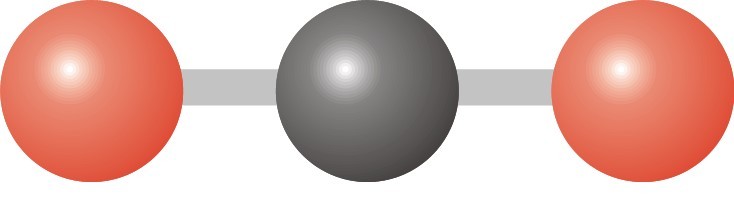
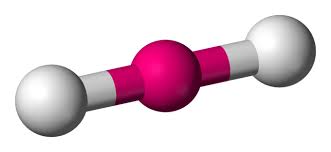
Which molecule would have this molecular geometry?
a)
BF3
b)
CH4
c)
PCl5
d)
CO2
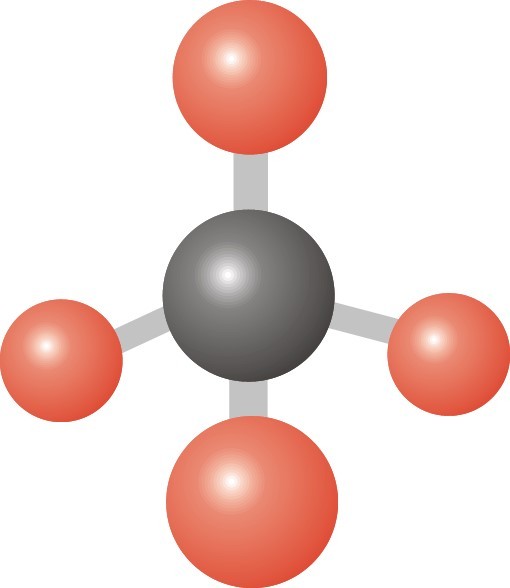
51.
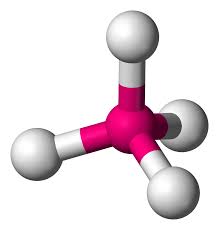
What molecule could this be? 
a)
BF3
b)
CH4
c)
H2O
d)
CO2
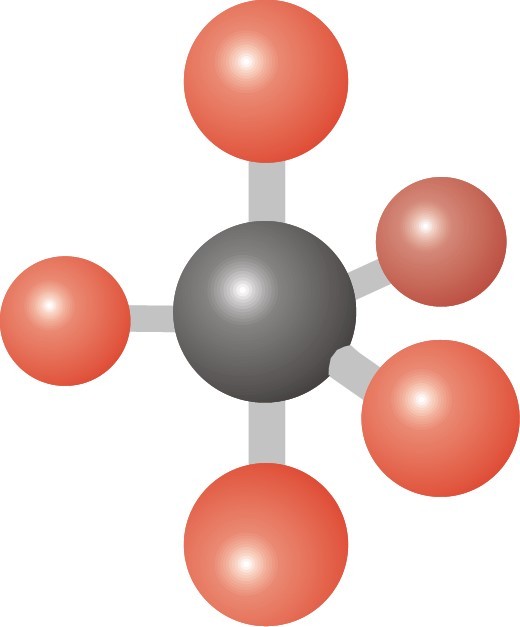
52.
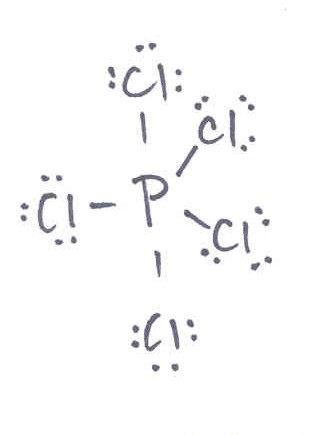
What molecule could this be? 
a)
H2O
b)
CCl4
c)
PCl5
d)
NaCl
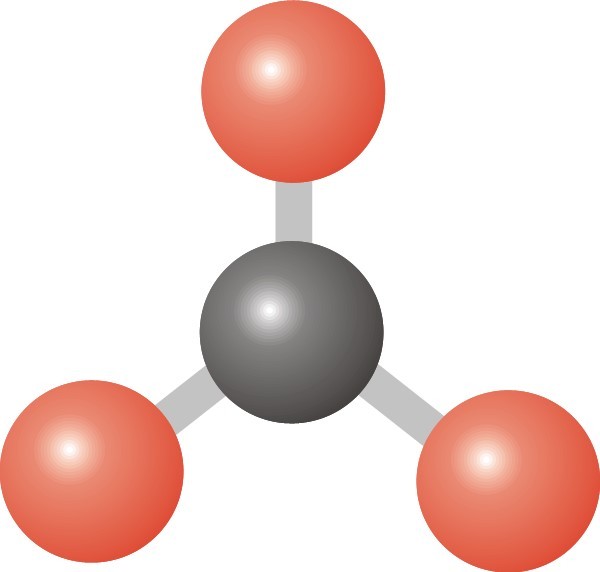
53.
Who could this molecule be?
a)
CH4
b)
CO2
c)
PCl5
d)
BF3
54.

What molecular geometry would PH3 have?

a)

Trigonal Pyramidal

b)

Trigonal Bipyramidal

c)

Bent

d)

Linear

55.
A molecule with a lone pair on the central atom would have the same electron and molecular geometry
a)
True
b)
False
56.
Consider the molecule below.  Determine the molecular geometry at each of the 2 labeled carbons.
a)
C1 = tetrahedral, C2 = linear
b)
C1 = trigonal planar, C2 = bent
c)
C1 = bent, C2 = trigonal planar
d)
C1 = trigonal planar, C2 = tetrahedral
57.

Is this molecule polar?

a)

Yes

b)

No

58.

What is molecular shape for this shape?

a)

Tetrahedral

b)

Trigonal planar

c)

Trigonal bipyramidal

d)

Trigonal pyramidal

59.
Which of the following is a polar molecule?
a)

CH4

b)

Xe

c)

H2O

d)

CO2

60.
Which formula represents a nonpolar molecule?
a)

HBr

b)

H2S

c)

CBr4

d)

PCl3

61.

Is this molecule polar or non-polar?

a)

Polar

b)

Non-polar

62.
In covalent bonds, electrons are ___________.
a)

transferred

b)

gained

c)

lost

d)

shared

63.
In this Lewis structure, the symbol above F means...
a)

electrons are being transferred to Fluorine

b)

electrons are less attracted to F than H

c)

electrons are more attracted to F than H

d)

Fluorine has formed a cation

64.

A diatomic molecule like O2 is always_______ because electrons are shared ________.

a)

nonpolar; equally

b)

polar; equally

c)

nonpolar; unequally

d)

nonpolar; unequally

65.
For carbonate ions, what is the bond strength between C and O
a)
C-O (single bond)
b)
C=O (double bond)
c)
C≡O (triple bond)
d)
C-O(between single and double bond)
66.
For carbonate ions, how many resonance structures can be drawn ?
a)
2
b)
3
c)
4
d)
5
67.
Define the term resonance structure
a)
Delocalization of electrons in an atom
b)
Delocalization of π electrons within a molecule
c)
Spread of π electrons in an atom
d)
Spread of π electrons within a molecule
68.
How many resonance structure can you draw for benzene?
a)
1
b)
2
c)
3
d)
4
69.

The Lewis structure of N2H2 shows __________.

a)

a nitrogen-nitrogen triple bond

b)

a nitrogen-nitrogen single bond

c)

each nitrogen has one lone pair

d)

each nitrogen has two lone pairs

e)

each hydrogen has one lone pair

70.

In the nitrite ion (NO2-), __________.

a)

both bonds are single bonds

b)

both bonds are double bonds

c)

both bonds are the same because of resonance

d)

there are 20 valence electrons

e)

there is one single and one double bond

71.

Resonance structures differ by __________.

a)

number and placement of electrons

b)

number of electrons only

c)

placement of atoms only

d)

number of atoms only

e)

placement of electrons only

72.

This carbon atom went through ....

a)

sp hybridization

b)

sp2 hybridization

c)

sp3 hybridization

d)

dsp3 hybridization

73.

What is the hybridization of a linear molecule?

a)

sp

b)

sp2

c)

sp3

d)

sp3d

74.

What is the hybridization of this molecule shown above

a)

sp

b)

sp2

c)

sp3

d)

sp4

75.

What is the bond angle for the CH4 molecule?

a)

120°

b)

107°

c)

109.5°

d)

90°

76.
The ability of an atom to attract electrons to itself is called
a)
geometry
b)
conductivity
c)
electronegativity
d)
ionization energy
77.

Molecule CO2

a)

undergoes sp2 hybridisation

b)

has 2 σ bond and 2 π bond

c)

undergoes sp3d hybridisation

d)

is trigonal planar molecule

78.

What is the hybridization of PF5?

a)

sp3

b)

sp3d

c)

sp3d2

d)

sp2

79.
Which statement is TRUE, based on the diagram provided?
a)
atomic orbital overlap to produce sigma bond
b)
s orbital overlap to produce π bond
c)
s orbital overlap with s orbital to produce sigma bond
d)
p orbital overlap to produce π bond
80.
Which of the statement is TRUE?
a)
s orbital overlap with p orbitals to form sp hybrid orbital
b)
s orbital with two p orbitals to form one sp2 hybrid orbital
c)
s orbital with two p orbitals to form two sp2 hybrid orbital
d)
s orbital with two p orbitals to form three sp2 hybrid orbital
81.
Which molecule will undergo sp3 hybridization?
a)
CO2
b)
NH3
c)
SO3
d)
NO2
82.
Sulfur atom undergo
a)
sp hybridization
b)
sp2 hybridization
c)
sp3 hybridization
d)
dsp3 hybridization
83.
Nitrogen atom undergo
a)
sp hybridization
b)
sp2 hybridization
c)
sp3 hybridization
d)
dsp3 hybridization
84.
Sulfur atom undergo
a)
sp hybridization
b)
sp2 hybridization
c)
sp3 hybridization
d)
dsp3 hybridization
85.
Nitrogen atom undergo
a)
sp hybridization
b)
sp2 hybridization
c)
sp3 hybridization
d)
dsp3 hybridization
86.
How many sigma and pi bonds does this have?
a)
1 sigma and 1 pi
b)
2 sigma and 1 pi
c)
1 sigma and 2 pi
d)
2 sigma and 2 pi
87.

How many pi bonds are in the following compound? Just put the number.

(a)  
88.
Pi bonds are formed by 
a)
side to side overlap of s orbitals
b)
end to end overlap of s orbitals
c)
side to side overlap of p orbitals
d)
end to end overlap of p orbitals
89.
How many sigma and pi bonds does this have? 
a)
3 sigma and 2 pi
b)
5 sigma and 5 pi
c)
5 sigma and 0 pi
d)
0 sigma and 5 pi
90.
How many sigma bonds does this have? 
a)
0
b)
1
c)
2
d)
3
91.
How many pi bonds are there in a double bond? 
a)
0
b)
1
c)
2
d)
3
92.
How many pi bonds are there in a single bond? 
a)
0
b)
1
c)
2
d)
3
93.
How many sigma bonds are there in a triple bond? 
a)
0
b)
1
c)
2
d)
3
94.

a single covalent bond that is formed when an electron pair is shared by the direct overlap of bonding orbitals

a)

covalent bond

b)

pi bond

c)

coordinate covalent bond

d)

sigma bond

95.

What type of intermolecular forces would be between two of the molecules in the picture?

a)

dispersion

b)

ion-dipole

c)

hydrogen bonding

d)

ion-ion

e)

dipole-dipole

96.

Reorder the following in terms of strength of intermolecular forces.

a)

Dispersion

b)

Dipole-Dipole

c)

Hydrogen Bonding

1)
2)
3)
97.
Which noble gas has the highest boiling point?
a)
Xe
b)
Kr
c)
Ar
d)
He
98.

For benzene; Which of the statements is/are correct?

a)

It is an aromatic compound.

b)

Its empirical formula is CH.

c)

It contains 3 π and 12 σ bonds.

99.
Which one is an empirical formula?
a)
H2O2
b)
C2H6O12
c)
CaCl2
d)
N2O8
100.
Which pair has the same empirical formula?
a)
NaCrO4 and Na2Cr2O7
b)
C2H4O2 and C6H12O6
c)
C3H6Oand C2H6O2
d)
CH4 and C2H6
101.
A formula with the lowest whole # ratio of elements in a compound is called
a)
Molecular Formula
b)
Chemical Formula
c)
Empirical Formula 
d)
Distance Formula
102.

Which one is the empirical formula?

C4H6

a)

CH

b)

CH3

c)

C2H3

d)

C4H6

103.
Find the percent composition of Cu2S?
a)
%Cu= 67.987 %S= 32.013
b)
%Cu= 79.854   %S= 20.145
c)
%Cu= 35.946   %S= 64.054
104.
A compound consists of 72.2% magnesium(Mg) and 27.8% nitrogen(N) by mass. What is the empirical formula?
a)
Mg4N3
b)
MgN2
c)
Mg3N
d)
MgN
105.
What is the molecular formula if the empirical formula is CH2O and the molecular molar mass is 180.18?
a)
CH2O
b)
C2H4O2
c)
C4H8O4
d)
C6H12O6
106.
What is the molecular formula for a compound with the empirical formula: K2SOand a molecular mass of 696g.
a)
K2SO
b)
K8SO16
c)
K8S4O
d)
K8S4O16 
107.
Glycerol has a molar mass of 92.09g/mol. Its percent composition is: 39.12% C, 8.75% H, and 51.12% O. What is the molecular formula for glycerol?
a)
C2H3O2
b)
CH2O
c)
C2H4O2
d)
C3H8O3
108.

Match the quantum number with its symbol.

a)

Principal Quantum Number

1.

n

b)

Angular momentum quantum number

2.

l

c)

Magnetic quantum number

3.

ml

d)

Spin quantum number

4.

ms

109.

Match the quantum number with what it tells us.

a)

Principal Quantum Number

1.

which shell

b)

Angular momentum quantum number

2.

which shape

c)

Magnetic quantum number

3.

which orbital

d)

Spin quantum number

4.

spin up or spin down

110.

Which of the following is the (n) / principal quantum number of 3d10?

a)

1

b)

2

c)

3

d)

4