
 Worksheets
Unit 2 Bonding and Nomenclature Review
Total questions: 60
Worksheet time: 2hrs 35mins
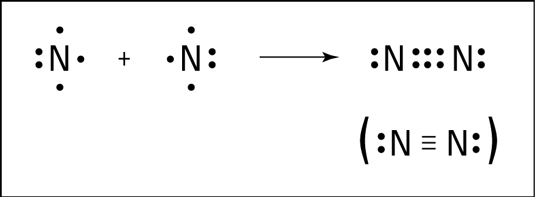
2. Ionic Bonding involves:
The transfer of protons
The transfer of neutrons
The transfer of electrons
None Of the above
3. What do atoms that form positive ions tend to do?
Tend to lose electrons
Tend to lose protons
Tend to gain electrons
Tend to gain protons
5. What happens when the sodium atom loses an electron?
It become negatively charged
It become positively charged
none
6. What usually forms the negative ion?
Nonmetals
Metal
None
7. Covalent compounds:
Share electrons
Transfer electrons
Neither

True or false? In naming ionic compounds,
the cation is always named first and the anion
second.
True
False

The correct name for LiCl is _______.
lithium monochloride
lithium(I) chloride
monolithium chloride
lithium chloride
monolithium monochloride

The correct name for FeO is _____.
iron oxide
iron (II) oxide
iron (III) oxide
iron (IV) oxide
iron (I) oxide

The charge on a lithium ion in its ionic
compound is _____.
+1
+2
+3
-1
Varies

The symbol for the rubidium ion is
Rb2+
R+
R2+
Ru
Rb+
Which of the following is not the correct
combination of compound name and its formula?
hydrobromic acid; HBr
calcium sulfate; CaSO4
beryllium oxide; BeO
nickel(II) peroxide; Ni2O
ammonium chromate; (NH4)2CrO4
Which of the following formulas is
incorrect?
CaNO3
MgS
AlBr3
Li2O
NaOH
Titanium(IV) oxide has the formula
Ti4O
TiO4
Ti(IV)O
TiO2
Ti4O2
The correct name for P2O5 is
phosphorus(II) oxide
phosphorus(V) oxide
diphosphorus oxide
diphosphorus pentoxide
phosphorus pentoxide
The substance ClO3– is best described as
a molecule
a polyatomic ion
a polyatomic molecule
a mixture
Potassium chlorate has the formula
KCl
KClO
KClO2
KClO3
KClO4
The name for Al(OH)3 is
aluminum(III) hydroxide
aluminum trihydroxide
aluminum hydroxide
monaluminum trihydroxide
aluminum(I) hydroxide
Li2SO3
Click on the bond that shares the most electrons in this structure.
Click on the bond that shares the most electrons in this structure.
Label the type of bonds seen in the structure to the right
Double Bond
Triple Bond
Single bond
Quadruple Bond
Match the following
valence electron
energy level of an electron
covalent
sharing of electron pairs
ionic
transfer of electrons
reactivity
ability to undergo chemical reactions
oxidation state
charge of an atom
Match the following
One shared pair of electrons
Single Bond
Two shared pairs of electrons
Double Bond
Three shared pairs of electrons
Triple Bond
Match the types of elements with the correct bond formation.
metal - nonmetal
ionic bond
metal - metal
metallic bond
nonmetal - nonmetal
covalent bond
Match the following types of chemical bonds:
Metal and Metal
Metallic Bond
Nonmetal and Nonmetal
Covalent Bond
Hydrogen and Oxygen
Covalent Bond
H2O
Sodium and Chlorine
Ionic Bond
NaCl
Metal and Nonmetal
Ionic Bond
Match the term and its diagram

Ionic bond

Covalent bond

Hydrogen bond
PtO2
Intermolecular forces are attractions between ______.
Cations and anions
Atoms within a molecule
Neighboring molecules
Protons and electrons
________________________ have the strongest intermolecular forces of attraction.
Dipole- Dipole
Dispersion
Hydrogen Bonds
Match the Following
Hydrogen Bond
Present in Polar involving N, O, F
London Dispersion Forces
Present in both Polar and Non Polar Molecules
Dipole- Dipole
Polar Substances only
Which of the following properties of substances is NOT determined by IMFs?
Melting/boiling point
Vapor pressure
Density
Shape and color

What kind of force is the arrow pointing to?
Intramolecular Force
Intermolecular Force
Which spot is on the intermolcular force?

Which is correct about this drawing? Choose 2 answers.
A is pointing to a covalent bond
B is pointing to a hydrogen bond
A is pointing to a hydrogen bond
B is pointing to a covalent bond
A would take more energy to break compared to B
B would take more energy to break compared to A
Which substance would have the weakest intermolecular forces of attraction?
CH4
NaCl
H2O
MgF2

