
 Worksheets
Exam 1 - Global Architectural History 1 - Modules 1-5
Total questions: 61
Worksheet time: 40mins
Based on your reading and the lectures, which of these is NOT a commonly shared characteristic of prehistoric ritual sites?
Arrays of stones and earthquakes.
Communal effort to build them.
Associated with the home of a king or chief.
Relationships to the sun or moon.
At what site do we find prehistoric temples built of stone that feature statues of a possible mother goddess?
The Indus Valley
Malta
Sumeria
The Ohio Valley
What is the current use of the Octagon Earthwork in Newark, Ohio?
Religious site
Historical park
Housing subdivision
Golf course
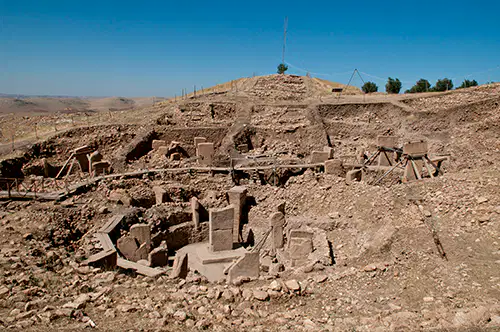
What site is shown in this image?
Gobeklin Tepe, Turkey
Catal Hoyuk, Turkey
Mohenjo-Daro, India
Ggantija Temple, Malta
Which of these is NOT an issue that scholars use to build interpretations of Stonehenge?
Presence of extraterrestrial materials on the site.
The origin of the bluestones.
Comparison with the other sites that have similar characteristics.
The presence of other ritual structures nearby.
Stonehenge is an example of (a) construction.
The Octagon Earthwork in Newark, Ohio appears to have been built to register the movements of the (a) .
Traditionally the "neolithic" has been distinguished from the "paleolithic" by what?
Settled agriculture
Use of metal tools
Use of language
Large stone constructions
Which of these is a characteristic of mud brick as a material?
Requires little maintenance
Withstands earthquakes well
Easy to make
Colorful
Which of these is a factor that limited the choices of construction system available to the early people of Sumeria in Iraq?
No mean to move material.
Marshy land required them to live in boats.
Lack of structural wood.
Which of these is NOT an innovative feature of Zoser's mortuary complex?
Pyramid-like tomb
Hypostyle hall
Inclusion of space for the royal jubilee (heb-sed) ceremony
Clerestory lighting
New Kingdom Egyptian cult temples can be entered from any direction but there is no particular path of movement through the buildings.
True
False
Which of these is NOT a major visual or formal characteristic of the temple of Uruk?
Use of columns
Patterned ceramic ornament
Thick Walls
Vertical buttress elements
What is the term for the type of masonry technique used in Egyptian buildings like Zoser's mortuary complex?
Buttressed
Ashlar
Adobe
Irregular
Which of these is a development around the beginning of the 4th dynasty in Egypt that seems to relate to the form of the pyramid complex at Giza?
The rule of the so-called "black pharos"
Lack of resources for building
Change in beliefs about the afterlife
Use of ashlar masonry
Which of these is a means that Egyptian architects used to create differences between spaces in the cult temples?
Some rooms are designed for dancing
Some rooms have more decor
Lightning goes from bright to dark
Which of these is a kind of document frequently encountered in the writings recovered in Mesopotamia?
Histories of kings' failed war efforts
Records of business transactions
Diaries of common people
Letters from architects
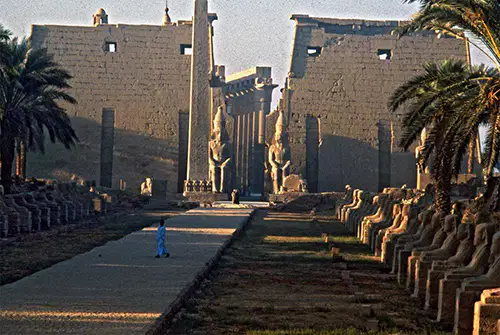
What is the best term for the architectural element (building part) shown here?
Mastaba
Ziggurat
Hypostyle
Pylon
Which of these phrases best summarizes the Greek definition of "symmetry" as transmitted by Vitruvius?
Both sides of the building are identical
Proportional relationships between the parts and the whole
All buildings are based on the same module
Columns are same height
Which of the Greek "Orders" is used in the Erechtheion?
Corinthian
Doric
Ionic
Which of these is not a difference between Doric and Ionic temple formats?
One has columns with a base
One has no columns at the rear
One is frontal in emphasis
One uses more decorative sculpture
Which of these best describes why the Parthenon and the rest of the Athenian Acropolis were built in the late 5th century BCE?
Celebrate victory of the Persians
Honor the god Poseidon
Because they needed space for public assembly
Because the old temples were too small
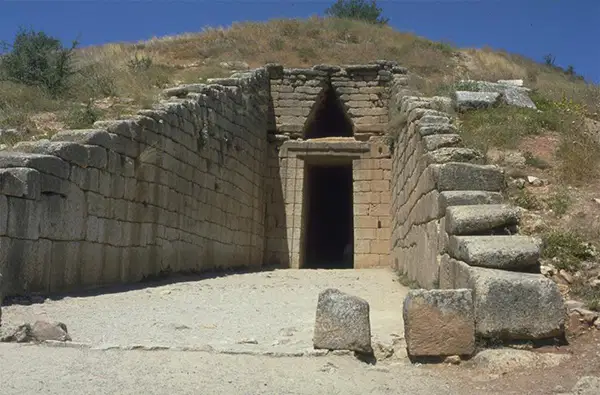
In what period was this structure built?
Classical
Bronze Age
Hellenistic
Archaic

What is the name of this building?
Parthenon
Erechtheion
Theater of Dionysus
Propylaion
Which of these is the most accurate date for the Parthenon in Athens?
200BCE
900BCE
430BCE
1000BCE
Which of these characteristics is most typical of an Etruscan Temple?
No steps to reach temple
Accessible from the rear
Columns in front only
Built of marble
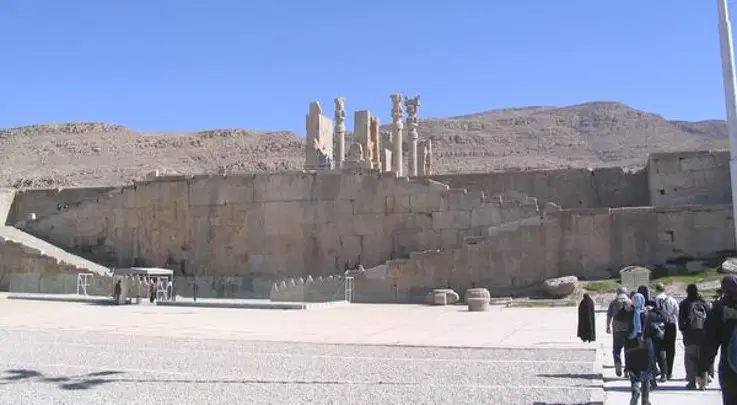
Where is this structure?
Persepolis, Iran
Athens, Greece
Mycenae, Greece
Knossos, Greece
Which of these is a major difference between Minoan "Palaces" and Mycenaean citadels?
Use of stone
Number of entrances
Use of tapered columns
Which of these three buildings was built first (oldest)
Ishtar Gate at Babylon
Great Temple of Amon-Re at Karnak
White Temple of Uruk
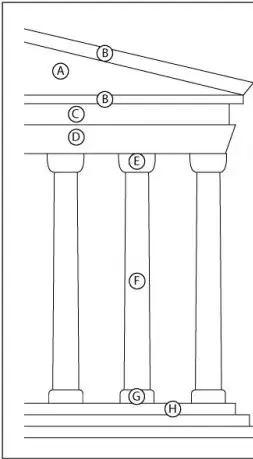
Which section is considered the Captial
(a)
Which section is considered the Base
(a)
Which section is considered the Frieze
(a)
Which section is considered the architrave
(a)
Which section is considered the Stylobate
(a)

What type of vault is the ceiling of this room an example of?
Barrel
Arched
Dome
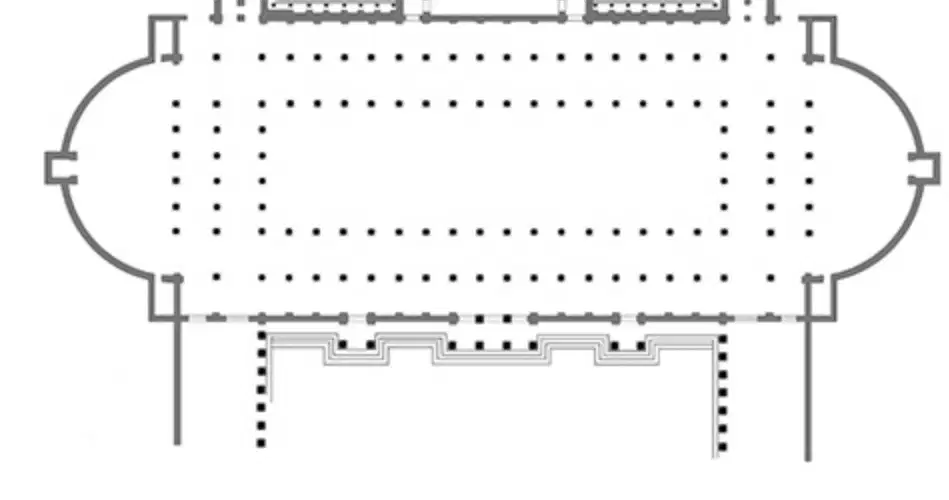
What building type is shown in this plan?
Temple
Basilica
Domus
Amphitheater
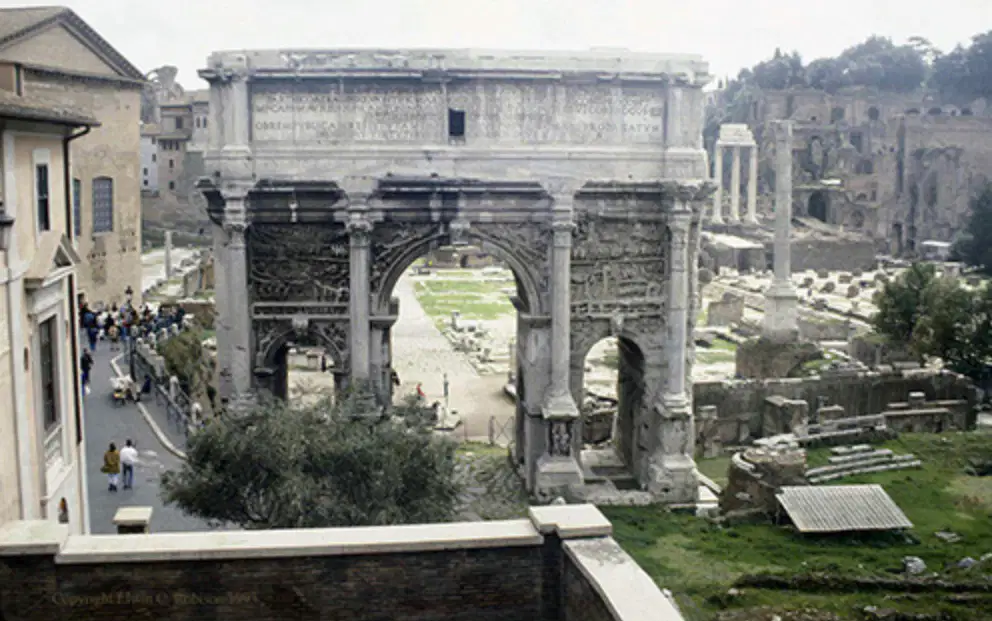
What building type is this?
Basilica
Theater
Temple
Triumphal Arch
Which emperor introduced sophisticated concrete construction into Rome with his Golden House?
Nero
Augustus
Trajan
Hadrian
Which statement best describes the relationship between "type" and "Program" in architectural theory?
Same thing
Program is first in the design process
Type is the form and program is the contents
Type is decoration, program is structure
Which of these is NOT a possible meaning of the Pantheon in Rome as rebuilt by Hadrian?
Designed for Christian Worship
Relates to the structure of the cosmos as understood at the time
Honors the emperor's relationship to his predecessors
Dedicated to the seven planetary gods
Which of these was built last?
House of the Tragic Poet
Pantheon
Sanctuary of Fortuna Primigenia
Forum of Augustus
Which of these best describes the use of the Tablinum in an upper class Roman house?
A quiet place for guests of high social status
Office for meeting with clients privately
Room where the family eats breakfast
Where the servants sleep
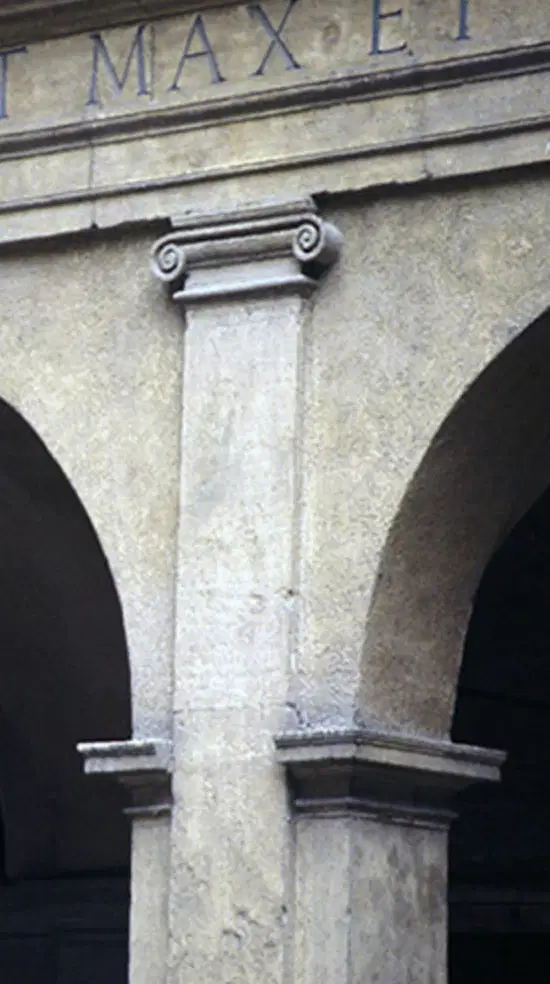
Which is the best term for this architectural element?
Niche
Poche
Pilaster
Voussoir
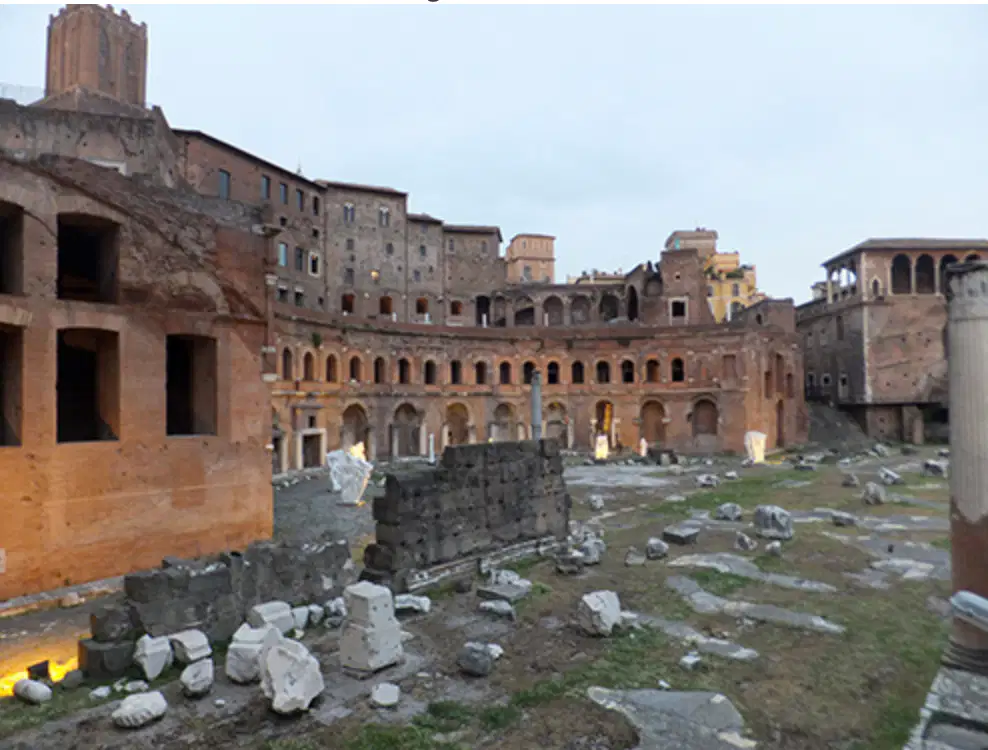
What is the name of this building?
Pantheon
Forum Baths
Markets of Trajan
Colosseum
Which of these is NOT a characteristic of Augustus' building program in Rome?
Standardized column sizes
Built an opulent palace for himself
Established parameters and scale of later imperial buildings
Introduced a new richness of materials
Which of these is NOT a characteristic of the Roman imperial monuments built using concrete?
They use a lot of materials
They focused innovation mostly on the exteriors
The wall is a sculptural surface composed in layers
Walls are always thin membranes
What emperor rebuilt the Pantheon in Rome after it was destroyed by fire?
Pansa
Augustus
Nero
Hadrian

What building type is shown in this plan?
Amphitheater
Basilica
Baths
Domus
Which of these best describes how Roman architects used engaged columns?
To create a non-structural layer of correct Greek details
To support vaults
To cover joints in the concrete
To counteract lateral thrust
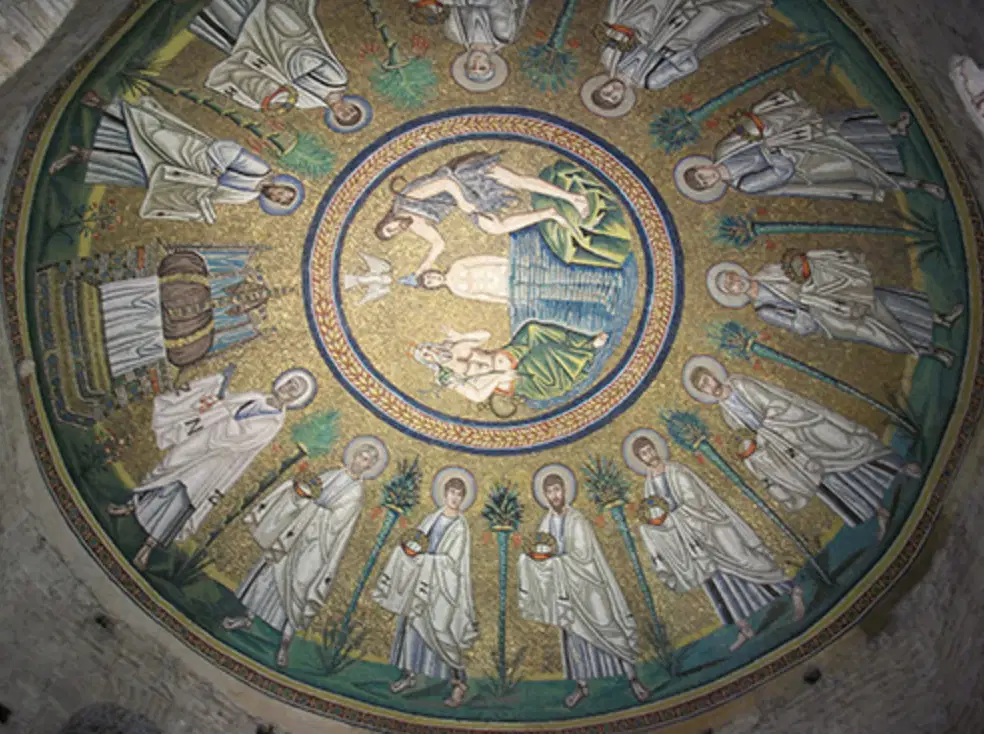
Where is this mosaic?
Milan, Italy
Ravenna, Italy
Rome, Italy
Istanbul, Turkey
Which of the following was built most recently?
Pantheon, Rome
Palace of Diocletian, Split
Arch of Constantine, Rome
Hagia Sophia, Istanbul
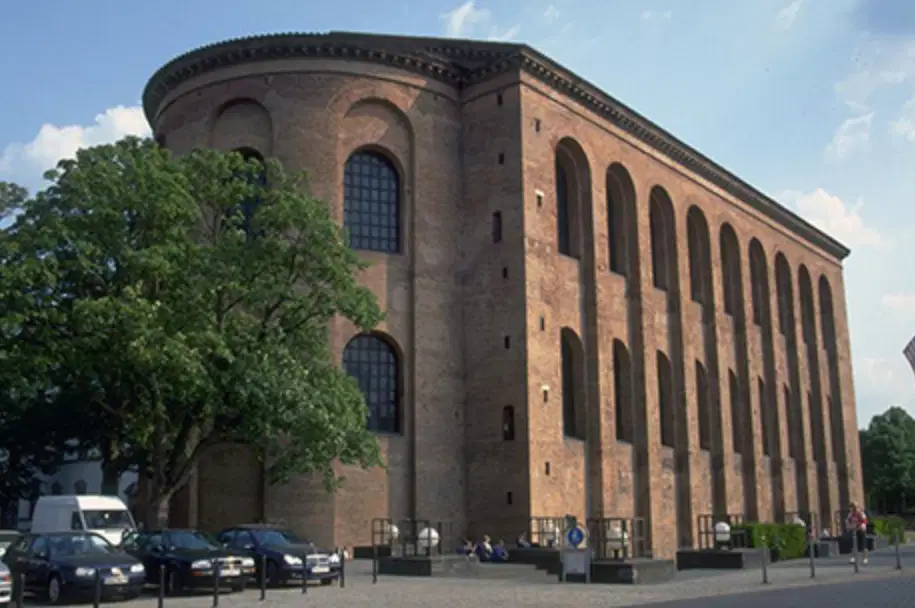
Who was the patron of this building?
Diocletian
Hadrian
Justinian
Constantine
Which of these was NOT a part of the imperial ritual in Justinian's church of Hagia Sophia?
The congregation filled the space under the domes and sang hymns
The priests were invisible most of the time, behind a screen
The emperor and patriarch met under the dome at key points inthe liturgy
The public were only given partial views of the central nave.
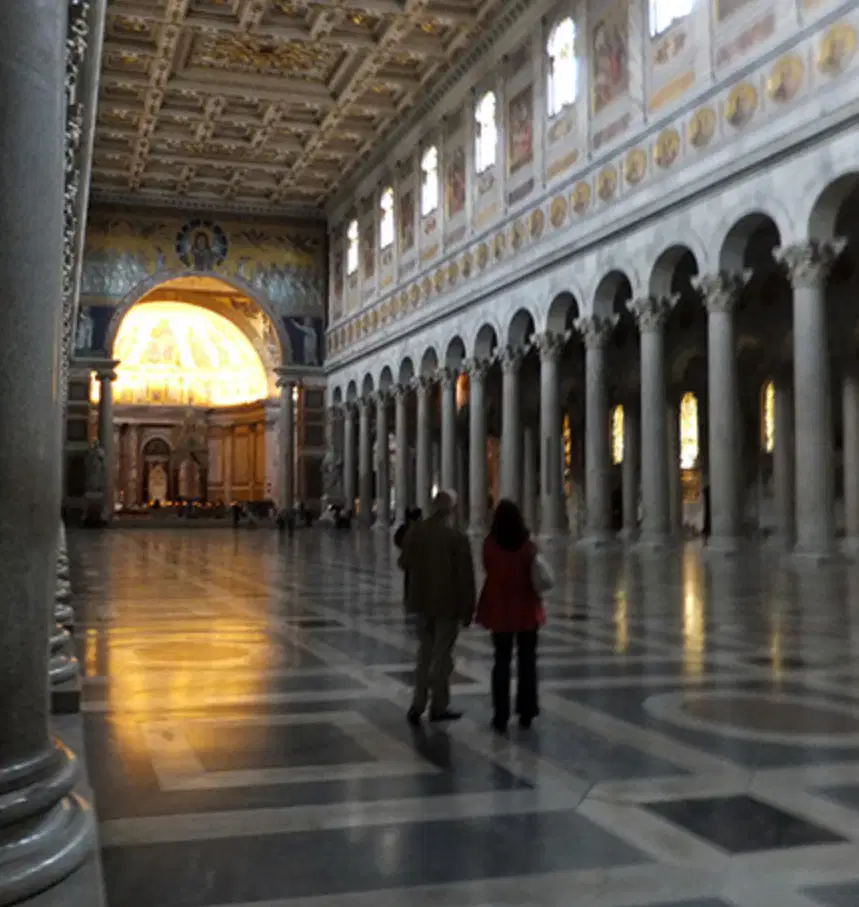
What type of space is this?
Basilica
Domus
Esplanade
Hall
What ritual was often associated with centrally planned buildings in Early Christian practice?
Coronation
Baptism
Confession
Communion
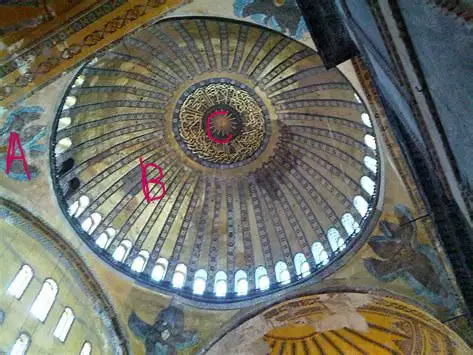
Which area is the pendentive?
A
B
C
The architects of early Christian churches used spolia columns because there was no money for new ones.
True
False
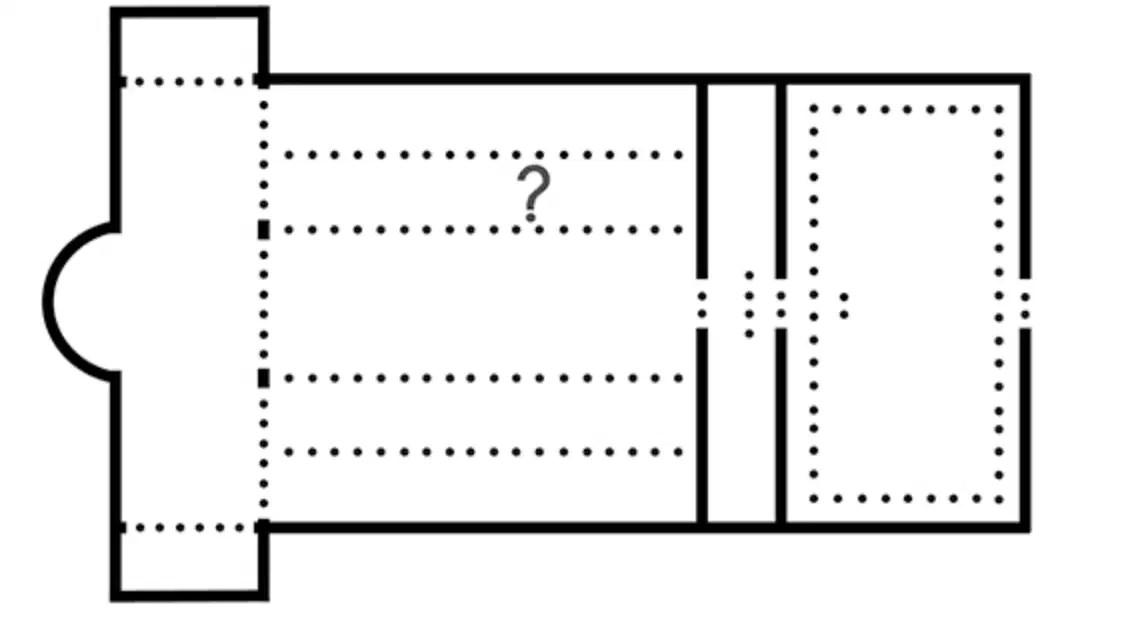
What is the best term that describes the "?" on this plan?
Aisle
Transept
Apse
Nave
What term describes the peculiar system of government that Emperor Diocletian tried to establish?
Anarchy
Byzantine
Tetrarchy
Monarchy
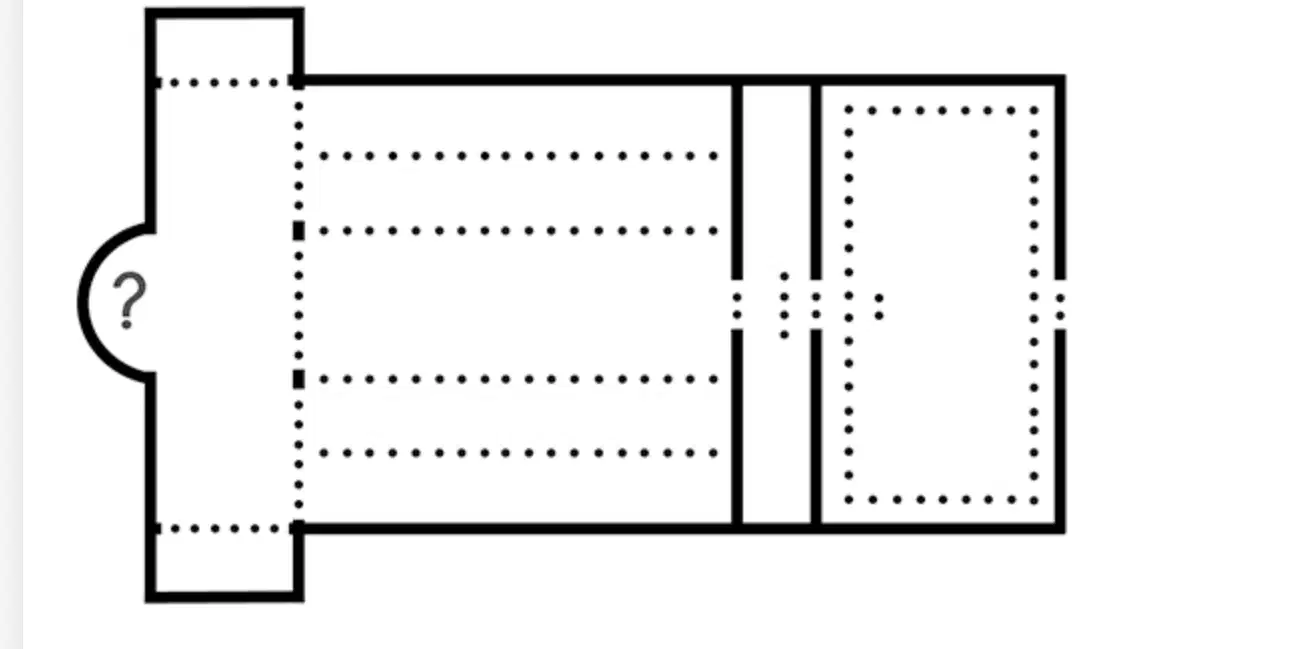
What term best describes the "?" on this plan?
Aisle
Transept
Apse
Nave
Which of these statements best describes a difference between a Roman civil basilica and a basilica built for Christian worship?
The apse form is left out because it serves no purpose in the Christian context.
The civil basilica has only one entrance, while the Christian basilica has many.
The altar is in the location where the emperor's statue was in the civil basilica.
Early churches are lit by candles instead of clerestory windows.

