
 Worksheets
Unit 1 Practice Test
Total questions: 67
Worksheet time: 1hrs 3mins

What characteristic is shown: A bacteria cell divides itself in two.
Reproduce
Respond to a Stimulus
Homeostasis
Grow and Develop

Which characteristic is shown: An American alligator kills and eats a fish.
Change Over Time
Acquire and Use Energy
Grow and Develop
Made of Cells

Which characteristic is shown: A corn field absorbs sunlight to produce food.
Made of Cells
Respond to a Stimulus
Acquire and Use Energy
Genetic Code

Which characteristic is shown: A chocolate lab puppy becomes a fully grown dog.
Respond to a Stimulus
Grow and Develop
Homeostasis
Change Over Time

Which characteristic is shown: A tadpole grows legs and becomes a fully grown frog.
Homeostasis
Grow and Develop
Acquire and Use Energy
Change Over Time

Which characteristic is shown: Your body sweats to maintain body temperature.
Respond to a Stimulus
Homeostasis
Made of Cells
Change Over Time

Which characteristic is shown: Carbon Dioxide is used in your blood to maintain the blood pH.
Respond to a Stimulus
Homeostasis
Reproduce
Grow and Develop

Which characteristic is shown: A plant switches position and follows the sunlight throughout the day.
Grow and Develop
Respond to stimulus/environment
Acquire and Use Energy
Reproduce

Which characteristic is shown: A deer runs from a dog after hearing barking.
Made of Cells
Respond to stimulus/environment
Acquire and Use Energy
Homeostasis
All of the living and nonliving things in an environment
ecosystem
biome

A cactus
Biotic factor
Abiotic factor

Air
Biotic factor
Abiotic factor

Soil or dirt
Biotic factor
Abiotic factor

Precipitation (rain, snow, sleet, hail)
Biotic factor
Abiotic factor


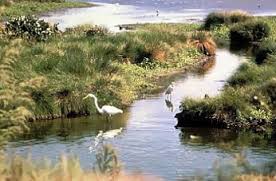
What does autotroph mean?
self feeding
self motivated
self conscious
self aware
An organism that can make its own food by using energy from sunlight is a:
autotroph
heterotroph
A plant is a:
autotroph
heterotroph
An organism that obtains nutrients by consuming other organisms is a:
autotroph
heterotroph
An organism that cannot produce their own food:
autotroph
heterotroph
A tree is a:
autotroph
heterotroph
A lion is a:
autotroph
heterotroph
A human is a:
autotroph
heterotroph
In which type of symbiotic relationship do both species benefit (+,+) ?
Commensalism
Parasitism
Mutualism
Predation
In which type of symbiotic relationship does one species benefit while the other species is not affected (+, 0)?
Commensalism
Parasitism
Mutualism
Predation
In which type of symbiotic relationship does one species benefit while the other species is harmed (+,-)?
Commensalism
Parasitism
Mutualism
Predation
What is a food chain?
The flow of energy from one thing to another
The way animals eat each other
The way the sun makes everything
How the plants grow
What is a Producer?
An animal that eat plants
An animal that eats meat
is a plant that produces their own food
An animal that grows really tall
which one is a Producer?


Click on the picture to answer the question. What is true about a food chain?
It is just 1 path of energy.
It is all possible energy paths.
Click on the picture to answer the question. What is true about a food web?
It is just 1 path of energy.
It is all possible energy paths.

According to the image, what is the producer?
plant
insect
mouse
snake

What are "producers" producing?
the energy for the food chain
the insects for the food chain

The word "primary" means "first."
If that's true, what does primary consumer mean?
Hint: look carefully at the food chain!
the first organism in a food chain
the first organism that consumes something else for energy

According to the image, what is the primary consumer in the food chain?
plant
insect
mouse
snake

According to the image, what is the secondary consumer?
plant
insect
mouse
snake

Imagine you're an explorer in the wild, observing a food web. What do the arrows in this food web represent?
Animals munching on their lunch
The bright sunlight shining down
The flow of energy from one creature to another
The physical matter of the organisms

In this energy pyramid, which organisms have the most energy available?
Producers
Carnivores
Herbivores
Top Predator

In this energy pyramid, which organism has the least amount of energy available?
Producers
Herbivores
Carnivores
Top Predator

The graph below represents the growth of a population of flies in a car? Which of the following statements best describes the graph?
The fly population did not change.
The fly population decreased, then increased.
The fly population grew following the logistic growth model.
The fly population grew following the exponential growth model.
Which of the following could be a density-independent limiting factor in the desert?
number of prey
food supply
parasitism
rainfall

Which point in this graph represents exponential growth?
Point E
Point A
Point B
Point C

The graph represents _____ of a population.
logistic growth model
exponential growth model

Which point on the graph best represents the carrying capacity?
Letter A
Letter C
Letter E
Letter D

In which month(s) did the Cottontail Rabbits reach their carrying capacity?
January and February
March and May
April and January
April and May
Which of the following is density-independent limiting factor?
disease
competition
earthquake
predation
Without other changes to a population, which of the following will cause a population to increase in size?
The birth rate equals the death rate.
The birth rate is less than the death rate.
The birth rate is greater than the death rate.
The birth rate and the death rate both equal 0.

A massive tornado
density dependent limiting factor
density independent limiting factor

exponential growth curve
logistic growth curve

logistic growth curve
exponential growth curve

