
Font size
 Worksheets
(Errors) CBA #1 Review Quizizz #2!!
Total questions: 79
Worksheet time: 43mins
How many protons, neutrons, and electrons are present in an atom of Zirconium, Zr, with a mass number of 40?
91 protons
91 neutrons
40 electrons
40 protons
51 neutrons
40 electrons
40 protons
40 neutrons
51 electrons
40 protons
91 neutrons
40 electrons
Group 18 is _________ at room temperature and chemically ______________.
gaseous, flammable
liquid, unstable
liquid, stable
gaseous, stable
If an object has a density of less than 1 g/ml it will _______.
float
sink
If an object has a density of more than 1 g/ml it will _______.
float
sink
An unknown element has many of the same physical and chemical properties as lithium and potassium, but has a lower atomic mass than either of these elements. This element could be ____.
Magnesium
Hydrogen
Sodium
Beryllium
Aluminum, oxygen, and carbon are elements found on the periodic table. Tests involving these three elements would show that at normal room temperature -
Aluminum is malleable and oxygen conducts electricity
Carbon is malleable and conducts electricity
Aluminium is malleable and conducts electricity
All three elements are malleable and conduct electricity
The sample has a mass of 29.4 g and a volume of 4.4 cm3. What is the density of the mineral sample?
129.36 g/cm3
25 g/cm3
33.8 g/cm3
6.68 g/cm3
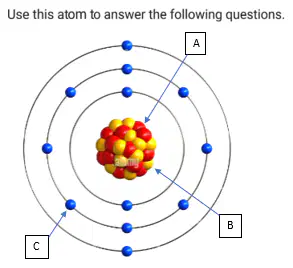
Which statement best describe the charges on the particles in this model?
Particle A will have a negative charge in the nucleus
Particle B will have a negative charge in the nucleus
Particle C will have a negative charge in the nucleus
Particle C will have a negative charge in the electron cloud/shells
Which statement best describe the charges on the particles in this model?
Particle A will have a positive charge in the nucleus
Particle B will have a positive charge in the electron cloud/ shells
Particle C will have a negative charge in the nucleus
Particle A will have a negative charge in the electron cloud/shells
Which statement best describe the charges on the particles in this model?
Particle A will have a negative charge in the nucleus
Particle B will have a positive charge in the electron cloud/ shells
Particle B will have a neutral charge in the nucleus
Particle A will have a negative charge in the electron cloud/shells
The atom's volume is mostly --
empty space
nucleus
protons and neutrons
packed tightly
The charge of the nucleus is --
neutral
negative
positive
none of the above
The charge of the electron shells are --
neutral
negative
positive
none of the above
The charge of the whole atom is --
neutral
negative
positive
none of the above
What determines the identity of the atom?
protons
neutrons
electrons
valence electrons
What determines the reactivity of the atom?
protons
neutrons
electrons
valence electrons
If an atom has a FULL outer shell (8ve-) it will be --
stable
unstable
reactive
nonreactive
If an atom does NOT have a FULL outer shell (8ve-) it will be --
stable
unstable
reactive
nonreactive
How many electrons can fit in the first shell?
2
5
8
16
How many electrons can fit in the second shell?
2
5
8
16
How many electrons can fit in the third shell?
2
5
8
16
How many valence electrons would an element need in order to be considered stable / nonreactive (full outer shell)?
4
6
9
8
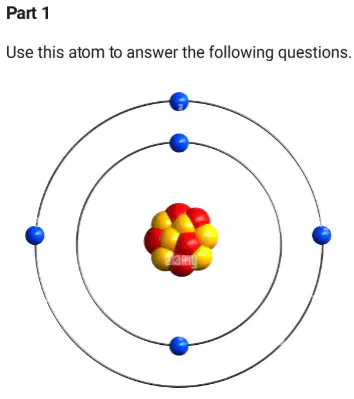
Select the term(s) that describe this atom.
stable
unstable
reactive
nonreactive
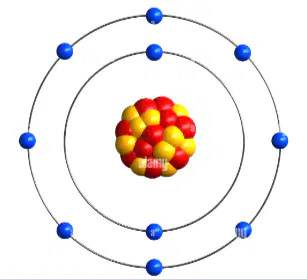
Select the term(s) that describe this atom.
stable
unstable
reactive
nonreactive
If an object is dull, broken by a hammer to create a powdery substance it would be considered a --
Metal
Nonmetal
Metalloid
None of the above
If an object is malleable, dull in appearance and a semiconductor it would be considered a --
Metal
Nonmetal
Metalloid
None of the above
If an object can be shaped into a sheet, and bent by a hammer it would be considered a --
Metal
Nonmetal
Metalloid
None of the above
If an object can be made into wire, shiny solid, can be stretched, and dented by a hammer it would be considered a --
Metal
Nonmetal
Metalloid
None of the above
If an object can be made into solid round pellets and flattened by a hammer it would be considered a --
Metal
Nonmetal
Metalloid
None of the above
Group 18 is in what state of matter at room temperature?
solid
liquid
gas
plasma
Group 18 are known as "Noble Gases" which term(s) describes Group 18's reactivity?
stable
reactive
unstable
nonreactive
Select the group(s) that are MOST reactive.
Group 1
Group 2
Group 18
Group 17
Which group would most likely bond or react with group 13 (3A)?
Group 1 (1A)
Group 2 (2A)
Group 18 (8A)
Group 15 (5A)
If an object has 1 valence electron and is a shiny conductor, it would most likely be which of the following atoms?
Potassium
Hydrogen
Helium
Beryllium
If an object has 3 valence electron and is a solid semiconductor, it would most likely be which of the following atoms?
scandium
Boron
Silicon
Carbon
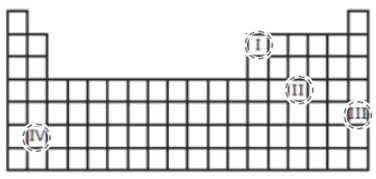
Which Roman Numeral is the least reactive and is a stable gas at room temperature?
I
II
III
IV
Which Roman Numeral has 1 less valence electron than another element marked with a Roman numeral and is a metal?
I
II
III
IV
Which Roman Numeral has 3 more valence electrons than another element marked with a Roman numeral and is a semiconductor?
I
II
III
IV
An unknown element has many of the same physical and chemical properties as Bromine and chlorine, but has a lower atomic mass than either of these elements. This element could be ____.
Carbon
Fluorine
Sulfur
Selenium
An unknown element has many of the same physical and chemical properties as Neon and Argon, but has a lower atomic mass than either of these elements. This element could be ____.
Helium
Fluorine
Krypton
Chlorine
A list of atoms is provided and you find that:
atom 1 has 2 valence elctrons
atom 2 has 6 valence electrons
atom 3 has 7 valence electrons
atom 4 has 8 valence electrons
Which of the answers provided is a true statement?
atom 1 is the most reactive because it belong to group 2
atom 2 is the most reactive because it belongs to group 6
atom 3 is the most reactive because it belongs to group 17
atom 4 is the most reactive because it belongs to group 18
A list of atoms is provided and you find that:
atom 1 has 1 valence elctrons
atom 2 has 4 valence electrons
atom 3 has 7 valence electrons
atom 4 has 8 valence electrons
Which of the answers provided is a true statement?
atom 4 is stable because it belongs to group 18
atom 3 is the most reactive because it belongs to group 17
atom 2 is the most reactive because it belongs to group 14
atom 1 is also the most reactive because it belongs to group 1
What does a group tell you about an element?
the number of electron shells it has
the valence electrons - all have same reactivity
the number of protons
the atomic mass
What does the period the element is in tell you about an element?
the number of electron shells it has
the valence electrons - all have same reactivity
the number of protons
the atomic mass
What is the charge of the atom's nucleus if the atom has 12 protons, 12 neutrons, and 12 electrons?
+12
-24
+36
zero
What is the charge of the atom's nucleus if the atom has 35 protons, 45 neutrons, and 35 electrons?
-35
+80
+35
zero
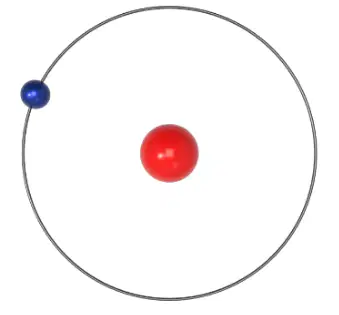
Which group does this element belong to AND what is its reactivity?
1; least reactive
1; most reactive
1; somewhat reactive
1; nonreactive
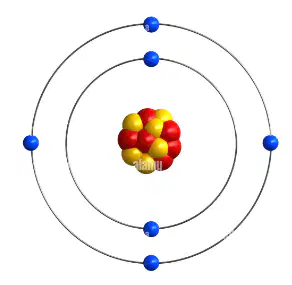
Which group does this element belong to AND what is its reactivity?
group 4; least reactive
group 14; most reactive
group 6; somewhat reactive
group 14; somewhat reactive
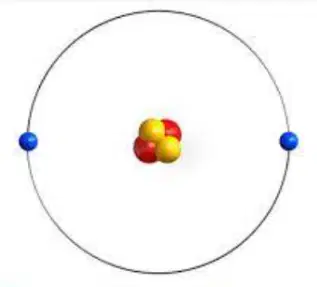
Which group does this element belong to AND what is its reactivity?
group 2; somewhat reactive
group 2; least reactive
group 18; most reactive
group 18; least reactive
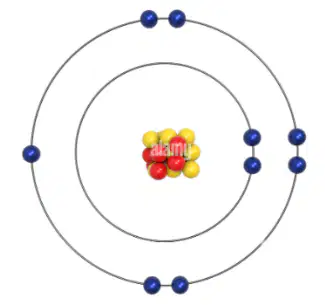
Which group does this element belong to AND what is its reactivity?
group 17; somewhat reactive
group 17; least reactive
group 17; most reactive
group 7; least reactive
group 1 (1A)
most reactive
least reactive
somewhat reactive
stable
group 2 (2A)
most reactive
least reactive
somewhat reactive
stable
group 13 (3A)
most reactive
least reactive
somewhat reactive
stable
group 14 (4A)
most reactive
least reactive
somewhat reactive
stable
group 15 (5A)
most reactive
least reactive
somewhat reactive
stable
group 16 (6A)
most reactive
least reactive
somewhat reactive
stable
group 17 (7A)
most reactive
least reactive
somewhat reactive
stable
group 18 (8A)
most reactive
least reactive
somewhat reactive
stable
group 18 (8A) bonds (reacts with) which group?
group 1
group 2
group 17
none, it has a full outer shell so it's nonreactive/stable
group 1 (1A) bonds (reacts with) which group in order to make a full outer shell (8ve-)?
group 17
group 2
group 18
none, it has a full outer shell so it's nonreactive/stable
group 2 (2A) bonds (reacts with) which group in order to make a full outer shell (8ve-)?
group 1
group 16
group 15
none, it has a full outer shell so it's nonreactive/stable
group 13 (3A) bonds (reacts with) which group in order to make a full outer shell (8ve-)?
group 15
group 14
group 1
none, it has a full outer shell so it's nonreactive/stable
group 14 (4A) bonds (reacts with) which group in order to make a full outer shell (8ve-)?
group 16
group 14
group 1
none, it has a full outer shell so it's nonreactive/stable
group 15 (5A) bonds (reacts with) which group in order to make a full outer shell (8ve-)?
group 13
group 1
group 2
none, it has a full outer shell so it's nonreactive/stable
group 16 (6A) bonds (reacts with) which group?
group 1
group 2
group 17
none, it has a full outer shell so it's nonreactive/stable
group 17 (7A) bonds (reacts with) which group?
group 1
group 2
group 17
none, it has a full outer shell so it's nonreactive/stable
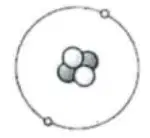
This is an example of a Helium (He), what is special (exception to the rule) about Helium? Select the statement(s) that are true about Helium.
It has 2 valence electrons, but it is NOT in group 2.
It is the only element that is in a group with other elements that it does NOT have the same number of valence electrons as, but does have the same reactivity as.
It belongs to group 18 because it has a full valence electrons shell.
It is a stable/ nonreactive/ least reactive element that is a gas a room temperature.
This is an example of a Helium (He), what is special (exception to the rule) about Helium? Select the statement(s) that are true about Helium.
It has 2 valence electrons, but it is NOT in group 2.
It is the only element that is in a group with other elements that it does NOT have the same number of valence electrons as, but does have the same reactivity as.
It belongs to group 18 because it has a full valence electrons shell.
It is a stable/ nonreactive/ least reactive element that is a gas a room temperature.
Which property of the unknown element determines the other elements it reacts with?
number of neutrons in the unknown element
total number of particles in the nucleus of the unknown element
number of protons in the nucleus of the unknown element
number of valence electrons in the unknown element
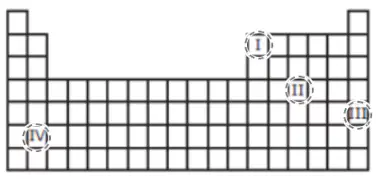
If an element was a semiconductor, which Roman numeral(s) could it be?
I
I and II
IV
II and III
Which subatomic particle(s) are in the nucleus?
Protons
Neutrons
Electrons
Valence Electrons
Which subatomic particle(s) are in the energy levels?
Protons
Neutrons
Electrons
Valence Electrons
How many subatomic particles are located outside of the nucleus of an atom of Chlorine?
35
17
52
34
How many subatomic particles are located outside of the nucleus of an atom of Silver?
47
155
108
61
How many subatomic particles are located inside the nucleus of an atom of Silver?
47
155
108
61
How many subatomic particles are located in the nucleus of an atom of Chlorine?
35
17
52
34
How many subatomic particles are located in the nucleus of an atom of Chlorine?
35
17
52
34
How do you find the volume of an irregular shaped objects using a graduated cylinder?
L x W x H
Ending water level - initial water level
initial water level - ending water level
just pick a random number out of the question
Which element in group 18 is "special" and considered the exception to the rule that all elements in the same group also have the same number of valence electrons?
Helium
Hydrogen
Neon
Argon

