
 Worksheets
REVIEW: Plate Tectonics
Total questions: 71
Worksheet time: 1hrs 23mins
Which of the following is a real world example of a divergent plate boundary location:
San Andreas
Iceland
The Cascade Mountains
The Aleutian Islands
The Andes Mountains
Which of the following is a real world example of a divergent plate boundary location:
San Andreas
East Africa
The Cascade Mountains
The Aleutian Islands
The Andes Mountains
Which of the following is a real world example of a divergent plate boundary location:
San Andreas
Mid-Atlantic Ridge
The Cascade Mountains
The Aleutian Islands
The Andes Mountains
Which diagram represents a divergent boundary


Which features are associated with divergent plate boundaries and which are not:
Earthquakes
Volcanoes
Seafloor spreading
Trench
Subduction
Mountains
Rift Valley
The region located between the ridges (mountains) at divergent boundaries:
Trench
Subduction zone
Rift valley
Volcanic island arc
Continental volcanic arc
Divergent boundaries are considered (a) boundaries
Constructive boundaries are locations in which lithosphere is:
created
destroyed
neither created nor destroyed
Lithospheric plates at divergent boundaries move:
toward one another
away from one another
past one another
Which of the following does not belong:
Earthquake
Volcano
Trench
Rift valley
Seafloor spreading
Which of the following does not belong:
Earthquake
Volcano
Subduction
Rift valley
Mountains
Which type of lithosphere forms at mid-ocean ridges:
Continental
Oceanic
Nickel and Iron

The image depicts a:
Trench
Subduction zone
Rift valley
Continental volcanic arc
Volcanic island arc
Identify the location of three (3) divergent boundaries:
Identify the features associated with the divergent boundary:
rift valley
mid-ocean ridge
Seafloor spreading
Which of these is not a divergent boundary:
Iceland
Mid-Atlantic Ridge
East Africa
Andes Mountains
Which features would you find at a divergent boundary?
Why are divergent boundaries called constructive boundaries?
What forms at divergent boundaries?
New seafloor
Continental volcanic arcs
Trenches
Subduction zones
Organize these options into the right categories:
The Andes Mountains
Mid-Atlantic Ridge
The Caribbean Islands
Iceland
East Africa
The Himalayas
Destructive
Constructive


Earthquakes
Volcanoes
Trench
Subduction
Mountains
Seafloor spreading
Rift valley
Earthquakes
Volcanoes
Trench
Subduction
Mountains
Seafloor spreading
Rift valley
Earthquakes
Volcanoes
Trench
Subduction
Mountains
Seafloor spreading
Rift valley
Which is an example of a continental-continental convergent boundary:
The Himalayas
The Andes
The Mid-Atlantic Ridge
The Caribbean
San Andreas
Which is an example of a Oceanic-continental convergent boundary:
The Himalayas
The Andes
The Mid-Atlantic Ridge
The Caribbean
San Andreas
Which is an example of a Oceanic-oceanic convergent boundary:
The Himalayas
The Andes
The Mid-Atlantic Ridge
The Caribbean
San Andreas
Why are there no active volcanoes at continental-continental convergent boundaries?
There are. Most volcanoes occur at these boundaries.
There is no subduction. The continental plates smash into each other and create mountains
There is not enough magma in the mantle to feed volcanoes in these locations.
The gravitational pull of the moon is too great and forces the magma to remain submerged.
The downward force of the colliding continents keeps the magma from rising to the surface.
Convergent boundaries are considered (a) boundaries because lithosphere is either recycled back into the mantle or uplifted, creating mountains.
Convergent boundaries are considered destructive because lithospheric plates are (a) here through melting back into the mantle or smashing together to create mountains.
Convergent boundaries are considered (a) because lithosphere is (b) here.
Lithosphere at convergent boundaries move (a) one another.

Identify the type of plate boundary:
oceanic-continental convergent
oceanic-oceanic convergent
continental-continental convergent
transform
divergent

Identify the type of plate boundary:
oceanic-continental convergent
oceanic-oceanic convergent
continental-continental convergent
transform
divergent

Identify the type of plate boundary:
oceanic-continental convergent
oceanic-oceanic convergent
continental-continental convergent
transform
divergent
Identify the oceanic-oceanic plate boundary:


Identify the oceanic-continental plate boundary:
Identify the continental-continental plate boundary:
The more dense lithospheric plate dives beneath a less dense plate in a process known as
(a)
Which location represents subduction?
Which location represents a trench?
Which location represents a continental volcanic arc?
Which location represents an oceanic plate?
Which location represents a continental plate?
The process of a plate subducting beneath another is due to differences in (a) between the two (2) plates.
Oceanic lithosphere has (a) density than continental lithosphere, which is why subduction occurs.
Describe the process of subduction:
Which correctly describes the process of subduction:
The process of one tectonic plate sinking beneath another.
The process of two tectonic plates colliding and forming mountains.
The process of two tectonic plates grinding past one another.
The process of tectonic plates moving apart and creating a rift.
A chain of volcanoes associated with an oceanic-oceanic convergent boundary is called:
volcanic island arc
continental volcanic arc
The ring of fire
The Pacific rim
Hawaii
A chain of volcanoes associated with an oceanic-continental convergent boundary is called:
volcanic island arc
continental volcanic arc
The ring of fire
The Pacific rim
Hawaii
Earthquakes
Volcanoes
Trench
Subduction
Mountains
Seafloor spreading
Rift valley
Earthquakes
Volcanoes
Trench
Subduction
Mountains
Seafloor spreading
Rift valley
Which is an example of a transform boundary:
The Himalayas
The Andes
Iceland
The Caribbean
San Andreas
Which is an example of a hotspot:
The Himalayas
The Andes
Iceland
Yellowstone
San Andreas
Which is an example of a hotspot:
The Caribbean islands
The Andes
Iceland
Hawaii
San Andreas
Why are there no active volcanoes at transform boundaries?
There are. Most volcanoes occur at these boundaries.
There is no subduction. The plates grind past one another.
There is not enough magma in the mantle to feed volcanoes in these locations.
The gravitational pull of the moon is too great and forces the magma to remain submerged.
The downward force of the colliding continents keeps the magma from rising to the surface.
Transform boundaries are considered (a) boundaries because lithosphere is neither created nor destroyed.
Transform boundaries are considered conservative because lithospheric plates are (a) here. Plates are neither created nor destroyed.
Lithosphere at transform boundaries move (a) one another.

Identify the type of plate boundary:
oceanic-continental convergent
oceanic-oceanic convergent
continental-continental convergent
transform
divergent
The majority of Earthquakes occur at which plate boundary:
oceanic-continental convergent
oceanic-oceanic convergent
continental-continental convergent
transform
divergent
Identify the transform plate boundary:


Where would you expect the next island in this chain to form?
to the left of A
between D and E
to the right of E
between A and B
Which island is the oldest?
A
B
C
D
E
Which island is the youngest?
A
B
C
D
E

The cross section below displays the movement of an oceanic tectonic plate over a hotspot, resulting in the formation of a chain of volcanos labeled A, B, C and D. The geological age of volcano C is shown. What are the most likely ages of volcanos B and D?
B is 5 million years old and D is 12 million years old
B is 2 million years old and D is 6 million years old
B is 9 million years old and D is 9 million years old
B is 10 million years old and D is 4 million years old
Hotspots are volcanoes that form...
at convergent plate boundaries.
at divergent plate boundaries.
at transform plate boundaries.
in the middle of a tectonic plate.

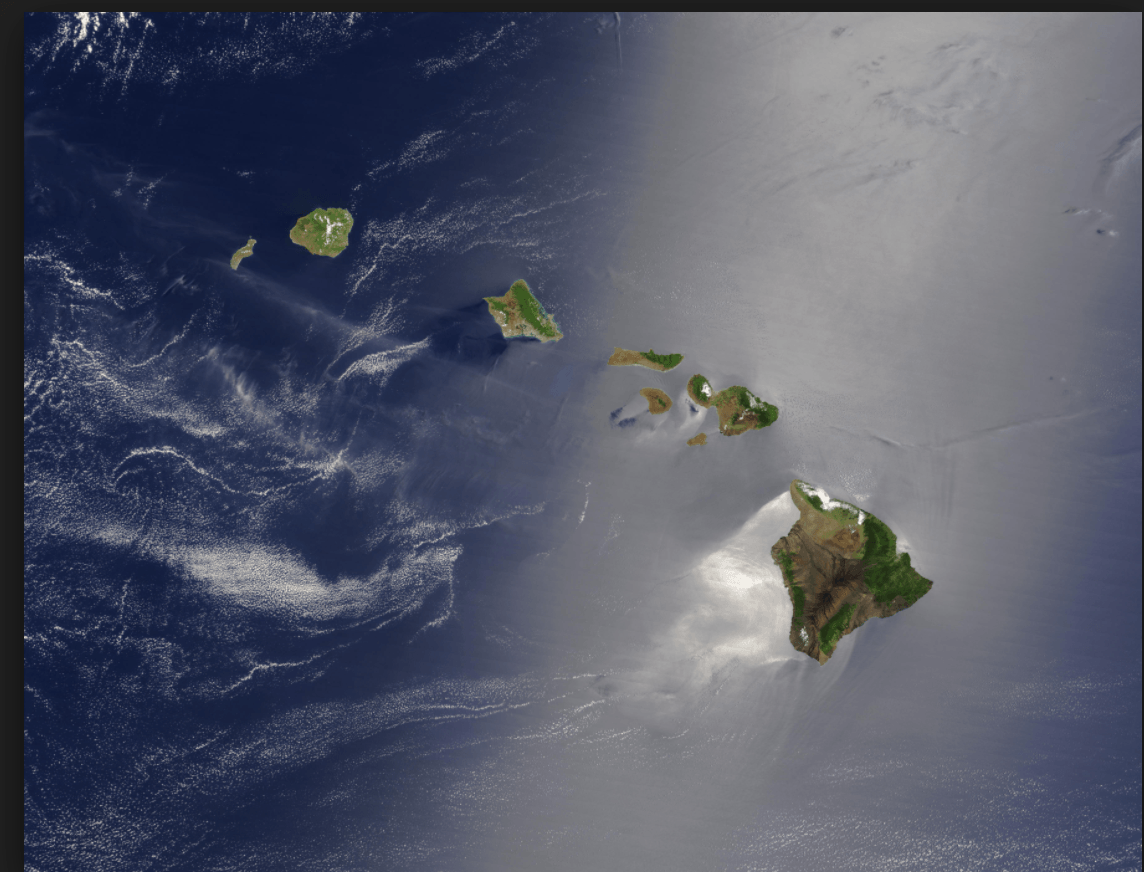
This image shows the hawaiian island change. Hawaii is currently the tallest island and is still an active volcano. Based on the map chose the answer that best explains the age of the islands.
The further the islands are from Hawaii the younger the island is.
Hawaii is the youngest island because it is currently on top of the hotspot.
Hawaii is the oldest island because it is closest to the hotspot.
Ohau is younger than the big island because it is further from the hot spot.

Destructive
Transform
Hotspot
Convergent
Divergent
Hawaii
Galapagos islands
Yellowstone
The Andes mountains
The Caribbean islands
The Mariana islands
San Andreas
Iceland

