wayground logo

Free Printable Worksheets

Font size

S
M
L
XL
Worksheets

Unit 2 Review

Total questions: 163

Worksheet time: 2hrs 11mins

Name
Class
Date
1.

Which subgroup of protein contains all of the necessary amino acids our body needs for the day?

a)

Fat soluble protein

b)

Incomplete protein

c)

Saturated protein

d)

Unsaturated protein

e)

Complete protein

2.

How many amino acids does our body need in a day to function properly?

a)

11

b)

20

c)

9

d)

4

e)

36

3.

What is the role of protein in the body?

a)

Is the main source of energy for the body

b)

Helps to build and repair body tissue

c)

Provide warmth and cushioning to the body's organs

d)

Helps to transport vitamins through the body

e)

All of the above are roles of protein in the body

4.

If I take in a gram of protein, approximately how many calories have I consumed?

a)

2,000 calories

b)

9 calories

c)

3,500 calories

d)

4 calories

e)

2 calories

5.

If I am consuming animal products, such as meat, dairy products, and eggs, what type of protein am I taking in?

a)

Fat soluble protein

b)

Incomplete protein

c)

Complete protein

d)

Saturated protein

e)

Unsaturated protein

6.

Based on the national guidelines, approximately how much of my daily calories should be coming from protein for the average person?

a)

25-35%

b)

10-15%

c)

5-10%

d)

0-5%

e)

45-65%

7.

What could be an issue if I do not consume enough protein regularly?

a)

Lead to a break down of muscle and tissue in the body

b)

Increase the amount of energy

c)

Dehydration of the body's cells

d)

Weight gain which can lead to heart disease

e)

Both A and D are correct

8.

If I am a vegetarian, what type of protein am I consuming? What should I be aware of to ensure I am eating healthy?

a)

Incomplete protein and I need to make sure I am not consuming too many of these proteins

b)

Saturated proteins and I need to make sure to limit the amount I consume

c)

Water soluble proteins and I need to make sure to consistently consume these proteins

d)

Incomplete proteins and I need to make sure I consume a variety of the proteins in order to get what I need

e)

I am a vegetarian therefore I am not consuming protein

9.

How many amino acids do you need to take in from food on a daily basis?

a)

20

b)

9

c)

11

d)

4

e)

2

10.

If I am taking in too much protein what could happen to me? (Select all that apply)

a)

Extra protein can be converted into stored energy

b)

May lead to kidney problems

c)

It can cause weight loss

d)

It can cause weight gain

e)

It can cause issues with the breakdown of muscle and body tissue

11.

What kind of chemical bonds hold proteins together

a)

Hydrogen

b)

Peptide

c)

Brotherly

d)

Ionic

12.

What are enzymes?

a)

They are a biological catalyst (something that speeds up a chemical reaction)

b)

They are a food category

c)

They are hormones

d)

They help in temperature regulation

13.

What are the building blocks of tissues?

a)

Amino Acids

b)

Proteins

c)

Catalysts

d)

Enzymes

14.

What are the monomers of proteins?

a)

Amino Acids

b)

Peptide bonds

c)

Enzymes

d)

Catalysts

15.

What element(s) is/are contained in proteins?

a)

C

b)

H

c)

O

d)

N

e)

All are found in proteins

16.

Antibodies are made up of proteins.

a)

True

b)

False

17.
What atoms make up all carbohydrates?
a)
Carbon, Sulfur, Hydrogen
b)
Carbon, Oxygen, Phosphorus
c)
Carbon, Oxygen, Nitrogen
d)
Carbon, Oxygen, Hydrogen
18.
How many sugar units make up monosaccharides?
a)
one
b)
two
c)
three
d)
zero
19.
How many sugar units make up disaccharides?
a)
one
b)
two
c)
three
d)
zero
20.
How do the number of H atoms compare to the number of O atoms in a carbohydrate?
a)
There are TWICE as many H
b)
They are the same amount
c)
There are THREE times as many H
d)
There are TWICE as many O
21.
What type of carbohydrate is this?
a)
polysaccharide
b)
disaccharide
c)
monosaccharide
d)
it isn't a carbohydrate
22.
Some carbohydrate foods are ________
a)
fruits
b)
grains
c)
vegetables
d)
all the above
23.
The process of removing water in order to form a bond between monomers is called....
a)
Dehydration Synthesis
b)
Hydrolysis
24.
The process of adding water in order to break bonds within a polymer....
a)
Dehydration Synthesis
b)
Hydrolysis
25.
The process of digesting a polysaccharide into individual monosaccharides is called....
a)
Dehydration Synthesis
b)
Hydrolysis
26.
The process of breaking the bonds within a starch molecule in order to release glucose molecules is called......
a)
Dehydration Synthesis
b)
Hydrolysis
27.
The following figure is illustrating
a)
Dehydration Synthesis
b)
Hydrolysis
28.
The following figure is illustrating
a)
Dehydration Synthesis
b)
Hydrolysis
29.
Carbohydrates are the first source of _______ for the body?
a)
repair
b)
hygiene
c)
fuel
30.
The percentage of our daily calories that should come from carbohydrate should be in the range of ______to_____%
a)
5-10%
b)
45-65%
c)
20-25%
d)
90-100%
31.
If we eat too much carbohydrate it is stored in the body as ___?
a)
fat
b)
extra cells
c)
flouride
32.
Some carbohydrate foods are ________
a)
fruits
b)
grains
c)
vegetables
d)
all the above
33.
_____________ carbohydrates come from sugar. They do not supply many nutrients.
a)
complex
b)
optional
c)
simple
d)
loaded
34.
Simple carbohydrates do not supply any _________________.
a)
fiber
b)
fuel
35.
An example of a simple carbohydrate could be ________________.
a)
bread
b)
oatmeal
c)
cupcake
d)
pasta
36.
Different sugars all end in the suffix _____
a)
ly
b)
itis
c)
ose
d)
ion
37.
The simple sugar from fruit is called_____.
a)
sucrose
b)
lactose
c)
fructose
d)
maltose
38.
The simple sugar in milk is ________.
a)
lactose
b)
maltose
c)
sucrose
d)
fructose
39.
______________ carbohydrates supply longer lasting energy.
a)
simple
b)
complex
c)
generic
40.
complex carbohydrates contain many nutrients and also contain__________
a)
fiber
b)
protein
41.
The following is an example of a complex carbohydrate
a)
can of pop
b)
poptart
c)
sweet potato
d)
Snickers
42.
Beans are a good source of carbohydrates. 
a)
true
b)
false 
43.
When choosing carbohydrates, try and choose ___________ carbs.
a)
complex
b)
simple
44.
Corn syrup is an a type of simple carbohydrate added to sweeten foods. 
a)
true 
b)
false
45.
A monosaccharide is a
a)
carbohydrate
b)
lipid
c)
nucleic acid
d)
protein
46.
What are the monomers of a polysaccharide?
a)
glycerol
b)
amino acid
c)
fatty acid
d)
glucose
47.
Which of the following organic compounds is the main source of energy for living things?
a)
carbohydrates
b)
lipids
c)
nucleic acids
d)
proteins
48.
Which type of carbohydrate is this?
a)
monosaccharide
b)
disaccharide
c)
polysaccharide
d)
glyceride
49.
  Glycogen, a polysaccharide, in your liver may be broken down to glucose by the process of __________.
 
a)
hydrolysis 
b)
dehydration synthesis
c)
 condensation
d)
 
isomerization isomerization
50.
A monomer splits from a polymer through
a)
ATP synthesis
b)
monomerization
c)
hydrolysis
d)
condensation reaction
51.
This polysaccharide is important to the structure of plant cell walls, 
a)
Starch
b)
Glycogen
c)
Cellulose
d)
Chitin
52.
What type of carbohydrate is this?
a)
polysaccharide
b)
disaccharide
c)
monosaccharide
d)
it isn't a carbohydrate
53.
The 3 categories of carbohydrates are:
a)
Monosaccharide, disaccharide, polysaccharide
b)
glucose, fructose, galatose
c)
starch, cellulose, chitin
d)
There are no categories of carbohydrates
54.
What molecule is this
a)
sucrose
b)
protein
c)
glucose
d)
cellulose
55.

What are processes P and Q?

a)

P - oxidation

Q - reduction

b)

P - reduction

Q - oxidation

c)

P - condensation

Q - hydrolysis

d)

P - hydrolysis

Q - condensation

56.
Carbohydrates are the first source of _______ for the body?
a)
repair
b)
hygiene
c)
fuel
57.

Which is not one of the three classes of lipids?

a)

Phospholipids

b)

Sterols

c)

Amino Acids

d)

Triglycerides

58.

Lipids are digested in the ____________.

a)

stomach

b)

small intestine

c)

large intestine

d)

colon

59.

Trans Fatty Acids are formed due to the hardening of polyunsaturated oils by hydrogenation.

a)

True

b)

False

60.

Supplements of omega-3 fatty acids or fish oil are a healthy addition for most people especially people lacking fresh fish.

a)

True

b)

False

61.

Identify a monounsaturated fat. Check all that apply.

a)

Canola oil

b)

Peanut oil

c)

Butter

d)

Beef Tallow

62.

Identify a saturated fat. Check all that apply.

a)

Soybean oil

b)

Chicken fat

c)

Coconut oil

d)

Fish oil

63.

Bile acts as an ______ to help break down fat by allowing fat to mix with digestive juices.

a)

protein

b)

emulsifier

c)

enzyme

d)

antioxidant

64.

Cholesterol is:

a)

Perfectly fine in high amounts

b)

A “fat-like” substance needed for essential body processes

c)

Invisible fat that cannot be removed from foods

d)

Visible fat that can be removed from foods

65.

Cholesterol produces hormones.

a)

True

b)

False

66.

Saturated fats are generally:

a)

Solid at room temperature

b)

Liquid at room temperature

c)

“Man-Made” Fat

d)

Cholesterol

67.

Unsaturated fats are generally:

a)

Solid at room temperature

b)

Liquid at room temperature

c)

“Man-Made” Fat

d)

Cholesterol

68.

Meat/animal sources, poultry skin, whole milk, butter, tropical oils, shortening and lard are examples of which kind of fat:

a)

Saturated fats

b)

Polyunsaturated fats

c)

Monounsaturated fats

69.

Plant oils like Corn oil, soybean oil and safflower oil are examples of which kind of fat:

a)

Saturated fats

b)

Polyunsaturated fats

c)

Monounsaturated fats

70.

Fats and oils: a major source of food providing long term energy and other functions.

a)

Sugars

b)

Carbohydrates

c)

Lipids

d)

Proteins

71.

Long term energy storage,

help form cell membranes, and provide parts of other biomolecules like hormones.

a)

Functions of Sugars

b)

Functions of Polysaccharides

c)

Functions of Carbohydrates

d)

Functions of Lipids

72.

A hydrocarbon chain that is sometimes considered to be a monomer of lipids.

a)

Fatty Acids

b)

Nucleic Acids

c)

Proteins

d)

Lipids

73.

Single bond between Carbon and Hydrogen chains.

Tends to be solid at room temperature like butter.

a)

Saturated Fats

b)

Unsaturated Fats

c)

Carbohydrates

d)

Proteins

74.

Double bond between Carbon and Hydrogen chains.

Tends to be liquid at room temperature like oils.

a)

Polysaccharides

b)

Lipids

c)

Saturated Fats

d)

Unsaturated Fats

75.
The characteristic that all lipids have in common is----
a)
made of lots of double bonds
b)
acidic when mixed with water
c)
no high energy content
d)
do not dissolve in water
76.
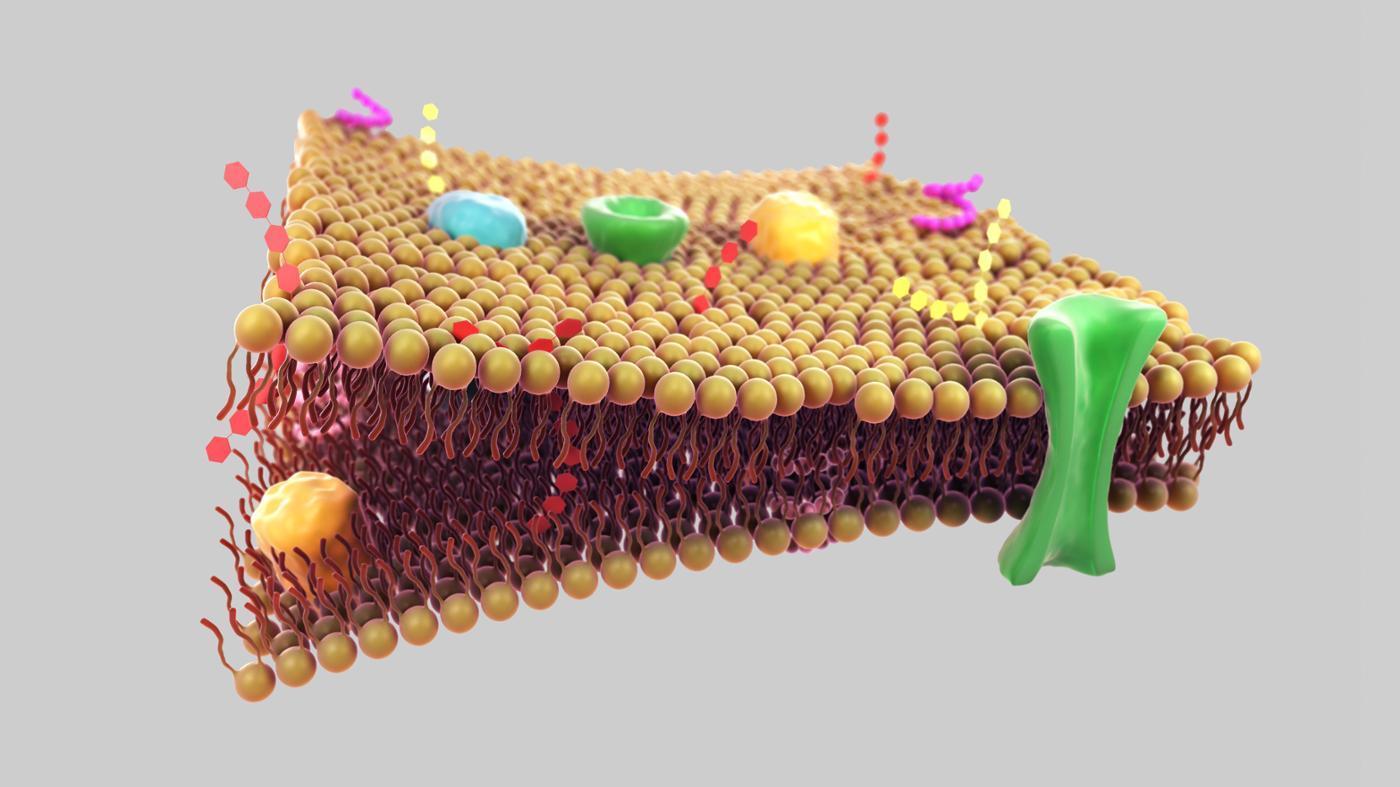
The phospholipid bilayer comprises what part of the cell?
a)
cytoplasm
b)
cell membrane
c)
cytoskeleton
d)
nuclear membrane
77.

Fatty Acids differ in there chain length and their

a)

protein carriers

b)

Side chains

c)

energy level

d)

degree of saturation

78.
Which foods are NOT rich in lipids?
a)
Fats
b)
Oils
c)
Pasta
d)
Butter
79.
In addition to glycerol, how many fatty acids are needed to make a triglyceride?
a)
3
b)
4
c)
2
d)
1
80.
What is another word for monomer? 
a)
Building Blocks
b)
Polymer
c)
Protein
81.

Which one of the following is a function of lipids?

a)

store information

b)

store energy

c)

breakdown wastes

d)

join with substrates

82.
Examples of lipids are...
a)
Dogs, Cats, Horses
b)
Fats, Waxes, Oils
c)
Salt, Pepper, Paprika
d)
Fingers, Toes
83.

What are the two types of fats?

a)

saturated and unsaturated

b)

complete and incomplete

c)

cholesterol and trans fat

d)

total fat and trans fat

84.

How many calories is in 1 gram of fat?

a)

4

b)

7

c)

9

d)

11

85.

In the phospholipid, the polar head is considered what type of structure?

a)

hydrophobic

b)

hydrophillic

86.

Which of the following molecules make up the basic structure of a cell membrane?

a)

waxes

b)

triglycerides

c)

fatty acids

d)

phospholipids

87.

Lipids are made of...

a)

CHO sometimes P

b)

CHON

c)

CHONP

d)

CHONS

88.

Hydrophobic means-

a)

afraid of water

b)

loves water

89.

Hydrophillic means-

a)

afraid of water

b)

loves water

90.

Which type of fat do olives contain?

a)

Monounsaturated

b)

Polyunsaturated

c)

Saturated

91.

Which of the following are/is an example of primary fatty acids are:

a)

Saturated fatty acids (SFA)

b)

Monounsaturated fatty acids (MUFA)

c)

Polyunsaturated fatty acids (PUFA)

d)

All are correct

92.
DNA and RNA are examples of...
a)
proteins
b)
nucleic acids
c)
carbohydrates
d)
lipids
93.
What is the monomer of nucleic acids?
a)
Glycerol
b)
Monosaccharides
c)
Amino Acids
d)
Nucleotides
94.
What are the components of a nucleotide?
a)
nitrogen base, phosphate group, and pentose sugar
b)
pentose sugar, purine, and pyrimidine
c)
nitrogen base and a phosphate group
d)
DNA, phosphate group, monosaccharide
95.
What is the difference between DNA and RNA from the point of view of the nitrogenous bases that are present in their nucleotides?
a)
In DNA, nucleotides can be made up of A, T, C, G. In RNA, nucleotides can also contain A, C or G; however, instead of T, they contain U.
b)
Purine and Pyrimidine
c)
Pyrimidine: Thymine, Cytosine (Urical)
d)
DNA, RNA
96.
RNA contains the sugar...
a)
Deoxyribose
b)
Glucose
c)
Ribose
d)
Lipids
97.
Which macromolecule is shown?
a)
lipid
b)
protein
c)
nucleic acid
d)
carbohydrate
98.

What are 2 types of nucleic acids?

a)

Fatty Acids and Glycerol

b)

DNA and RNA

c)

Amino Acids and Enzymes

d)

Monosaccharides and Polysaccharides

99.

Which of the following is NOT part of a nucleotide?

a)

Nitrogenous Base

b)

Phosphate Group

c)

Pentose Sugar

d)

Fatty Acid

100.

What sugar is found in DNA?

a)

Glucose

b)

Ribose

c)

Deoxyribose

d)

Fructose

101.
Which of these is true about RNA?
a)
Has a double helix
b)
Has a single helix
c)
Contains thymine
102.
Adenine, Thymine, Guanine and Cytosine are what?
a)
Phosphates
b)
Sugars
c)
Nucleotides
d)
Bases
103.
What kind of bond holds the two strands of DNA together?
a)
Hydrogen bonds
b)
Ionic bonds
c)
Polar bonds
d)
Covalent bonds
104.

What is the shape of DNA?

a)

Double Hyperbola

b)

Paraolic

c)

Double Helix

d)

Linear

105.
Which of the following elements does a Nucleic Acid have that a Carbohydrate and Lipid do not?
a)
Carbon
b)
Oxygen
c)
Hydrogen
d)
Nitrogen
106.
From the nucleotide on the right, which part is labeled 2?
a)
Sugar
b)
Phosphate
c)
Nitrogenous Base
d)
Phosphorous
107.
What pentose sugar does DNA use?
a)
Ribose
b)
Sucrose
c)
Amylose
d)
Deoxyribose
108.
The backbone of DNA is made up of _______ & ________ units. 
a)
sugar & base
b)
sugar & phosphate
c)
base & phosphate
d)
phosphate & phosphate
109.

Where is DNA found?

a)

In the Nucleic Acid

b)

In the RNA

c)

In the Nucleus

d)

In the Cytosine

110.

What is the function of Nucleic Acids?

a)

Store Genetic Information

b)

Building blocks of Proteins

c)

Energy

d)

Energy storage

111.

A nucleic acid is a ________, composed of many monomers called nucleotides.

a)

nucleus

b)

DNA strand

c)

RNA strand

d)

polymer

112.
Guanine is complementary to what other nitrogenous base?
a)
Cytosine
b)
Adenine
c)
Thymine
d)
Uracil
113.

Which base is ONLY found in DNA?

a)

Cytosine

b)

Guanine

c)

Thymine

d)

Adenine

114.

Which base is only found in RNA?

a)

Uracil

b)

Thymine

c)

Adenine

d)

Guanine

115.

How many phosphate groups are found in a molecule of ATP?

a)

1

b)

2

c)

3

d)

4

116.

What is stored in the chemical bonds of ATP?

a)

Sugar

b)

Neutrons

c)

Energy

d)

Protein

117.

What is A?

a)

Phosphate Group

b)

Pentose Sugar

c)

Nitrogenous Base

d)

Adenosine Triphosphate

118.

What is C?

a)

Phosphate Group

b)

Pentose Sugar

c)

Adenosine Triphosphate

d)

Nitrogenous Base

119.

In DNA, thymine always pairs with ...

a)

any nitrogenous base

b)

adenine

c)

guanine

d)

cytosine

120.

Which nitrogenous base pairs with which in DNA?

a)

A with T

C with G

b)

A with C

T with G

c)

A with G

T with C

d)

A with A

T with T

G with G

C with C

121.

Which nitrogenous base pairs with which in RNA?

a)

A with T

C with G

b)

A with U

C with G

c)

A with G

T with C

d)

A with A

T with T

G with G

C with C

122.

Nucleic acids are made of

a)

CHO

b)

CHON

c)

CHONP

d)

CHONS

123.

What is the molecular structure of water?

a)

1 Hydrogen

2 Oxygen

b)

1 Hydrogen

1 Oxygen

c)

2 Hydrogen

2 Oxygen

d)

2 Hydrogen

1 Oxygen

124.

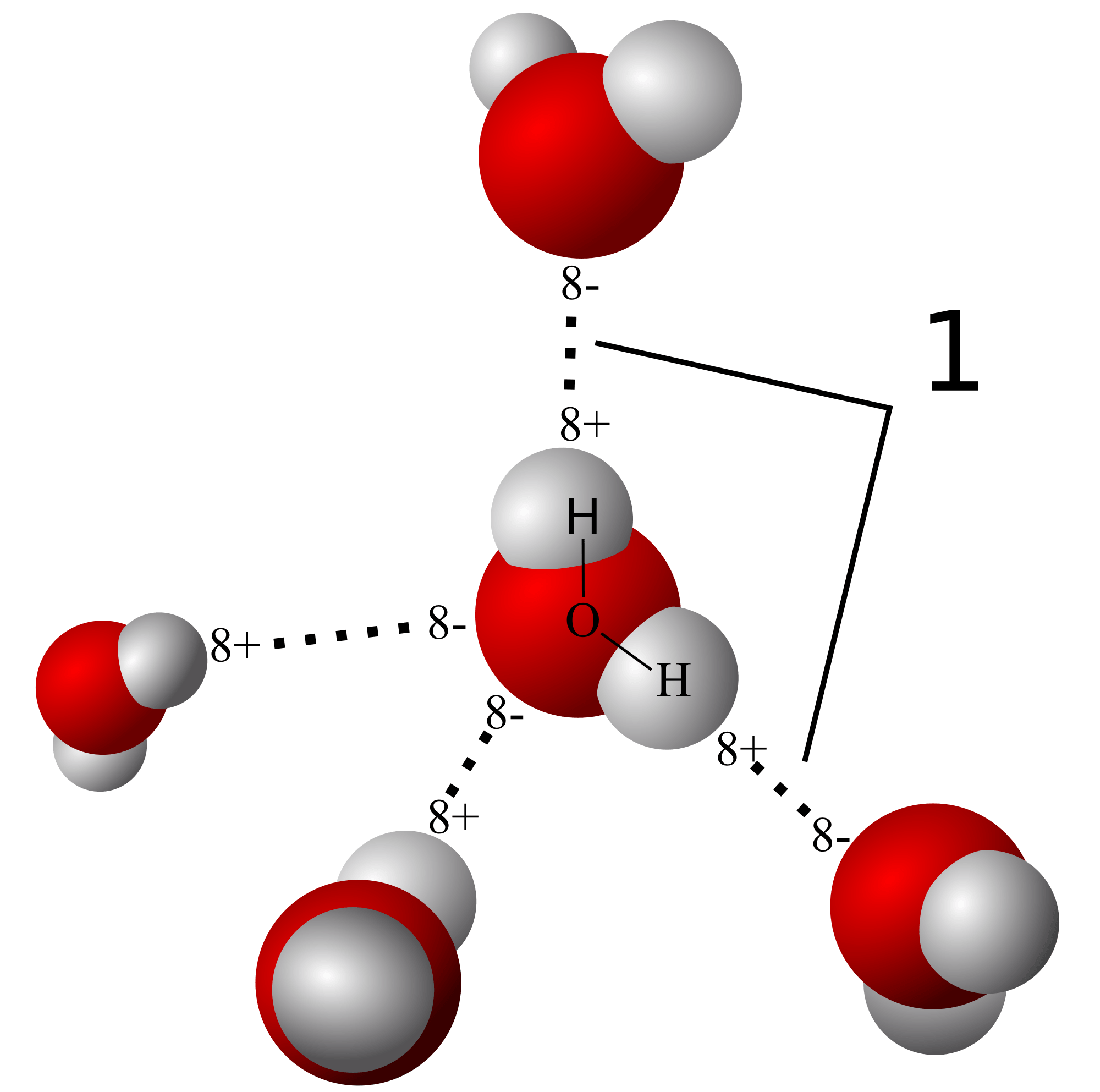
Which side of the water molecule has a slightly positive charge?

a)

Oxygen

b)

Hydrogen

c)

It's all positive

d)

It's all negative

125.

Which side of the water molecule has a slightly negative charge?

a)

It's all negative

b)

It's all positive

c)

Hydrogen

d)

Oxygen

126.

What kind of Bond does a water molecule have?

a)

Ionic

b)

Polar Covalent

c)

Non Polar Covalent

d)

Metallic

127.

What is the boiling point of water?

a)

0 C

b)

100 C

c)

200 C

d)

50 C

128.

What is the freezing point of water?

a)

0 C

b)

100 C

c)

200 C

d)

50 C

129.

True or False: Ice is Less Dense than Water

a)

True

b)

False

130.

What is the property of the surface of a liquid that allows it to resist an external force, due to the cohesive nature of its molecules?

a)

Cohesion

b)

Surface Tension

c)

Adhesion

d)

Polarity

131.

What is Adhesion?

a)

Water molecules ability to stick to each other

b)

Water molecules ability to stick to other surfaces

c)

Water molecules ability to conduct electricity

d)

Water molecules ability to melt

132.

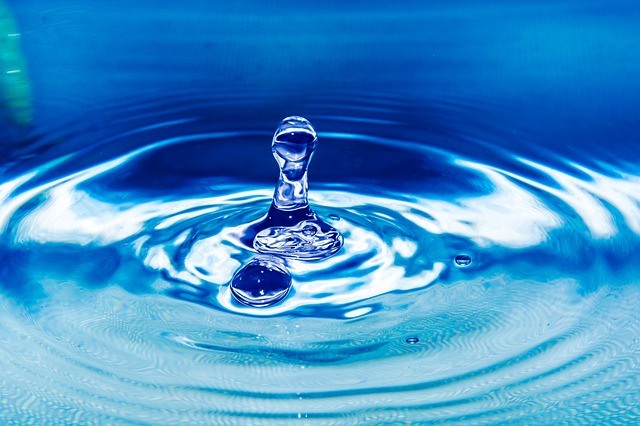
What water phenomenon can be observed in this photo?

a)

Water dissolving

b)

Capillary Action

c)

Chemical Reaction

d)

Photosynthesis

133.
What property of water allows it to be such a versatile solvent that it is often called the "universal solvent?"
a)
Purity
b)
Polarity and cohesion
c)
High heat capacity
d)
Expansion upon freezing
134.
Large bodies of water do not quickly fluctuate in temperature. Why?
a)
Water is a solvent.
b)
Water has a high heat capacity.
c)
Water acts as a buffer.
d)
Water is non-polar.
135.
Attractions between water molecules are called
a)
Covalent bonds
b)
Ionic bonds
c)
Polar bonds
d)
Hydrogen bonds
136.
Which is NOT a unique property of water?
a)
Frozen water floats on liquid water.
b)
Water covers most of the Earth’s surface and retains a large amount of heat.
c)
Water molecules stick to each other through hydrogen bonds.
d)
Water cools very rapidly.
137.
What property of water helps to moderate earth's temperature?
a)
adhesion
b)
chohesion
c)
Specific heat capacity
d)
Latent heat of vaporization
138.
Water is polar because...
a)
The unequal sharing of electrons gives the water molecule a slight negative charge near its oxygen atom and a slight positive charge near its hydrogen atoms.
b)
The molecule has two poles, at which the it is colder than other regions of the molecule.
c)
The unequal sharing of electrons gives the water molecule a slight negative charge near its hydrogen atoms and a slight positive charge near its oxygen atom.
d)
The water molecule is neutral.
139.
Which types of compounds dissolve easily in water?
a)
Polar and Nonpolar
b)
Polar and Ionic
c)
Nonpolar and Ionic
d)
Covalent and Nonpolar
140.
What is the chemical formula for water?
a)
H20
b)
h2o
c)
H2O2
d)
H2O
141.
What is adhesion?
a)
Water's ability to stick to itself
b)
Water's ability to stick to other substances
c)
The strength of the cohesion of all the water molecules combined
d)
Tape, glue and other adhesives
142.
What is cohesion?
a)
Water's ability to stick to itself
b)
Water's ability to stick to other substances
c)
The strength of the cohesion of all the water molecules combined
d)
Tape, glue and other adhesives
143.
Water is a universal solvent because it...
a)
It can be found anywhere
b)
It freezes when it gets cold
c)
floats when frozen
d)
Dissolves most substances
144.
Large bodies of water, such as lakes and oceans, do not quickly fluctuate in temperature. What is the reason for this phenomenon?
a)
Water is an acid.
b)
Water is a versatile solvent.
c)
Water has a high heat capacity.
d)
 Water acts as a buffer.
145.

What characteristic is shown in the image?

a)

Polarity

b)

Hydrogen Bonds

c)

Cohesion

d)

Adhesion

146.

Water has ... specific heat. Meaning, it takes ... time to warm up a large amount of water.

a)

high/ long 

b)

high/ short

c)

low/long

d)

low/ short

147.
What is a solute?
a)
The substance that does the dissolving in a solution.
b)
The substance that is dissolved into the solution.
c)
The mixing of different substances.
d)
The process in which neutral molecules lose or gain electrons
148.
What is a solvent?
a)
The substance that does the dissolving in a solution.
b)
The substance that is being dissolved in a solution.
c)
The mixing of different substances.
d)
The process in which neutral molecules lose or gain electrons
149.
The pH scale is a range from:
a)
1-7
b)
0-14
c)
1-14
d)
1-20
150.
A(n) ______ is a substance with a pH less than 7
a)
Acid
b)
Alkaline
c)
Base
d)
Buffer
151.
A(n) _______ is a substance with a pH greater than 7.
a)
Base
b)
Acid
c)
Buffer
d)
Water
152.
Which solution releases H+ in solution?
a)
Base
b)
Acid
c)
Buffer
d)
Water
153.
This substance releases OH- into solution
a)
Acid
b)
Base
c)
Neutral
154.
A solution with a pH of 3.6 would be...
a)
Acid
b)
Base
c)
Neutral
d)
Acid and Base
155.
A solution with a pH of 8.6 would be...
a)
Acid
b)
Base
c)
Neutral
d)
Acid and Base
156.
According to the pH range which substance is more acidic than lemon juice
a)
Hydrochloric acid
b)
cabbage
c)
milk
157.
Bleach is a strong base, what is the pH level of bleach?
a)
13
b)
14
c)
1
d)
2
158.

What does pH measure?

a)

the amount of hydrogen (H+) ions

b)

the amount of hydroxide (OH-) ions

c)

amount of water

d)

all of the above

159.

For every power of 10 in concentration of hydronium ions, the pH will change how much?

a)

1

b)

2

c)

10

d)

100

160.
What is the pH of water?
a)
0
b)
4
c)
7
d)
14
161.

A combination of particles of one or more substance that are distributed uniformly throughout another substance is a/an

a)

Mixture

b)

Substance

c)

Solution

162.
Buffer is defined as
a)
ability to resist pH change
b)
ability to prevent pH from decreasing
c)
ability to resist a pH increase
d)
ability to resist pH change when small amount of acid added
163.
How is acid rain formed?
a)
Carbon monoxide and carbon dioxide mix with water in the ocean.
b)
Carbon dioxide and oxygen mix with water in the air.
c)
Sulfur dioxide and carbon monoxide mix with lake water.
d)
Sulfur dioxide and nitrogen oxide mix with water in the air.