wayground logo

Free Printable Worksheets

Font size

S
M
L
XL
Worksheets

Bio 2 - S1 Final Review

Total questions: 158

Worksheet time: 4hrs 38mins

Name
Class
Date
1.
A series of steps used by scientists to solve a problem or answer a question. 
a)
scientific method
b)
recipe
c)
data collection
d)
metric system
2.
A testable explanation to a problem that has not yet been tested. 
a)
data
b)
theory
c)
hypothesis
d)
fact
3.
This variable in an experiment is the one being changed by the scientist. 
a)
dependent variable
b)
independent variable
c)
data
d)
control group
4.
Testing a hypothesis often involves a(n):
a)
answer
b)
experiment
c)
problem
d)
safety check
5.
The summary at the end of an experiment that explains the results. 
a)
conclusion
b)
procedures
c)
materials
d)
responding variable
6.
The name of the information that you get from your experiment (you organize it into charts and graphs).
a)
observations
conclusion
b)
data
c)
variables
d)
hypothesis
7.
An experiment is performed on plants to see how different liquids affect plant growth. Each plant in the experiment is given a different liquid; water, apple juice, or milk. Each plant has the same amount of soil, sunlight, and listens to the same music. In this investigation, the independent variable is ...
a)
The type of plant
b)
The amount of sunlight
c)
The type of music
d)
The type of liquid
8.
Dependent variable means
a)
the scientist controls what to test
b)
educated guess
c)
ask a question
d)
what is being measured
9.
If you increase the amount of spinach you eat, then you will increase the iron in your blood. 
What's the dependent variable?
a)
increase the amount of iron in your blood
b)
spinach you eat
10.
If I ride my bike to school instead of walking, then I will get to school faster. What is the dependent variable?
a)
True
b)
How fast you get to school
c)
Riding a bike or walking
d)
False
11.
Will a construction paper air plane fly faster than an airplane made from notebook paper? Choose the best hypothesis.
a)
If I make a paper airplane from notebook paper, then it will fly faster than construction paper.
b)
Yes.
c)
No.
d)
I think the construction paper air plane will fly faster.
12.
If I study for my scientific method test, then I will have a better test score. What is the dependent variable?
a)
Scientific Method
b)
Studying
c)
Independent variable
d)
Test score
13.
Mr. McNiece wanted to see how different types of music affected students' pulse rates. She played different types of music: heavy metal, rap, R&B, alternative, pop, country, and classical music. What constant should be considered when doing this experiment?
a)
types of music
b)
use all dead people
c)
using a different student for each music type
d)
amount of time the music was played
14.

Eiko is doing an experiment to determine the best fertilization plan for bean plants.


She will test four groups of four plants using this schedule.


Which group is the control group?

a)

Group A

b)

Group B

c)

Group C

d)

Group D

15.

A drug company is testing a new medicine. They give one group of test subjects the new medicine in a tablet. They give the other group an identical tablet with no medicine.


What is the best reason that one group gets a matching tablet with no medicine?

a)

to find out how long it takes people to get well with no medicine

b)

to find out whether people really get well or if they are just pretending

c)

to be sure it is the medicine that makes people well and not anything else

d)

to find out whether the new medicine makes people more sick than people who get no medicine

16.

A gardener is doing an experiment. He is trying to find the solution of nutrients and water that is best for growing carrots.


He plants four groups of carrots. Which group shows that no nutrients were provided?

a)

Group A

b)

Group B

c)

Group C

d)

Group D

17.

HOW MANY KINGDOMS ARE THERE?

a)

4

b)

5

c)

6

d)

7

18.

MUSHROOMS ARE IN WHAT KINGDOM

a)

PLANT

b)

ANIMAL

c)

FUNGI

d)

PROTIST

19.

APES BELONG TO WHAT KINGDOM

a)

PLANT

b)

ANIMAL

c)

FUNGI

d)

PROTIST

20.

RINGWORM IS CAUSED BY MEMBERS OF WHAT KINGDOM

a)

PLANT

b)

ANIMAL

c)

PROTIST

d)

FUNGI

21.
This domain is characterized by ancient bacteria that can live in extreme environments, such as volcanoes.
a)
Archaea
b)
Bacteria
c)
Eukarya
d)
Prokarya
22.
What are the three domains?
a)
Archaea, Bacteria, and Eubacteria
b)
Archaea, Protists, and Eubacteria
c)
Archaea, Bacteria, and Eukarya
d)
Archaea, Fungi, Animalia
23.
The domain Eukarya has 4 kingdoms, protista, fungi, plantae and ________.
a)
Animalia
b)
Mammalia
c)
Crustacea
d)
Amphibia
24.
Cells that have a nucleus are called....
a)
eukaryotes
b)
prokaryotes
c)
unicellular
d)
multicellular
25.
Bacteria are one-celled and have no nucleus. What are they classified as?
a)
Eukaryote
b)
Prokaryote
26.

Bacteria and archaea are similar because both _________________.

a)

are eukaryotes

b)

are prokaryotes

c)

have the same kind of cell wall

d)

store their DNA in a nucleus

27.
Which two kingdoms are entirely multicellular?
a)
Animalia and Plantae
b)
Animalia and Protista
c)
Protista and Plantae
28.
The study of animal behavior
a)
biology
b)
ecology
c)
ethology
d)
behaviorology
29.
What is the definition of behavior
a)
animal's response to a stimulus
b)
animal's type of communication
c)
animal's care of offspring
d)
animal's main characterisitics
30.

Which of the following is NOT an example of a stimulus?

a)

Sight

b)

Sound

c)

Smell

d)

Reflex

31.
An internal stimulus happens ____________ the body
a)
outside
b)
inside
c)
behind
d)
under
32.

A bark, snort, growl, and hoot are all examples of what type of communication

a)

visual communication

b)

auditory communication

c)

tactile communication

d)

chemical communication

33.
When animal learns to ignore harmless stimuli like a scarecrow, what type of learning is this? 
a)
innate learning
b)
classical conditioning 
c)
habituation 
d)
trial and error learning 
34.

The scent of food is an example of a (an) ____ stimulus.

a)

innate

b)

external

c)

internal

d)

habitual

35.

A (an) ____ is an environmental change that directly influences the activity of an organism.

a)

stimulus

b)

behavior

c)

innate response

d)

fixed action pattern

36.

Which is an example of innate behavior?

a)

pond ducks flocking to be fed

b)

bears learning to catch fish

c)

human babies speaking words

d)

birds chirping when hatched

37.

Which behavior is genetically based and NOT linked to past experiences?

a)

innate behavior

b)

habituation

c)

operant conditioning

d)

classical conditioning

38.

A spider will not stop making a web once it has started, even if another stimulus interrupts or disrupts the web. This is an example of a .........

a)

stimulus

b)

genetic behavior

c)

fixed action patern

d)

learned behavior

39.

________________ behaviors result from an interaction between innate behaviors & past experiences.

a)

Genetic

b)

Hunting

c)

Innate

d)

Learned

40.

This type of innate behavior occurs when an animal carries out a specific set of actions, in sequence, in response to a stimulus.

a)

imprinting

b)

fixed action pattern

c)

habituation

d)

classical conditioning

41.
Traveling to a different region during different times of the year
a)
Migration
b)
Communication
c)
Hibernation
d)
Competition
42.
A dog rolls over and gets a treat, so she rolls over again. This is an example of a...
a)
learned behavior
b)
inherited behavior
c)
physical trait
d)
instinct
43.

An example of a reflex action includes

a)

Touching a butterfly

b)

Brushing your hand against the side of your body

c)

Touching a hot stove

d)

Your legs moving as you walk

44.

An animal that becomes sedentary and covers itself in slime during hot summer months to prevent itself from drying out is using:

a)

Ick Factor

b)

torpor

c)

estivation

d)

hibernation

45.

Behavior: Amy ran away


Consequence: Her parents changed the locks

a)

+ reinforcement

b)

-- reinforcement

c)

+ punishment

d)

-- punishment

46.

Behavior: Jack mows the lawn


Consequence: He receives an allowance

a)

+ reinforcement

b)

-- reinforcement

c)

+ punishment

d)

-- punishment

47.

Behavior: Zane has his phone out in class


Consequence: He gets it taken away

a)

+ reinforcement

b)

-- reinforcement

c)

+ punishment

d)

-- punishment

48.

Behavior: Ingrid was drunk driving


Consequence: She went to jail

a)

+ reinforcement

b)

-- reinforcement

c)

+ punishment

d)

-- punishment

49.

A bell rings, then a puff of air into the eye causes a reflexive blink. After this happens on several occasion, the bell ringing alone causes a conditioned reflexive blink. This is an example of:

a)

operant conditioning

b)

classical conditioning

c)

fixed action pattern

d)

reflex behavior

50.

Skunk Spraying

a)

Auditory

b)

Visual

c)

Tactile

d)

Chemical

51.

A mouse squeaking to warn others of preditors

a)

Auditory

b)

Visual

c)

Chemical

d)

Tactile

52.

A person wearing cologne to feel more confident in themselves

a)

Visual

b)

Auditory

c)

Chemical

d)

Tactile

53.

A dog standing at its dog bowl

a)

Chemical

b)

Visual

c)

Auditory

d)

Tactile

54.

Pheromones

a)

Chemical

b)

Tactile

c)

Visual

d)

Auditory

55.

A cat purring when you pet it

a)

Auditory

b)

Visual

c)

Chemical

d)

Tactile

56.

A dog licking you in the face

a)

Auditory

b)

Visual

c)

Tactile

d)

Chemical

57.
Which are examples of fungi?
a)
mold
b)
yeast
c)
mushrooms
d)
all of the above
58.
Fungi are like animals because...
a)
they all reproduce sexually.
b)
they get their food from other organisms.
c)
they can move from one place to another.
d)
They are not like animals.
59.
What part of a fungus is described as long, thread-like structures that absorb nutrients?
a)
roots
b)
fruiting body
c)
hyphae
d)
spores
60.
What part of a fungus is used for reproduction?
a)
spores
b)
flagellum
c)
cilia
d)
hyphae
61.
What vocabulary word describes the breaking down of dead things and recycling it's nutrients through the food chain?
a)
Symbiosis
b)
Decomposing
c)
Budding
d)
Mycelium
62.
How can humans benefit from fungi?
a)
 Eats the bacteria in their yards.
b)
Makes pretty flower-like structures.
c)
Used in dish soaps
d)
Used in antibiotics
63.
A collective mass of hyphae are referred to as ____________
a)
parasitic
b)
fruiting
c)
mycelium
d)
spores
64.

Which is not one of the three domains?

a)

Archaea

b)

Bacteria

c)

Eukarya

d)

Fungaea

65.
Mold is classified into which of the following kingdoms?
a)
plantae
b)
fungi
c)
protista
d)
bacteria
66.
Which correctly lists the 6 kingdoms?
a)
Animal, plant, protist, fungus, bacteria, archaea 
b)
Chytrids, zygomycetes, glomeromycetes, ascomycetes, basidiomycetes, rhizae
67.
All of the following are examples of fungi except one.  Which of the following is NOT a type of fungus?
a)
yeast
b)
mold
c)
mushroom
d)
algae
68.
__________ are fungi that produce the gas that makes bread rise.
a)
mushrooms
b)
athlete's foot
c)
blue cheese
d)
yeast
69.
Fungi can be 
a)
decomposers or producers
b)
consumers or producers
c)
consumers or decomposers
d)
none of these
70.
Any method of reproducing that create offspring identical to the single parent. 
a)
asexual
b)
budding
c)
sexual
d)
sporogenesis
71.
Fungi that feed on and HELP the host.
a)
mutualistic
b)
parasitic
72.
Most Fungi are multicellular organisms. This means they are made of:
a)
one cell
b)
more than one cell
c)
no cells
73.
What term is used for fungi that feed on living organisms but cause harm to the organism?
a)
Saprophytic
b)
Parasitic
c)
Cilia
d)
ymbiotic
74.
Athlete's foot would be considered
a)
commensalistic
b)
mutualistic
c)
parasitic
75.
An antibiotic made from a species of thread-like fungus.
a)
lichen
b)
mold
c)
penicillin
d)
asprin
76.
Spores are tiny structures that are used by Fungi during both sexual and asexual reproduction. What can you infer about how these spores are dispersed (moved from place to the other)?
a)
They are carried by wind, water or animals
b)
The parent fungus moves the spores to another location
c)
The spores must ONLY grow directly beside the parent
77.
Look at the picture at number 7. Instead of roots, fungi have long fibrous strands that they use to absorb water and nutrients called:
a)
basidia
b)
hyphae
c)
mycellium
78.
Look at the picture at number 8. This is an underground network or group of hyphae called:
a)
hyphen
b)
hyphae
c)
mycellium
79.
Look at the picture. The part of the mushroom that is above ground is known as the:
a)
fruiting body
b)
hyphae
c)
mycellium
80.
Fungi produce millions of ____________________which are lightweight and easily carried through the air or water.
a)
buds
b)
gills
c)
spores
d)
hyphae
81.
Fungi can be helpful to humans and the environment because they can...
a)
decompose matter
b)
be used to create medicines
c)
can be used to create yummy food
d)
all of the above
82.
Many fungi and trees have a ___________________________relationship in which the tree provides food for the fungi and the fungi provide the tree with extra water and nutrients.
a)
mutualistic
b)
parasitic
83.
Lichen:
a)
Mutualistic association between fungus and algae/autotrophic bacteria
b)
Mutualistic relationship between fungus and tree roots 
c)
Parasitic association between fungus and algae/autotrophic bacteria
d)
Parasitic relationship between fungus and tree roots
84.
Lichen:
a)
Good indicator for air quality
b)
Often mistaken for one organism, when really is made of two
c)
Over time, turn rock to soil
d)
All of the above
85.
In lichen, the fungi benefits because....
a)
the algae/autotrophic bacteria produce the food
b)
the algae/autotrophic bacteria have roots
c)
the algae/autotrophic bacteria provide shade
d)
the algae/autotrophic bacteria reproduce faster
86.
In lichen, the algae/autotrophic bacteria benefit because...
a)
the fungi give shelter
b)
the fungi give water
c)
all of the choices
d)
the fungi gives minerals by breaking down rock
87.
Lichen are excellent bioindicators because they are the first to ___________when pollution rises.
a)
grow
b)
die
c)
reproduce
d)
turn bright pink
88.
Which describes a fungi?
a)
eukaryotic heterotroph 
b)
prokaryotic heterotroph
c)
eukaryotic autotroph
d)
prokaryotic autotroph
89.
The threadlike structures that fungi use to obtain food are called?
a)
Spores
b)
Roots
c)
Stems
d)
Hyphae
90.
All fungi have cell walls made of _.
a)
cellulose
b)
glucose
c)
chitin
d)
sucrose
91.
A unique feature of fungal decomposition is that organic material is digested _ the fungal cells.
a)
inside
b)
outside
c)
nucleus
d)
between
92.
___________ is a drug used to fight bacterial infections and was produced using mold
a)
penicillin
b)
aflatoxin
c)
mycorrhizae
d)
hydrogen peroxide
93.
_______ is a fungal interaction with plants that helps them absorb minerals like phosphorus. 
a)
mycorrhizae
b)
mycelia
c)
penicillium
d)
rhizoid
94.
Unlike plants, fungi can't make their own sugars, so they are classified as ______
a)
heterotrophs
b)
autotrophs
c)
chemotrophs
d)
sporophytes
95.
Mycorrhizae would _______ a plant
a)
help
b)
harm
96.
Which variety of fungus most often forms mycorrhizae with plants?
a)
chytrids
b)
glomeromycetes
c)
ascomycetes
d)
basidiomycetes
97.
To what domain does Kingdom Fungi belong?
a)
Eukarya
b)
Archaea
c)
Bacteria
98.
What is the tangled, underground network of hyphae that makes up the largest portion of a fungus?
a)
Mycelium
b)
Basidia
c)
Gills
d)
Fruiting Body
99.
What is the above-ground, reproductive structure produced by fungi?
a)
Fruiting body
b)
Hyphae
c)
Mycelium
d)
Chitin
100.
The cells walls of fungi are made of a chemical compound known as ____________.
a)
Chitin
b)
Cellulose
c)
Phospholipid Bilayer
d)
Calcium Carbonate
101.
Certain fungi exists in mutualistic relationships with plants, wrapping around the roots of the plant. This increases the surface area of the plant roots and allows them to absorb more nutrients. Fungi in this relationship are known as _____________.
a)
Mychorrizae
b)
Lichen
c)
Diatoms
d)
Bracket Fungi
102.
True or False: Spores are used for both asexual and sexual reproduction in fungi.
a)
True
b)
False
103.
When fungi reproduce sexually, the offspring fungi are genetically ________________ from the parent fungi.
a)
different from
b)
identical to
104.
Spores have flagella; common in lakes/ponds/soil; responsible for amphibian decline
a)
chytrids
b)
zygomycetes
c)
ascomycetes
d)
basidiomycetes
105.
Attack break and fruit; fast growing; common mold is an example
a)
glomeromycetes
b)
ascomycetes
c)
zygomycetes
d)
chytrids
106.
Club fungus; mushrooms/puffballs/shelf fungus; quintessential fungus
a)
basidiomycetes
b)
glomeromycetes
c)
ascomycetes
d)
zygomycetes
107.
Form mycorrhizae called arbuscules
a)
glomeromycetes
b)
chytrids
c)
ascomycetes
d)
zygomycetes
108.
Form sac-like structures for sexual reproduction; yeast/morels/cup fungus are examples
a)
Ascomycetes
b)
Chytrids
c)
Zygomycetes
d)
Glomeromycetes
109.
Which of the following is a "club fungus."
a)
Basidiomycetes
b)
Deuteromycetes
c)
 Ascomycetes 
d)
Zygomycetes
110.
When a seed sprouts and begins the early growth of a young plant.
a)
germination
b)
pollination
c)
seed dispersal
d)
fertilization
111.
All of the following are examples of seed disbursement except:
a)
wind
b)
volcanic eruptions
c)
physical movement (rolling)
d)
animals feces
112.
Why is photosynthesis important for plants?
a)
It collects sunlight which is used to make food for plants
b)
It gets rid of plant waste products
c)
It changes plant sugar into stronger chemicals
d)
It helps attract insects to flowers
113.
This is a group of vascular plants where their seeds are not surrounded by a fruit?
a)
dicots
b)
monocots
c)
angiosperms
d)
gymnosperms
114.

This type of vascular plant produces flowers that have seeds enclosed in a fruit.

a)

angiosperms

b)

gymnosperms

c)

bryosperms

d)

evergreens

115.
All flowering plants are ________________.
a)
gymnosterms
b)
angiosperms
c)
ugly
d)
non-vascular
116.
A pine tree is an example of a(n)
a)
Gymnosperm
b)
Angiosperm
c)
Sporophyte
117.
A dandelion is an example of a(n)
a)
Gymnosperm
b)
Angiosperm
c)
Sporophyte
118.
This part of the plant is where photosynthesis occurs.
a)
Flowers
b)
Leaves
c)
Roots
d)
Stem
119.
What two characteristics distiguish angiosperm from gymnosperm?
a)
Angiosperm seeds are fully covered and produce flowers.
b)
Angiosperm seeds are not fully covered and produce flowers.
c)
Angiosperm seeds are fully covered and do not produce flowers.
d)
Angiosperm seeds are not fully covered and do not produce flowers.
120.
Which of the two main groups of seed plants do conifers, or cone-bearing plants, belong?
a)
gymnosperm
b)
angiosperm
c)
vascular
d)
non-vascu
121.
Plants are:
a)
autotrophic eukaryotes, have cell walls
b)
autotrophic prokaryotes, have cell walls
c)
heterotrophic eukaryotes, have cell walls
d)
heterotrophic prokaryotes, have cell membranes
122.
Plants need sunlight, carbon dioxide & water for __.
a)
photosynthesis
b)
respiration
c)
growth
d)
mitosis
123.
The first plants to evolve lived __.
a)
in water.
b)
on land.
c)
in the desert.
124.
Plants have a cuticle, gametes & vascular tissue to enable them to __.
a)
live on land
b)
produce their own food
c)
produce energy
d)
reproduce
125.
Vascular tissue which carries water upward from the roots.
a)
xylem
b)
phloem
c)
nutrients
d)
carbon dioxide
126.
Vascular tissue that carries nutrients and carbohydrates.
a)
phloem
b)
xylem
c)
chloroplasts
d)
glucose
127.
Dried/ground seeds/fruit of several angiosperms are commonly used as
a)
spices
b)
fossil fuels
c)
stomata
d)
hair product
128.
Pollination is most often achieved with the help of
a)
Animals
b)
Water
c)
Photosynthesis
d)
Leaves
129.
Most of the world's food supply comes from 
a)
Moss
b)
Dry fruit of angiosperms
c)
Fleshy fruit of angiosperms
d)
Gymnosperms
130.
How can agriculture become more sustainable?
a)
Only farm native/local plants
b)
Genetically modify the crops
c)
Protect biodiversity 
d)
All of these
131.

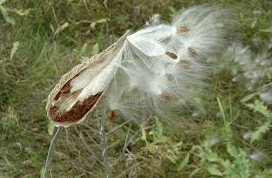
I am a seed with parachute-like structures. What is likely my dispersal method?

a)

wind

b)

water

c)

animals

d)

explosive action

132.
I have hooks to cling to animal fur. What is likely my dispersal method?
a)
wind
b)
water 
c)
animals
d)
explosive action
133.
The movement of pollen from one plant to another is called _________.
a)
dispersion
b)
pollination
c)
fruits
d)
seedlings
134.
Animals _________ plant pollination and seed dispersal.
a)
hurt
b)
make no difference to
c)
destroy
d)
help
135.
Animals disperse seeds by _________.
a)
eating seeds and dropping waste later on
b)
hiding seeds for late and not coming back for them
c)
catching seeds on their fur and carrying them to different places
d)
all of the above
136.
Definition: Found on roots and stems and helps increase the plant's length.
a)
Apical Meristem
b)
Epidermis
c)
Guard Cells
d)
Sap
137.
What process occurs when light energy is captured in autotrophs and converted into sugar?
a)
Photosynthesis
b)
Cellular Respiration
138.
What is the pigment in chloroplasts that performs photosynthesis?
a)
Chlorosynthesis
b)
Chlorophyll
c)
ADP
d)
Electron Transport
139.
Which gas is removed from the atmosphere during photosynthesis?
a)
hydrogen
b)
oxygen
c)
nitrogen
d)
carbon dioxide
140.
Leaves look green because.....
a)
they eat their vegetables
b)
to blend into their environment
c)
they contain a molecule named chlorophyll
d)
they are sick
141.
A waxy layer that holds in moisture in plants.
a)
lignin
b)
cuticle
c)
pollination
d)
seed
142.
A complex polymer that hardens cell walls of some vascular tissues in plants.
a)
cone
b)
seed
c)
lignin
d)
fruit
143.
A structure used by some land plants to store and protect the embryo.
a)
cone
b)
seed
c)
flower 
d)
fruit
144.
Reproductive structure of gymnosperms inside of which the female gamete is fertilized and seeds are produced
a)
cone
b)
seed
c)
monocot
d)
dicot
145.
A reproductive structure of an angiosperm
a)
cone
b)
flower
c)
gymnosperm
d)
lignin
146.

Which phyla has a soft unsegmented body and can be protected by a shell?

a)

Mushroom

b)

Mollusks

c)

Echinoderm

d)

Annelid

147.

This phylum means spiny skin and lives in water

a)

Echinoderm

b)

Arthropods

c)

Mollusks

d)

Annelids

e)

Cnidarians

148.

This phylum has a medusa and polyp stage, stinging tentacles, and radial symmetry. What phyla is it?

a)

Arthropods

b)

Annelids

c)

Cnidarian

d)

Echinoderms

e)

Mollusks

149.

Which of the following organisms belong to phylum echinoderm?

a)

Snails, octopus, squid, and slugs

b)

Insects, crustaceans, and spiders

c)

Jelly fish, corals, and sea anemones

d)

Brittle stars, sea cucumbers, sea stars, and sea urchins

150.

Which domain do all organisms under Kingdom Animalia belong?

a)

Archae

b)

Eubacteria

c)

Eukarya

151.

Select the phyla with bilateral symmetry

a)

Cnidarians

b)

Echinoderm

c)

Annelids

152.
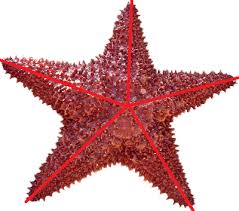
What type of symmetry is displayed in the picture?
a)
asymmetry
b)
bilateral symmetry
c)
radial symmetry
d)
photosynthesis
153.
Identify this animal.
a)
sponge
b)
cnidarian
c)
flatworm
d)
segmented worm
154.
Identify this animal.
a)
sponge
b)
cnidarian
c)
roundworm
d)
flatworm
155.
Organisms, like sponges, lacking body tissues and body symmetry belong to which of the following phyla?
a)
Cnidaria
b)
Mollusca
c)
Nematoda
d)
Porifera
156.
Mollusks include which of the following?
a)
Octopus, Squid, Slugs, Snails
b)
Fish, Squid, Jellyfish, Sea cucumbers
c)
Sea stars, Sea cucumbers, sea urchins
d)
Oysters, Fish, Whales, Sponges
157.
Which of the following is a flagellated cell (flagella) which sweeps water through a sponge's body?
a)
choanocyte
b)
amoebocyte
c)
neuron
d)
coelom
158.
Animals that are segmented and have jointed appendages and an exoskeleton are members of the phylum
a)
platyhelminthes
b)
arthropoda
c)
annelida
d)
cnidaria