
Font size
 Worksheets
Africa Unit Test Review
Total questions: 116
Worksheet time: 1hrs 23mins
Gel Electrophoresis separates molecules by
Shape
Color
Size
Atom

This laboratory procedure is known as
CLONING
gel electrophoresis
chromatography
use of a dichotomous key


What is the correct claim for this crime scene?
Suspect 1 committed the crime.
Suspect 2 committed the crime.
Suspect 3 committed the crime.
Suspect 4 commited the crime.
Need more evidence to make a claim.

Which organelle is responsible making food (Glucose) using sunlight?
Cell Membrane
Nucleus
Chloroplast
Mitochondria
Select all that are products/outputs of Photosynthesis.
Water
Carbon Dioxide
Oxygen
Sunlight (Light Energy)
Glucose (Sugar/food)
Exit: Carbon dioxide
Exit: Glucose
Exit: Oxygen
Exit: Water vapor

What converts nitrogen gas into a usable form for plants and animals?
bacteria
rain
fungi
car exhaust
15 out of 25 kids chose to go swimming at camp. What percent is that?
15%
20%
45%
60%
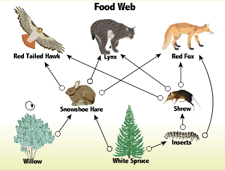


What happens if a population grows past its carrying capacity?
The population keeps growing
The population starts to die off
The entire species will go extinct
The carrying capacity just increases

Something that regulates the size of a population is called...
a limiting measure
a limiting factor
carrying capacity
biodiversity
This may cause a population to increase
increase of food supply
removal of predators
removal of disease
all of these
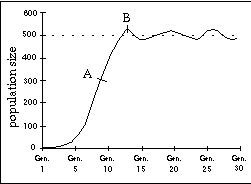
What is the carrying capacity of the graph?
around 500
more than 800
less than 300
around 700
Elephant populations that experience poaching have many more tuskless elephants compared to populations that are protected. Why?
Tusk-less elephants were more likely to survive the poachers
Individuals lost their tusks because they needed to avoid the poachers.
Which of the following are the reactants for Photosynthesis?
O2 + Glucose
O2 + H2O
CO2 + H2O
CO2 + Glucose
Which of the following are the products of cellular respiration?
CO2 + H2O + ATP (Energy)
O2 + Glucose
O2 + H2O + ATP (Energy)
CO2 + H2O + light
Unit of energy
Species
Competition
Energy
Kilocalorie
A lion hunts and kills 1 wildebeest. The total energy available from the wildebeest is 25,000 kcal, and the total energy cost per wildebeest is 10,000 kcal. What is the net energy gained by the lion?
25,000 kcal
10,000 kcal
35,000 kcal
15,000 kcal

What is a keystone species?
A species that helps to hold an ecosystem together.
A species that lives in or around rocks.
An introduced species that is not native to the area.

Based on the graph, what happens to the amount of kelp as sea otter numbers decrease?
As the sea otter population decreases, kelp increases.
As the sea otter population decreases, kelp decreases.
As the sea otter population decreases, kelp doesn't change.

According to the graph, how do plants obtain their nitrogen needs?
Denitrification bacteria
Nitrogen fixing bacteria
The "breathe" it in
Plants don't need nitrogen

What organisms use cellular respiration?
Animals
Plants
Both
Occurs in plants
photosynthesis only
cellular respiration only
photosynthesis and cell respiration
all of the above

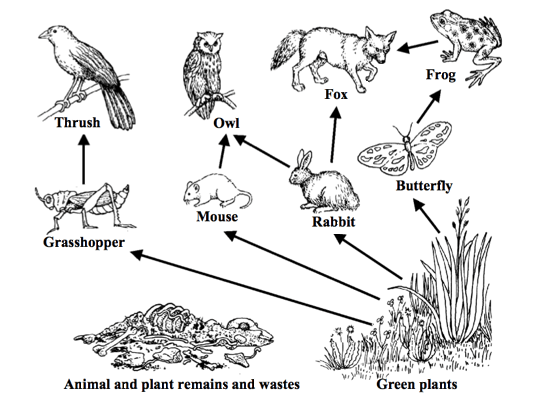
According to the image, what is the producer?
plant
insect
mouse
snake

What are "producers" producing?
the energy for the food chain
the insects for the food chain

The word "primary" means "first."
If that's true, what does primary consumer mean?
Hint: look carefully at the food chain!
the first organism in a food chain
the first organism that consumes something else for energy


Which lion prides are the most closely related according to the phylogenetic tree shown?
sabi sands and tsavo
Zimbabwe and cameroon
Kalahari and umfolozi
etosha45 and stave
How are an individual’s chromosomes grouped when examining a karyotype?
They are in singles
Pairs
Triplets
Grouped in different ways depending on the animal
Which strategy allows lions to be more successful and effective hunters, and why?
Hunt smaller prey solo - they can do it faster alone, still gain enough energy from the prey
Hunt larger prey in a group - they can share the energy cost of hunting, gain more energy
What are the roles of the female lions in the pride?
Raising the cubs
Feeding the pride
Teaching the juveniles how to hunt
All of the above
Which feeding niche makes up secondary (2nd) Consumers?
Producers
Herbivores
Carnivores
Carnivores and/or omnivores
Which trophic level is made up by herbivores?
Producers
Primary (1st) Consumers
Secondary (2nd) Consumers
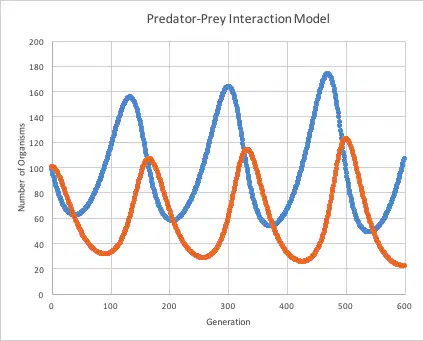
The blue line on the graph represents the population of
predator
prey

Look at the genotype data: Why does each lion have two alleles for each gene?
organisms inherit (receive) one allele from mom and one allele from dad
organisms have two dominant alleles for every gene
organisms have two alleles in case one is not inherited correctly
organisms inherit both alleles from their mother

How many alleles do offspring receive from their father?
0 copies
1 copy
2 copies

What type of evidence are we examining here?
behavioral data
geographic data
genetic data

What do the different letters represent?
B/C N/O S/T D/E
different lions
different chromosomes
different genes
different alleles
Why did we need to examine multiple genes? (choose all that apply)
only FCA 77 gene can tell us who the father is
we need to examine multiple genes to have enough information to eliminate the other males
individuals may share some alleles even if they are not parent and child

Based on the geographic data which pride do you think is likely to show the greatest differences in their alleles from the other prides?
Zambia
Etosha
Cameroon
Kalahari

What cellular process captures light energy and transforms it into chemical energy (that eventually ends up in the lion)?
meiosis
digestion
photosynthesis

This data is showing ...
a karyotype, showing all of the lions chromosomes
a phylogenetic tree, showing how groups of lions are related
a genotype, showing the combination of alleles a lion is carrying
geographic data, showing the location of multiple prides of lions

A gene is best described as...
a special cell to pass on genetic information
a coiled up strand of DNA that carries genes
a section of DNA that codes for a trait
Which of the following would be considered an abiotic factor in the lions' environment that affects their survival?


Which of the following would be considered a biotic factor in the lions' environment that affects their survival?


In a lion cub’s karyotype, how many chromosomes are inherited from the mother lion?
Half
Some
All
None

What percentage of energy gets transferred to each level in the energy pyramid?
1
10
50
100
The word "primary" means "first."
If that's true, what does primary consumer mean?
Hint: look carefully at the food chain!
the first organism in a food chain
the first organism that consumes something else for energy

Which of the animals not worth hunting?
Meerkat
Warthog
Wildebeest
Zebra

Is this animal an herbivore or carnivore? Why?
Carnivore because it has sharp, pointy teeth
Carnivore because it has sharp, flat teeth
Herbivore because it has sharp, pointy teeth
Herbivore because it has sharp, flat teeth

Is this animal an herbivore, carnivore, or omnivore? Why?
Carnivore because it has sharp, pointy teeth
Herbivore because it has sharp, flat teeth
Omnivore because it has large flat teeth in the back
Omnivore because it has both sharp, flat teeth and sharp, pointy teeth

Is this animal an herbivore or carnivore? Why?
Carnivore because it has sharp, pointy teeth
Carnivore because it has sharp, flat teeth
Herbivore because it has sharp, pointy teeth
Herbivore because it has sharp, flat teeth
Giraffe's can eat food at the top of the tree so no one competes. What type of niche partitioning is this?
Time
Height
Diet
Space


Chromosomes line up at the equator of the cell
Spindle fibers extend from the centrioles to the middle of the chromosomes
Prophase
Metaphase
Anaphase
Interphase

Nuclear membrane reforms around the new daughter cells.
Cytoplasm begins to "pinch" in.
Anaphase
Metaphase
Telophase
Interphase

Chromatids separate
Anaphase
Metaphase
Prophase
Telophase

in the cell cycle, what is the next stage after TELOPHASE (most of the time)?
Metaphase
anaphase
cytokinesis
interphase


In the biological process known as mitosis, the two resulting cells are:
different from the starting cell and identical to each other.
different from the starting cell and different from each other.
identical to the starting cell and different from each other.
identical to the starting cell and identical to each other.

This is an onion root cell in the process of mitosis. Which phase is shown?
PROPHASE
METAPHASE
ANAPHASE
TELEOPHASE

This is an onion root cell in the process of mitosis. Look at the the cell identified by the pointer. Which phase of mitosis is this onion cell undergoing?
PROPHASE
METAPHASE
ANAPHASE
TELEOPHASE

Which of the following best describes the reason cells divide?
to improve genetic variation
to decrease genetic mutations
to replace worn out/dead cells
to amplify genome probability
What are the benefits of asking open-ended questions?
There are no benefits
open-ended questions allow you to find out more information
open-ended questions stop the conversation.
What is an open-ended question?
How many pets do you have?
Open Ended Question
Close Ended Question
When is your birthday?
Open Ended Question
Close Ended Question
Why do dogs bark?
Open Ended Question
Close Ended Question
The ecological role an organism performs in their specific environment is considered the organism's...
Habitat
Population
Biome
Niche
the differentiation of niches that enables similar species to coexist in a community
character displacement
climax community
resource partitioning
pioneer species



What gas is given off during photosynthesis?
oxygen
carbon dioxide
nitrogen
carbon
What two reactants are needed for photosynthesis to occur?
water and oxygen
glucose and carbon dioxide
glucose and oxygen
water and carbon dioxide
Which of the following graphs is best for showing how a quantity changes over time?
Pie chart
Scatter plot
Line graph
Bar graph
What does the x-axis typically represent in a graph?
The average value
The dependent variable
The independent variable
The total value

cytokinesis


telophase


Cells spend most of their lives in which phase?
Interphase
Prophase
Telophase
Metaphase

What is the correct order of the phases of Mitosis?
Anaphase, Telophase, Metaphase, Prophase
Metaphase, Prophase, Anaphase, Telophase
Prophase, Metaphase, Anaphase, Telophase
Prophase, Anaphase, Telophase, Metaphase

Identify the stage of the cell cycle shown in Image C.
(a)

The image shows cells in the different stages of mitosis. Which cell is in telophase?
A
B
C
D

What is the main reason elephants are poached?
For their meat
For their skin
For their ivory tusks
For their bones
How does poaching elephants affect the ecosystem?
It increases plant diversity
It disrupts the balance of the ecosystem
It has no effect on other animals
It helps control elephant population
Which of the following best describes niche partitioning?
When all species use resources in the same way
When one species eliminates another from a habitat
When species divide resources to reduce competition
When two species compete for the exact same resources
Which of the following is an example of niche partitioning in a forest ecosystem?
Two bird species feeding on the same insects at the same height
One bird species outcompeting all others for food
Different bird species feeding on insects at different heights in the trees
All birds migrating at the same time
How does niche partitioning contribute to biodiversity?
It leads to all species using the same resources
It decreases the number of species in an ecosystem
It allows multiple species to coexist by reducing direct competition
It causes extinction of weaker species

