
 Worksheets
Lab 4: Phyla Ctenophora, Porifera & Cnidaria
Total questions: 51
Worksheet time: 48mins
once cell type unique to sponges is the ______
neurons
osteocytes
choanocyte
spongin
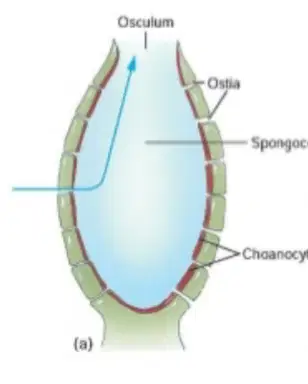
sponges are categorized into three body types, what is the image:
leucon
ascon
sycon
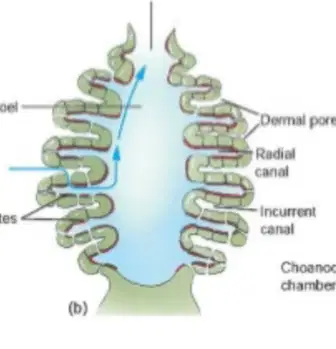
sponges are categorized into three body types, what is the image:
leucon
sycon
ascon
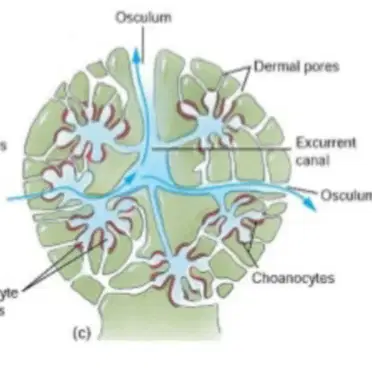
sponges are categorized into three body types, what is the image:
sycon
leucon
ascon
All sponges feed by filtration—specialized cells (a) create water currents that pull in organic particles; they
have no mouth or digestive tract
tiny, needle-like structures found in the bodies of some animals, like sponges. They provide support and protection, kind of like the skeleton of the animal.
(a)
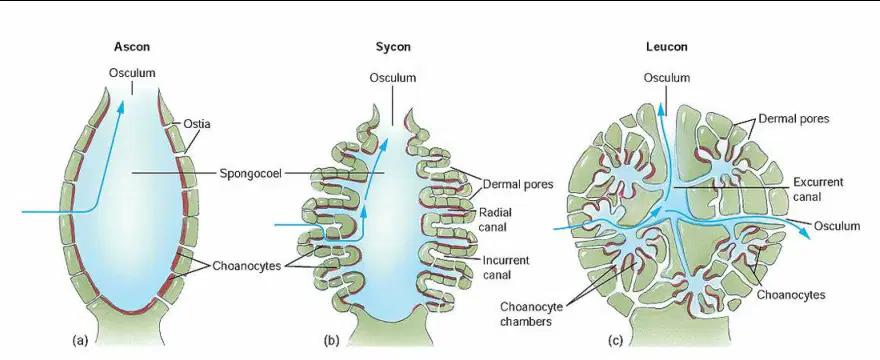
what is the name of the central cavity of the sponge?
(a)
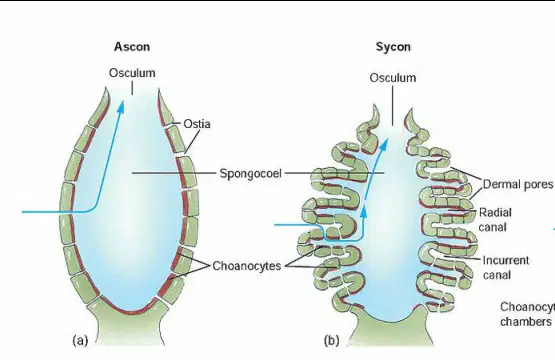
water enters the incurrent canals through external pores (a) and passes through minuscule internal openings into radial canals and to the spongocoel and out the osculum
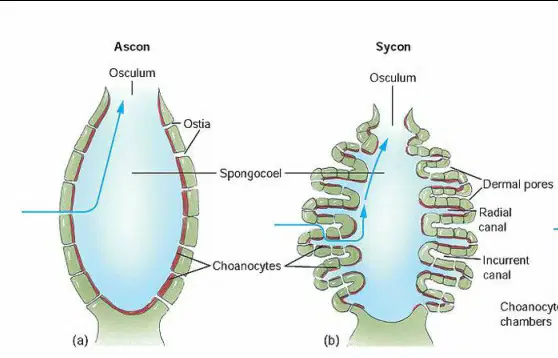
external spaces between these enclosed canals are ________ _______, which open to the outside but end blindly at the inner end.
(a)

identify the structures indicated on the sponge body wall in the figure below:
A
(a)
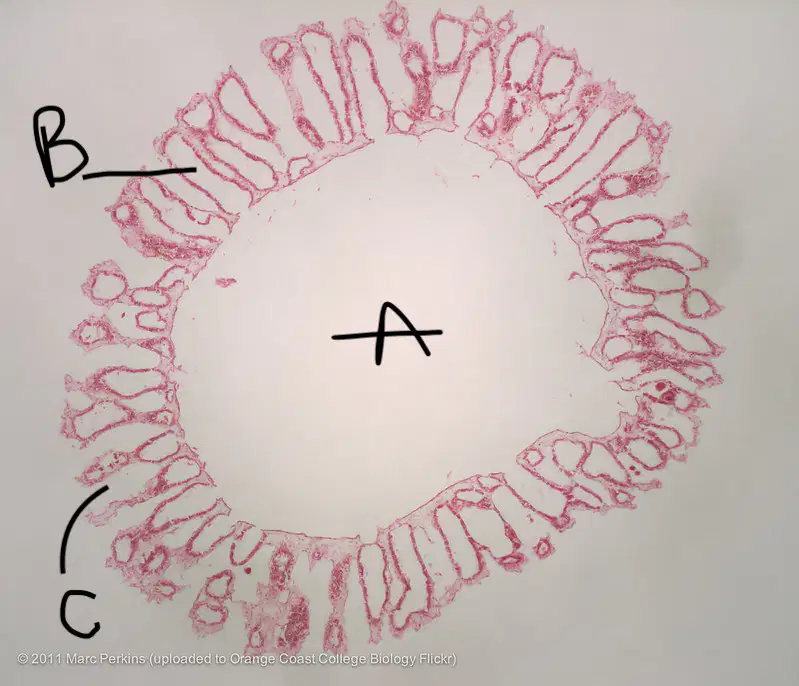
identify the structures indicated on the sponge body wall in the figure below:
B
(a)
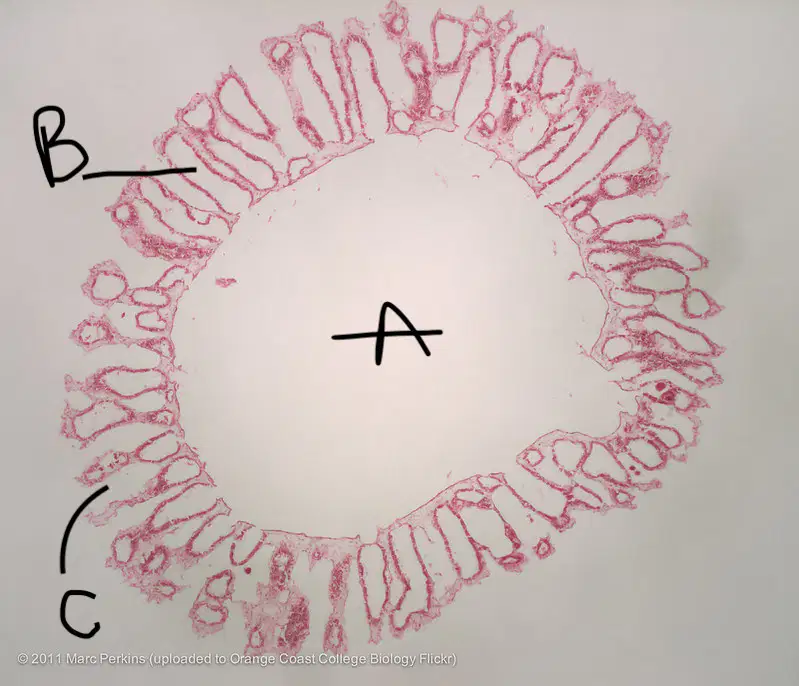
identify the structures indicated on the sponge body wall in the figure below:
C
(a)
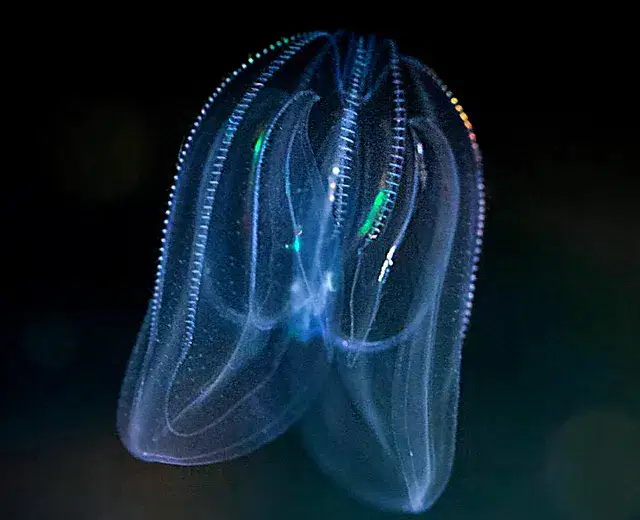
comb jellies belong to what phylum?
(a)
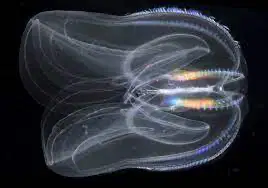
what do ctenophores (comb jellies) lack?
digestive system
tentacles
stinging cells (cnidocytes)
digestive system
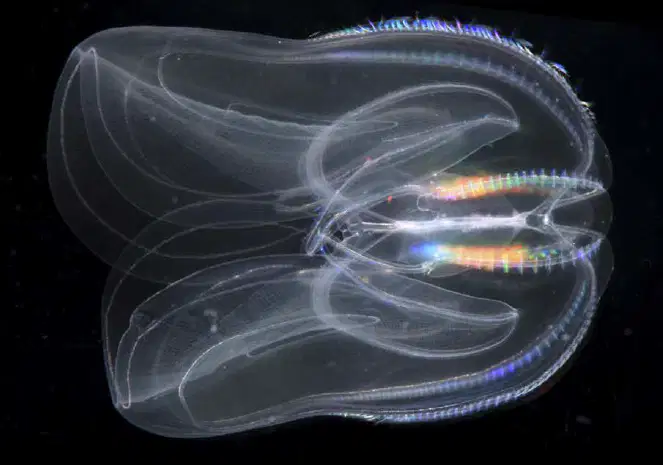
Instead, to capture prey,
ctenophores (comb jellies) possess sticky cells called (a)
the body of hydra (Phylum Cnidaria) is supported by (a) skeleton
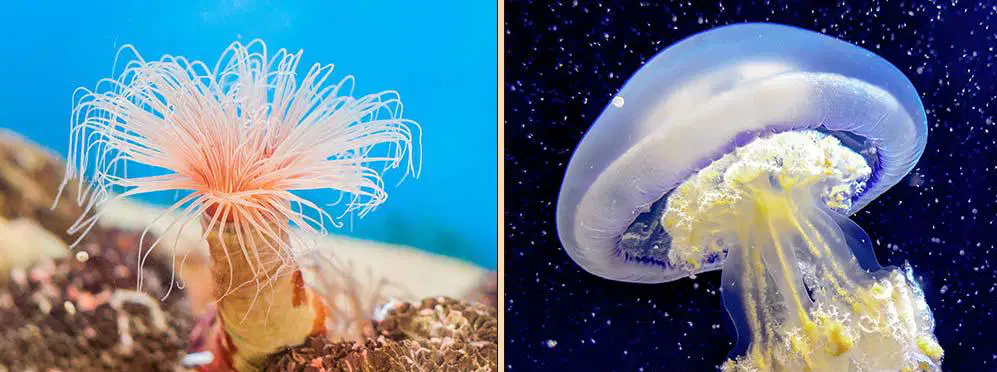
Two body forms are present in the life cycle
of many of these animals (phylum cnidaria) an umbrella-like, free-swimming stage called a (a) , and a cylindrical, attached or
stationary form known as a polyp.
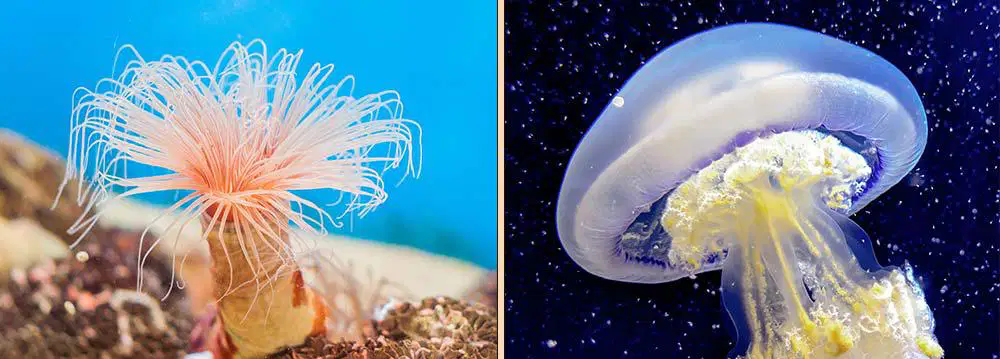
Two body forms are present in the life cycle
of many of these animals (phylum cnidaria) an umbrella-like, free-swimming stage called a medusa, and a cylindrical, attached or
stationary form known as a (a) .
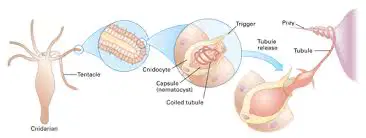
All Cnidarians have a unique cell type called
(a) , which contain a stinging organelle called a nematocyst
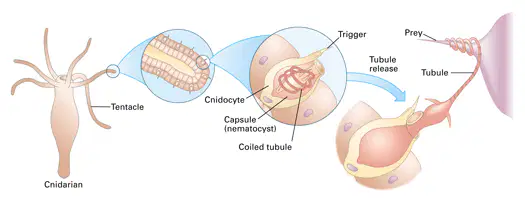
All Cnidarians have a unique cell type called cnidocytes, which contain a stinging organelle called a (a)
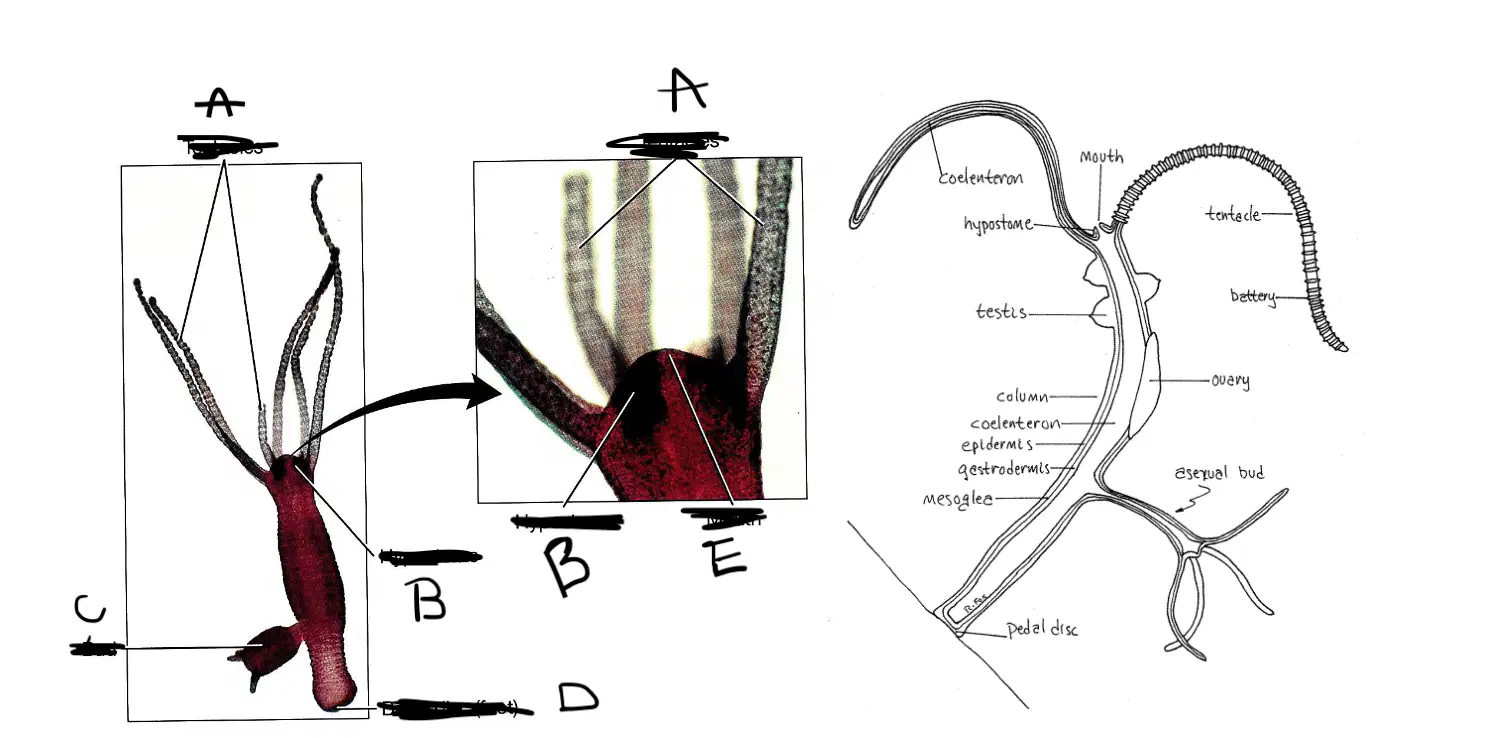
label A of the free living hydrozoans (class Hydrozoa)
(a)
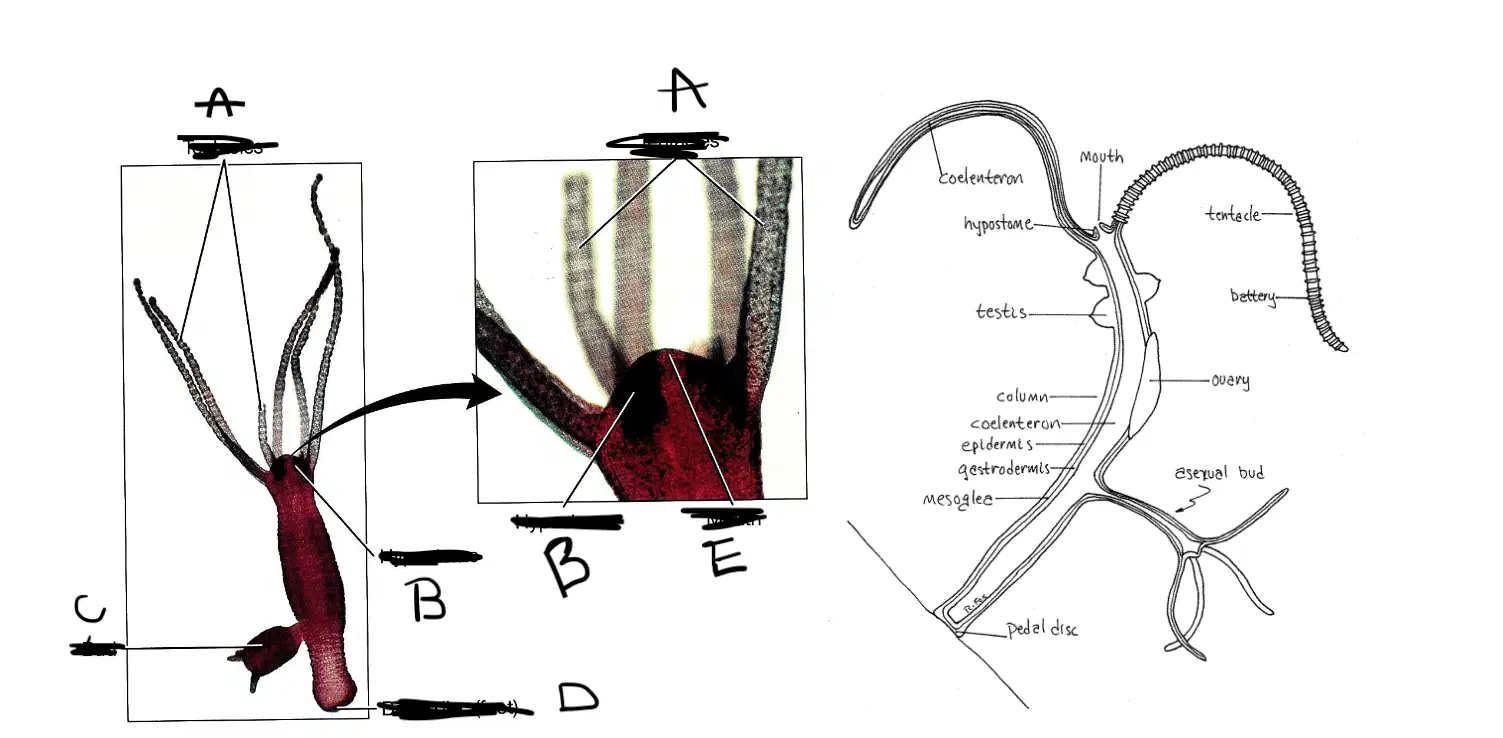
label B of the free living hydrozoans (class Hydrozoa)
(a)
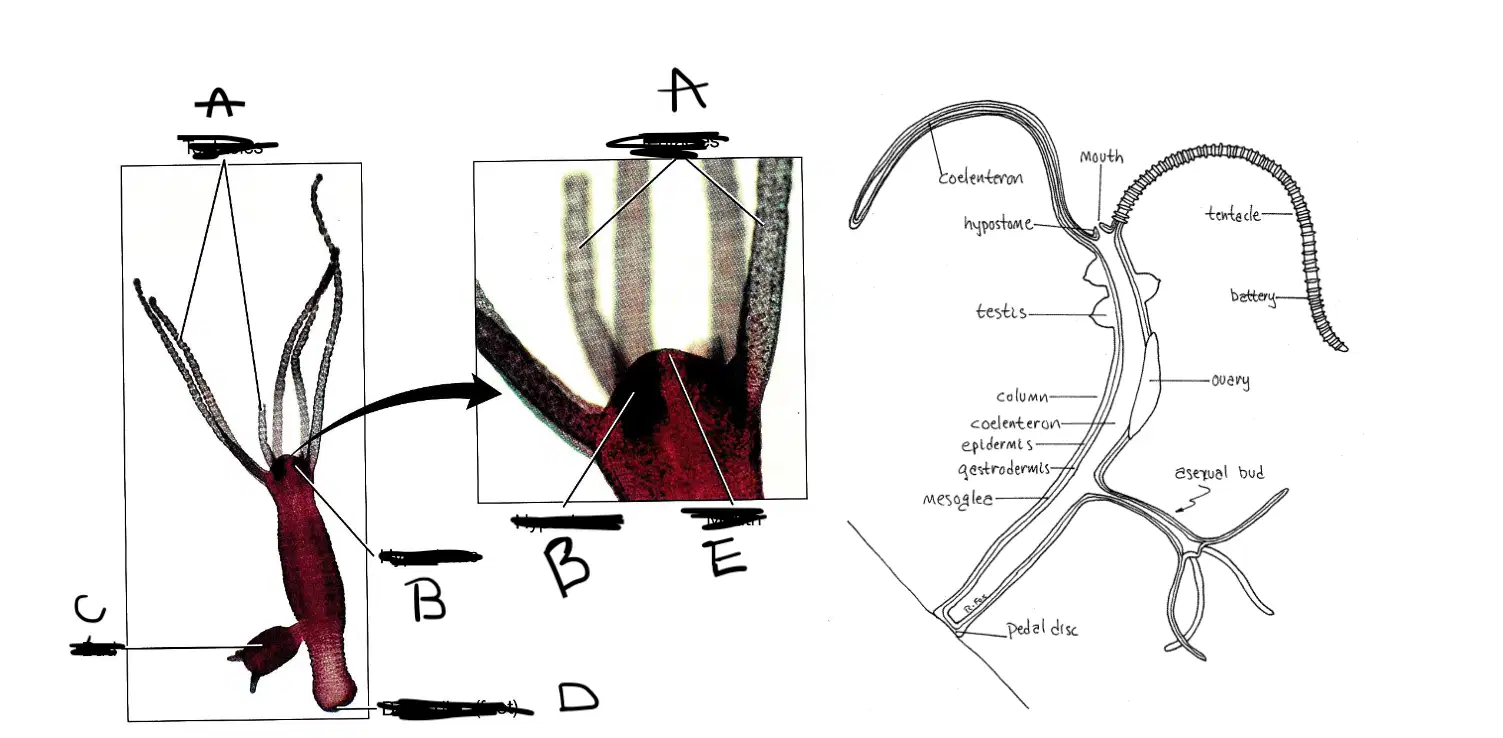
label C of the free living hydrozoans (class Hydrozoa)
(a)
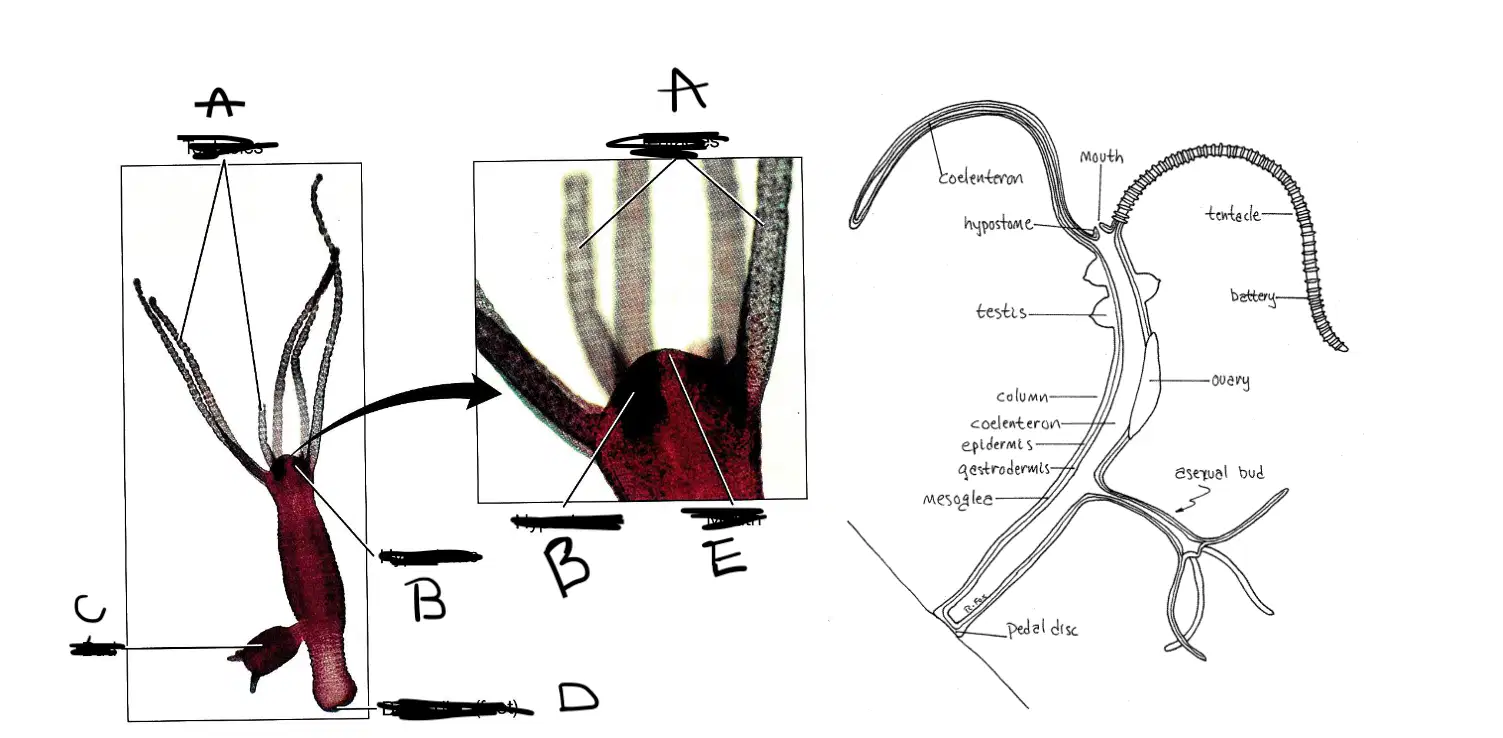
label D of the free living hydrozoans (class Hydrozoa)
(a)
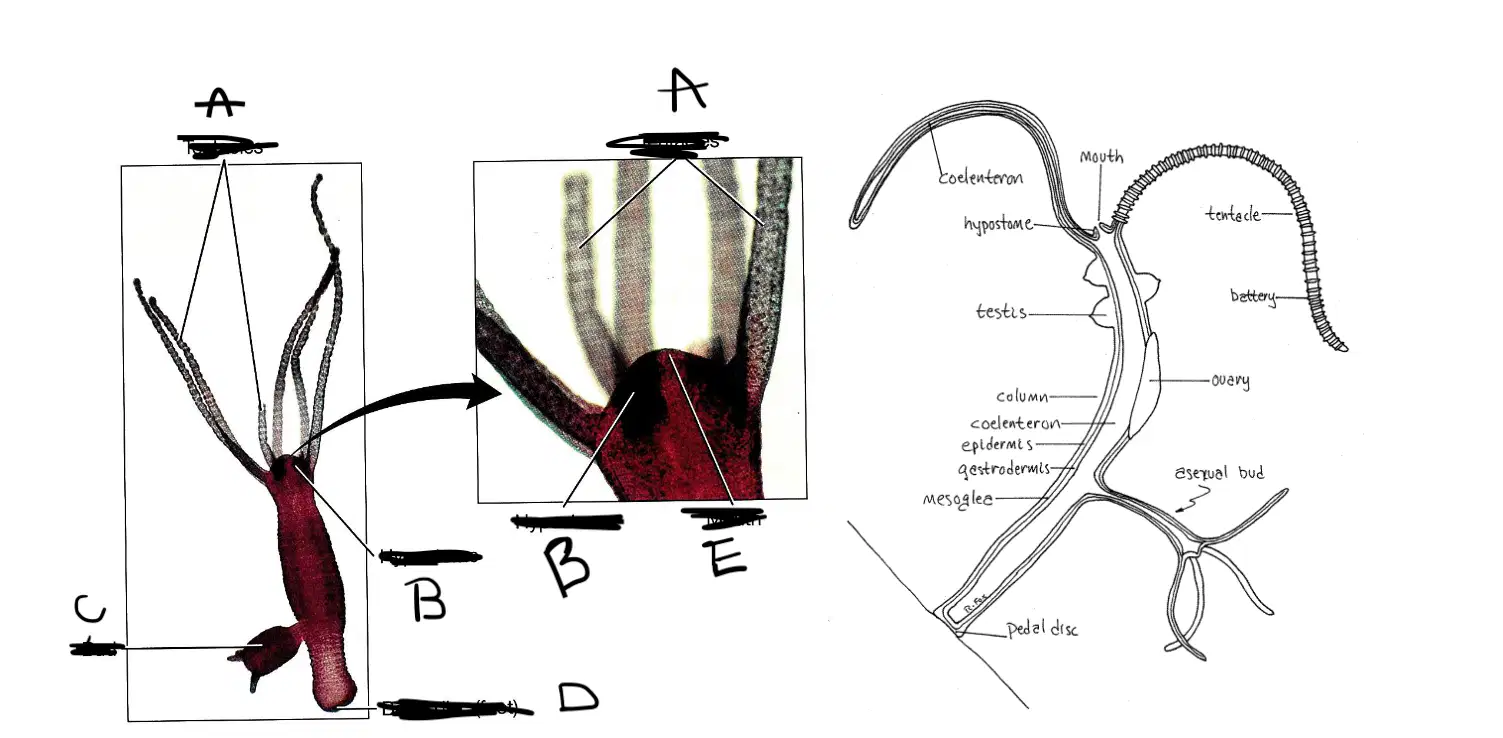
label E of the free living hydrozoans (class Hydrozoa)
(a)
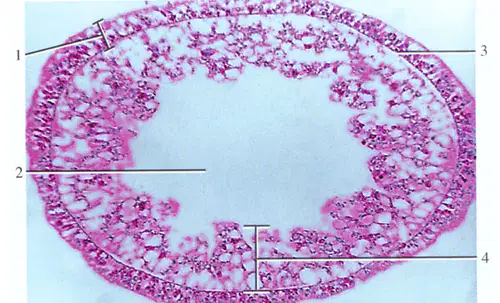
cross section through body of hydra, label 1
(a)
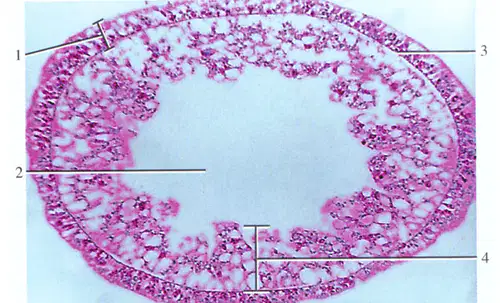
cross section through the body of hydra, label 2
(a)
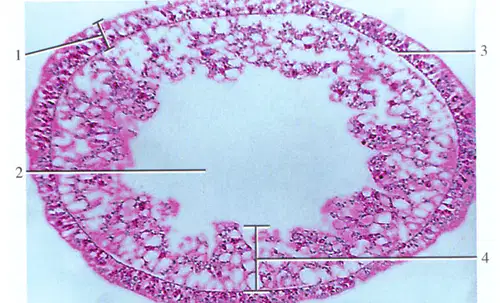
cross section through the body of hydra, label 3
(a)
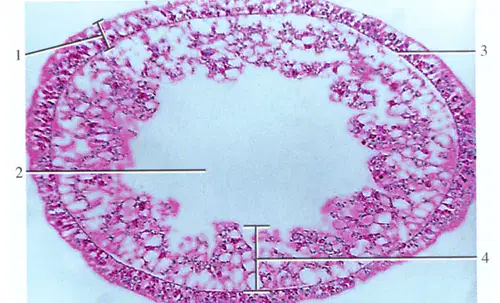
cross section through body of hydra, label 4
(a)
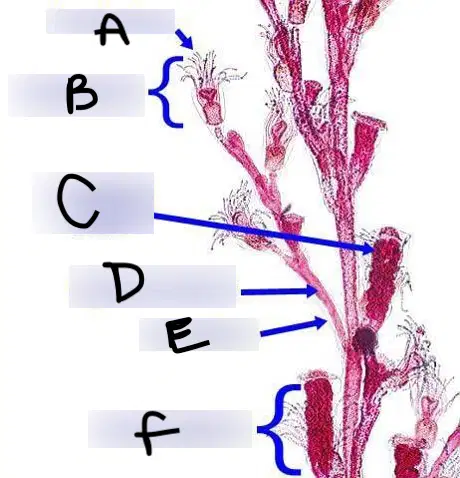
phylum cnidaria, colonial hydrozoans (class Hydrozoa, genus obelia)
label: A
(a)
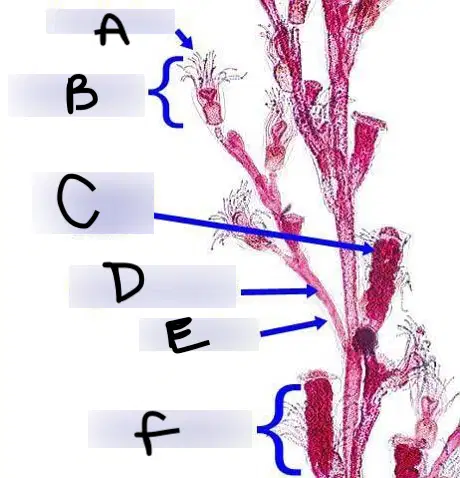
phylum cnidaria, colonial hydrozoans (class Hydrozoa, genus obelia)
label: B
(a)
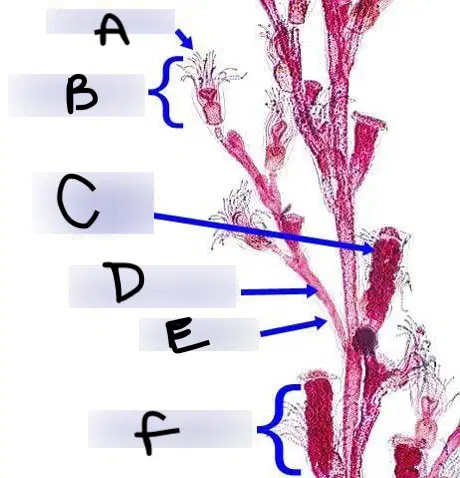
phylum cnidaria, colonial hydrozoans (class Hydrozoa, genus obelia)
label: C
(a)
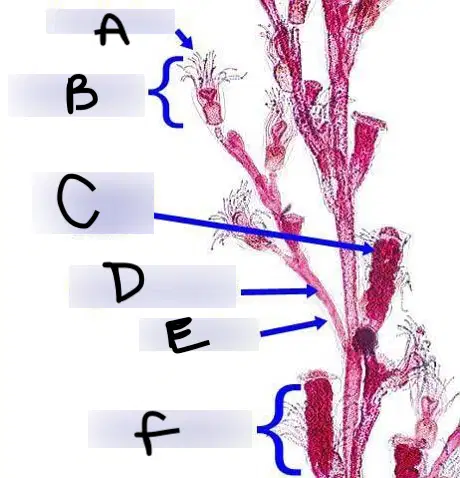
phylum cnidaria, colonial hydrozoans (class Hydrozoa, genus obelia)
label: F
(a)
phylum cnidaria, true jellyfish, class (a)
what is the thick gelatinous substance making up most of the tissue in scyphozoans?
(a)
phylum cnidaria, sea anemone and stony coral, class (a)
phylum cnidaria, sea anemone and stony coral, class (a)
In what habitat do you find most sponges?
Polar ice caps
ropical rainforests
Desert ecosystems
freshwater lakes and streams
the feeding polyps of a colonial hydrozoan (Genus: Obelia) are known as
(a) , while the reproductive polyps are known as
gonangia
the feeding polyps of a colonial hydrozoan (Genus: Obelia) are known as
hydranths, while the reproductive polyps are known as
(a)
Which is a sessile animal, comb jellies or sea anemones?
comb jellies
sea anemones
phylum (a) (sponges)
phylum (a) (comb jellies)
phylum (a) free living hydrozoans (class Hydrozoa)
phylum cnidaria, free living hydrozoans (class (a) )
phylum (a) colonial hydrozoans (class Hydrozoa)
phylum cnidaria, colonial hydrozoans (class (a) )
phylum (a) , true jellyfish (class Scyphozoa)
phylum cnidaria, true jellyfish (class (a) )
phylum (a) , sea anemone and stony coral (class anthozoa)
phylum cnidaria sea anemone and stony coral (class (a) )

