
 Worksheets
Exam 1 Review (Chapters 1-5)
Total questions: 73
Worksheet time: 1hrs 13mins
Which of the following are subatomic particle of an atom?
peptide
proton
neutron
molecule
electron
Protons have a _____ charge. Are protons located in the nucleus?
neutral, no
positive, no
negative, no
positive, yes
Neutrons are also located in the nucleus. What kind of charge do they have?
positive
negative
neutral
What kind of charge do electrons have?
zero
negative
neutral
positive
Where are electrons located in an atom?
Energy levels or shells
Neutrons
Protons
Nucleus
What are ionic bonds?
Ionic bonds are chemical bonds formed between two atoms when both atoms share electrons equally.
Ionic bonds are chemical bonds formed between two atoms when one atom transfers protons to another atom.
Ionic bonds are chemical bonds formed between two atoms when both atoms have the same number of electrons.
Ionic bonds are chemical bonds formed between two atoms when one atom transfers electrons to another atom, resulting in the formation of ions with opposite charges.
What are covalent bonds?
Chemical bonds formed by the sharing of electron pairs between atoms.
Chemical bonds formed by the repulsion of electron pairs between atoms.
Chemical bonds formed by the attraction of opposite charges between atoms.
Chemical bonds formed by the transfer of electron pairs between atoms.
What are the four classes of organic molecules?
carbohydrates, lipids, proteins, and nucleic acids
carbohydrates, lipids, proteins, and vitamins.
carbohydrates, lipids, proteins, and minerals.
What is the role of Hydrogen Bonds in Water and Macromolecules?
Hydrogen bonds break down the structure of water and macromolecules.
Hydrogen bonds have no effect on the properties of water and macromolecules.
Hydrogen bonds are only found in macromolecules, not in water.
Hydrogen bonds provide unique properties to water and help maintain the structure of macromolecules.
What is cohesion in water molecules?
Attraction between water molecules due to hydrogen bonding.
Attraction between water molecules due to ionic bonding.
Repulsion between water molecules due to hydrogen bonding.
What is adhesion in water molecules?
Attraction between water molecules and other substances
The movement of water molecules from an area of low concentration to an area of high concentration.
The ability of water molecules to dissolve in other substances.
Repulsion between water molecules and other substances.
True or False: Water does NOT have a high heat capacity.
True
False
What is the Roles of Carbohydrates in Human Physiology?
Carbohydrates help transport oxygen throughout the body.
Carbohydrates are responsible for regulating body temperature.
Carbohydrates aid in the production of hormones and enzymes.
Carbohydrates provide energy and structural support, and play a role in cell signaling and communication.
What are the three classes of lipids?
fatty acids, glycerol, and cholesterol.
carbohydrates, proteins, and nucleic acids.
monosaccharides, disaccharides, and polysaccharides.
fats, phospholipids, and steroids
What are the functions of fats?
Fats, or triglycerides, serve as a long-term energy storage form. They also provide insulation and cushioning for organs
The functions of fats include promoting bone health.
The functions of fats include regulating blood sugar levels.
The functions of fats include building muscle mass and strength.
What are the functions of phospholipids?
Phospholipids are responsible for energy storage in cells.
Phospholipids help in the transportation of oxygen in the bloodstream.
Phospholipids play a role in DNA replication.
Phospholipids are major components of cell membranes, forming a lipid bilayer that separates the cell from its environment.
What are the functions of steroids?
Increasing inflammation, slowing down metabolism, and suppressing the immune system.
Promoting muscle growth, enhancing brain function, and improving cardiovascular health.
Aiding digestion, boosting energy levels, and strengthening bones.
Regulating metabolism, reducing inflammation, and influencing the immune system.
Amino acids are the building blocks of ________?
lipids
carbohydrates
proteins
nucleic acids
What does ATP stand for?
Adenosine Trisulfate
Adenosine Triphosphate
Adenosine Tetraphosphate
Adenosine Trisodium
What is the role of adenosine triphosphate (ATP) in cellular reactions?
ATP regulates the pH level in cellular reactions.
ATP acts as a catalyst in cellular reactions.
ATP provides energy for cellular reactions.
ATP helps in the synthesis of proteins in cellular reactions.
What is cell theory?
Cell theory is the concept that all living organisms are composed of atoms.
Cell theory is the concept that all living organisms are composed of organs.
Cell theory is the concept that all living organisms are composed of cells.
Cell theory is the concept that all living organisms are composed of tissues.
What is the role of the plasma/cell membrane in eukaryotic cells?
The plasma/cell membrane provides structural support to the cell.
The plasma/cell membrane is responsible for protein synthesis in the cell.
The plasma/cell membrane stores genetic information in the cell.
The plasma/cell membrane surrounds the cell and controls the passage of substances in and out of the cell. It is selectively permeable and consists of a lipid bilayer embedded with proteins..
What are organelles?
Tiny organisms that live inside cells.
Specialized structures within a cell that perform specific functions.
Long, thread-like structures that help with cell movement.
Chemical compounds that make up the cell membrane.
1) What is the nucleus in a cell responsible for? 2) What is the endoplasmic reticulum responsible for?
1) Regulating cell growth and division. 2) Maintaining cell shape and structure.
1) Producing energy for the cell. 2) Transporting materials within the cell.
1) Initiating cell death. 2) Secreting hormones and enzymes.
1) Controlling cell activities and storing genetic information. 2) Protein synthesis and lipid metabolism.
What is the Golgi apparatus responsible for?
Synthesizing DNA and RNA.
Generating ATP for cellular energy.
Regulating cell division and growth.
Modifying, sorting, and packaging proteins and lipids for transport
1) What is the role of the mitochondria? 2) What is the role of lysosomes?
1) The role of the mitochondria is to synthesize proteins. 2) The role of lysosomes is to maintain cell shape and structure.
1) The role of the mitochondria is to produce energy in the form of ATP through cellular respiration. 2) The role of lysosomes is to break down waste materials and cellular debris through the process of hydrolysis.
1) The role of the mitochondria is to regulate cell division. 2) The role of lysosomes is to transport nutrients throughout the cell.
1) The role of the mitochondria is to store genetic information. 2) The role of lysosomes is to produce energy through photosynthesis.
Which theory suggests that eukaryotic cells evolved from prokaryotic cells through a process of symbiosis?
evolutionary theory
prokaryotic theory
symbiotic theory
endosymbiotic theory
What is diffusion?
The movement of molecules or particles from an area of low concentration to an area of equal concentration.
The movement of molecules or particles from an area of low concentration to an area of high concentration.
The passive movement of molecules from an area of higher concentration to an area of lower concentration until equilibrium is reached, without the use of energy.
The movement of molecules or particles from an area of high concentration to an area of equal concentration.
What is osmosis?
A specific type of diffusion involving the movement of water molecules across a selectively permeable membrane from an area of lower solute concentration to an area of higher solute concentration
The movement of solvent molecules from an area of lower solute concentration to an area of higher solute concentration without a semipermeable membrane.
The movement of solute molecules from an area of lower solvent concentration to an area of higher solvent concentration through a semipermeable membrane.
The movement of solvent molecules from an area of higher solute concentration to an area of lower solute concentration through a semipermeable membrane.
What is facilitated transport?
Transport of molecules across a cell membrane by active transport.
Transport of molecules across a cell membrane through simple diffusion.
Transport of molecules across a cell membrane by endocytosis.
Transport (passive) in which molecules are assisted across the membrane by transport proteins, such as channel proteins and carrier proteins. It also occurs without energy input.
What is passive transport? What are some examples of passive transport?
Passive transport is the movement of molecules across a cell membrane by ATP hydrolysis.
Passive transport is the movement of molecules across a cell membrane through endocytosis.
Active transport is the movement of molecules across a cell membrane with the use of energy.
Passive transport is the movement of molecules across a cell membrane without the use of energy. Examples include diffusion, osmosis, and facilitated diffusion.
What is active transport? What are some examples of active transport?
Some examples of active transport include diffusion, osmosis, and facilitated diffusion.
Active transport is the movement of molecules across a cell membrane with their concentration gradient, requiring energy.
Active transport moves substances against the concentration gradient, from areas of lower concentration to higher concentration. It requires energy, typically provided by ATP. Examples include the sodium-potassium pump and endocytosis/exocytosis
Active transport is the movement of molecules across a cell membrane without requiring energy.
What is the role of ribosomes and their location?
Ribosomes are responsible for carbohydrate synthesis and are located in the Golgi apparatus.
Ribosomes are responsible for protein synthesis and are located in the cytoplasm (free ribosomes) and on the endoplasmic reticulum (bound ribosomes).
Ribosomes are responsible for DNA replication and are located in the mitochondria.
Ribosomes are responsible for lipid synthesis and are located in the nucleus.
What is the role of enzymes in metabolic reactions?
Enzymes act as catalysts in metabolic reactions.
Enzymes have no role in metabolic reactions.
Enzymes inhibit metabolic reactions.
Enzymes are the end products of metabolic reactions.
The ATP (adenosine triphosphate) cycle involves the continuous regeneration of ATP from ________ _______ and ________ ________
AMP and organic phosphate
ADP and organic phosphate
AMP and inorganic phosphate
ADP and inorganic phosphate
Stage 1 of the ATP cycle involves energy input. How is this done?
Hydrolysis
Glycolysis
Oxidative phosphorylation
Phosphorylation
Stage 2 of the ATP cycle includes energy release. How is this done?
ATP is hydrolyzed into ADP and Pi, releasing energy that can be used by the cell for various functions.
Glycolysis, the breakdown of glucose by enzymes, releasing energy and pyruvic acid.
Photosynthesis, the process by which green plants and some other organisms use sunlight to synthesize foods from carbon dioxide and water.
Fermentation, the chemical breakdown of a substance by bacteria, yeasts, or other microorganisms, typically involving effervescence and the giving off of heat.
Stage 3 of the ATP cycle includes energy utilization. How is this done?
ATP synthesis
ATP hydrolysis
ATP phosphorylation
ATP oxidation
The final step, stage 4 includes ATP regeneration. How is this done?
Fermentation.
Cellular respiration and photosynthesis.
Krebs cycle.
Glycolysis.
What are the four major classes of tissue?
blood tissue, bone tissue, cartilage tissue, and adipose tissue
skin tissue, tendon tissue, ligament tissue, and bone tissue
epithelial tissue, connective tissue, muscle tissue, and nervous tissue
skeletal tissue, cardiac tissue, smooth tissue, and adipose tissue
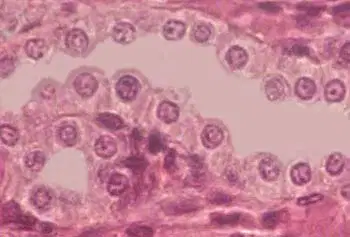
What is epithelial tissue?
Epithelial tissue is a type of tissue that stores energy in the body.
Epithelial tissue is a type of tissue that connects bones together.
Epithelial tissue covers body surfaces, lines cavities, and forms glands. It provides protection, absorption, secretion, and sensory reception
Epithelial tissue is a type of tissue that lines the organs of the body.
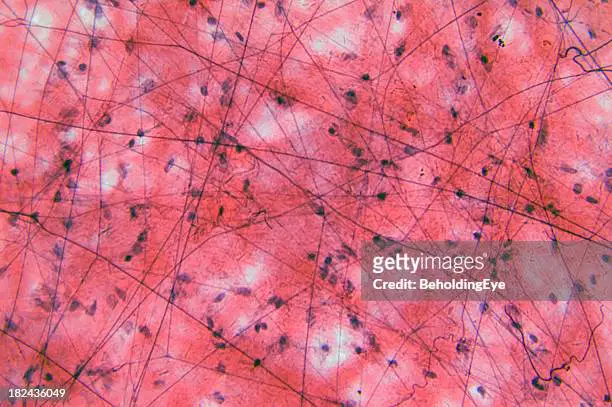
What is connective tissue and what does it provide?
Connective tissue is involved in the digestion process.
Connective tissue supports, binds, and protects other tissues and organs. It includes diverse types like loose connective tissue, dense connective tissue, cartilage, bone, blood, and adipose tissue.
Connective tissue is responsible for transmitting electrical signals in the body.
Connective tissue helps in the production of hormones.
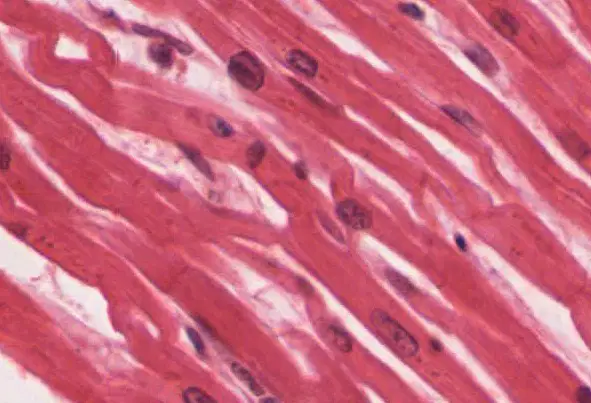
1) What is muscle tissue responsible for? 2) What are the three types of muscle tissue?
Movement and generating force; Skeletal muscle, cardiac muscle, and smooth muscle
Conducting electrical signals; Skeletal muscle, cardiac muscle, and smooth muscle.
Filtering waste products; Skeletal muscle, cardiac muscle, and smooth muscle.
Digestion and absorption; Skeletal muscle, cardiac muscle, and smooth muscle.
What are the differences between skeletal, cardiac, and smooth muscle?
The differences: skeletal muscle is for voluntary movement, smooth muscle is involuntary and found in organs, and cardiac muscle is involuntary and found in the heart
The differences between skeletal, cardiac, and smooth muscle are their sizes and shapes.
The differences between skeletal, cardiac, and smooth muscle are their structures and compositions.
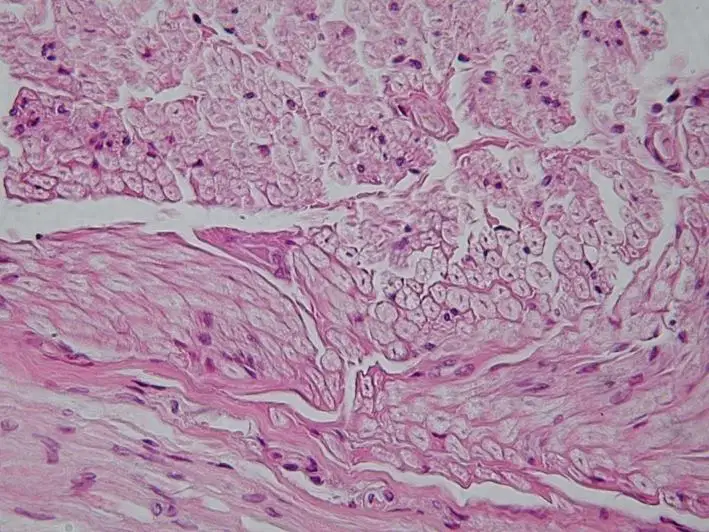
What is nervous tissue?
Nervous tissue consists of neurons and supporting cells. It conducts electrical impulses and is responsible for transmitting signals and processing information in the nervous system.
Nervous tissue is responsible for digesting food in the body.
Nervous tissue is responsible for transporting oxygen in the body.
Nervous tissue is responsible for producing hormones in the body.
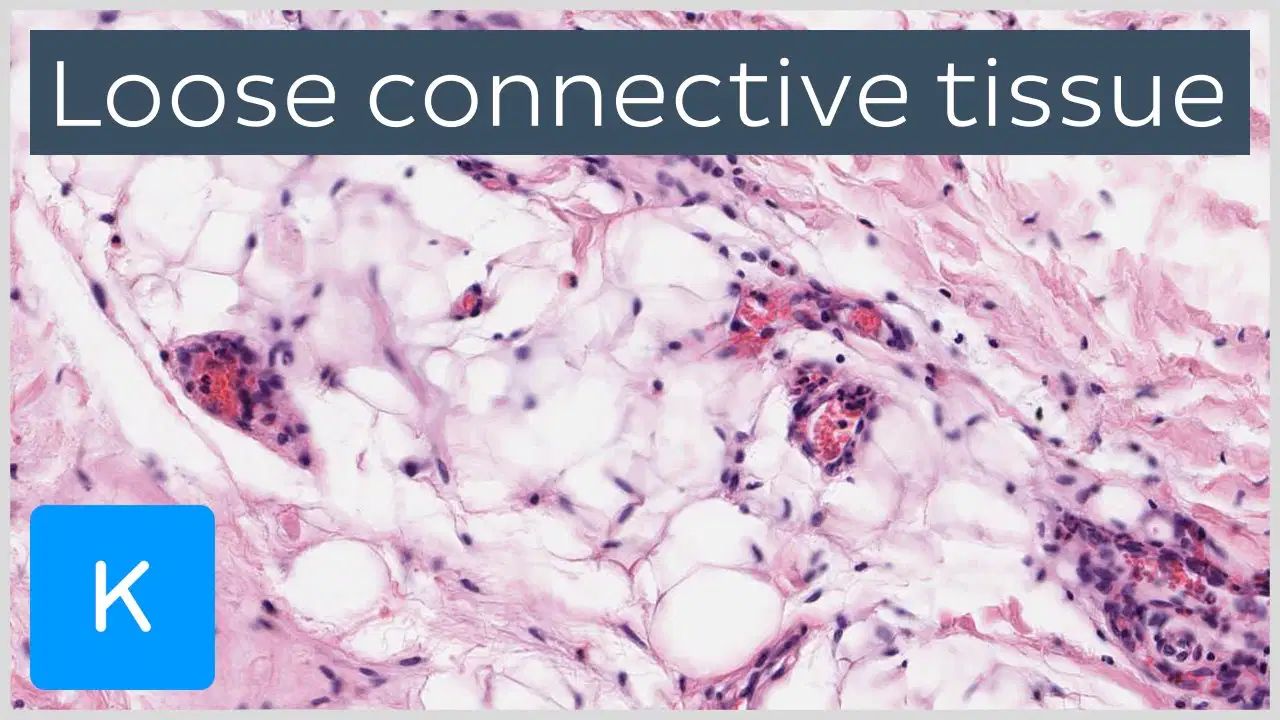
What is loose connective tissue?
Loose connective tissue is a type of muscle tissue.
Loose connective tissue is a type of epithelial tissue.
Loose connective tissue is a type of nervous tissue.
Loose connective tissue provides support and elasticity to organs. Found in skin and mucous membranes.
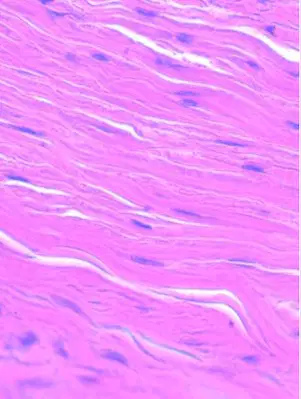
What is the function of dense connective tissue?
Dense connective tissue is a type of connective tissue that is characterized by a high concentration of adipose cells.
Dense connective tissue is a type of connective tissue that is characterized by a high concentration of elastic fibers.
Dense connective tissue is a type of connective tissue that is characterized by a high concentration of blood vessels.
Dense connective tissue offers strength and resistance to pulling forces. Forms tendons (muscle to bone) and ligaments (bone to bone).

What is the function of cartilage?
The function of cartilage is to provide support and cushioning between bones in joints.
The function of cartilage is to transmit nerve impulses.
The function of cartilage is to regulate body temperature.
The function of cartilage is to produce red blood cells.
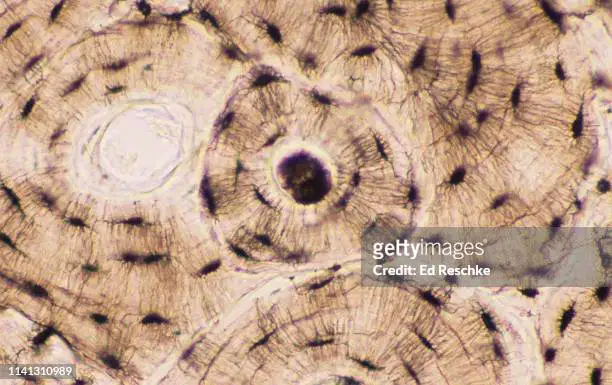
What is the function of bone tissue?
The function of bone tissue is to support and protect body structures, store calcium and minerals, and produce blood cells in the bone marrow
The function of bone tissue is to regulate body temperature.
The function of bone tissue is to store and release minerals.
The function of bone tissue is to produce red and white blood cells.
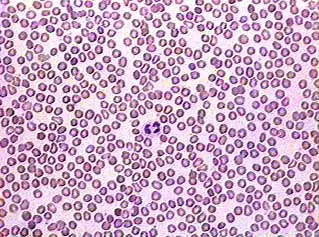
What is the function of the blood tissue?
Regulation of body temperature
Protection against pathogens
Transportation of oxygen, nutrients, hormones, and waste products throughout the body
Production of hormones
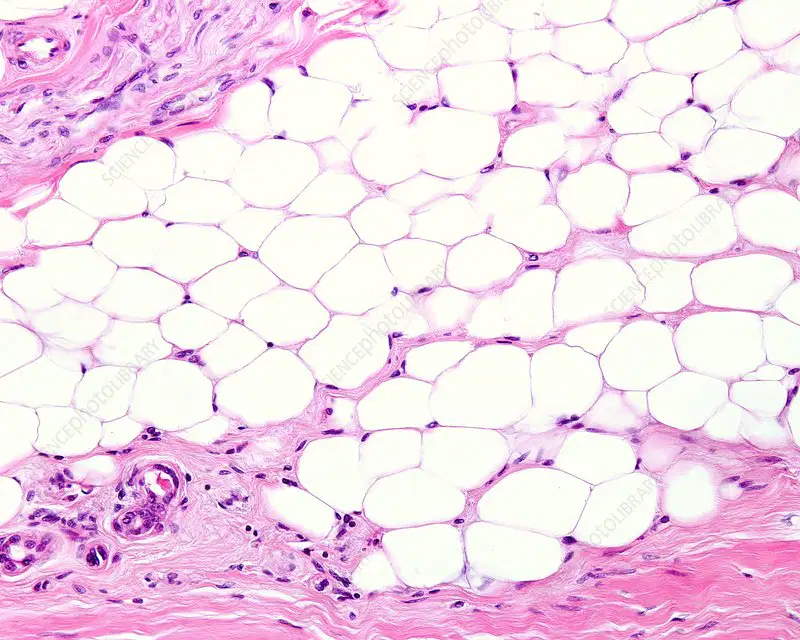
What is the function of adipose tissue?
Transport nutrients.
Stores energy in the form of fat and provides insulation and cushioning for organs.
Produce hormones.
Insulate the body.
What is the structure of a neuron like?
The structure of a neuron consists of the cell body and axon.
The structure of a neuron consists of the dendrites and synapses.
The structure of a neuron consists of the nucleus and cytoplasm.
The structure of a neuron consists of the cell body, dendrites, and axon.
What is the function of the Integumentary System?
The function of the Integumentary System is to produce hormones and regulate metabolism.
The function of the Integumentary System is to aid in digestion and absorption of nutrients.
The function of the Integumentary System is to transport oxygen and nutrients to the body's cells.
The function of the Integumentary System is to protect the body from external threats, regulate body temperature, and provide sensory information.
What is the function of the nervous system?
Control muscle movements
Regulate body temperature
Controls body functions through electrical signals (nervous impulses)
Produce hormones
What is the function of the muscular system?
Enable movement and provide support to the body
Produce hormones and regulate metabolism.
Transport oxygen and nutrients to the cells.
Generate heat and regulate body temperature.
What are the functions of the skeletal system?
Digestion, respiration, excretion, reproduction, coordination.
Transportation, communication, regulation, defense, support.
Absorption, filtration, secretion, sensation, reproduction.
Support, protection, movement, blood cell production, mineral storage
What is the function of the circulatory system?
The function of the circulatory system is to transport oxygen, nutrients, and other substances throughout the body.
The function of the circulatory system is to digest food.
The function of the circulatory system is to produce hormones.
The function of the circulatory system is to regulate body temperature.
What is the function of the respiratory system?
Regulate body temperature.
Filter waste products.
Facilitate gas exchange
Produce hormones.
What is the function of the digestive system?
To produce hormones for growth and development.
To regulate body temperature.
To transport oxygen throughout the body.
To break down food and absorb nutrients
What is the function of the urinary system?
Regulate body temperature
Produce red blood cells
Digest food
Filters blood, removing waste products and regulating electrolyte and fluid balance.
What is the function of the endocrine system?
The function of the endocrine system is to regulate body temperature.
The function of the endocrine system is to control muscle movement.
The function of the endocrine system is to transport oxygen in the body.
The function of the endocrine system is to produce and release hormones.
What is the dorsal cavity?
The dorsal cavity includes the cranial cavity (housing the brain) and the spinal cavity (housing the spinal cord).
The dorsal cavity is a body cavity located in the lower part of the body.
The dorsal cavity is a body cavity located in the middle of the body.
The dorsal cavity is a body cavity located along the anterior (ventral) side of the body.
What is the ventral cavity?
The ventral cavity is a small, posteriorly located body cavity in animals that contains the organs of the thoracic and abdominopelvic regions.
The ventral cavity is a cavity located in the head region of animals that contains the brain and sensory organs.
The ventral cavity is a cavity located in the limbs of animals that contains the muscles and bones.
Contains the thoracic cavity (heart and lungs) and the abdominopelvic cavity (abdominal and pelvic organs).
What are the two main components of the cardiovascular system?
brain and spinal cord
lungs and kidneys
heart and blood vessels
stomach and intestines
What are the functions of the cardiovascular system?
Transporting oxygen, nutrients, hormones, and waste products throughout the body, regulating body temperature, and maintaining homeostasis.
Digesting food, absorbing nutrients, and eliminating waste.
Filtering blood, producing urine, and regulating electrolyte balance.
What is the structure and function of the arteries?
Arteries have thick, rigid walls and transport deoxygenated blood AWAY from the heart.
Arteries have thin, elastic walls and transport oxygenated blood TOWARDS the heart.
Arteries have thick, elastic walls and transport oxygenated blood AWAY from the heart.
Arteries have thin, rigid walls and transport deoxygenated blood TOWARDS the heart.
What is the structure and function of veins?
Veins carry oxygenated blood away from the heart.
Veins have thick walls to withstand high pressure.
Veins are part of the lymphatic system.
Thinner-walled vessels that return deoxygenated blood from the body's tissues to the heart. They have one-way valves to prevent backflow.
What is the structure and function of the capillaries?
The structure of capillaries consists of microscopic vessels that facilitate the exchange of nutrients, oxygen, and waste products between the bloodstream and surrounding tissues.
The structure of capillaries consists of multiple layers of endothelial cells, and their function is to transport oxygenated blood to the heart.
The structure of capillaries consists of smooth muscle cells, and their function is to filter waste products from the blood.
The structure of capillaries consists of thick walls, and their function is to carry deoxygenated blood to the lungs.
Which of the following shows the correct order of the flow of blood through the chambers of the human heart?
left atrium, left ventricle, pulmonary artery, lungs, pulmonary veins, right atrium, right ventricle, aorta
right atrium, left ventricle, pulmonary artery, lungs, pulmonary veins, left atrium, right ventricle, aorta
right atrium, right ventricle, aorta, lungs, pulmonary veins, left atrium, left ventricle, pulmonary artery
right atrium, tricuspid valve, right ventricle, pulmonary artery, lungs, pulmonary veins, left atrium, left ventricle, aorta
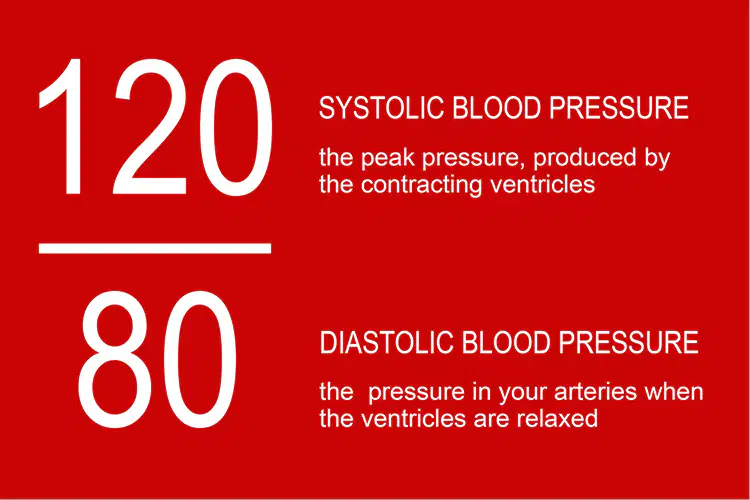
What is the difference between systolic and diastolic blood pressure?
Systolic blood pressure is higher than diastolic blood pressure.
Systolic blood pressure is measured during inhalation, while diastolic blood pressure is measured during exhalation.
Systolic blood pressure is more important for diagnosing hypertension than diastolic blood pressure.
The difference between systolic and diastolic blood pressure is that systolic blood pressure is the maximum pressure in the arteries when the heart contracts, while diastolic blood pressure is the minimum pressure in the arteries when the heart is at rest between beats.
What is the pulmonary circuit and how does it work?
The pulmonary circuit is responsible for carrying oxygenated blood from the heart to the lungs and returning deoxygenated blood back to the heart.
The pulmonary circuit is responsible for carrying blood from the lungs to the heart.
The pulmonary circuit is responsible for carrying oxygenated blood from the lungs to the rest of the body.
The pulmonary circuit is responsible for carrying deoxygenated blood from the heart to the lungs and returning oxygenated blood back to the heart.
What is the systemic circuit and how does it work?
The systemic circuit is responsible for carrying oxygenated blood from the heart to the body and returning deoxygenated blood back to the heart.
The systemic circuit is responsible for carrying deoxygenated blood from the body to the heart and returning oxygenated blood back to the body.
The systemic circuit is responsible for carrying oxygenated blood from the body to the heart and returning deoxygenated blood back to the body.
The systemic circuit is responsible for carrying deoxygenated blood from the heart to the body and returning oxygenated blood back to the heart.
What are some underlying causes of cardiovascular diseases?
Genetic factors, stress, and age.
Excessive alcohol consumption, poor diet, and lack of sleep.
Lung diseases, kidney diseases, and hormonal imbalances.
High blood pressure, high cholesterol levels, smoking, obesity, diabetes, and a sedentary lifestyle.

