wayground logo

Free Printable Worksheets

Font size

S
M
L
XL
Worksheets

Honors Chemistry Midterm Review (Unit 1 - 4B)

Total questions: 100

Worksheet time: 2hrs 20mins

Name
Class
Date
1.

You should ALWAYS pour water in to acid.

a)

True

b)

False

2.
What instrument should be used if the lab directions ask you to measure to the nearest milliliter? 
a)
graduated cylinder
b)
triple beam balance
c)
Erlenmeyer flask
d)
meter stick
3.

Target on the right, how would it be described?

a)

Accurate

b)

Precise

c)

Accurate and Precise

d)

Neither Accurate or Precise

4.

Target on the left, how would it be described?

a)

Accurate

b)

Precise

c)

Accurate and Precise

d)

Neither Accurate or Precise

5.
How many Significant Figures in the number below?
4.56 x 10³
a)
5
b)
4
c)
6
d)
3
6.
How many sig figs are there?
0.00400
a)
1
b)
3
c)
5
d)
6
7.
You know 1000 mg = 1 g.  Convert 2.5 grams into milligrams.
a)
25 mg
b)
25,000 mg
c)
250 mg
d)
2500 mg
8.
convert 9 km to mm
a)
900,000
b)
9,000,000
c)
9,000
d)
90,000
9.
What unit is the largest unit
a)
hm
b)
cg
c)
g
d)
dm
10.

3.05 + 0.013

a)

3.063

b)

3.06

c)

3.1

d)

3

11.

432.521 + 3.50

a)

436.021

b)

436.02

c)

436.0

d)

436

12.

340.123 - 63.02

a)

277.103

b)

277.10

c)

277.1

d)

277

13.

5.9 x 6.01

a)

35.459

b)

35.46

c)

35.5

d)

35

14.

5.40 x 7.90

a)

42.66

b)

42.7

c)

43

d)

40

15.

2.1/5.1

a)

0.4118

b)

0.412

c)

0.41

d)

0.40

16.

0.9/2.3

a)

0.391

b)

0.39

c)

0.40

d)

0.4

17.
as temperature of a substance decreases, the average kinetic energy of its particles.
a)
increases
b)
decreases
c)
remains the same
18.
Which is true of matter?
a)
It takes up space but does not have mass.
b)
It has mass and takes up space. 
c)
It does not take up space.  
d)
Matter is not found on earth. 
19.
Which state of matter contains particles that are far apart and can easily move?
a)
gas
b)
liquid
c)
solid
d)
all
20.
Which state of matter takes the shape of its container?
a)
gas and solid
b)
solid and liquid
c)
liquid and gas
d)
liquid, solid, and gas
21.
Which process converts water vapor into a liquid form?
a)
evaportation
b)
sublimation
c)
freezing
d)
condensation
22.
Mass per unit volume is
a)
density
b)
volume
c)
matter
d)
centimeters
23.
Which of the following is a chemical property?
a)
dissolves
b)
flammable
c)
melts
d)
freezes
24.

Solubility

a)

Physical Property

b)

Chemical Property

25.

Melting point

a)

Physical Property

b)

Chemical Property

26.

NaCl (salt) dissolves in water

a)

Physical Change

b)

Chemical Change

27.

Heat changes H2O to steam

a)

Physical Change

b)

Chemical Change

28.

Length

a)

Intensive Property

b)

Extensive Property

29.

Density

a)

Intensive Property

b)

Extensive Property

30.

Reactivity with acid

a)

Intensive Property

b)

Extensive Property

31.
In an exothermic reaction, heat is ...
a)
taken in
b)
given out
32.
When iron nails get rusty, heat is released.  What process is this?
a)
Exothermic
b)
Endothermic
33.

What is the sign of ΔH in an endothermic reaction?

a)

Positive

b)

Negative

34.
The SI unit of heat and energy is the __________.
a)
calorie
b)
heat
c)
joule
d)
watt
35.
A sample of iron receives 50.J of heat energy that raises the temperature of the iron by 25.0°C. If iron has a specific heat of 0.10 J/g°C, what is the mass of the iron sample?  (show your work)
a)
25g
b)
30g
c)
20g
d)
50g
36.
If I have 2 blocks of Aluminium (one of 1kg and one of 10 kg) and heat them up.
Which one heats up the fastest.
a)
1 kg
b)
10 kg
c)
They both heat up at the same speed
d)
They don't heat up.
37.
What  is the formula to calculate heat energy required to raise the temperature of any substance?
a)
Q=mc∆t
b)
Q=mc
c)
Q= ½mv
d)
m=QC
38.
The symbol for specific heat is .......
a)
c
b)
Q
c)
m
d)
t
39.
What subatomic particles would you find in the nucleus of an atom?
a)
Protons only
b)
Protons and Neutrons
c)
Neutrons and Electrons
d)
Protons and Electrons 
40.
Which subatomic particles contribute the most to the mass of an atom?
a)
Protons, Neutrons, Electrons
b)
Protons only
c)
Protons and Electrons
d)
Protons and Neutrons
41.
What is the number of protons that the element in this image contain?
a)
14
b)
7
c)
15
d)
18
42.
An atom has 10 protons, 15 neutrons and 10 electrons what is its mass number.
a)
20
b)
10
c)
5
d)
25
43.
The mass of one proton is greater than the mass of one...
a)
neutron
b)
electron
44.
What is the element name of the atom pictured? 
a)
Fluorine
b)
Neon
c)
Argon
d)
Potassium
45.
Which scientist conducted experiments using alpha particles and thin gold foil, which later helped him develop his model for the atom? 
a)
Ernest Rutherford
b)
Kneels Bore
c)
Niels Bohr
d)
Earnest Rutherfraud
46.
24.1% of all the isotopes of a an element have a mass of 75.23 amu, 48.7% have a mass of 74.61 amu, and 27.2% have a mass of 75.20 amu.
What is the average mass of this element?
a)
74.92 amu
b)
24.97 amu
c)
75.01 amu
d)
74.51 amu
47.
Cations are
a)
positive
b)
negative
c)
on the right side of the periodi table.
d)
nonmetals
48.
Negative ions form when atoms _________ valence electrons.
a)
lose
b)
gain
c)
share
49.
Phosphorous trichloride
a)
PCl3
b)
P3Cl
c)
P3Cl3
d)
PCL
50.
what is the name of CCl4?
a)
carbon tetrachloride
b)
monocarbon tetrachloride
c)
tetracarbon monochloride
d)
carbon chloride
51.
Naming a compound that starts with a transition metal requires us to use...
a)
Prefixes
b)
Roman Numeral
c)
Nothing, just name it
52.
Naming a compound of two non-metals requires us to use..
a)
Prefixes
b)
Roman Numerals
c)
Nothing, just name it
53.
Which of these compounds is ionic? 
a)
Carbon dioxide
b)
Dinitrogen trioxide
c)
Silicon tetrachloride
d)
Lithium bromide
54.
Name this formula: 
KNO3
a)
Potassium Nitrogen Oxide
b)
Potassium Nitride
c)
Potassium Nitrate
d)
Potassium (I) Nitrite
55.
Name this formula: 
Fe3PO4
a)
Iron Phosphide
b)
Iron (III) Phosphide
c)
Iron (I) Phosphate
d)
Iron Phosphate
56.
The proper formula for magnesium hydroxide:
a)
MgOH
b)
Mg2OH
c)
Mg(OH)2
d)
Mg2OH2
57.
What is the name of the compound P2O5
a)
Pentaphosphorus dioxide
b)
Phoshphide dioxide
c)
Diphosphorus pentoxide
58.
What is the name of the compound CoCl2
a)
cobalt (II) chloride
b)
monocobalt dichloride
c)
Chlorous cobalt
59.
What is the formula for Hydrochloric Acid?
a)
HClO3
b)
HClO2
c)
HClO
d)
HCl
60.
What is the formula for Hydrosulfuric Acid?
a)
H2(SO3)
b)
H2S
c)
H2(SO2)
d)
H2(SO4)
61.
What is the formula for Nitric Acid?
a)
HNO2
b)
HNO3
c)
HNO4
d)
H2NO3
62.
What is the formula for Carbonic Acid?
a)
H2CO3
b)
H2CrO4
c)
H2C2O4
d)
HCO3
63.
What type of reaction occurs between an element and a compound?
Zn + 2HCl --> ZnCl2 + H2
a)
Synthesis
b)
Decomposition
c)
Single Replacement
d)
Double Replacement
64.
What kind of reaction is this:
4Fe  +  3O2 →   2Fe2O3 
a)
Synthesis
b)
Decomposition
c)
Single Replacement 
d)
Double Replacement
65.
What kind of reaction is this:
2C3H7OH +9O2 -> 6CO2 + 8H2O
a)
Double Replacement
b)
Combustion
c)
Single Replacement
d)
Decomposition
66.
The reaction below is an example of?
AgNO3 + NaCl 
→ AgCl + NaNO3
a)
Single Replacement
b)
Double Replacement
c)
Decomposition
d)
Combustion
67.
What are the products of this reaction: Fe + Na2CO?
a)
Na2 + Fe(CO3)2
b)
Na + CO3Fe
c)
Na + Fe2CO3
d)
No Reaction
68.
What are the products of this single replacement reaction: Mg + CuSO4
a)
Cu + MgSO4
b)
Cu + SO4Mg
c)
Cu + Mg(SO4)2
d)
No Reaction
69.
Is AgCl soluble or insoluble?
a)
Soluble
b)
Insoluble
c)
Neither 
d)
Both
70.
What is a precipitate?
a)
A solid formed from a single replacement reaction
b)
An aqueous compound formed from single replacement reaction 
c)
An aqueous compound formed from double replacement reaction
d)
A solid formed from a double replacement reaction
71.
Predict the products for the this reaction:
AgNO3 + KCl --> 
a)
AgCl + KNO3
b)
AgK + ClNO3
c)
AgNO3 + KCl
d)
KAg + NO3Cl
72.
Al(C2H3O2)3 contains how many oxygen atoms?
a)
2 atoms
b)
5 atoms
c)
6 atoms
d)
22 atoms
73.
Has a mass of 4 and a charge of +2
a)
Alpha
b)
Beta
c)
Gamma
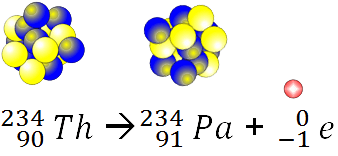
74.
Which type of nuclear radiation is being emitted here?
a)
Alpha
b)
beta
c)
gamma 
d)
none
75.
A form of radiation that carries energy and has no mass and no charge.
a)
Alpha particles
b)
Beta Particles
c)
Gamma Rays
d)
Daughter nucleus
76.
Solve this equation for alpha decay.
20985At = ___ + 42He
a)
20583Bi
b)
20986Rn
c)
20781Tl
d)
20885At
77.
Solve this equation for beta decay.
146C = ___ + 0-1e
a)
104Be
b)
147N
c)
102He
d)
136C
78.

states that when different compounds are formed by the combination of the same elements, different masses of one element combine with the same mass of the other element in a ratio of small whole numbers

a)

law of multiple proportions

b)

law of definite proportions

c)

law of conservation of mass

d)

percent by mass

79.
Which scientist discovered the electron, which helped him develop a model of the atom?
a)
Niels Bohr
b)
John Dalton
c)
Ernst Rutherford
d)
J.J Thompson
80.
Which experiment did Thompson do?
a)
Gold Foil
b)
Cathode Ray
c)
Discovered TNT
d)
First dissection
81.

The attendance for the basketball game was estimated to be 15,000 people but 12,500 people attended. What was the percent error?

a)

16.67%

b)

20%

c)

2500%

d)

80%

82.

Write 7.113 x 10⁷ in standard form.

a)

71,130,000

b)

7,113,000

c)

0.0000007113

d)

7,113

83.
Write 0.00000707 in scientific notation.
a)
7.07 x 10⁻⁶
b)
7.07 x 10⁶
c)
707 x 108
d)
707 x 10-8
84.

Solid --> Gas

a)

Evaporation

b)

Condensation

c)

Deposition

d)

Sublimation

85.

Isotopes differ in their amount of....

a)

Protons

b)

Electrons

c)

Neutrons

d)

Happiness

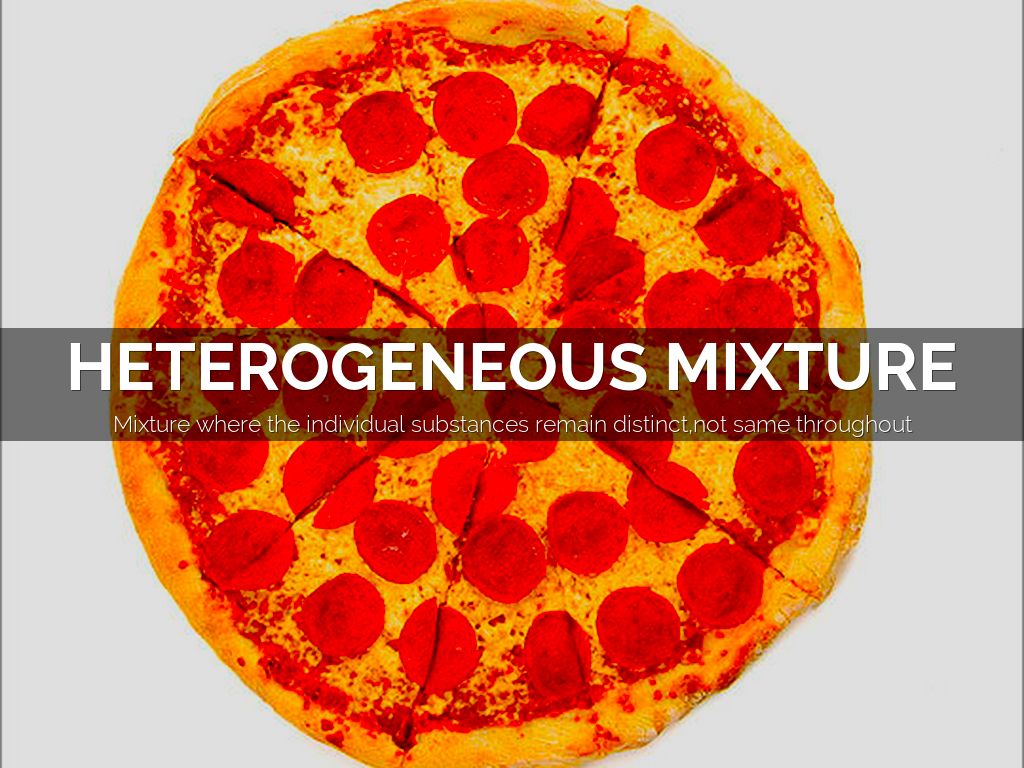
86.
What does it mean if a mixture is heterogeneous?
a)
you can see the different parts
b)
cannot tell one part from another
c)
very well blended
d)
made of elements
87.
Elements and compounds are always ___.
a)
pure
b)
mixed
88.
Mixtures are always ___.
a)
pure
b)
mixed
89.
A horizontal row of elements in the periodic table.
a)
column
b)
group
c)
period
90.
A vertical column in the periodic table.  Elements share similar properties.
a)
row
b)
group
c)
period
91.
Elements in a ..................have similar chemical properties.  
a)
period
b)
group
c)
row
92.
In the modern periodic table elements are arranged by:
a)
atomic mass
b)
atomic number
c)
valence electrons
d)
number of isotopes
93.

Who organized the periodic table by Atomic Number?

a)

Mr. G

b)

Moseley

c)

Mendeleev

d)

Lil Pump in all of his greatness

94.

What is the oxidation number of Carbon in the following polyatomic ion: CO32-

a)

-4

b)

+2

c)

+4

d)

+6

95.
In the reaction
2Ca(s) + O2(g) --> 2CaO(s), calcium is __________
a)
Reduced
b)
Synthesized
c)
Oxidized
d)
None of the above
96.
What is oxidation number of P in K3PO4?
a)
+1
b)
+5
c)
-2
d)
0
97.

What element is oxidzed?

a)
Cu
b)

N

c)

O

d)

H

98.
Which is the correct net ionic equation for the reaction of AgNO3 and CaCl2?
a)
Ca2+(aq) +  2Cl- (aq) → CaCl(s)
b)
Ag+(aq)  +  Cl- (aq) → AgCl(s)
c)
Ag +  Cl  →  AgCl
d)
Ag+  +  Ca2+   →Ag2Ca (s)
99.
What are the spectator ions in the reaction of sodium chloride with silver nitrate?
a)
silver and nitrate
b)
sodium and chloride
c)
sodium and nitrate
d)
silver and chloride
100.
What are the spectator ions in this reaction?
CuCl2(aq) + NaOH(aq) → Cu(OH)2(s) + NaCl(aq)

 
a)
Cu2+ and OH1-
b)
Na2+ and Cl2-
c)
Na1+ and Cl1-
d)
Na1+ and OH1-