wayground logo

Free Printable Worksheets

Font size

S
M
L
XL
Worksheets

CHE 123 Unit 3 Hwk

Total questions: 91

Worksheet time: 3hrs 6mins

Name
Class
Date
1.
Who first proposed that everything in the world was made up of tiny particles?
a)
Aristotle
b)
Democritus
c)
Plato
d)
Socrates
2.
Democritus called the tiniest particles of matter "atomos", which is Greek for _____
a)
empty space
b)
invisible
c)
very small
d)
indivisible
3.
The electron was discovered in 1897.  Who discovered it?
a)
Ernest Rutherford
b)
John Dalton
c)
J. J. Thomson
d)
Niels Bohr
4.
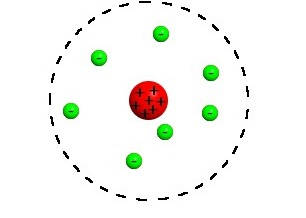
Whose model showed atoms as uniformly packed spheres of positive matter filled with negatively charged electrons?
a)
J. J. Thomson
b)
John Dalton
c)
Ernest Rutherford
d)
Niels Bohr
5.
Which scientist became known as "the father of the nuclear age"?
a)
J. J. Thomson
b)
John Dalton
c)
Ernest Rutherford
d)
Niels Bohr
6.
Whose experiment involved shooting small, positively charged alpha particles at a sheet of gold foil?
a)
J.J. Thompson
b)
Max Planck
c)
Ernest Rutherford
d)
Niels Bohr
7.
Who concluded that atoms consisted largely of empty space with most of the mass concentrated in the center?
a)
J. J. Thomson
b)
Max Planck
c)
Ernest Rutherford
d)
Niels Bohr
8.
Rutherford referred to the center of the atom, where the mass was concentrated, as _____
a)
the kernel
b)
the nucleus
c)
the focus
d)
the heart
9.
Who stipulated that electrons orbit the nucleus at fixed energies and distances?
a)
Albert Einstein
b)
Max Planck
c)
Ernest Rutherford
d)
Niels Bohr
10.
Who showed it was impossible to determine both the exact position and speed of electrons as they moved around an atom?
a)
Werner Heisenberg
b)
Niels Bohr
c)
Max Planck
d)
Albert Einstein
11.
The current model of the atom, where electrons exist within a range of possible locations, is called _____
a)
the chocolate chip cookie model
b)
the plum pudding model
c)
the quantum model
d)
the planetary model
12.
As electrons circling an atom shift between energy levels, they absorb or release energy in the form of _____
a)
heat at a specific temperature
b)
kinetic energy at a certain speed
c)
light of a specific wavelength
d)
sound waves at a certain intensity
13.
This model this model was the first to show a nucleus, consisting of protons and neutron.  Electrons surround the nucleus but are not shown in distinct energy levels. 
a)
The "Rutherford Model" of the atom
b)
The "Plum Pudding Model" of the atom
c)
The "Quantum Mechanical Modell" of the atom
d)
Democritus's model of the atom
14.
This was the first model of the atom ever proposed. It was simple and described atoms as tiny spheres that could not be broken down into smaller pieces.
a)
Democritus's model of the atom
b)
The "Plum Pudding Model" of the atom
c)
The "Rutherford Model" of the atom
d)
The "Quantum Mechanical Model" of the atom
15.
Ernest Rutherford discovered that atoms were mostly _________________. 
a)
negatively charged
b)
positively charged
c)
electrons
d)
empty space. 
16.
What does the nucleus of an atom contain?
a)
Electrons & Neutrons
b)
Protons & Neutrons
c)
Neutrinos & Positrons
17.
In the Bohr Model, how many electrons fit in the first energy level?
a)
2
b)
4
c)
8
d)
18
18.

Who was the first person to come up with the Atomic Theory which included four parts.

a)

John Dalton

b)

Democritus

c)

Ernest Rutherford

d)

Niels Bohr

19.
Who developed the Quantum Mechanical Model?
a)
Erwin Schrodinger
b)
Joseph Thomson
c)
James Chadwick
d)
Ernest Rutherford
20.

Worked with Rutherford to discover particles with no charge -- called neutrons.

a)

James Chadwick

b)

Niels Bohr

c)

Democritus

d)

Thomson

21.

Proposed that electrons move around the nucleus in specific layers, or shells.

a)

Bohr

b)

Rutherford

c)

Chadwick

d)

Thomson

22.

Which of the choices below has the correct order of scientists' discoveries of the structure of an atom?

a)

Bohr, Democritus, Dalton, Thomson, Rutherford, Schrodinger

b)

Democritus, Dalton, Thomson, Schrodinger, Bohr, Rutherford

c)

Democritus, Dalton, Thomson, Rutherford, Bohr, Schrodinger

d)

Schrodinger, Bohr, Rutherford, Thomson, Dalton, Deomcritus

23.
The Billiard Ball is the nickname for ________ theory.
a)
Dalton
b)
Neils Bohr
c)
JJ Thomson
d)
Ernest Rutherford
24.

Why did Ernest Rutherford and his colleagues perform the Gold-Foil Experiment?

a)

They wanted to test and confirm the Plum-Pudding model

b)

They wanted to test John Dalton's Model

c)

They were looking for electrons

d)

They wanted to come up with their own Atomic Model

25.

What results did Rutherford expect to see if the Plum-Pudding model is correct?

a)

He expected that most of alpha particles would go through a gold-foil and small number of particles would deflect sightly

b)

He expected that most of alpha particles would not go through a gold-foil and will stop on one side of a foil.

c)

He expected that most of alpha particles would ricochet back after hitting a gold-foil

26.

What results did Rutherford observe in his Gold-Foil experiment?

a)

He observed that all alpha particles did go through a gold-foil in straight lines

b)

He observed that most alpha particles did not go through a gold-foil and stopped on one side of the gold foil.

c)

He observed that a small number of alpha particles bounced off the gold-foil at very large angles

d)

He observed that all alpha particles slightly deflected from the straight line when going through a gold-foil

27.

Which type of nuclear radiation can be stopped by a sheet of paper?

a)

Alpha

b)

Beta

c)

Gamma

28.

Which type of nuclear radiation can be stopped 60 cm of aluminum or 7 cm of lead?

a)

Alpha

b)

Beta

c)

Gamma

29.

When a substance undergoes beta decay

a)

The atomic number increases by 1

b)

The atomic number decreases by 2

c)

The atomic number does not change

30.

After 4 half-lives, 1g of a sample of Krypton-85 is left. What was the original mass of the sample?

a)

16g

b)

32g

c)

0.0625g

d)

4g

31.
When a nucleus undergoes nuclear decay by gamma rays, the atomic number of the element....
a)
remains the same
b)
  decreases by one.
c)
increases by one.
d)
increases by two.
32.
The half-life of strontium-90 is 25 years. How much strontium-90 will remain after 100 years if the initial amount is 4.0 g?
a)
3.0g
b)
0.25mg
c)
0.3g
d)
0.25g
33.
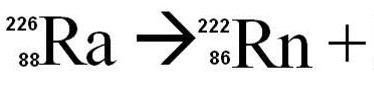
What particle completes this reaction?
a)
alpha particle
b)
beta particle
c)
gamma particle
d)
neutron
34.
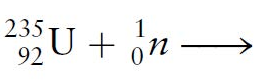
What particle completes this reaction?
a)
alpha particle
b)
beta particle
c)
gamma particle
d)
neutron
35.
Complete the nuclear equation and determine the type of decay that is occurring in this reaction. 
a)
alpha
b)
beta
c)
gamma
d)
none
36.
What is the missing isotope that will balance the following nuclear equation?
94Be  +  11H →  _____  +  42He
a)
105B
b)
105Ne
c)
63Li
d)
63C
37.
Balance the following equation:
146C --> 0-1e + ________
a)
145B
b)
146C
c)
147N
d)
42He
38.
a)
23692U
b)
23693U
c)
23492Np
d)
23493Np
39.

Complete the nuclear reaction

85209At = ___ + 24He

a)

83205Bi

b)

86209Rn

c)

81207Tl

d)

85208At

40.

Complete the nuclear reaction

2760Co = ___ + -10e

a)

2556Mn

b)

2860Ni

c)

2358V

d)

2759Co

41.
What is the frequency of UV light that has an energy of 2.39 × 10 -18 J? 
a)
2.32 x 10Hz
b)
3.60 x 10¹⁵ Hz
c)
1.58 x 10-51 Hz
d)
3 x 10⁸  m/s
42.
Find the energy, in joules per photon, of microwave radiation with a frequency of 7.91 × 10 10 1/s.
a)
6.63 x 10⁻³⁴ J
b)
5.25 x 10¹⁴ J
c)
5.24 x 10⁻²³ J
d)
1.19 x 1044 J
43.
What is the energy of an X-ray with a frequency of 1.0 x 10¹⁷ Hz?
a)
6.63 x 10⁻³⁴ J
b)
6.63 x 10⁻¹⁷ J
c)
1.51 x 10¹⁶ J
d)
1.51 x 10⁻¹⁶ J
44.

Which the energy of an electron in a given energy state of the H atom.

a)

ΔE =hcλ\Delta E\ =\frac{hc}{\lambda}

b)

ΔE=hv\Delta E=hv

c)

λ = cv\lambda\ =\ \frac{c}{v}

d)

En= RH (1n2)En=-\ R_{H\ }\left(\frac{1}{n^2}\right)

45.
Which has the SHORTEST wavelength and, therefore, the highest frequency/most energy
a)
Radio waves
b)
Ultraviolet Rays
c)
Gamma Rays
d)
X-rays
46.
Which section of the spectrum is the ONLY one we can see?
a)
X-rays
b)
Visible Light
c)
Gamma Rays
d)
Ultraviolet Rays
47.
A certain photon of light has a wavelength of 4.22x10⁻⁷nm. What is the frequency? (v=c/λ)
a)
7.11x10¹⁴ Hz
b)
7.11Hz
c)
1.41x10⁻¹⁵
d)
-1.41x10¹⁵
48.

When an electron moves from n=4 to n=1, what wavelength of energy is emitted?

a)

97 nm

b)

410 nm

c)

434 nm

d)

1282 nm

49.

What is n defined as in the Bohr's atomic model?

a)

a letter

b)

Principal quantum number

c)

Principal quantum variable

d)

a quantitiy

50.

All stars are composed of a mixture of elements. When these elements are heated they emit specific amounts of electromagnetic radiation, known as an emission spectrum. Each element emits a unique, identifiable, spectrum.


Using the Bright-line emission spectrum chart below, identify the elements present in this modeled star (found in the line labeled “mixture”).

a)

Lithium and cadmium are in the mixture. Strontium is not in the mixture.

b)

Lithium and strontium are in the mixture. Cadmium is not in the mixture

c)

Cadmium and strontium are in the mixture. Lithium is not in the mixture

d)

All of the shown elements are present in the mixture.

51.

_____________ predicted that an ideal black body at thermal equilibrium will emit radiation in all frequency ranges, emitting more energy as the frequency increases. This had led to what was called “the ultraviolet catastrophe”.

a)

Plank Theory

b)

Quantum theory

c)

Classical wave theory

d)

Einstein theory

52.

The energy of photoelectrons emitted from a metal surface can be increased by

a)

using light of higher frequency.

b)

using light of longer wavelength.

c)

using light of higher intensity.

d)

using monochromatic, polarized light.

53.
The photoelectric effect only occurs if the light shining on the metal is:
a)
coherent.
b)
above a minimum intensity.
c)
above a minimum frequency.
d)
above a minimum wavelength.
54.

What is the best description of 'threshold frequency'?

a)

The minimum energy needed for electrons to escape a surface.

b)

The maximum kinetic energy that an emitted electron has.

c)

The minimum frequency of a photon that will cause an electron to be emitted.

d)

The frequency that an emitted electron will have.

55.
Which type of orbital is shaped like a sphere?
a)
s orbital
b)
p orbital
c)
d orbital
d)
f orbital
56.

Which of the following is NOT a possible pair of quantum numbers?

a)

2p

b)

2d

c)

4p

d)

4f

57.
Why is the 3rd energy able to fit more electrons?
a)
Because 3 is a sacred number, just look at it!
b)
Because the p-block that looks like it is part of the 3rd energy level is actually part of the 2nd energy level
c)
Because the d-block that looks like it is part of the 4th energy level is actually part of the 3rd energy level
d)
Because the third energy level has 7 s orbitals
58.
What is the electron configuration for F?
a)
1s2 2s2 3p5
b)
1s2 2s2 3d5
c)
1s2 2s2 2p5
d)
1s2 2p5
59.
What is the electron configuration for V?
a)
[Ne] 4s2 4d3
b)
[Ar] 4s2 4d3
c)
[Ne]4s2 3d3
d)
[Ar] 4s2 3d3
60.

What element has the electron configuration 1s2 2s2 2p6 3s2 3p5?

a)

Chlorine

b)

Argon

c)

Fluorine

d)

Sulfur

e)

Bromine

61.

What is the noble gas configuration for Cobalt?

a)

[Kr] 4s2 3d7

b)

[Kr] 4s2 4d7

c)

[Ar] 4s2 3d7

d)

[Ar] 4s2 4d7

62.

What is the noble gas configuration for 1s2 2s2 2p6 3s2?

a)

[He] 3s2

b)

[Ne] 3s2

c)

[Ar] 3s2

d)

[Ar] 4s2

63.

There may be a maximum of ____ p orbitals at a given energy level.

a)

2

b)

6

c)

3

d)

8

64.

This shape is that of a...

a)

s orbital

b)

d orbital

c)

p orbital

d)

f orbital

65.

The proper pair of the L value with the orbital shape.

a)

0; f

b)

3; p

c)

1; s

d)

2; d

66.

How many electrons total are found in the f orbital?

a)

2

b)

6

c)

10

d)

14

67.

n=4, l=3?

a)

4f

b)

4d

c)

3s

d)

3p

68.

N=5 l=2

a)

3s

b)

4sp

c)

5d

d)

5p

69.

Which of the following sub levels does not exist

a)

2p

b)

3d

c)

2d

d)

5f

e)

4f

70.

If n=4, what are the possible l values?

a)

l = 0, 1, 2, 3, 4

b)

l = 0, 1, 2, 3

c)

l = -4, -3, -2, -1, 0, 1, 2, 3, 4

d)

l = -3, -2, -1, 0, 1, 2, 3

71.

If l = 2, what are the possible ml values?

a)

ml = 0, 1, 2

b)

ml = 0, 1

c)

ml = -2, -1, 0, 1, 2

d)

ml = -1, 0, 1

72.

How many ELECTRONS can fit within a s-subshell?

a)

2

b)

6

c)

10

d)

14

73.

How many ORBITALS does a p-subshell contain?

a)

1

b)

3

c)

5

d)

7

74.

Q11. Which of the following sets of quantum numbers (n, l, ml, and ms) describes the valence electron of Na?

a)

2, 1, 0, -½

b)

2, 0, 0, -½

c)

3, 1, 1, +½

d)

3, 0, 0, +½

75.

Which of the following sets of quantum numbers (n, l, ml, and ms) describes the valence electron of 4s1?

a)

2, 0, 0, +1/2

b)

2, 1, 0, +1/2

c)

4, 0, 0, +1/2

d)

4, 1, 1, +1/2

76.
Which element has the greater ionization energy?
a)
Strontium
b)
Boron
77.

Which element has the greater ionization energy?

a)

Magnesium (Mg)

b)

Phosphorus (P)

78.

Which element has the greater ionization energy?

a)

Iodine (I)

b)

Chlorine (Cl)

79.
Which of these elements has the highest ionization energy?
a)
Lithium (Li)
b)
Potassium (K)
c)
Francium (Fr)
d)
Sodium (Na)
80.
What is this element? 
1s22s22p63s23p6
4s23d104p6
a)
Argon
b)
Krypton
c)
Selenium
d)
Bromide
81.
Which element is pictured?
a)
neon
b)
fluorine
c)
magnesium
d)
argon
82.
An electron occupies the lowest energy orbital that can receive it.
a)
Hund’s rule
b)
Pauli exclusion principle
c)
Bohr model of the atom
d)
Aufbau principle
83.
No two electrons in the same atom can have the same four quantum numbers.
a)
Aufbau principle
b)
Pauli exclusion principle
c)
Hund’s rule
d)
Noble gas notation
84.
Which guideline, Hund’s rule or the Pauli exclusion principle, is violated in the following orbital diagrams?
a)
Hund's
b)
Aufbau's
c)
Pauli's Exclusive
85.
Which guideline, Hund’s rule or the Pauli exclusion principle, is violated in the following orbital diagrams?
a)
Aufbau's
b)
Hund's
c)
Pauli exclusive
86.
What is incorrect about this orbital diagram?
a)
Both arrows in the 2p box should be pointing up
b)
There is nothing incorrect with this diagram
c)
In the 2p box there should only be 1 electron in the first 2p box and one in the 2nd 2p box
d)
All the arrows should be pointing up.
87.

What is the correct condensed electron configuration for the ion Ca2+?

a)

[Ar]

b)

[Ar] 4s2

c)

[Kr]

d)

[Kr] 4s2

88.

Transition of electron from an excited state to a ground state of n = 5 formed a photon. Which of the following series belongs to this respective transition?

a)

Balmer

b)

Pfund

c)

Brackett

d)

Lyman

e)

Paschen

89.

If energy is supplied, electron ___________ the energy and is promoted from a _____ energy level to a ______ higher energy level.

a)

absorbed; lower; higher

b)

emitted; lower; higher

c)

absorbed; higher; lower

d)

emitted; higher; lower

90.

The ground state electronic configuration of Cr is

a)

[Ar] 4s1 3d5

b)

[Ar] 4s2 3d4

c)

[Ar] 3d4

d)

[Ar] 4s1 3d3

91.

Explain why ionization energy decreases as you go down a group.

a)

Outer electrons are further away from the nucleus you go down a group

b)

Electrons feel less pull from the nucleus as you go down a group

c)

Electrons are easier to remove as you go down a group

d)

All of the above