Wayground logo

Free Printable Worksheets

Font size

S
M
L
XL
Worksheets

Module 3,4, and 5 Quarter 1 Earth Science

Total questions: 143

Worksheet time: 2hrs 34mins

Name
Class
Date
1.

What are the three main types of rocks?

a)

igneous, sedimentary, and metamorphic

b)

granite, limestone, and shale

c)

volcanic, sandstone, and slate

d)

basalt, conglomerate, and marble

2.

How are sedimentary rocks formed?

a)

Melting, cooling, and solidification.

b)

Weathering, erosion, deposition, compaction, and cementation.

c)

Volcanic activity and lava flow.

d)

Tectonic plate movement and folding.

3.

What is the process of changing rocks from one type to another called?

a)

erosion

b)

weathering

c)

deposition

d)

metamorphism

4.

Which type of rock is formed from the cooling and solidification of magma or lava?

a)

granite

b)

sedimentary rock

c)

igneous rock

d)

metamorphic rock

5.

What are the two main types of igneous rocks?

a)

volcanic and plutonic

b)

sedimentary and metamorphic

c)

granite and basalt

d)

intrusive and extrusive

6.

What is the most common type of rock found on the Earth's surface?

a)

volcanic rock

b)

sedimentary rock

c)

metamorphic rock

d)

igneous rock

7.

What are the characteristics of sedimentary rocks?

a)

Sedimentary rocks are formed from the cooling and solidification of magma.

b)

Sedimentary rocks are formed from volcanic activity.

c)

Sedimentary rocks are typically found deep within the Earth's mantle.

d)

Sedimentary rocks are formed from the accumulation and consolidation of sediments. They are typically layered and contain fossils. They can be classified into three types: clastic, chemical, and organic.

8.

What is the process of compacting and cementing sediments to form sedimentary rocks called?

a)

lithification

b)

deposition

c)

erosion

d)

weathering

9.

What are the two main types of metamorphic rocks?

a)

foliated and non-foliated

b)

granite and basalt

c)

igneous and sedimentary

d)

marble and quartzite

10.

How are metamorphic rocks formed?

a)

Metamorphic rocks are formed through volcanic activity.

b)

Metamorphic rocks are formed through erosion and deposition.

c)

Metamorphic rocks are formed through the cooling and solidification of magma.

d)

Metamorphic rocks are formed through changes in temperature, pressure, or chemical composition.

11.

What are the characteristics of metamorphic rocks?

a)

Metamorphic rocks are formed from pre-existing rocks that have undergone changes due to heat, pressure, and/or chemical reactions.

b)

Metamorphic rocks are formed from the cooling and solidification of magma.

c)

Metamorphic rocks are only found on the surface of the Earth.

d)

Metamorphic rocks are formed from volcanic activity.

12.

What is the process of melting and cooling rocks to form igneous rocks called?

a)

condensation

b)

solidification

c)

vaporization

d)

liquefaction

13.

What are the characteristics of igneous rocks?

a)

Igneous rocks are formed from the solidification of molten material and are characterized by their crystalline structure.

b)

Igneous rocks are formed from the compression of organic matter.

c)

Igneous rocks are formed from the cooling of lava.

d)

Igneous rocks are formed from the erosion of sedimentary rocks.

14.

What is the most common type of sedimentary rock?

a)

sandstone

b)

limestone

c)

granite

d)

shale

15.

What is the process of heat and pressure changing rocks to form metamorphic rocks called?

a)

erosion

b)

weathering

c)

deposition

d)

metamorphism

16.
The igneous rock texture that is characterized by two distinctly different crystal sizes is called
a)
Coarse grained
b)
Fine grained
c)
Glassy
d)
Porphyritic
17.
The three groups of rocks are classified by
a)
How they form
b)
Color
c)
Grain size
d)
Chemical Composition
18.
Fossils are only found in
a)
Sedimentary rocks
b)
Foliated Metamorphic rocks
c)
Igneous Rocks
d)
Nonfoliated Metamorphic rocks
19.

What kind of igneous rock usually contains large crystals?

a)

clastic

b)

extrusive

c)

organic

d)

intrusive

20.

Streak is the color of a mineral’s

a)

fracture

b)

luster

c)

powder

d)

cleavage

21.

You find a deposit of organic limestone. In what type of rock setting did it probably form?

a)

the ocean

b)

a volcano

c)

a swamp

d)

sand dunes

22.

A rock that forms from many small fragments of other rocks is a(n)

a)

igneous rock

b)

metamorphic rock

c)

sedimentary rock

d)

extrusive rock

23.

The process by which metamorphic rock changes to igneous rock begins with

a)

melting

b)

erosion

c)

deposition

d)

crystallization

24.

Which rock cycle process causes many sedimentary rocks to have visible layers?

a)

eruption

b)

intrusion

c)

crystallization

d)

deposition

25.

Which is the process that breaks up rock on Earth’s surface?

a)

deposition

b)

melting

c)

compaction

d)

weathering

26.

Geologists have classified rocks into three major groups of rocks which are:

a)

inorganic, organic and chemical rocks

b)

igneous, sedimentary and metamorphic rocks

c)

metamorphic, chemical and non chemical rocks

d)

sedimentary, inorganic and igneous rocks

27.

Any rock that forms from another rock as a result of changes in heat or pressure (or both) is a:

a)

chemical rock

b)

igneous rock

c)

sedimentary rock

d)

metamorphic rock

28.

Streak is the color of a mineral’s

a)

fracture

b)

luster

c)

powder

d)

cleavage

29.

What kind of igneous rock usually contains large crystals?

a)

clastic

b)

extrusive

c)

organic

d)

intrusive

30.

You find a deposit of organic limestone. In what type of rock setting did it probably form?

a)

the ocean

b)

a volcano

c)

a swamp

d)

sand dunes

31.

A rock that forms from many small fragments of other rocks is a(n)

a)

igneous rock

b)

metamorphic rock

c)

sedimentary rock

d)

extrusive rock

32.

The process by which metamorphic rock changes to igneous rock begins with

a)

melting

b)

erosion

c)

deposition

d)

crystallization

33.

Which rock cycle process causes many sedimentary rocks to have visible layers?

a)

eruption

b)

intrusion

c)

crystallization

d)

deposition

34.

If heat and pressure inside Earth cause the texture and crystal structure of a rock to change, what new material is formed?

a)

sedimentary rock

b)

metamorphic rock

c)

igneous rock

d)

chemical rock

35.

You find a rock in which the grains are arranged in wavy, parallel bands of white and black crystals. What kind of rock have you probably found?

a)

igneous

b)

sedimentary

c)

metamorphic

d)

extrusive

36.

A substance that flows and whose shape can change, but

not its volume is a:

a)

solid

b)

liquid

c)

volume

d)

matter

37.

A substance that resists to change its shape is a:

a)

liquid

b)

solid

c)

matter

d)

volume

38.

The amount of space that a matter occupies is its:

a)

volume

b)

liquid

c)

solid

d)

length

39.

A naturally occurring solid that can form by inorganic processes and that has a crystal structure and a definite chemical composition.

a)

It´s a rock

b)

It´s a crystal

c)

It´s a mineral

d)

It´s a substance

40.

The particles of a mineral line up in a pattern that repeats over and over again with a pattern of a mineral’s particles that forms a translucent or transparent solid is a:

a)

granite

b)

crystal

c)

solid

d)

sand

41.

An element is a substance composed of

a)

many particles

b)

a single kind of atom

c)

a crystal arrangement

d)

many layers

42.

All minerals are substances that where formed by

a)

volcano activity

b)

human intervention

c)

natural processes

d)

rock deposition

43.

To be classified as a mineral, a substance must satisfy this

requirement

a)

have a definite chemical composition

b)

naturally occurring

c)

be a solid

d)

all the above

44.

The streak of a mineral is the

a)

color of the rock

b)

when it carved a line in a surface

c)

is the color of it´s powder

d)

is its hardness

45.
Which mineral has a Moh's value of 10?
a)
Talc 
b)
Quartz
c)
Diamond 
d)
Calcite
46.
A mineral that breaks cleanly over a smooth plane is considered______________.
a)
Point 
b)
Fracture 
c)
Breakage 
d)
Cleavage 
47.
The breaking down of rocks is associated with_______________
a)
Erosion 
b)
Weathering 
c)
flooding 
d)
Sediments 
48.
_________________ is the process that involves the movement of soil and rocks.
a)
Weathering 
b)
Erosion 
c)
Deposition 
d)
Waves 
49.
What 2 changes are included in the process of weathering?
a)
Chemical and Mechanical changes 
b)
Sedimentary and Metamorphic changes 
c)
Chemical and Physical changes 
d)
none of the above
50.
Dull, silky, waxy, pearly, and earthy are terms that best describe which property of minerals?
a)
luster
b)
color
c)
streak
d)
cleavage
51.
What does inorganic mean?
a)
Something that is living
b)
Something that is dead, but was once living
c)
Something that was never living
d)
Something that was once dead and is now alive
52.
What is the relationship between a rock and a mineral?
a)
Rocks are made up of minerals.
b)
Minerals are made up of rocks.
c)
Rocks are on the Earth's surface. Minerals are found underground.
d)
Rocks and minerals are different names for the same thing.
53.
Why is coal not considered a mineral?
a)
It is not a solid
b)
It is man-made
c)
It is not inorganic
d)
It is made of carbon
54.
What is the softest mineral known as?
a)
diamond
b)
talc
c)
graphite
d)
Corundum
55.
The most obvious, but also least useful property when identifying minerals is?
a)
Streak
b)
Luster
c)
Cleavage
d)
Color
56.

This rock is formed in layers.

a)

Sedimentary

b)

Igneous

c)

Metamorphic

57.

Fossils are often found in this rock.

a)

Sedimentary

b)

Igneous

c)

Metamorphic

58.

This rock is often found near water.

a)

Sedimentary

b)

Igneous

c)

Metamorphic

59.

What kind of rock is "Granite"?

a)

Sedimentary

b)

Igneous

c)

Metamorphic

60.

What kind of rock is "Marble"?

a)

Sedimentary

b)

Igneous

c)

Metamorphic

61.

What kind of rock is "Limestone"?

a)

Sedimentary

b)

Igneous

c)

Metamorphic

62.

What kind of rock is "Sandstone"?

a)

Sedimentary

b)

Igneous

c)

Metamorphic

63.

What kind of rock is "Basalt"?

a)

Sedimentary

b)

Igneous

c)

Metamorphic

64.
The top layer of sediments in a sedimentary rocks is...
a)
The newest and youngest layer.
b)
The oldest layer.
c)
The only layer that is made from pebbles.
d)
The second layer of sediments.
65.
A __________ is a natural, nonliving substance that makes up rocks. 
a)
Sedimentary rock
b)
Igneous Rock
c)
Mineral
d)
Sediment
66.

A diamond is a type of metamorphic rock.

a)

TRUE

b)

False

67.
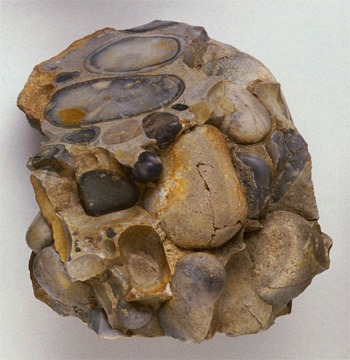
Identify this type of rock. 
a)
igneous
b)
metamorphic
c)
sedimentary
68.
What type of rock has wavy layers that may be bent? 
a)
sedimentary
b)
igneous
c)
metamorphic
69.
What type of rock changes by intense heat AND pressure? 
a)
sedimentary
b)
igneous
c)
metamorphic
70.
What type of rock might contain holes from gases of quickly cooled lava? 
a)
sedimentary
b)
igneous
c)
metamorphic
71.
What type of rock has visible flat layers? 
a)
sedimentary
b)
igneous
c)
metamorphic
72.
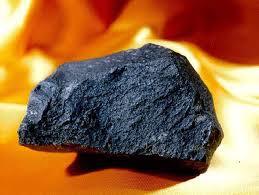
This rock was formed when magma cooled very slowly inside the Earth. What specific type of rock is it?
a)
Intrusive Igneous Rock
b)
Extrusive Igneous Rock
c)
Foliated Metamorphic Rock
d)
Clastic Sedimentary Rock
73.
This rock formed when lava cooled very quickly on Earth's surface. What specific type of rock is it?
a)
Extrusive Igneous Rock
b)
Intrusive Igneous Rock
c)
Non-Foliated Metamorphic Rock
d)
Biochemical Sedimentary Rock
74.
Two ways to describe types of igneous rocks are _____
a)
Extrusive and Intrusive
b)
Foliated and Non-Foliated
c)
Clastic and Biochemical
d)
Black and Gray
75.
Which of the words below describe broken up rock?
a)
stalactites
b)
magmas
c)
metamorphs
d)
sediments
76.
This rock was formed by smaller pieces of rock that settled at the bottom of a lake millions of years ago. What type of rock is this?
a)
Sedimentary
b)
Igneous
c)
Metamorphic
77.
This rock was found near the mouth of a volcano. What type of rock is this?
a)
Sedimentary
b)
Igneous
c)
Metamorphic
78.
This rock formed when bits of other rocks became pressed into a solid. What type of rock is it?
a)
Sedimentary Rock
b)
Metamorphic Rock
c)
Igneous Rock
79.
This rock was formed when magma cooled very slowly inside the Earth. What specific type of rock is it?
a)
Intrusive Igneous Rock
b)
Extrusive Igneous Rock
c)
Foliated Metamorphic Rock
d)
Clastic Sedimentary Rock
80.
This rock formed when lava cooled very quickly on Earth's surface. What specific type of rock is it?
a)
Extrusive Igneous Rock
b)
Intrusive Igneous Rock
c)
Non-Foliated Metamorphic Rock
d)
Biochemical Sedimentary Rock
81.
When you watch a volcano erupt molten rock, you are seeing _____
a)
Lava
b)
Magma
c)
Mineral Crystals
d)
Igneous Rocks
82.
When you are describing the sizes of the mineral grains in a rock, you are detailing the rock's _____
a)
Texture
b)
Composition
c)
Sedimentation
d)
Igneous-ness
83.
The individual particles that make up a rock are known as _____
a)
Grains
b)
Textures
c)
Metamorphs
d)
Lava
84.
What are the 3 major types of rocks?
a)
Igneous, Metamorphic, Sedimentary
b)
Metamorphic, Igneous, Cementation
c)
Brown, Red, Gray
d)
Streak, Hardness, Breakage
85.
Two ways to describe types of igneous rocks are _____
a)
Extrusive and Intrusive
b)
Foliated and Non-Foliated
c)
Clastic and Biochemical
d)
Black and Gray
86.
What process is used to form sedimentary rocks?
a)
Lava cools and hardens to form a rock.
b)
Weathering, Erosion, Deposition, Compaction, Cementation
c)
Extreme heat and pressure from inside the Earth turn rocks into new rocks.
d)
Magma trapped under the Earth's surface cools and solidifies.
87.
Which of the words below describe broken up rock?
a)
stalactites
b)
magmas
c)
metamorphs
d)
sediments
88.
This rock was formed by smaller pieces of rock that settled at the bottom of a lake millions of years ago. What type of rock is this?
a)
Sedimentary
b)
Igneous
c)
Metamorphic
89.
This rock was found near the mouth of a volcano. What type of rock is this?
a)
Sedimentary
b)
Igneous
c)
Metamorphic
90.
When sediments are pressed together tightly, this is called ____________.
a)
Compaction
b)
Cementation
c)
Weathering
d)
Erosion
91.
The process in which sediment are fused or glued together.
a)
compaction
b)
deposition
c)
organic rock
d)
cementation
92.
What is deposition?
a)
Dropping off sediment
b)
Movement of sediment
c)
Breaking down of sediment 
93.
The process when rocks break into smaller pieces due to exposure to natural elements is called
a)
erosion
b)
weathering
c)
sediments
d)
deposition
94.
The movement of weathered material (sediment) is called?
a)
weathering
b)
erosion
c)
deposition
d)
cementation
95.
Sedimentary rock that is made of fragments of rocks cemented together by a mineral are called...
a)
chemical
b)
organic
c)
clastic
96.
Sedimentary rock that is formed from water evaporating and minerals being left behind.
a)
clastic
b)
organic
c)
chemical
97.
Sedimentary rock made from fossils are called...
a)
organic
b)
chemical
c)
stratified
98.
This rock was formed when molten rock cooled into a solid. What type of rock is it?
a)
Igneous Rock
b)
Metamorphic Rock
c)
Sedimentary Rock
99.
Which type of rock is formed from INTENSE heat and pressure?
a)
igneous
b)
sedimentary
c)
metamorphic
100.
Is the following metamorphic rock foliated or non-foliated?
a)
Foliated
b)
Non-foliated
c)
Neither
101.
A _______ is a solid, naturally formed substance that always has the same composition.
a)
rock
b)
carbon
c)
mineral
d)
water
102.
___________ rocks are formed when magma cools.
a)
Sedimentry
b)
Igneous
c)
Metamorphic
d)
Mineral
103.
When igneous rock breaks apart (weathers), it forms ___________.
a)
sedimentry rocks
b)
metamorphic rocks
c)
sediments
d)
crystals
104.
________ is an example of a metamorphic rock.
a)
Pumice
b)
Limestone
c)
Sandstone
d)
Marble
105.
One example of a sedmentary rock is ____________.
a)
pumice
b)
obsidian
c)
sandstone
d)
marble
106.
Salt crystals form when _______________.
a)
magma cools
b)
sandstone is heated
c)
sandstone weathers
d)
water evaporates
107.
Which of the following are formed from minerals mixed together?
a)
Sandstone
b)
Granite
c)
Marble
d)
All of the above
108.
A ___________ is where two tectonic plates meet and one gets pushed underneath the other.
a)
rift zone
b)
subduction zone
c)
transform fault
d)
rock layer
109.
The __________ describes the process by which rocks change forms.
a)
rock cycle
b)
water cycle
c)
igneous cycle
d)
metamorphic process
110.
________ are layers of sedimentary rock.
a)
Pumice
b)
Crystals
c)
Strata
d)
Magma
111.

Silicates are one of the most abundant minerals on Earth. Which of the following example is a silicate?

a)

Amber

b)

Apatite

c)

Feldspar

d)

Magnetite

112.

Quartz are composed of silicon and oxygen. Which common group of minerals do quarts belong?

a)

Oxide

b)

Silicate

c)

Sulfate

d)

Sulfide

113.

Which group of minerals do common table salts belong?

a)

Carbonates

b)

Fluorites

c)

Halides

d)

Sulfide

114.

are naturally occurring substances that are harnessed and used by humans in everyday life.

(a)  

115.

Hinges Handles Make-up color

(a)  

116.

Chrome plating Dyes

(a)  

117.

Electric wiring

(a)  

118.

Clocks Mirrors

(a)  

119.

Porcelain Ceramics

(a)  

120.

overall shape or growth pattern of the mineral. It can be described as equant, elongate and platy.

(a)  

121.

three dimensions of the mineral have about the same length, like that of a cube or sphere

a)

Equant

b)

Elongate

c)

Platy

122.

forms prismatic or prism-like crystals that are thicker than the needle as in a pencil. (ei. Indicolite)

(a)  

123.

looks like a flattened and thin crystal (like plate). (ei. Wulfenite)

(a)  

124.

Describes the appearance of a mineral when light is reflected from its surface. It can be described as opaque, transparent, dull, or shiny.

(a)  

125.

is opaque and very reflective like gold and silver.

(a)  

126.

Is dull, silky, greasy, and pearly like silicates.

(a)  

127.

break along random, irregular surfaces. It can be classified as conchoidal, uneven, hackly, splintery, and earthy.

(a)  

128.

A solid substance in which the atoms are arranged in an orderly, repeating, three-dimensional pattern

a)

Rock

b)

Lava

c)

Mohs

d)

Crystal

129.

The resistance of a mineral or other material to being scratched

a)

Streak

b)

Silicates

c)

Carbonates

d)

Hardness

130.

Used to describe a mineral’s hardness; based on the fact that a harder mineral will scratch a softer one

a)

Density

b)

Composition

c)

Mohs Scale

d)

Element

131.

Which is NOT a characteristic of a mineral?

a)

Forms in nature

b)

Inorganic

c)

Luster

d)

Crystal structure

132.

Which is NOT a characteristic of a mineral?

a)

Definite chemical composition

b)

Solid

c)

Nonliving

d)

Streak

133.

Which specific characteristic of a mineral explains that, there must be no traces of organic materials from the once part of an organism?

a)

A mineral is naturally-occuring

b)

A mineral is inorganic

c)

A mineral is a homogenous solid

d)

A mineral has a definite chemical composition

134.

All of the following dictates the color/hue of a mineral EXCEPT for:

a)

composition

b)

ordered internal structure

c)

cystal system

d)

colors of light

135.

Mineraloids are naturally-occurring , inorganic, homogenous solid with definite mechanical compositions but with no ordered internal structure.

a)

TRUE

b)

FALSE

c)

TRALSE

136.

The nonmetallic luster variation of the mineral topaz falls under what type?

a)

pearly

b)

adamantine

c)

vitreous

d)

dull

137.

The presence of cleavage in a mineral is dependent of its hardness.

a)

TRUE

b)

FALSE

138.

Sedimentary rocks can be classified into

(a)  

139.

It is formed when dissolved materials precipitate from the solution

a)

Clastic

b)

Chemical

c)

Organic

140.

It is formed from the build-up of plant or animal debris

a)

Clastic

b)

Chemical

c)

Organic

141.

It is formed from the mechanical weathering debris of rocks

a)

Clastic

b)

Chemical

c)

Organic

142.

It is formed through pressure due to compression of rocks that create bands called foliation

(a)  

143.

It has no foliation or bands

(a)