wayground logo

Free Printable Worksheets

Font size

S
M
L
XL
Worksheets

F2 Cambri - Forces and Energy Review

Total questions: 143

Worksheet time: 2hrs 15mins

Name
Class
Date
1.

What is the use of force meter?

a)

We use force meter to measure mass.

b)

We use force meter to check your blood pressure.

c)

We use force meter to measure weight.

d)

We use a force meter to check your weight.

2.

What is newton's second law?

a)

F = Ma

b)

Ma = fm

c)

X = Fm

d)

Fm = A

3.

What unit is force measured in?

a)

newton

b)

Weight

c)

None

d)

Kg

4.

What is a formula for converting mass to weight

a)

M = 10*w

b)

W = M*10

c)

M = W*10

d)

W = M by 10

5.

What are balanced forces? ...

a)

If two individual forces are acting in opposite directions and are equal in magnitude, then the force is said to be balanced.

b)

If two individual forces are acting in the same directions and are equal in magnitude, then the force is said to be balanced.

c)

If 4 individual forces are acting in opposite directions and are equal in magnitude, then the force is said to be balanced.

d)

If 4 individual forces are acting in same directions and are equal in magnitude, then the force is said to be balanced.

6.

Did you like my quiz?

a)

Yes

b)

Yes

c)

Yes

d)

Yes

7.

Calculate the weight of a man who has a mass of 75 kgs.

a)

750N

b)

750

c)

I don't know mate.

d)

500N

8.
___________ is the amount of matter in an object.
a)
mass
b)
weight
c)
volume
d)
force
9.
At which location would your mass be the greatest?
a)
Earth
b)
Moon
c)
Jupiter
d)
Mass Stays the Same Everywhere
10.
On which surface would friction be the greatest?
a)
carpet
b)
ice
c)
snow
d)
satin
11.

What is the definition of a force?

a)

Net force equal 0N and there is no change in the object's motion

b)

the overall force acting on an object after all forces are combined

c)

a push or a pull that acts on an object

d)

The force does not equal 0N, the object accelerates

12.

What is the definition of net force?

a)

a push or a pull that acts on an object

b)

Net force equal 0N and there is no change in the object's motion

c)

the overall force acting on an object after all the forces are combined

d)

The force does not equal 0N, the object accelerates

13.

What do we call a force that has a net force of zero Newtons and the object does not change its motion?

a)

balanced force

b)

unbalanced force

c)

acceleration force

d)

net force

14.

What is the magnitude and direction of the force in the free body diagram shown?

a)

70 N right

b)

70 N left

c)

50 N right

d)

50 N left

15.

What is the magnitude and direction of the force in the free body diagram shown?

a)

2000 N forward

b)

800 N backward

c)

1200 N forward

d)

2800 N forward

16.

What is the magnitude and direction of the force in the free body diagram shown?

a)

35 N right

b)

17 N right

c)

11 N right

d)

5 N right

17.
What is the name of the units that we measure force in?
a)
Einsteins 
b)
Newtons
c)
Kg
d)
Metres
18.
Which of these uses friction?
a)
A parachute
b)
A ball falling through the sky
c)
Brakes on a bike
d)
A wind turbine
19.

You are pushing a wheelbarrow. What happens to the wheelbarrow's motion if more mass is added and you push with the same force?

a)

The motion will remain the same

b)

The motion will increase.

c)

The motion will decrease.

d)

The motion will change directions.

20.
If an object mass =30 Kg on the Earth, what would be it's weight on Earth?
a)
30 N
b)
300 kg
c)
3000N
d)
300 N
21.
A child has a mass of 30 Kg on Earth. If the gravity on Moon is one sixth that of the Earth what is the mass of the child on Moon? 
a)
30 Kg
b)
180 Kg
c)
5 Kg
d)
0 Kg
22.

What is the weight of a 456g object?

a)

456g

b)

0.456kg

c)

4.56N

d)

456N

23.

The astronaut floats in international space station. It proves that...

a)

His weight is less in space

b)

His mass is less in space

c)

His weight does not change

d)

His mass is more in space

24.
The mass of an object ___________ as it moves away from the center of Earth
a)
stays the same
b)
decreases
c)
increases
d)
doubles
25.
What is Newtons 1st law of motion?
a)
Force= Mass multiplied by acceleration 
b)
An object at rest stays at rest unless acted on an unbalanced force. (inertia)
c)
For every action there is a equal and opposite  re-action.
d)
law of gravity 
26.
What law of motion does this picture represent?
a)
Newtons 1st law
b)
Newtons 4th law 
c)
Newtons 3rd law 
d)
Newtons 2nd law
27.
A net force of 15 N is exerted on an encyclopedia to cause it to accelerate at a rate of 5 m/s2. Determine the mass of the encyclopedia?
a)
 m = 3.0 kg
b)
m = 4.0 kg 
c)
m = 3.0 ml 
d)
m = 30.0 g
28.
Mass is a measure of an object's inertia. Objects with greater mass have a greater inertia; objects with less mass have less inertia.
a)
true 
b)
false 
29.
__________ is the sum of all forces acting on an object. It is capable of accelerating a mass. 
a)
velocity
b)
gravity
c)
net force
d)
distance
30.
A magician pulls a tablecloth out from under dishes and glasses on a table without disturbing them.
a)
Newton's 1st Law
b)
Newton's 2nd Law
c)
Newton's 3rd Law
d)
None of them
31.
The masses of four objects are given in this table. If all objects are struck with the same amount of force, which one will have the greatest acceleration?
a)
Object 1
b)
Object 2
c)
Object 3
d)
Object 4
32.

If a force of 26 N is exerted on two balls, one with a mass of 0.52 kg and the other with a mass of 0.78 kg, which ball will have the greater acceleration? (F=ma)

a)

The one with a mass of .78 kg will have the greatest acceleration.

b)

The one with a mass of .52 kg will have the greatest acceleration.

c)

They will both accelerate at the same rate.

33.

A physical science text book has a mass of 2.2 kg. What is the weight on the Earth? g = 10 m/s2

a)

22.00 N

b)

21.56 kg

c)

21.56 m/s

d)

21.56 m/s2

34.

If your mass is 35 kg on Earth, what would you weigh on Mars (g = 3.7 m/s2)? W=mg

a)

120 N

b)

130 N

c)

120 kg

d)

130 kg

35.
The mass of a car is 1000 kg.  How much force would be required to accelerate the car at a rate of 3 m/s2? 
a)
1000 ÷ 3
b)
3 ÷ 1000
c)
1000 x 3
36.
Which two forces are equal?
a)
The Force of Gravity and the Normal Force
b)
The applied force and the Force of friction
c)
None
d)
The Force of Gravity and the  Motion Force
37.

What is the resultant force?

a)

17 N, Left

b)

6N, Right

c)

11N , Left

d)

12N, Left

38.
Is the car
a)
Stationary
b)
Moving at constant speed
c)
Accelerating
d)
Decelerating
39.
Is the car
a)
Stationary
b)
Moving at constant speed
c)
Accelerating
d)
Decelerating
40.
Two features of a vector?
a)
Size and direction
b)
Speed and distance
c)
Quantity and units
d)
Amount and magnitude
41.

What is potential energy?

a)

moving energy

b)

stored energy

c)

renewable energy

d)

non renewable energy

42.
At what position does the pendulum have the greatest gravitational potential energy?
a)
Position D
b)
Position C
c)
Position B
43.

How does a windmill change forms of energy?

a)

Mechanical to electrical

b)

Electrical to mechanical

c)

Mechanical to light

d)

It is unable to change forms

44.

If you have a battery in a device, what is the first energy transformation that must happen?

a)

Chemical to light

b)

Chemical to electrical

c)

Electrical to chemical

d)

Electrical to light

45.

If the marble had a mass of 0.3kg and the hill was 2.3 m tall, how much potential energy did it have at the top of the ramp?

a)

2.3

b)

.23

c)

6.9

d)

5.2

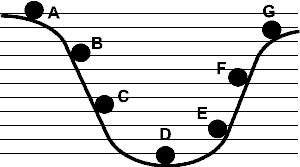
46.

At which point does the ball has the greatest gravitational potential energy (GPE)?

a)

A

b)

G

c)

D

d)

C

e)

G

47.

How could you increase the gravitational potential energy of an object without changing its mass and gravity?

a)

Make the object larger

b)

Lower the object towards the ground

c)

Raise the object farther off the ground

d)

Allow the object to roll on the ground

48.

Which is the correct unit for expressing gravitational potential energy?

a)

Joule

b)

Newton

c)

m/s2

d)

meter

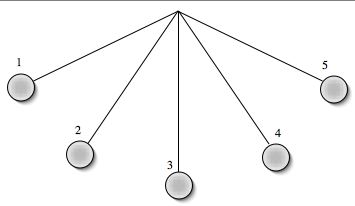
49.
When a pendulum swings, at which point is kinetic energy highest?
a)
1
b)
2
c)
3
d)
4
50.
A 60.0 kg person walks from the ground to the roof of a 74.8 m tall building. How much gravitational potential energy does she have at the top of the building?
a)
43982.4 J
b)
63982.3 J
c)
43962.4 J
d)
83942.4 J
51.
A pitcher throws a 0.145 kg baseball at a velocity of 30.0m/s. How much kinetic energy does the ball have?
a)
65.35 J
b)
87.25 J
c)
23.45 J
d)
65.25 J
52.
A pitcher throws a 0.145 kg baseball at a velocity of 30.0m/s. How much kinetic energy does the ball have?
a)
65.35 J
b)
87.25 J
c)
23.45 J
d)
65.25 J
53.

A cheetah can run briefly with a speed of 31.0 m/s. Suppose a cheetah with a mass of 47.0 kg runs at this speed. What is the cheetah’s kinetic energy?

a)

1457 Joules

b)

22,584 Joules

c)

15 Joules

d)

45,167Joules

54.
Calculate the kinetic energy of a moving 4 kg object travelling at a velocity of 3 m/s.
a)
18 J
b)
36 J
c)
12 J
d)
6 J
55.

What two factors affect an object's kinetic energy?

a)

area and volume

b)

mass and weight

c)

weight and height

d)

mass and speed

56.
Explain what happens to the potential energy of a rock as it falls off the side of a cliff.
a)
The kinetic energy decreases as the potential energy increases.
b)
The kinetic energy decreases as the potential energy decreases.
c)
The potential energy decreases as the kinetic energy increases.
d)
The potential energy decreases as the kinetic energy decreases. 
57.

Rank in order, from largest to smallest, the gravitational potential energies of the balls.

a)

1 > 2 = 4 > 3

b)

1 > 2 > 3 > 4

c)

3 > 2 = 4 > 1

d)

3 > 2 > 4 > 1

58.
What is the KE of a football which has a mass of 0.8 kg and is kicked at a velocity of 10m/s.
a)
80 J
b)
3.2 J
c)
160 J
d)
40 J
59.
What does one newton exerted over a distance of one meter equal?
a)
One watt
b)
One hertz
c)
One volt 
d)
One joule 
60.
A kid applies a force of 70 N to a ball over 1.1 meters. How much work did he do on the ball? 
a)
77 J
b)
7.7 J 
c)
0.7 J 
d)
770 J 
61.
A weightlifter lifts two 300 newton weights 1.5 meters off the ground. How much work has he done?
a)
600 J 
b)
660 J
c)
900 J 
d)
1200 J 
62.
You do 90 joules of work in 30 seconds. How much power have you generated?
a)
30 watts
b)
3 watts
c)
120 watts
d)
270 watts
63.
You move an 8-newton weight five meters in 4 seconds. How much power have you generated?
a)
160 watts
b)
10 watts
c)
6.4 watts
d)
17 watts
64.
Which of the following would produce the most power?
a)
A mass of 10 kilograms lifted 10 meters in 10 seconds 
b)
A mass of 10 kilograms lifted 10 meters in 5 seconds
c)
A mass of 5 kilograms lifted 10 meters in 5 seconds
d)
A mass of 5 kilograms lifted 5 meters in 10 seconds
65.
The unit used to measure power is the 
a)
Watt
b)
Newton
c)
Joule
d)
Newton*meter
66.
Which situation is work not done?
a)
lifting a 20 pound box off the floor
b)
holding a 20 pound box above the floor
c)
sliding a 20 pound box across the floor
d)
sliding a 20 pound box up an inclined plane
67.
What is the definition of power?
a)
the amount of work an object does
b)
the rate at which force is applied
c)
the amount of matter in an object
d)
the rate at which work is done
68.
rate at which velocity changes
a)
instantaneous speed
b)
direction
c)
acceleration
d)
motion
69.
If one of Earth's plates moves 5 centimeters every year, how far will it move in 500 years?
a)
25 kilometers
b)
25 centimeters
c)
25 meters
d)
250 meters
70.
the steepness of a line on a graph 
a)
rise
b)
run
c)
slope
d)
vertical axis
71.
speed equals distance divided by 
a)
time
b)
velocity
c)
size
d)
motion
72.
Earth's plates move a few millimeters to several centimeters each
a)
day
b)
week
c)
month
d)
year
73.
Changing direction is an example of a kind of 
a)
acceleration
b)
speed
c)
velocity
d)
constant rate
74.
Which of the following is an example of deceleration?
a)
a bird taking off for flight
b)
a roller coaster moving down a steep hill
c)
a car approaching a red light
d)
an airplane following a straight flight path
75.
The International System of Units (SI) is used 
a)
only in the U.S.
b)
only in France
c)
in most of Europe
d)
all over the world
76.
If the speed of an object does not change, the object is traveling at a 
a)
constant speed
b)
average speed
c)
increasing speed
d)
decreasing speed
77.
When an object's distance from another object is changing,
a)
it is in motion.
b)
it is speeding.
c)
it has a high velocity.
d)
it is accelerating.
78.
The upper layer of Earth consists of more than a dozen major pieces called
a)
units.
b)
plates.
c)
continents.
d)
tectonics.
79.
The basic SI unit of length is the 
a)
meter.
b)
foot.
c)
inch.
d)
mile.
80.
When you know the speed and direction of an object's motion, you know the
a)
average speed.
b)
acceleration.
c)
distance it has traveled.
d)
velocity.
81.
The motion of a car stopping at a traffic light is an example of ____________ acceleration, also called deceleration.
a)
negative
b)
positive
c)
increasing
d)
constant
82.
Motion is measured relative to a 
a)
acceleration.
b)
plates.
c)
reference point. 
d)
velocity.
83.
Average speed is
a)
equivalent to velocity.
b)
the rate at which an object is moving at a given instant.
c)
the rate at which a slope changes.
d)
the total distance traveled divided by the total time.
84.
If you know the distance an object has traveled in a certain amount of time, you can determine 
a)
the size of the object.
b)
the speed of the object.
c)
the location of the object.
d)
the acceleration of the object.
85.
A reference point is assumed to be _____________, or not moving.
a)
changing
b)
decreasing
c)
stationary
d)
equivalent
86.
The rate at which an object is moving at a given instant is called
a)
acceleration.
b)
average speed.
c)
constant speed.
d)
instantaneous speed.
87.

Not knowing technically what density is yet, what does your gut tell you? Which is "more dense", the balloon of air or the bowling ball? What makes you think that?

4 lines
88.

Which diagram shows the MOST dense object?

a)

left

b)

center

c)

right

89.

Which diagram shows the LEAST dense object?

a)

left

b)

center

c)

right

90.

Rank the objects from MOST dense to LEAST dense.

a)

left, center, right

b)

right, center, left

c)

left, right, center

d)

right, left, center

e)

center, left, right

91.

A block of aluminum occupies a volume of 15.0 mL and weighs 45.0 g. What is its density?

a)

3 g/mL

b)

0.3333 g/mL

c)

675 g/mL

d)

I have no idea

92.

A sample of liquid has a mass of 300 g and occupies 50 mL in a graduated cylinder. What is the density?

a)

15,000 g/mL

b)

.16667 g/mL

c)

6 g/mL

d)

Yup, still no clue

93.

How are you feeling about your ability to apply the density formula to calculate density?

a)

This is pretty easy for me

b)

As long as I have the formula in front of me I think I'll be alright

c)

Numbers and math scare me so I have no confidence even if I'm doing it right

d)

I can't follow what we're doing so I should probably watch the Edpuzzle and Notes and maybe come for extra help

94.

The Law of Conservation of Energy states:

a)

Energy can created or destroyed but not transformed

b)

Energy cannot be created or destroyed, it can only transformed

c)

Energy can't be created, destroyed or transformed

d)

Energy cannot be created or destroyed.

95.

What kind of energy does an object possess when it's resting on top of the hill?

a)

Potential Energy

b)

Chemical Energy

c)

Kinetic Energy

d)

All of the above

96.

What do you need to add to kinetic energy in order to find an object’s mechanical energy?

a)

Initial Energy

b)

Gravitational Energy

c)

Thermal Energy

d)

Potential Energy

97.

What force causes a roller coaster cart to slow down the most?

a)

friction

b)

weight

c)

gravity

d)

air resistance

98.

What is the formula for Kinetic Energy?

a)

KE = mass x velocity

b)

KE= 1/2 x mass x velocity 2

c)

KE = mass x gravity x height

d)

KE = mass x velocity / 2

99.
What energy transformation occurs from a light bulb? 
a)
Electrical energy = kinetic energy + potential energy 
b)
Electrical energy = electrical energy 
c)
Electrical energy = chemical energy 
d)
Electrical energy = light energy + thermal energy 
100.
The law of energy conservation says the total energy before the change _______ the total energy after it
a)
is less than
b)
is more than
c)
affects
d)
equals
101.
Which 2 letters have the most kinetic energy
a)
W & Y
b)
X & Z
102.
Energy can be created.
a)
True
b)
False
103.
Roller coasters slow down because their energy disappears.  
a)
True 
b)
False
104.

Which form of energy is represented in this image?

a)

kinetic

b)

thermal

c)

potential

d)

radiant

105.

What happens when the ball goes from the highest position to the lowest position

a)

PE and KE increases and decreases together

b)

Impossible to know without knowing the mass of the object

c)

the PE decreases while KE increases

106.
At which point is potential energy greatest?
a)
W
b)
X
c)
Y
d)
Z
107.

What kind (s) of energy is (are) in this image?

a)

Potential

b)

Kinetic

c)

Both Potential and Kinetic

108.

The SI Unit for Energy is

a)

Joule

b)

Potential

c)

Calorie

d)

Kilojoule

109.

Efficiency is calculated by Energy Out divided by Energy In, expressed as a percentage

a)

False

b)

True

110.

What percentage of Energy is wasted by a human being converting food into work?

a)

15%

b)

25%

c)

50%

d)

75%

111.

A combustion engine driving car loses most of it energy (75%) to heat. Is this energy loss or energy transformation?

a)

loss

b)

transformation

c)

neither

d)

both

112.

A toy car down a ramp loses most of its energy to

a)

friction

b)

sound

c)

heat

d)

gravity

113.

The energy of a certain point with respect to some reference point is

a)

Spatial Energy

b)

Velocity

c)

Potential Energy

d)

Kinetic energy

114.

According to the Law of Conservation of Energy, what CAN'T Energy do? (select all that apply)

a)

it cannot be created

b)

it cannot be transferred into or out of a system

c)

it cannot be transformed to a different energy

d)

it cannot be destroyed

115.

The amount of energy before and after an event, like a chemical reaction, must be the same. Another way to say this is that _?_.

a)

the total amount of energy is conserved

b)

the total amount of energy decreases

c)

the total amount of energy increases

116.

In a car's internal combustion engine 'system' most of the chemical energy it gets from the fuel is transformed to thermal energy. What happens to the thermal energy?

a)

it raises the temperature of the engine

b)

it leaves the system and enters the surrounding environment

c)

it is transformed to mechanical energy to move the car

d)

all of these

117.

The fusion reaction on the sun transforms _?_ energy to _?_ energy, which is the only form that can travel through outer space.

a)

nuclear, mechanical

b)

chemical, light

c)

nuclear, thermal

d)

nuclear, electromagnetic

118.

What type of energy is provided by the food we eat?

a)

e-m light

b)

thermal

c)

chemical

d)

sound

119.

What is happening with energy when you hold an ice cube in your hand?

a)

cold energy from the ice cube transfers to your hand

b)

thermal energy from your hand transfers to the ice cube

c)

cold energy from your hand transfers to the ice cube

d)

thermal energy from the ice cube transfers to your hand

120.

When a soccer player kicks a ball, _?_ is transferred to the ball.

a)

mechanical energy

b)

sound energy

c)

electromagnetic energy

d)

chemical energy

121.

An isolated/closed system has two marbles of equal mass. Marble A is rolling, and Marble B is at rest. If Marble A hits Marble B, what will happen to the amount energy in the system?

a)

it will be destroyed

b)

it will be split between the two marbles

c)

it will remain the same

d)

it will be increased

122.

What form of energy is stored in the bonds between atoms and compounds.

a)

electromagnetic

b)

nuclear

c)

kinetic

d)

chemical

123.

What form of energy involves the movement of the internal particles of matter?

a)

chemical

b)

potential

c)

thermal

d)

sound

124.

What form of energy holds protons and neutrons close together in the middle of atoms?

a)

nuclear

b)

chemical

c)

mechanical

d)

sound

125.

What form of energy is all about motion?

a)

thermal

b)

nuclear

c)

chemical

d)

mechanical

126.

If a certain amount of energy leaves a system, _?_.

a)

energy has been destroyed

b)

it must create new energy to make up for it

c)

the surrounding environment gains the same amount of energy

d)

a transformation has occurred

127.

As a plant grows it transforms _?_ energy into _?_ energy by way of photosynthesis.

a)

thermal, electromagnetic

b)

chemical, light

c)

nuclear, chemical

d)

electromagnetic, chemical

128.

During combustion, fuels are transformed from _?_ energy into _?_ energy.

a)

thermal into electromagnetic

b)

chemical into electromagnetic & thermal

c)

nuclear into chemical

d)

electromagnetic into thermal

129.
An iron bar is held with one end in a fire. The other end soon becomes too hot to hold. hand
iron bar
How has the heat travelled along the iron bar? 
a)
 by conduction
b)
by convection
c)
by expansion
d)
by radiation fire 
130.
The diagram shows a block of ice placed in a warm room. At which point is the temperature the lowest?
a)
A
b)
B
c)
C
d)
D
131.
The diagram shows a cooling unit in a refrigerator. Why is the cooling unit placed at the top? 
a)
Cold air falls and warm air is displaced upwards.
b)
Cold air is a bad conductor so heat is not conducted into the refrigerator.
c)
Cold air is a good conductor so heat is conducted out of the refrigerator.
d)
Cold air stops at the top and so prevents convection. 
132.
How does heat from the Sun reach the Earth?
a)
conduction only
b)
convection only
c)
radiation only 
d)
conduction, convection and radiation
133.
A beaker contains water at room temperature. How could a convection current be set up in the water?
a)
cool the water at X 
b)
cool the water at Y
c)
stir the water at X
d)
stir the water at Y 
134.
Which statement refers to convection?
a)
It does not involve energy transfer.
b)
It is the transfer of heat energy without the movement of particles.
c)
It only occurs in liquids or gases.
d)
It only occurs in solids. 
135.
Spoons made of different materials were placed in four cups of coffee poured from the same jug. Which spoon will be hottest to touch at end X? 
a)
A
b)
B
c)
C
d)
D
136.
A heater is placed in a room.
Which diagram shows the movement of air as the room is heated? 
a)
A
b)
B
c)
C
d)
D
137.
The diagrams show four identical pieces of ice that are heated in test-tubes of water. In which test-tube will the ice take the longest time to melt? 
a)
A
b)
B
c)
C
d)
D
138.
A cup with a lid contains a hot drink.
When the lid is removed, the rate of heat loss from the drink increases. What causes this?
a)
convection only
b)
evaporation only
c)
both convection and evaporation
d)
neither convection nor evaporation
139.
A cupboard is placed in front of a heater. Air can move through a gap under the cupboard.

Which line in the table describes the temperature and the direction of the air that moves through the gap? 
a)
A
b)
B
c)
C
d)
D
140.
Two plastic cups are placed one inside the other. Hot water is poured into the inner cup and a lid is put on top as shown.

Which statement is correct? 
a)
Heat loss by radiation is prevented by the small air gap.
b)
No heat passes through the sides of either cup.
c)
The bench is heated by convection from the bottom of the outer cup.
d)
The lid is used to reduce heat loss by convection.
141.
A person holds a glass beaker in one hand and fills it quickly with hot water. It takes several seconds before his hand starts to feel the heat. Why is there this delay? 
a)
Glass is a poor conductor of heat. 
b)
Glass is a good conductor of heat. 
c)
Water is a poor conductor of heat.
d)
Water is a good conductor of heat. 
142.
On a cold night, two children sit next to a camp fire to warm their hands. Their hands are the same distance from the fire. Child 1 holds his hands over the fire and child 2 holds her hands in front of the fire.

How does the heat from the fire reach each child’s hands? 
a)
A
b)
B
c)
C
d)
D
143.
An electric kettle contains a metal heating element.

What are the main processes by which heat energy is transferred from the element to the water, and throughout the water? 

a)
A
b)
B
c)
C
d)
D