
 Worksheets
World History
Total questions: 80
Worksheet time: 55mins

What is monotheism?
The belief that there is only one God
The belief that there are many Gods
The belief that there is no God

If you are Christian (a person who practices Christianity), where do you worship?
Mosque
Synagogue
Church

If you are Muslim (a person who practices Islam), where do you worship?
Mosque
Synagogue
Church

If you are Jewish (a person who practices Judaism), where do you worship?
Mosque
Synagogue
Church

The Christian holy book is called what?
Torah
Qur'an
Bible

The Jewish holy book is called what?
Torah
Qur'an
Bible

The Islamic holy book is called what?
Torah
Qur'an
Bible
Muhammad is an important prophet of which religion?
Christianity
Judaism
Islam
Abraham is an important prophet of which religion?
Christianity
Judaism
Islam
Jesus is the founder of which religion?
Christianity
Judaism
Islam
What religion has the Five Pillars?
Judaism
Christianity
Buddhism
Islam
Hinduism
Which religion studies the Torah?
Judaism
Christianity
Buddhism
Islam
Hinduism

What river allowed Egypt to begin?
Nile
Amazon
Mississippi
Delta

What were the rulers of Egypt called?
Kings
Emperors
Presidents
Pharaohs

What was the purpose of Egyptian pyramids?
tombs
religious ceremonies
to be closer to the gods
to keep enemies away

What was the title used by the rulers of Egypt called?
Monarch
King
Pharaoh
Emperor

A series of rulers from the same family is called a ________________.
Dojo
Monarchy
Tribe
Dynasty
Ruling family
dynasty
pyramid
cataract
shadoof


What does Buddha mean?
Suffering
Life of Moderation
Enlightened One
An awakening to the truth

The exchanging of ideas such as Chinese Inventions was spread along
empires
the civil service
Han Dynasty
The Silk Road
Accomplishments of a successful Mandate of Heaven
Bring peace and order
Build roads, defensive walls and irrigation systems
support education and arts
allow corruption

A strong leader emerges and establishes a new dynasty
___________ mandate__________ begins again
(a)
Filial piety
the duty and respect that children owed their parents
Establish a strong, central government
The rulers' responsibility in the Mandate of Heaven was to keep them safe and fed.
True
False
Who was Alexander the Great's teacher?
Aristotle
Archimedes
Plato
Darius
What does Hellenistic mean?
Rock-like
Greek- like
Navel power
Great teachers

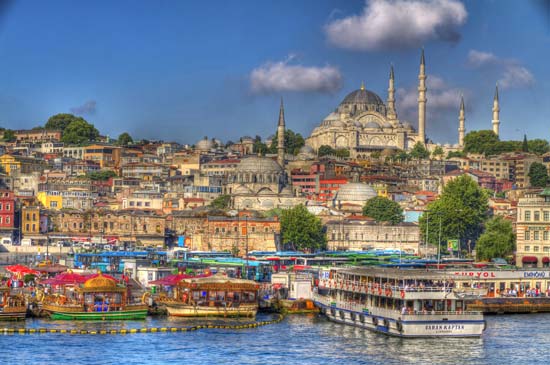
Which emperor had his own law codes and built the Hagia Sophia?
Justinian
Theodora
Constantine
Diocletian

the division of Islam into Sunni and Shi'a was the result of:
disputes over the role of Muslim prophets
resistance of the 5 Pillars
Conflict over the riches of Christian conquests
differences over who were rightful successors to Muhammad
Islam, Judaism, & Christianity share a belief in...
the divinity of Jesus
Monotheism
Pillars of Faith
Muhammad as the most recent prophet
What is the fundamental difference between Christianity and the religion of the ancient Roman Empire?
Christianity's fundamental belief in one God conflicts with the belief in many gods of the ancient Roman Empire.
Christians do not believe that Jesus was the Messiah while most Romans believed Jesus was the son of God.
The religious beliefs of the ancient Roman Empire include the belief in life after death which conflicts with the Christian belief in reincarnation.
The religious beliefs of the Roman Empire stem from Judaism while Christianity was created independently of Judaism.
At first, Christian beliefs –
accepted Roman polytheism.
conflicted with Roman polytheism.
were accepted widely in Rome.
were endorsed by the Roman Emperors.
Check all of the reasons why Christianity spread throughout the Roman Empire.
Most people in the empire could understand Latin or Greek, the language of the Apostles.
The Romans had a network of roads to connect the entire empire.
The apostles sailed across the Atlantic to found new churches in America.
Christianity started during the Pax Romana when travel around the empire was safe.
Why did Islam split into 2 branches?
People could not decided who could succeed Muhammad.
People were nomadic and fought over resources.
People could not agree with the number of daily prayers.
People disagreed the Muhammad was the prophet.
-Faith
-Prayer
-Charity
-Fasting
-Pilgrimage
What is being described?
Eightfold Path
Five Pillars of Islam
Four Nobel Truths
Ten Commandments
How are the Five Pillars of Islam and the Ten Commandments similar?
Both support the belief of reincarnation
Both provide a guide to moral and ethical behavior
Both encouraged the worship of many gods
Both promoted the ownership of slaves
Sunni Muslims believed that the caliph should be...
selected from the community by the community
a blood relative of Muhammad.
chosen by lottery.
traced to the tribe of Isaac.
A term for a Muslim ruler.
caliph
caliphate
ummah
Sunnah
What was the result of Alexander the Great’s conquests?
After hundreds of years, Persia finally conquered Greece and took control of Greek lands.
Greek language, art, architecture, and literature spread throughout Southwest Asia.
Alexander ruled Greece and all conquered lands for over 20 years.
The progress of Greek scholars was halted.
The conquests of Alexander the Great created the
Macedonian Age, a period of advancement in art.
Hellenistic Era, an age that saw the expansion of the Greek language and Greek ideas to the non-Greek world.
Dark Ages, a time of great sadness for the Greek people.
Age of Lawlessness, a period of extreme cruelty and anarchy.
The question and answer format of teaching is called the ________.
Sophist method
Plato method
Socratic method
Aristotle method
______ questioned reality and taught Athenians free thought and inquiry.
Socrates
Plato
Aristotle
What method was used to understand the way that other think and feel?
Plato's method
Aristotle's method
Socratic method
philosopher's method
Socrates contribution to Greece was in what area?
Medical Science
Education
Politics
Mansa Musa practice of which religion?
Christianity
Islam
Judaism
Hinduism
Musa was famous for making a pilgrimage to?
Mali
Mecca
Miami
None of these
Today, centuries after the reign of Mansa Musa, Africa remains
The major supplier of gold in the world
More successful than Europe
A major center for Islam
Largely free from European influcence

What two key products did the kings of Ghana build their power on?
Salt and Gold
Iron and Salt
Gold and Ivory
Gold and Silver
What animal gave Ghanian's a trading advantage?
Camel
Horse
Oxen

Muhammad's journey to Medina?
hijab
hijrah
pilgrimage
monotheism
he city where the prophet Muhammad gathered supporters to help him conquer his enemies and spread Islam -
Medina
Jerusalem
Baghdad
Mecca
Muhammad left Mecca for Medina because _______.
He believed Allah commanded him to do so
His teachings made it unsafe for him to remain there
He wanted to spread his message to new places now that he had secured a following in Mecca
The Ka'aba had been destroyed and there was no place to worship in Mecca

