
 Worksheets
G7 Practice quiz
Total questions: 70
Worksheet time: 12mins
What is a solvent
A liquid that will dissolve a solid solute
Another word for solution
A thing that make drinks change colour
Usually the solid about to be dissolved
Define the term insoluble.
Can dissolve in water.
Cannot dissolve in water.
Partially dissolves in water.


Ink can be separated by a method of -----------------------------------------------
distillation
filtration
chromatography
sedimentation
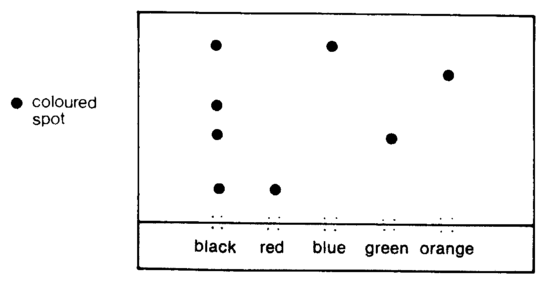
A substance is soluble if it can be dissolved.
In paper chromatography, the most soluble solute _____________________ .
does not move from the start point
stays closest to the start point
travels furthest away from the start point
can be found in the middle of the chromatogram

Two or more substances that are mixed together but not chemically combined create a...
solvent
compound
mixture

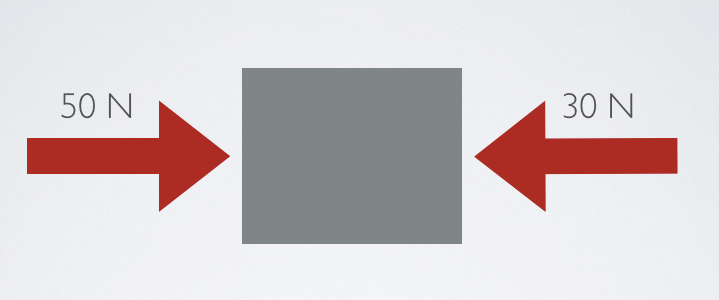

These forces are...
Balanced
Unbalanced

In this graph, a bus is:
moving
standing still (stationary)
speeding up (accelerating)
slowing down (decelerating)

This line is:
a curve
vertical
horizontal
a slope

It is TRUE that (more answers possible):
the graph shows a steep slope line.
the speed is steady in the graph.
a bus is moving forward.
a bus is returning back.

In this graph,
the bus is gradually speeding up (accelerating).
the line is curved.
the bus is gradually slowing down (decelerating).
none of the above.
Which is the equation for calculating moments?
Moment = Force x Distance moved
Moment = Mass x Perpendicular Distance to pivot
Moment = Force x Perpendicular Distance to pivot
Moment = Force x Distance to pivot
The units for moments are...
Newtons (N)
Metres (m)
Newton Metres (Nm)
Newtons per Metre (N/m)
When object's balance, the moment clockwise and anticlockwise must be..
Equal
Zero
Large
Small

The weight of the barrel is (a) N

Which allows the crane to lift a heavier load?
Move the hook closer to the pivot
Move the hook away from the pivot
Increase the counterweight
Decrease the counterweight
Move the counterweight further from the pivot


Pressure exerted by air on the earth's surface
Pressure
Atmospheric pressure
Heat pressure
Atmospheric pressure is highest at
Mean sea level
Above sea lvel
Below sea level
Diffusion is the natural movement of molecules from:
Areas of low concentration to areas of high concentration
Areas of high concentration to areas of low concentration
Cold to hot environments
Gaseous to liquid environments
An increase in temperature does what to diffusion?
Speeds it up
Slows it down
Nothing
Stops it all together
Which gases move into and out of the blood at the lungs by diffusion
Nitrogen and Oxygen
Oxygen and Carbon Dioxide
Nitrogen and Carbon Dioxide
Argon and Nitrogen
Living things within an ecosystem.
Biotic Factors
Limiting Factor
Carry Capacity
Abiotic Factors
Eat producers or only eat plants.
Producers
Consumers
Omnivores
Herbivores
Animal that hunts and kills other animals for food.
Prey
Consumer
Predator
Carnivore
Non-living parts of ecosystem (air, water, soil, sun)
Ecosytsem
Abiotic Factors
Biotic Factors
Niche
Large geographic areas with similar climates and ecosystems. (Tundra, Desert, Grassland, etc)
Niche
Ecosystem
Biomes
Habitat
All the living organisms that live in an area and the nonliving features of their environment.
Habitat
Niche
Biomes
Ecosystem
Organism that makes its own food.
Consumer
Producer
Herbivore
Omnivore
Organism that cannot make own food.
Consumer
Producer
Herbivore
Omnivore

What is a food chain?
The rage of organisms living in an area.
A diagram showing a set of linked food chains.
A diagram that shows the transfer of energy between organisms.
Predator at the top of food chain without any natural predators
Carnivore
Herbivore
Apex Predator
Prey
Both the abiotic and biotic parts that exist in a given area
Population
Biosphere
Environment
Community
All of the biotic things that interact in a given area
Environment
Population
Biosphere
Ecosystem

2 tubes entering the lungs
pharynx
larynx
bronchus
bronchioles
________ is the tube that connects the larynx to the lungs.
alveoli
larynx
pharynx
trachea

The correct word equation for aerobic respiration is
carbon dioxide + water (+ energy) → glucose + oxygen
water + oxygen → carbon dioxide + glucose (+ energy)
glucose + oxygen → carbon dioxide + water (+ energy)
glucose + water → carbon dioxide + water (+ energy)
During heavy exercise when supply of oxygen to our muscles is insufficient food breakdown is by
anaerobic respiration
aerobic respiration
cellular respiration
What are the products of anaerobic respiration in a human cell?
Energy and Lactic Acid
Lactic Acid
Lactic Acid and Carbon Dioxide
Carbon Dioxide and Water
Where in the body does respiration take place? Select the best answer.
The lungs
The muscles
All cells
The blood
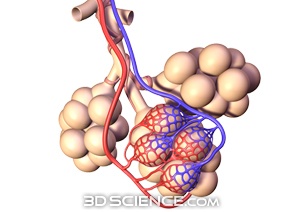
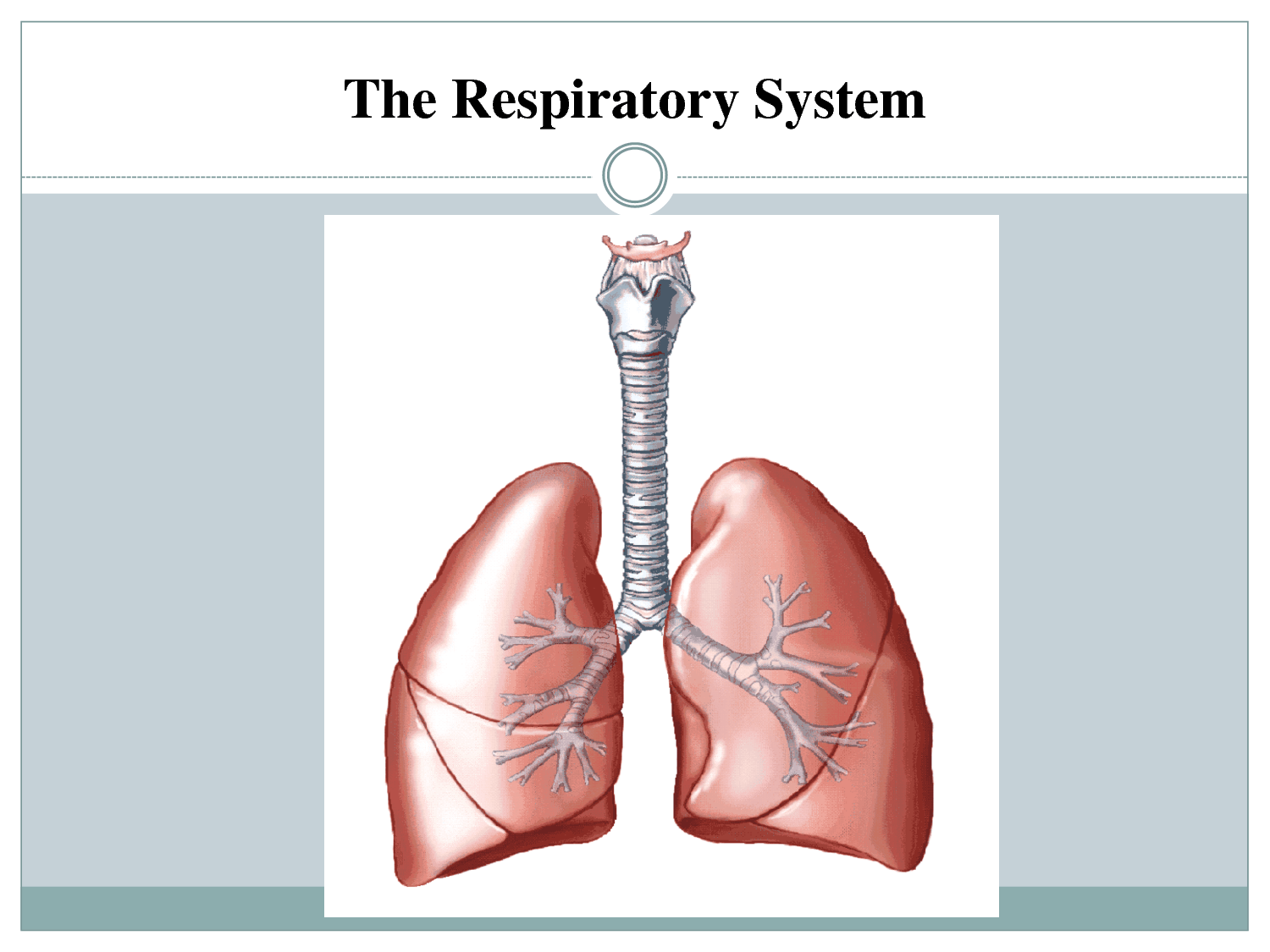
1. larynx
2. nasal cavity
3. pharynx
4. trachea
Which of the following is the correct order that air would flow during inhalation.
true or false: red blood cells carry a protein called hemoglobin?
true
false
where do red blood cells start developing?
muscle
lungs
bone marrow
bones
what do red blood cells look like?
like a donut with an indented middle
a flat circle
a ball like shape
an egg shape
where do red blood cells take oxygen?
heart
lungs
kidney
liver
What carries oxygen around the body?
Plasma
Red Blood Cells
Platelets
White Blood Cells
What causes the blood to be the distinct red colour?
Heamaglobin
Glucose
Hormones
Oxygen
The function is destroying disease-causing microorganism.
White Blood Cells
Vein
Pulmonary circulation
Systemic circulation

