
Font size
 Worksheets
Test Unit 3: Cell Reproduction
Total questions: 92
Worksheet time: 1hrs 1mins

What is the scientific term that refers to sex cells?
autosome
gamete
karyotype
chromosome

This term refers to half the normal chromosome number
haploid
2N
diploid
3N

The stage of meiosis where crossing over or the exchange of genetic information happens between pairs of chromosomes
Prophase II
Telophase I
Metaphase II
Prophase I

This term refers to the production of gametes by organisms that reproduce sexually
mitosis
binary fission
meiosis
cloning

The exchange of genetic information that insures that every gamete is unique is referred to as
mitosis
meiosis
reduction division
crossing over

All sperm and egg cells are genetically identical.
TRUE
FALSE

The term that refers to a cell that has its full or complete number of chromosomes is
diploid
N
gamete
haplpoid

How many times does a sex cell undergo cell division?
1
2
3
4

At the end of meiosis, how many complete/operational sex cells are created for each original cell?
2 for males; 2 for females
1 for males; 4 for females
4 for males; one for females
1 for males; 1 for females

How many TOTAL steps are there in the process of meiosis?
2
4
8
16

Crossing over happens when part of the genetic information of one chromosome switches places with the genetic information from another chromosome. Another term for this process is
genetic recombination
genetic reduction
a mutation
nondisjunction

Name the stage: Chromosomes line up in the middle of the cell.
Prophase
Metaphase
Anaphase
Telophase

Name the stage: two nuclei are formed enclosed by nuclear membranes
prophase
metaphase
anaphase
telophase

Name the stage: chromosomes condense and become visible
prophase
metaphase
anaphase
telophase

Name the stage: Chromosomes pull away from each other and move to opposite sides of the cell
Prophase
Metaphase
Anaphase
Telophase

Sea turtles have 56 chromosome in their somatic cells. How many chromosomes are in their gametes?
28
56
112
46

What is another term for body cells?
somatic cells
gamete
stem cell
neural cell
The --------------------- cells undergo Mitosis while the --------- undergo Meiosis
(A) Somatic or body ; Gametes
(B) Gametes; Somatic or body cells
(C) Gametes; Gametes
(D) Somatic or Body cells; Somatic or Body cells
Two identical chromatids are called...
Daughter Chromatids
Sister Chromatids
Brother Chromatids
Twin Chromatids
Meiosis results in ------------ While Mitosis resuls in ---------
(A) 2 haploid daughter cells and 2 haploid daughter cells
(B) 4 haploid daughter cells and 2 diploid daughter cells
(C) 2 diploid daughter cells and 4 haploid daughter cells
(D) 4 diploid daugther cells and 2 haloid daughter cells
Has one set of chromosomes
Haploid
Diploid
Body cells
None of the above
What crosses over in Meiosis I?
Homologous chromosomes
Sister chromatids
Forms gametes
Mitosis
Meiosis
Forms genetically non-identical cells
Mitosis
Meiosis
Forms four cells
Mitosis
Meiosis
Forms genetically identical cells
Mitosis
Meiosis

What is this picture of?
Chromosomes
Chromatids
Chromatin
Centromeres

The picture depicts what stage of meiosis?
(A) Prophase 1
(B) Anaphase 1
(C) Metaphase 2
(D) Metaphase 1
(E) Telophase 1
What phase does the crossing over take place?
Prophase I
Prophase II
Metaphase I
Metaphase II
If parent cell is 32N, what is the ploidy of the haploid daughter cell?
32N
16N
0N
18N
Which statement is NOT true about interphase?
It's the longest phase of the cell cycle
During interphase organelles duplicate
During interphase, DNA replicates
During interphase, the chromatin condenses into chromosomes.

Compare and contrast number of divisions between mitosis & meiosis
Mitosis – 0, Meiosis – 1
Mitosis – 1, Meiosis – 1
Mitosis – 1, Meiosis – 2
Mitosis – 1, Meiosis – 0
Produces diploid cells
Mitosis
Meiosis
Compare and contrast number of DNA replications between mitosis & meiosis
Mitosis – 0, Meiosis – 1
Mitosis – 1, Meiosis – 1
Mitosis – 1, Meiosis – 2
Mitosis – 1, Meiosis – 0
Stem Cells are
specialized
Not specialized
differentiated
Which stage facilitates cell growth and preparation for mitosis?
Interphase
Metaphase
Prophase
Anaphase
DNA is replicated in which stage?
Interphase
Prophase
Anaphase
Metaphase
What are two identical sister chromatids connected at the centromere?
chromosome
chromatid
chromatin
dna

What stage of the cell cycle is this?
Prophase
Anaphase
Metaphase
Telophase
Chromosomes become visible in the cell during which phase?
prophase
anaphase
telophase
cytokinesis

Which phase of mitosis is this?
Metaphase
Anaphase
Prophase
Telophase

What phase of the cell cycle is this?
anaphase
metaphase
telephase
cytokinesis
During which phase of the cell cycle do sister chromatids separate and then pulled to opposite poles of the cell?
anaphase
metaphase
telophase
prophase

What are the two parts of the cell cycle?
Interphase and Mitosis
Interphase and Cytokinesis
Interphase and Meiosis
Mitosis and Meiosis

What would happen if you are injured and the cell cycle is stopped in your body?
You would form cancer
The injury wouldn't heal
You would mutate
The injury would get worse
How many daughter cells are formed during mitosis?
4
3
2
1
Do the daughter cells formed from mitosis have DNA identical to the parent cells or different to the parent cells?
Identical
Different
Identical but different
In which phase of the cell cycle does a cell spend the longest time?
Interphase
Mitosis
In which process are Gametes produced?
Mitosis
Meiosis
How many pairs of chromosomes do humans have in a cell?
92
46
23
12
How many daughter cells is made at the end of Meiosis?
4
3
2
1

What is happening during crossing over in Meiosis?
chromatids are replicating
chromatids are exchanging genetic information
chromatids are changing color
chromatids are being deleted
What type of cancer is Melanoma?
skin
brain
liver
stomach
What is the correct definition of a haploid cell?
A cell that only has a single set of chromosomes. (23 = n)
A cell that has 2 sets of chromosomes (46 = 2n)

HOW MANY CHROMOSOMES DO HUMAN GAMETES HAVE?
46
23
47
22
CROSSING OVER ALLOWS FOR WHAT TO HAPPEN?
ALL CELLS TO STAY THE SAME
GENETIC VARIATION
REDUCTION OF CHROMOSOMES
CHROMOSOME NUMBER TO INCREASE
WHY ARE THE CHROMOSOMES EVEN NUMBERED FOR ORGANISIMS?
JUST A COINCIDENCE
BECAUSE 75% OF THE INFO COMES FROM MOM AND 25% COMES FROM DAD
BECAUSE 51% OF THE INFO COMES FROM MOM AND 49% COMES FROM DAD
BECAUSE HALF OF THE GENTIC INFORMATION COMES FROM MOM AND HALF COMES FROM DAD

THIS IMAGE SHOWS WHAT IS HAPPENING WITH THE CHROMOSOMES?
NON- DISJUNCTION
METAPHASE
TELOPHASE
CROSSING OVER

The end of mitosis results in ____ to each other.
2 cells that are identical
4 cells that are identical
2 cells that are not identical
4 cells that are not identical


During meiosis, if an organism has 10 chromosomes, how many will the new daughter cells have?
10
8
5
2
Select the image that represents meiosis:


In humans, the haploid number of chromosomes is ____.
23
46
69
92
True or False? Before cells undergo meiosis they pass through interphase first.
true
false

What is the order of the three phases in interphase?
G1, G2, S
S, G1, G2
G1, S, G2
G1, G2, G3
Cells of organisms must go through cell division for?
growth
repair of damaged cells
replacement of dying cells.
All of these
DNA is replicated during ______ of the cell cycle.
Gap 1
Synthesis (S phase)
Gap 2
Gap 0
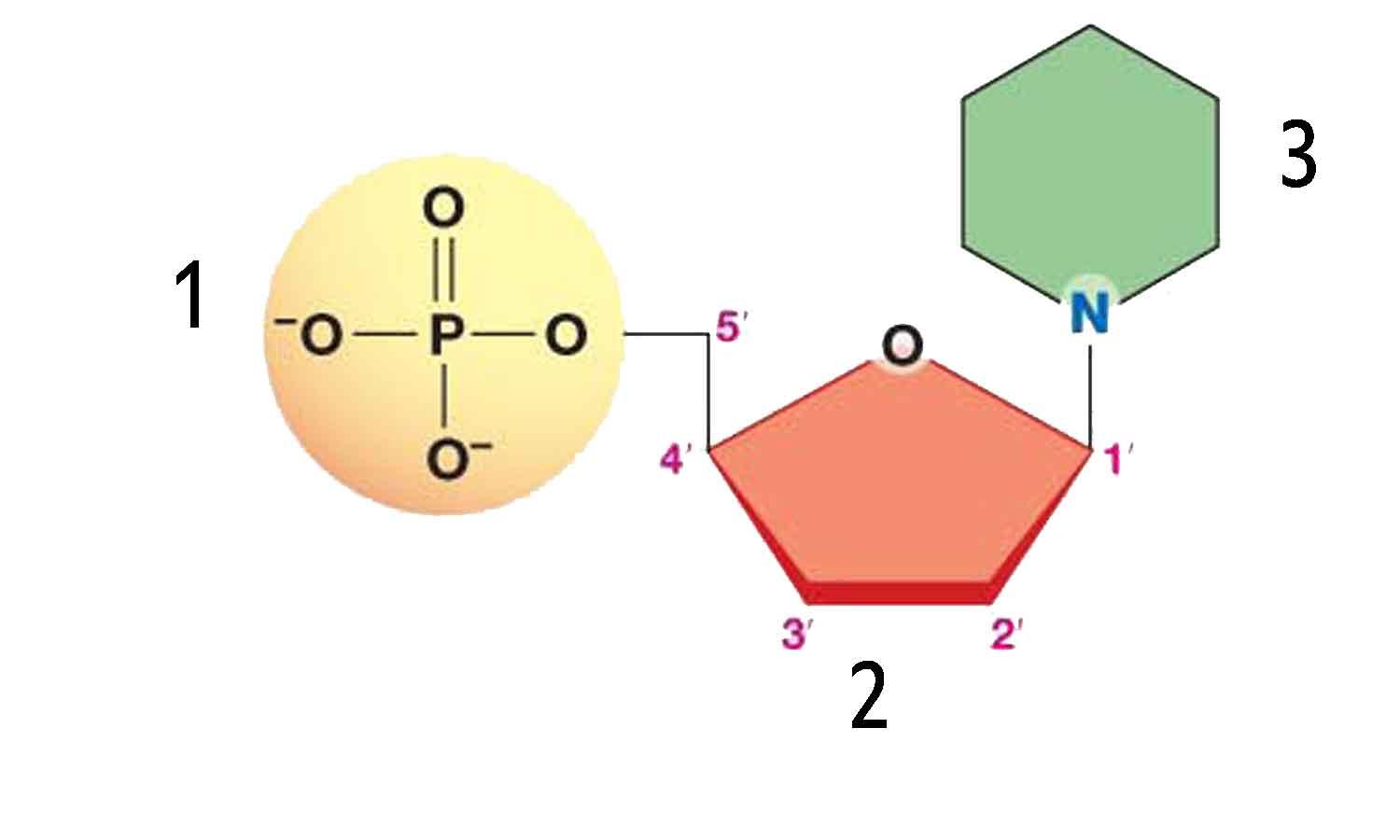
3) Nitrogen Base
2) Phosphate
3) Nitrogen Base
2) Ribose Sugar
3) Nitrogen Base
2) Deoxyribose Sugar
3) Nitrogen Base
Normal cells grow and divide continuously.
During most of interphase, DNA is found in a relaxed form called
chromosome
centromere
centriole
chromatin
During mitosis, DNA is found in the condensed form called a
chromosome
centromere
centriole
chromatin
In prophase of mitosis, chromosomes
form and the nuclear envelope disappears.
are pulled toward opposite ends of the cell.
chromosomes line up along the equator of the cell
chromosomes begin to decondense and the two new nuclei begin to form.
In metaphase of mitosis, chromosomes
form and the nuclear envelope disappears.
are pulled toward opposite ends of the cell.
chromosomes line up along the equator of the cell
chromosomes begin to decondense and the two new nuclei begin to form.
In anaphase of mitosis, chromosomes
form and the nuclear envelope disappears.
are pulled toward opposite ends of the cell.
chromosomes line up along the equator of the cell
chromosomes begin to decondense and the two new nuclei begin to form.
In telophase of mitosis, chromosomes
form and the nuclear envelope disappears.
are pulled toward opposite ends of the cell.
chromosomes line up along the equator of the cell
chromosomes begin to decondense and the two new nuclei begin to form.
After mitosis, the cytoplasm and organelles are divided between the two new forming cells in a process called
centriole
chromatin
cytokinesis
centromere
This process is the programmed death of a cell
stem cell
regulation
apoptosis
cytocide
These undifferentiated cells can become specialized cells after receiving a chemical signal.
stem cells
generic cells
blank cells
empty cells
The cell cycle is regulated by this
cyclins
stem cells
cyclin-dependent kinases
both cyclins and cyclin-dependent kinases
When cells go through mitosis repeatedly without entering interphase, this results
arthritis
cancer
mutation
diabetes

