
 Worksheets
Lithosphere Reviewer
Total questions: 157
Worksheet time: 2hrs 21mins
the same age as the lower layer
the same age as the lower layer


This is a result of ___________?


Which of the following is the name of the ancient supercontinent formed 280 Million Years ago.
Pangea
Gondwanda
Laurasia
Neverland


What do we call an area where more then two plates interact in different ways
plate boundary zones
hot spots
convergent boundaries
subduction
TRUE about Minerals:
Inorganic
Naturally occuring
With chemical composition
All of the above
Refers to a mineral’s ability to scratch another mineral or be scratched by another mineral.
Luster
Hardness
Streak
Specific gravity
The basic building blocks of rocks:
Crystal
Acids
Magma
Minerals
Example of Extrusive rock:
Pumice
Gabbro
Diorite
Granite
Characteristics of intrusive igneous rock:
Rapid cooling
glassy texture
coarsed grain
Fine grain
4 processes in the formation of sedimentary rock (in chronological order)
(first to last)
compaction,
deposition,
weathering,
mass wasting
erosion,
decomposition,
compaction,
cementation
compoction, erosion,
cementation,
decomposition
erosion,
deposition,
compaction,
cementation
Thick layers of sediment build up overtime and weigh down layers:
Erosion
Deposition
Weathering
Compaction
Metamorphic rock were form through:
Weathering
Erosion
Heat and pressure
Mass wasting
Examples of Metamorphic rock:
Gneiss
Limestone
Basalt
Gabbro
Exogenic process:
Transportation
Volcanism
Plutonism
Tectonic activity
TRUE about Earth's core:
Molten layer
drives earthquake and volcanic activity at the surface
Known through measurements of waves of earthquakes.
Separated from the mantle by the Moho, where density changes
TRUE about continental crust:
made of aluminum, sodium, potassium, calcium
almost entirely made up of mafic rocks
made of magnesium & iron minerals
contains asthenosphere
Example of exogenous process:
Igneous
Metamorphic
sedimentary
ALL of the above
Types of Tectonic process:
Folding
Faulting
Both A and B
Neither A nor B
TRUE about Syncline:
Rock layers buckle upward during folding to form an arch-like structure
form of valleys and lakes.
form of mountains or ridges
there is an enormous pressure from the two pieces of the earth’s crust pushing together.
The hanging wall is moving upward:
Strike slip fault
Normal fault
Reverse fault
None of the above
Degradation process:
Weathering
Mass Wasting
Erosion and Transportation
All of the above
Aggradation process happens when the deposit is found mostly in:
fluvial
eolian
glacial
all of the above
Physical weathering:
Hydrolysis
carbonation
geomorphic agents like plant roots
Lichens removing mineral content
important in iron-rich
rocks – reddish coloration like rust:
oxidation
carbonation
hydrolysis
exfoliation


What changes rocks from one type to another?
forces inside the Earth and at the surface
nothing does they don't change
forces inside the Earth
Forces at the surface

How does metamorphic rock change into sediments?
Heat and Pressure
Weathering and Erosion
Melting
Compaction and Cementation
Movement of tectonic plates and formation of volcanoes are endogenic processes.
TRUE
FALSE
How are magma's formed?
Magma's are formed through movement of rocks and minerals.
Magma's are formed under the earth’s mantle with the help of worms.
Magma's are formed through heating and cooling of materials on the earth’s surface
Magma's are formed under certain circumstances in special location deep in the crust or in the upper mantle.
A weak spot in the crust where molten material comes to the surface
earthquake
mountain
tsunami
volcano
A molten mixture of rock-forming substances, gases, and water from the mantle
lahar
lava
magma
mineral
Molten material that reaches the surface.
ashfall
lava
magma
volcanism
What are all the processes associated with the discharge of magma, hot fluids, and gases?
Continental Drift
Plate Tectonics
Seafloor Spreading
Volcanism
When does magma form?
when volcanoes erupt
when grains have been compacted together
when temperature are hot enough to melt rock
when new minerals form due to chemical changes in the rock
Which among the types of stress is similar to a rope being pulled from both sides?
compression
shear
tension
It refers to the internal dynamics or processes of the Earth.
Endogenic
Endergonic
Exogenic
Exergonic
What are the most abundant elements inside the Earth's core?
Silicon and Oxygen
Iron and Nickel
Both A and B
Neither A nor B
Which of the following is not an example of an endogenic process?
Volcanic Eruption
Metamorphism
Earthquake
Weathering
Metamorphism is an exogenic process.
TRUE
FALSE
The outer core is in a liquid form.
TRUE
FALSE
Because we rarely witness dramatic changes in the Earth, we can conclude that the Earth is not changing very much.
True
False
Movement of tectonic plates and formation of volcanoes are endogenic processes.
TRUE
FALSE
The heat of the planet is responsible for the moving of tectonic plates.
True
False
Conduction is the transfer of heat through direct contact.
True
False

What does endo means?
Inside
Internal
Outer
End of Contract
It is the movement of thermal energy from a warmer place to a cooler place.
Conduction
Convection
Induction
Heat Transfer
Movement of tectonic plates and formation of volcanoes are endogenic processes.
TRUE
FALSE
Include geological phenomena and processes that originate externally to the Earth's surface.
Exogenic Processes
Endogenic Processes
Caused by the effects of changing temperature on rocks, causing the rock to break apart. The process is sometimes assisted by water.
Chemical Weathering
Mechanical Weathering
Biotic Weathering
Mass Wasting
Occurs when water continually seeps into cracks, freezes and expands, eventually breaking the rock apart. The processes induced by stresses created by the freezing of water into ice.
Freeze-thaw
Block disintegration
Exfoliation
Occurs as cracks develop parallel to the land surface a consequence of the reduction in pressure during uplift and erosion.
Freeze-thaw
Exfoliation
Block disintegration
Caused by rain water reacting with the mineral grains in rocks to form new minerals (clay) and soluble salts. These reactions occur particularly when the water is slightly acidic.
Physical Weathering
Chemical weathering
Soil Erosion
None of the above
Removal of rock in solution by acidic rainwater.
Hydrolysis
Solution
Oxidation
Carbonation
The breakdown of rock by oxygen and water, often giving iron-rich rocks a rusty-coloured weathered surface.
Oxidation
Carbonation
Hydrolysis
Solution
The breakdown of rock by acidic water to produce clay and soluble salts.
Hydrolysis
Solution
Oxidation
Carbonation
It is the weathering or disintegration of rocks caused by living organisms.
Biotic Weathering
Biological Weathering
All of the above
Also known as slope movement or mass movement, is the geomorphic process by which soil, sand, regolith, and rock move downslope typically as a solid, continuous or discontinuous mass, largely under the force of gravity, frequently with characteristics of a flow as in debris flows and mudflows.
Mass Wasting
Soil Erosion
A naturally occurring process that affects all land forms.
Biotic Weathering
Soil Erosion
Mass Wasting
The removal of soil by the action of concentrated running water.
Sheet Erosion
Rill Erosion
Gully Erosion
Happens when winds carry large amount of fine soil particles.
Wind Erosion
Sheet Erosion
Rill Erosion
Gully Erosion
Removal of thin layers of soil because of surface runoff and rain.
Sheet Erosion
Wind Erosion
Rill Erosion
Gully Erosion
The removal of soil in water channels or drainage lines.
Soil Erosion
Gully Erosion
Rill Erosion
None of the above

Renewable energy resources produce less (a) than fossil fuels.
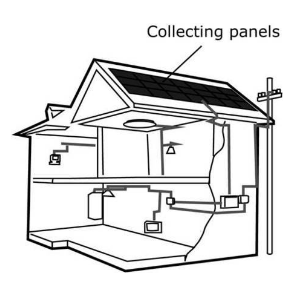
Which alternative energy source does this house use?
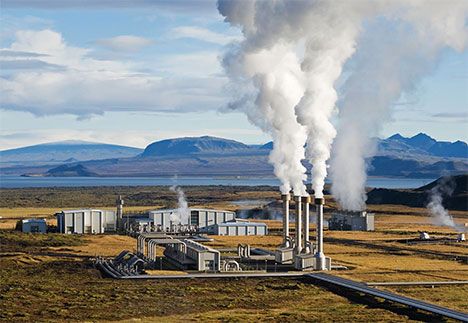
All of the following are considered renewable energy sources EXCEPT –
Wind
Coal
Biomass
Solar
Which one of these is NOT a type of renewable energy?
solar
wind
biomass
nuclear
A home is built with clear glass panels that allow sunlight to pass through. This is an example of
Active solar
Passive solar
Parabolic collector
Photovoltaic Cells
What are two advantages of geothermal energy? (a)
One benefit of geothermal energy is that (a) .
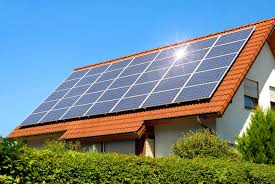
Why are not American's roofs crammed with more solar panels? (a)
Which renewable energy does not require spinning a turbine? (a)
Energy created from wood, peat moss, and manure is called (a) energy.
(a) energy comes from underground pockets of hot water.
Name a country that uses a high % of geothermal energy? (a)
Solar, wind, and hydroelectric power all share this same benefit.
zero carbon emissions/air pollution
habitat loss
cheap to use
nonrenewable
Which of the following is not a negative to using hydroelectric power
siltation occurs behind the dam
fish are not able to migrate upstream
creates air pollution
reservoirs impact the surrounding environment
biomass is a main source of energy for heating homes and food in
developed nations only
developing nations mostly
both developed and developing nations
nowhere on earth
non-living solid material found in nature and has the same makeup through the entire substance
mineral
luster
streak
color
outward appearance of a mineral noticeable by sight
color
luster
streak
hardness
color of powder left behind when a mineral is rubbed against a tile
color
luster
streak
hardness
describes how a mineral reflects light; shininess or lack of shininess of a mineral
color
luster
streak
hardness
a mineral's ability to scratch or be scratched by another mineral or other substance
color
luster
streak
hardness
describes how a mineral breaks forming flat surfaces
cleavage
fracture
hardness
chatoyancy
describes how a mineral breaks into forms other than flat surfaces
cleavage
fracture
double refraction
hardness
describes how a mineral reflects light across its surface in lines and seems to glow from within
luster
streak
double refraction
chatoyancy
ability of a mineral to bend light producing a double image
chatoyancy
luster
double refraction
effervescence
ability of a mineral to bubble when acid is placed on its surface
chatoyancy
double refraction
effervescence
fluorescence
ability of a mineral to glow in the presence of ultraviolet light
effervescence
fluorescence
chatoyancy
double refraction
ability of a mineral to attract to a magnet
magnetism
effervescence
fluorescence
double refraction

