
 Worksheets
SCIENCE MCQ TEST
Total questions: 126
Worksheet time: 2hrs 27mins
Q1.Electrolysis of water is a decomposition reaction. The mole ratio of hydrogen and oxygen gases liberated during electrolysis of water is
(a)1:1
(b)2:1
(c)4:1
(d)1:2
Rancidity is a process in which fat/oils smell due to the change process of
oxidation
reduction
displacement
neutralization
Colour of which metal changes to greem due to corrosion?
Cu
Al
Fe
Ag
Acid is?
A substance that reacts to metals and carbonates, and has a Ph of below 7.
Often used in drain cleaner.
Something that can only be found in a lab
A bitter tasting substance
A base is
A substance that feels slippery, has a higher Ph than 7, and is often used in drain cleaner.
Has a Ph of below 7 and can react to metal and carbonates
Is only found in a lab
Something water can never be
An indicator is?
A lab manual or guide
Something like litmus paper that can tell you if a substance is acidic or basic
A PS4 game where you pretend to direct traffic
Something only scientists in a lab can use
Do acids and bases conduct electricity?
Only acids conduct electricity
Only bases conduct electricity
Bases and acids conduct electricity
Neither conduct electricity
When you neutralize acid with a base you create
a Salt and water
You can not neutralize acid with a base
You create carbon dioxide
A moderate sized explosion
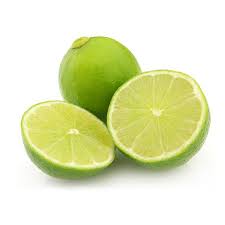
Which of these taste sour?
acids
bases
salts
Which of these feel slippery?
bases
acids
salts
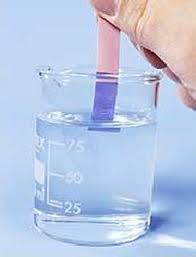
Which of these turn red litmus paper blue?
acids
bases
salts
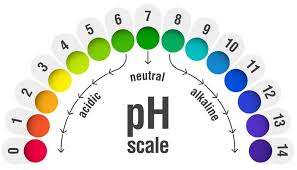
The pH scale is used to determine the strength of
acids and bases
chemical bonds
electrical charges
particles in a solution
Chemicals formed when an acid and a base combine.
salts
noble gases
metalloids
hydroxides

How would you best describe your science class this year?
awesome
very strange
dull
All of the following would classify an element as a metal except?
Dull
Luster
Malleable
Ductile


Metals are found
on the left side of the Periodic Table
on the right side of the Periodic Table
along the staircase (zig-zag line) on the Periodic Table

By looking at the element illustrated here, how might you classify it by appearance?
Metal
Non-Metal
Metalloid
Which of the following is the only metal that exist as a liquid at room temperature?
Gold (Au)
Mercury (Hg)
Titanium (Ti)
Argon is a ____________ at room temperature.
Gas
Liquid
Solid

This picture illustrates copper's
brittleness
malleability
ductility
Metals create _________ ions, because they give away (lose) electrons.
positive
negative
neutral
Most metals are solid at room temperature
False
True
The metal which can be cut with knife.
Iron
Silver
Sodium
Magnisium
The metal which is the best conductor of heat.
Iron
Silver
Potassium
Sodium
Which metal is the poor conductor of heat.
Silver
Potassium
Mercury
Iron
The radius of curvature of a convex lens is 20cm. What is its focal length?
10 cm
20 cm
30 cm
40 cm
Name the type of mirrors used in the following situations:
(i) Used by Dentist.
(ii) Rear-view mirror of vehicle
(i) Diverging mirror
(ii) Converging mirror
(i) & (ii) Both Converging mirror
(i) Converging mirror
(ii) Diverging mirror
(i) & (ii) Both Diverging mirror.

In the given ray diagram, which of the following path of the refracted ray is correct?


An object is kept at a distance of 4m in front of a spherical mirror, which forms its erect image at a distance of 1m
from the mirror. What is the magnification? Is the mirror concave or convex?
m = +4
Concave Mirror
m = -4
Convex mirror
m = - 1/4
Convex Mirror
m = +1/4
Convex Mirror
A concave mirror produces a three times magnified image on a screen. If the object is placed 20cm in front of the mirror, What is the image distance?
-20 cm
-40cm
-60 cm
-10 cm
Calculate the power of a lens whose focal length is +40 cm. Also Identify the nature of the lens.
P = +0.25 D
Concave lens.
P = +2.5 D
Convex lens
P = +0.25 D
Concave lens
P = +2.5 D
Convex Lens

Complete the path of the refracted ray of the given incident light on the given convex lens.


The image of a candle flame placed at a distance of 30cm from a mirror is formed on a screen placed in front of the mirror at a distance of 60cm from its pole. What is the nature of the mirror? Find its focal length.
F = - 20 cm
Concave Mirror
Real & Inverted Image
F = + 20 cm
Concave Mirror
Virtual & Erect Image
F = - 20 cm
Convex Mirror
Real & Inverted Image
F = + 20 cm
Convex Mirror
Virtual & Erect Image
A child is standing in front of a magic mirror. She finds the image of her head bigger, the middle portion of her body of the same size and that of the legs smaller. The following is the order of combinations for the magic mirror from the top.
Plane, convex and concave
Convex, concave and plane
Concave, plane and convex
Convex, plane and concave
The refractive indices of glass and water with respect to air are 3/2 and 4/3 respectively. If the speed of light in glass is 2 x 10⁸ m/s, find the speed of light in water.
0.5 x 10⁸ m/s
3 x 10⁸ m/s
2.25 x 10⁸ m/s
2 x 10⁸ m/s
A concave lens has focal length of 15 cm. At what distance should the object from the lens be placed so that it forms an image at 10 cm from the lens? Also, find the magnification.
u = + 30 cm
m = - 0.33
u = + 20 cm
m = - 1.33
u = - 20 cm
m = + 1.33
u = - 30 cm
m = + 0.33
A convex mirror used for rear view on an automobile has a radius of curvature of 3 m. If a bus is located at 5 m from this mirror. Find out the position, nature and size of the image.
v = - 1.15 m
m = - 0.23
Virtual & Erect
v = - 1.5 m
m = + 0.23
Real & Inverted
v = + 1.5 m
m = + 2.3
Real & Inverted
v = + 1.15 m
m = + 0.23
Virtual & Erect
An object is placed at a distance of 10 cm from a convex mirror of focal length 15 cm. Find the nature, size and position of the image formed.
v = - 6 cm
m = - 0.6
Real & Inverted
v = + 6 cm
m = + 0.6
Virtual and Erect
v = - 6 cm
m = - 0.6
Virtual and Erect
v = + 6 cm
m = + 0.6
Real & Inverted
Which of the following lenses would you prefer to use while reading small letters of newspaper?
A convex lens of focal length 50 cm.
A concave lens of focal length 5 cm.
A concave lens of focal length 50 cm.
A convex lens of focal length 5 cm.
An object 5 cm in size is placed at a distance of 20 cm in front of a convex mirror of radius of curvature 40 cm. Find out the position, size and nature of the image formed.
v = + 10 cm
h' = + 2.5 cm
Virtual, Erect and smaller in size.
v = - 20 cm
h' = - 0.5 cm
Real, Inverted and enlarge in size.
v = + 20 cm
h' = + 0.5 cm
Real, Inverted and enlarge in size.
v = - 10 cm
h' = - 2.5 cm
Virtual, Erect and smaller in size.
Electric current is defined as
detect electric current
negative terminal to positive terminal
positive terminal to negative terminal
the flow rate of electric charges through a conductor
What is the amount of current flowing through an electric press, if the amount of charge passing through a conductor in 10 minutes is 300 C?
30 A
0.3 A
0.5 A
5 A
Calculate the number of electrons constituting one coulomb of charge.
(Hint: e =1.6 × 10^-19 C)
A current of 1 A is drawn by a filament of an electric bulb. Calculate the number of electrons passing through a cross-section of the filament in 16 s.
(Hint: I = Q/t and Q = ne)
which of the following represents voltage?
Work done / (current x time)
work done x charge
(wordone x time) / current
work done x charge x time
When an electrochemical cell no longer works, it is out of charge and must be recharged before it can be used again.
True
False
An electrochemical cell can be a source of charge in a circuit. The charge that flows through the circuit originates in the cell.
True
False
Partly true
Charge becomes used up as it flows through a circuit. The amount of charge that exits a light bulb is less than the amount that enters the light bulb.
True
False
The local electrical utility company supplies millions and millions of electrons to our homes everyday.
True
False
Charge flows through circuits at very high speeds. This explains why the light bulb turns on immediately after the wall switch is flipped
True
False
When electric current is passed, electrons move from:
high potential to low potential.
low potential to high potential.
in the direction of the current.
against the direction of current
The heating element of an electric iron is made up of:
copper
aluminium
nichrome
iron
The electrical resistance of insulators is
high
low
zero
infinity
Electrical resistivity of any given metallic wire depends upon
its thickness
its shape
nature of the material
its length
Electric power is inversely proportional to
resistance
voltage
current
temperature
What is the commercial unit of electrical energy?
Joules
Kilojoules
Kilowatt-hour
watt-hour
Three resistors of 1 Ω, 2 ft and 3 Ω are connected in parallel. The combined resistance of the three resistors should be
greater than 3 Ω
less than 1 Ω
equal to 2 Ω
zero
An electric bulb is connected to a 220V generator. The current is 0.50 A. What is the power of the bulb?
440 V
220 V
110 V
55 V
Which of the following gases are filled in electric bulbs?
Helium and Neon
Neon and Argon
Argon and Hydrogen
Argon and Nitrogen
100 J of heat is produced each second in a 4Ω resistor. The potential difference across the resistor will be:
30 V
10 V
20 V
25 V
Coulomb is the SI unit of:
charge
current
resistance
potential difference

A cell, a resistor, a key and ammeter are arranged as shown in the circuit diagrams of Figure (i), (ii) and (iii). The current recorded in the ammeter will be
maximum in (i)
maximum in (ii)
maximum in (iii)
will be same in all the cases
Materials which allow larger currents to flow through them are called
insulators
conductors
semiconductors
alloys
Conventionally, the direction of the current is taken as
the direction of flow of negative charge
the direction of flow of atoms
the direction of flow of molecules
the direction of flow of positive charge

The slope of voltage (V) versus current (I) is called
resistance
conductance
resistivity
conductivity
An electric iron draws a current 4 A when connected to a 220 V mains. Its resistance must be
1000 Ω
55 Ω
44 Ω
none of these

Calculate the current flows through the 10 Ω resistor in the following circuit.
1.2 A
0.6 A
0.2 A
2.0 A
A fuse wire repeatedly gets burnt when used with a good heater. It is advised to use a fuse wire of
more length
less radius
less length
more radius

A student carries out an experiment and plots the V-I graph of three samples of nichrome wire with resistances R1 R2 and R3 respectively. Which of the following is high ?
R1 = R2 = R3
R1 > R2 > R3
R3 > R2 > R1
none of these
A boy records that 4000 joule of work is required to transfer 10 coulomb of charge between two points of a resistor of 50 Ω. The current passing through it is
2 A
4 A
8 A
16 A


Full form of ATP
Adenosinetriphosphate
Adenosidiphosphate
Adrenalin
Adoxide
The blood vessels which carry oxygenated blood
Vein
Artery
Both
None

The valve present between right atrium and right ventricle.
tricuspid
bicuspid
pulmonary
aortic
It is the site of gaseous exchange in human lungs.
villi
alveoli
trachea
larynx
In unicellular organisms like amoeba gaseous exchange takes place through the process of ____________.
osmosis
transportation
diffusion
elimination
The substance in plants and animals that act as an energy currency.
DNA
RNA
ADP
ATP
_______________ is the final product of glycolysis.
carbon dioxide
ATP
Pyruvic acid
acetyl coA
Glycolysis takes place in the __________ of the cell.
mitochondria
ribosomes
cytoplasm
Golgi complex
_________________ artery carries deoxygenated blood.
aortic
pulmonary
renal
inferior
chloroplasts are present in the ___________ of the leaf.
palisade parenchyma
aerenchyma
sclrenchyma
collenchyma
in plants food is stored i the form of
glycogen
starch
maltose
glucose
The waste product generated during photosynthesis is
carbon dioxide
oxygen
nitrogen
water
In plants waste products are stored as ------ and --------
water and glucose
glycogen and starch
resins and gums
starch and water

