
 Worksheets
Unit 1 Chemistry of Life Practice Test
Total questions: 127
Worksheet time: 3hrs 13mins


Refer to the picture; this is occurring because of:
Cohesion
Adhesion
Capillary action
Surface tension

The diagram has shown the WATER molecules. What is A
Hydrogen
Oxygen
Carbon dioxide
Helium
The diagram has shown the WATER molecules. What is B
Hydrogen
Oxygen
Carbon dioxide
Helium
Ice floats because
It's really cold
It is shaped like a square
less dense than liquid water
more dense than liquid water
Draw a water molecule.

What two atoms make up Water?
Nitrogen
Oxygen
Carbon
Hydrogen
Which is NOT a property of water?
Water has a high specific heat capacity
Water is a polar molecule
Water molecules cannot bond with other water molecules
Water is more dense as a liquid than as a solid
Which answer best describes cohesion?
Water molecules are attracted to other molecules
Water molecules are polar
Water molecules are attracted to other water molecules
Water moves up against gravity in plants
How can a water strider walk on water?
It doesn't
It is heavy enough to bend the water
It uses adhesion to its advantage
The property of cohesion

What property of water is mostly shown here? (Water droplets)
High Specific Heat
Density
Cohesion
Universal Solvent
Which atom(s) in a molecule of water is/are partially positive?
Oxygen
Carbon
Nitrogen
Hydrogen
The atom in water that is partially negative is...
(a)
What property of water deals with ice floating?
Cohesion
Adhesion
Density
Capillary Action
How does ice float?
As water freezes, the space between molecules expand, decreasing its density
As water freezes, it takes up more oxygen from the air, increasing its density
As water freezes, it takes up more hydrogen, increasing its density
Water is referred to as the 'universal' solvent because it...
Dissolves everything
Is dissolved by most things
Dissolves most things
Can be found anywhere
Surface tension is the tendency of a liquids surface to resist rupture when under tension or stress. What property of water gives water this ability?
Adhesion
Density
Cohesion
Solvent
Capillary action is the result of waters properties of cohesion and adhesion working together to allow water to...
Absorb water through the roots of plants
Stick to other things
Stick to itself
Flow upward against the force of gravity
When water freezes, the space between molecules...
Contract
Combine
Condense
Expand
What property of water allows for hydrogen bonding?
Water as a solvent
Water is polar
Water has a high specific heat
Water is less dense as a solid
Water dissolves many ionic and polar substances because of waters...
Ionic bonding
Covalent bonding
Specific heat
Polarity
Waters temperature changes...
Quickly, without adding much energy
Slowly, by adding a lot of energy
Slowly, without adding much energy
Quickly, by adding no energy
The "film" that forms on top of water is referred to as...
Adhesion
Capillary action
Surface tension
Cohesion



The ability of water molecules to stick to each other, creating surface tension is called:
Cohesion
Adhesion
Insulation
Ph
What property of water allows for water to act as a temperature regulator for the world?
Cohesive Behavior
Expansion Upon Freezing
High Specific Heat
Universal Solvent

What property of water causes these Alka-Seltzer tablets to dissolve?
Universal Solvent
Expansion Upon Freezing
Cohesive Behavior
High Specific Heat


Capillary action is when water moves up a thin tube such as the xylem in plants or chromatography paper pulls water upwards against gravity. This phenomena is due to.....
adhesion
cohesion
a combination of adhesion and cohesion
surface tension

Attractions between water molecules are called ....
Covalent bonds
Ionic bonds
Polar bonds
Hydrogen bonds
A frozen lake in winter with fish swimming below the surface is possible because of which property of water:
cohesion
adhesion
low molecular weight
polarity



In the diagram, what is letter A?
product
enzyme-substrate complex
substrate
active site

Letter C...
products
substrate
enzymes
active site

Letter B...
substrate
active site
enzyme
products
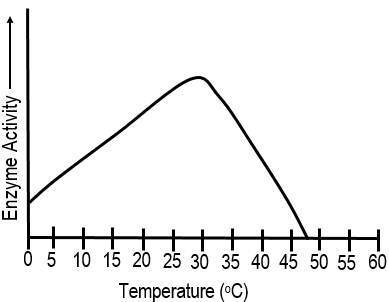
Things that affect enzyme activity...
Temperature, pH, Concentration, Inhibitors.
Substrate, pH, product, Inhibitors
Temperature, humidity, pH, Inhibitors
Concentration, pH, product, Inhibitors
Draw a subtrate entering an active site of enzyme.
Macromolecule
a very large organic molecule composed of many smaller molecules (critical to all living things)
one unit of a macromolecule
strand of many monomers
chemical substance that can not be broken down into simpler substances and are primary constituents of matter
monomer
a very large organic molecule composed of many smaller molecules (critical to all living things)
one unit of a macromolecule
strand of many monomers
chemical substance that can not be broken down into simpler substances and are primary constituents of matter
carbohydrate
macromolecule made up of carbon, hydrogen, and oxygen atoms; major source of energy for the human body
macromolecule, such as fats, oils, and waxes, that are made of carbon, hydrogen, and oxygen, hydrophobic
Macromolecule that contains carbon, hydrogen, oxygen, and nitrogen. Source of energy. Needed by tissue for repair and growth. Made up of 20 amino acids.
macromolecule containing hydrogen, oxygen, nitrogen, carbon, and phosphorus
lipid
macromolecule made up of carbon, hydrogen, and oxygen atoms; major source of energy for the human body
macromolecule, such as fats, oils, and waxes, that are made of carbon, hydrogen, and oxygen, hydrophobic
Macromolecule that contains carbon, hydrogen, oxygen, and nitrogen. Source of energy. Needed by tissue for repair and growth. Made up of 20 amino acids.
macromolecule containing hydrogen, oxygen, nitrogen, carbon, and phosphorus
protein
macromolecule made up of carbon, hydrogen, and oxygen atoms; major source of energy for the human body
macromolecule, such as fats, oils, and waxes, that are made of carbon, hydrogen, and oxygen, hydrophobic
Macromolecule that contains carbon, hydrogen, oxygen, and nitrogen. Source of energy. Needed by tissue for repair and growth. Made up of 20 amino acids.
macromolecule containing hydrogen, oxygen, nitrogen, carbon, and phosphorus
nucleic acid
macromolecule made up of carbon, hydrogen, and oxygen atoms; major source of energy for the human body
macromolecule, such as fats, oils, and waxes, that are made of carbon, hydrogen, and oxygen, hydrophobic
Macromolecule that contains carbon, hydrogen, oxygen, and nitrogen. Source of energy. Needed by tissue for repair and growth. Made up of 20 amino acids.
macromolecule containing hydrogen, oxygen, nitrogen, carbon, and phosphorus


Which macromolecule is shown?
lipid
protein
nucleic acid
carbohydrate


What macromolecule is shown?
Lipids
Proteins
Carbohydrates
Nucleic Acids

What macromolecule is shown?
Carbohydrates
Lipids
Nucleic Acids
Proteins

What macromolecule is shown?
Nucleic Acids
Lipids
Proteins
Carbohydrates

What macromolecule is shown?
Protein
Nucleic Acid
Carbohydrate
Lipid
This macromolecule breaks down into sugars such as glucose.
Lipids/Fats
Nucleic Acids
Protein
Carbohydrates
Which macromolecule stores energy?
Carbohydrates
Proteins
Lipids/Fats
Nucleic Acids
Which of the following elements are found in all macromolecules? (Select all that apply).


What is the purpose of a microscope?
To make objects appear larger
To study living organisms
To magnify light
To clean microscope lenses
Which type of microscope is more powerful?
Simple microscope
Compound microscope
Electron microscope
Hand lens
What is the total magnification of a microscope with an eyepiece magnification of 10x and an objective lens magnification of 40x?
400x
50x
4000x
100x
What type of slide would you use to study organisms living in pond water while they are still alive?
Temporary slide
Permanent slide
Cover slip
Base
What is the advantage of using a permanent slide?
It can be stored and studied over and over again
It is made of glass and is about 7.5 cm x 2.5 cm
It rests on the glass slide
It allows light to pass through
How should a microscope be held?
With one hand holding the arm and the other supporting the base
With one hand holding the eyepiece and the other supporting the stage
With one hand holding the diaphragm and the other supporting the mirror
With one hand holding the nosepiece and the other supporting the body tube
What should be used to clean microscope lenses?
Special lens paper
Regular tissues
Cloth
Lab partners t-shirt
Which part of the microscope is responsible for adjusting the amount of light entering the stage area?
Diaphragm
Eyepiece
Fine adjustment knob
High-power objective
Label the parts 1-10 microscope.
Objective Lens
Diaphragm
Light Source
Coarse Adjustment Knob
Stage
Stage Clip
Eye Piece (Ocular lens)
Nosepiece
Body Tube
Arm
Label part 11-12 on the microscope.
Fine Adjustment Knob
Base
When viewing a slide under a microscope you should start by using the
lowest objective
highest objective
whichever you want
no objective
These are found on the revolving nosepiece and range from 4x to 100x.
eyepiece
diaphragm
objective lense
stage
If you move the slide down while viewing, in which direction will it appear to move?
right
left
up
down
The greater the ___________________, the smaller the field you are actually viewing.
detail
objective
magnification
body

What do we call the platform where we place our sample for observation on a microscope?
base
center
plate
stage

What is the name of this part of the microscope?
stageclips
leg
objective lens
coarse adjustment knob

What is the name of this part?
objective lens
eyepiece/ocular lens
diaphragm
slide

What is the name of this part?
stageclips
stage
nosepiece
slide

What is the type of microscope we use in the lab?
transmission electron microscope
phase contrast microscope
compound light microscope
fluorescence microscope
What is the purpose of the diaphragm on the microscope?
It is the light source
It regulates the amount of light
Supports the stage
Used for first focusing
This adjustment is used first on low power (red lens)
When is it okay to go to a higher magnification and use the fine focus?
First thing when you get the slide.
After you have located the specimen using lower magnification and coarse focus
When you are done looking at the slide.

