
 Worksheets
Physical Science Final Exam Review
Total questions: 99
Worksheet time: 3hrs 4mins
Interpret the process of data.
Analysis
Metric system
Question
Question
Research
The process of gathering information to answer a question.
The process of gathering information to answer a question that is not scientific.
The process of gathering information to answer a question that is unanswerable.
The process of gathering information to answer a question that is not objective.
What does 'Qualitative data' refer to?
Data that is based on qualities, characteristics, and descriptors.
Data that can be measured and written down with numbers.
Data that is not accurate.
Data that is difficult to understand.
Select all of the TRUE statements:
Matter is anything that has mass and takes up space.
Matter consists of small particles called atoms.
Three types of matter include solids, liquids, and gases.
Atoms consist of protons, neutrons, and electrons.

Which letter shows the ball when it has MAXIMUM potential energy?
A
B
D
G
Why do atoms join to form bonds?
Valence electrons are:
Electrons farthest away from the nucleus
Electrons closest to the nucleus
Electrons that just come and go - they don't stay with the atom
Electrons in the second shell
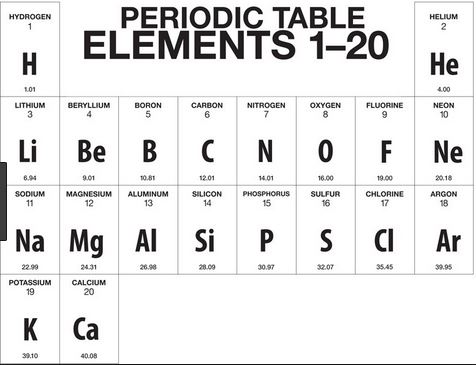
How many valence electrons does Nitrogen Have?
1 Valence electron
2 Valence electron
3 Valence electron
4 Valence electron
5 Valence electron
How many valence electrons does Hydrogen Have?
1 Valence electron
2 Valence electron
3 Valence electron
4 Valence electron
5 Valence electron
Which group has the greatest number of valence electrons?
1
14
18
16
USE THE PERIODIC TABLE
How many valence electrons does carbon have?
4
12
6
14
An ionic bond is the attraction between:
oppositely charged ions
similarly charged ions
neutral ions
neutral atoms
A covalent bond forms when atoms ___________ electrons.
gain
share
increase
transfer

Which letter represents wavelength?
A
B
C
D
What is another name for wave height?
Amplitude
Origin
Wavelength
Frequency
If a wave has a greater frequency, what happens to number of waves per second?
decreases
increases
stays the same
Frequency is always measured in _________
kilometers
Hertz
centimeters
Draw a picture of an atom.
Label: electrons, protons, and neutrons.

Which letter shows the ball when it has the LEAST potential energy?
A
B
D
G
Identify each model by the scientist who theorized it

Thomson

Rutherford

Bohr
Two or more atoms bonded together is a....
element
atom
molecule
bond
A baby carriage is sitting at the top of a hill that is 2 m high.
The carriage with the baby in it weighs 4 kg.
Calculate how much potential energy the carriage with baby has. (Use g = 10 m/s^2)
PE = mgh
800 J
8 J
80 J
40 J

The atomic number tells you the number of (a) in an element.
Select all of the TRUE statements:
Matter is anything that has mass and takes up space.
Matter consists of small particles called atoms.
Three types of matter include solids, liquids, and gases.
Atoms consist of protons, neutrons, and electrons.
In an Ionic Bond Valence Electrons are what?
created
destroyed
gained or lost
shared
There is a bell at the top of a tower that is 20 m high.
The bell weighs 100 kg. The bell has potential energy.
Calculate it. (Assume Gravity = 10 m/s^2)
PE = mgh
20,000 J
2000 J
200,000 J

Calculate the density of the cube.
2 g/cm3
4 g/cm3
6 g/cm3
8 g/cm3
How many valence electrons does an atom need to become stable?
2
4
6
8
Draw a picture of an atom.
Label: electrons, protons, and neutrons.

Is Sodium Na the Metal or the Nonmetal in the Ionic Bond? How do you know
Metal
Nonmetal
You serve a volleyball with a mass of 2 kg.
The ball leaves your hand with a speed of 30 m/s.
The ball has kinetic energy.
Calculate it.
KE = 1/2mv^2
60 J
1800 J
900 J
The atomic number tells you the number of (a) in an element.
Ionic Bonds occur between what two types of atoms?
metals and metals
Non metals and Non metals
Metals and Non Metals
unknown
A car is traveling with a velocity of 20 m/s and has a weight (mass) of 1000 kg. Calculate how much kinetic energy the car has.
KE = 1/2mv^2
200,000 J
100,000 J
400,000 J
Positively charged Atoms are called?
cations
anions

what is the volume of the cube?
123
144
244
150
negatively charged atoms are called?
cations
anions
Calculate the density of the cube.
2 g/cm3
4 g/cm3
6 g/cm3
8 g/cm3
what is the volume of the cube?
123
144
244
150

Is Fluorine F the cation or the anion in the Ionic Bond? how do you know?
cation
anion

At atom that GAINS 1 electron will have what charge?
+1
+2
-1
-2
At atom loses 2 electrons, its charge becomes what
+1
+2
-1
-2


Look at the periodic table. Count how many columns are in the 's', 'p', and 'd' blocks.
How many columns did you find?
s
2
p
6
d
10
How many electrons go in the first shell (ring) ?
6
8
4
2
How many electrons go in the first shell (ring) ?
6
8
4
2

Match the following:
s shell
2 electrons
p shell
6 electrons
d shell
10 electrons

This is a Bohr Diagram of Aluminum. How many valence electrons does Aluminum have?
3
4
5
How many valence electrons does Lithium (Li) have?
8
1
5
2
How many valence electrons does Tin (Sn) have?
8
7
5
4

What element has the following electron configuration: 1s2 2s2 2p6 3s1?
Ca+2
Ca
Mg
Na
Ar
How many valence electrons does Lithium (Li) have?
8
1
5
2

Neutrons have a ________ charge.
positive
neutral
negative
Match the following:
s shell
2 electrons
p shell
6 electrons
d shell
10 electrons
What is the difference between a pure substance and a mixture? Select all that apply.
substances are made of many different things while mixtures are just made of 1
a substance has one type of particle while a mixture has 2 or more types
a mixture is physically combined and can be physically separated while a substance is chemically bonded
a mixture is chemically bonded together while a substance is physically combined
Choose the correct electron configuration for Chlorine (Cl).
1s2 2s2 2p1
1s2 2s2 2p6 3s2
1s2 2s2 2p6 3s2 3p5
This is a Bohr Diagram of Aluminum. How many valence electrons does Aluminum have?
3
4
5
Look at the periodic table. Count how many columns on the periodic table are in the "p" block. How many columns did you find?
10
2
6
4
How many valence electrons does Bromine (Br) have?
5
6
7
8


Name this element.
Neon
Magnesium
Sodium
Manganese
What element has the following electron configuration: 1s2 2s2 2p6 3s2?
Ca+2
Ca
Mg
Na
Ar

How many valence electrons?
2
3
4
5
The two types of properties used to classify matter are (a) and chemical.
Type 2 sentences summarizing what you learned from this lesson.
(a) properties change the composition of the substance.

If I pour milk into a glass, filling it halfway, and then I pour more in, does the volume change?
yes
no
Chemical properties describe matter’s ability to change in reaction to something else.
true
false

If I leave milk out, will I be able to drink it in a month?
yes
no
Neutrons have a ________ charge.
positive
neutral
negative
What is the difference between a pure substance and a mixture? Select all that apply.
substances are made of many different things while mixtures are just made of 1
a substance has one type of particle while a mixture has 2 or more types
a mixture is physically combined and can be physically separated while a substance is chemically bonded
a mixture is chemically bonded together while a substance is physically combined

Identify the following
compound
homogeneous mixture
element
heterogeneous mixture
What pure substance is made of 2 or more types of atoms?
compound
element
Freezing is what happens when
a liquid changes to solid
gas changes to liquid
solid changes to liquid
Match the following
mass
amount of material in a substance
matter
substance that has both mass and volume
mixture
2 substances physically combined
volume
amount of space an object takes up
The definition of Mass is
The temperature of an object.
The force of gravity on an object.
The amount of matter in an object.
Match the following
Atom
Smallest particle that makes up matter.
Element
Matter containing only one type of atom
Molecules
Atoms join together to form new particle
Compounds
Combined atoms from different elements
Identify each model by the scientist who theorized it
Thomson
Rutherford
Bohr

Whose model suggested that negative particles were mixed in with positively charged material - like seeds in a watermelon?
J.J. Thomson
Ernest Rutherford
Niels Bohr
Albert Einstein
Who discovered that the atom had an small, dense, positively charged center?
Ernest Rutherford
J.J Thomson
Robert Millikan
John Dalton
Who named the positive center of the atom the "nucleus?"
Democritus
Dalton
Thomson
Rutherford
In the atomic model nicknamed the "plum pudding" model, what do the plums represent?
the nucleus
the atom
the electrons
the positive material
Who proposed that electrons move around the nucleus in circular orbits?
Dalton
Thomson
Rutherford
Bohr

