
 Worksheets
Year 8 Rocks Wk 1-5
Total questions: 86
Worksheet time: 56mins

The dropping off and settling of sediments to the bottom of a lake or river is called
erosion
deposition
weathering

What is the process process by which water, ice, wind or gravity picks up and moves weathered rock and soil from one place to another.


Weathering is the process of -
Moving sediment from one place to another
Dropping or leaving sediment in a location
Breaking down rocks into sediment


When a big rock breaks apart into smaller pieces, it will NOT weather faster.
true
false


The Statue of Liberty has changed colors due to this type of weathering:
oxidation
abrasion
physical weathering
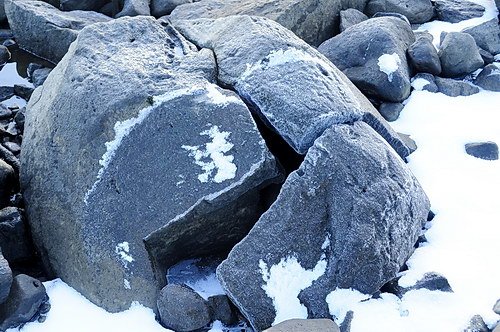
How does freezing water cause the weathering of rocks? The freezing water—
keeps the rocks in place.
makes the rocks last longer.
expands cracks and breaks rocks.
causes rocks to fall in landslides.

Over long periods of time, deposition may change the Earth’s surface by _____.
forming new land features.
breaking down large rocks into smaller ones.
washing away beaches.
moving topsoil.

What causes the greatest erosion effect on our beaches?
Waves
Gravity
Glaciers
Wind

What is an enormous mass of ice moving over land, causing weathering of rock and soil?
A glacier
An iceberg
An ice wedge
A sand dune


What is a crystal?
A pure material that can’t be changed.
Material with a regular,repeating arrangement of atoms.
A foggy like material.
Which of the following is a way that crystals can form in nature?
When liquids cool and start to harden.
When magma cools.
When water evaporates from a mixture.
All of the above.

If a mineral is scratched by talc, what must its hardness rating be?
1
3
6
10

Diamond is the hardest mineral.
True
False

What is # 4 on the MOH's scale?
Fluorite
Feldspar
Quartz
Calcite

Quartz can be scratched by Topaz.
True
False


Can Scratch 1, but gets scratched by 3. What am I?
Talc
Gypsum
Fluorite
If a mineral can SCRATCH another one, it is -
harder than the mineral
weaker than the mineral
the same mineral


Of the three kinds of sedimentary rocks, a rock that is made up of fragments of older rocks is called
Clastic sedimentary rock
Organic sedimentary rock
Chemical sedimentary rock

Compaction is
When slowing water lays down sediments to form beds
Squeezing of sediment grains together by the weight of sediments above
Precipitation of minerals that "glue" the sediment grains together
When tectonic plate movement raises buried rocks up to the surface
Cementation is
When slowing water lays down sediments to form beds
Squeezing of sediment grains together by the weight of sediments above
Precipitation of minerals that "glue" the sediment grains together
When tectonic plate movement raises buried rocks up to the surface

Of the three kinds of sedimentary rocks, a rock that is made from the remains of living things is called
Clastic sedimentary rock
Organic sedimentary rock
Chemical sedimentary rock

Of the three kinds of sedimentary rocks, a rock that is made by precipitation of dissolved minerals from water is called
Clastic sedimentary rock
Organic sedimentary rock
Chemical sedimentary rock

Remains of living things embedded or imprinted in a sedimentary rock are called
fossils
geodes
strata
clasts

Rock fragments, which range in size from boulders to cobbles to pebbles to microscopic clay grains, are called
fossils
clasts
geodes
stratification
Intrusive rock
igneous rock formed from lava that erupted onto Earth's surface
igneous rock formed when magma hardened beneath the surface of Earth
Extrusive rock
igneous rock formed from lava that erupted onto Earth's surface
igneous rock that formed when magma hardened beneath the surface of Earth

Is this Intrusive or Extrusive?
Intrusive
Extrusive

Pumice is
Extrusive
Intrusive


Does this rock have large or small crystals?
large crystals
small crystals

Does this rock have large or small crystals?
large crystals
small crystals

Describe the environment of formation for the following igneous rock (grain size 1-10 mm).
above ground
below ground

Describe the environment of formation for the following igneous rock (grain size < 1 mm).
above ground
below ground
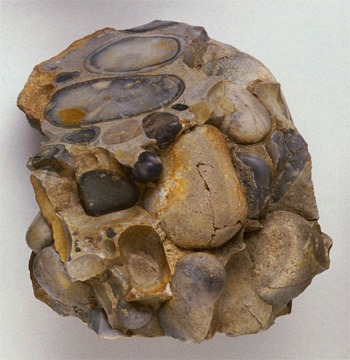
This rock was formed by smaller pieces of rock that settled at the bottom of a lake millions of years ago. What type of rock is this?
Sedimentary
Igneous
Metamorphic

When sediments are pressed together tightly, this is called ____________.
Compaction
Cementation
Weathering
Erosion
The process in which sediment are fused or glued together.
compaction
deposition
organic rock
cementation


Granite is an example of
Sedimentary rock
Igneous rock
Metamorphic rock
Obsidian is an example of
Sedimentary rock
Igneous rock
Metamorphic rock
Sandstone is an example of
Sedimentary rock
Igneous rock
Metamorphic rock

What type of rock is this?
Obsidian
Limestone
Pumice
Granite

What type of rock is this?
Conglomerate
Shale
Granite
Pumice

What type of rock is this?
Granite
Obsidian
Sandstone
Pumice

What type of rock is this?
Breccia
Conglomerate
Shale
Sandstone

What type of rock is this?
Pumice
Shale
Limestone
Sandstone
Which type of rock is described by its crystal size?
Igenous
Metamorphic
Sedimetary
All of the above

