
 Worksheets
Biology 9 LT4 Revision 2
Total questions: 132
Worksheet time: 2hrs 39mins
Which of the following is used to transport water & mineral ions, while also providing structural support to the plant?
Phloem
Mesophyll
Stem
Xylem
This vascular tissue carries substances from the leaves to the other parts of the plant.
Phloem
Leaves
Roots
Xylem
Which of the following is responsible for the transport of sugars ONLY.
Spongy mesophyll
Epidermis
Xylem
Phloem
What is the stomata in plants?
Large pores in the leaves
The green pigment
The chloroplast
Tiny pores in the leaves
By which of the following processes do water molecules enter into the plant?
Osmosis
Active transport
Diffusion
Transpiration
Define the term "Transpiration".
Exchange of gases between the leaf and atmosphere.
Loss of water vapour from the leaves and stems of the plant.
Movement of water from the roots to the leaves.
Movement of water through the cells of the leaf.
Which of the following is responsible for the absorption of mineral ions?
Active transport
Osmosis
Diffusion
Transpiration
What is meant by the term "Translocation"?
The process of releasing energy from glucose.
The process of transporting manufactured food throughout the plant
The process by which water is lost in the form of water vapour
The process by which plants make their own food.
For shoots growing from tubers, food moves from the tubers to the shoots. Which of the following statements in correct?
Sink to source
Source to sink
Sink to sink
Source to source

Transpiration is
the movement of water through a plant from the roots up the stem
the loss of water from the leaves of a plant by the process of evaporation
the flow of water into plant roots by osmosis from the soil
the process of minerals and sugars moving through plant veins
What happens to the transpiration rate as light intensity increases?
It increases
It decreases
It stays the same

diagram show the cross section of
stem
root
leaf

what is A
xylem
cambium
phloem
cortex

what is B
phloem
cambium
xylem
cortex

diagram shows cross section of a
leaf
root
stem

what is M
phloem
xylem

what is N
xylem
phloem
rate of transpiration decreases when .....
light intensity increases
humidity increases
wind speed increases
temperature increases
What are the rhythmic muscular contractions of your esophagus called to help food move along?
swallowing
peristalsis
inertia contractions
paralysis
______ is the watery liquid that begins to chemically break down food in your mouth.
salivary glands
saliva
mucus
water
Which shows the correct order of digestion?
mouth, pharynx, stomach, small intestines, esophagus
pharynx, esophagus, stomach, small intestines, large intestines
mouth, esophagus, large intestines, stomach, small intestines,
stomach, large intestines, esophagus, small intestines
Water from your undigested food is absorbed in the ___________________?
small intestines
stomach
liver
large intestines
Where is Bile produced?
The liver
The Gallbladder
The Pancreas
The Intestine
The movement of digested food molecules into the cells of the body where they are used, becoming part of the cells is called....
egestion
digestion
ingestion
assimilation
Which food group contains the sugar "lactose"?
Meat
Fruit and Vegetables
Dairy
Bread & Grains
On average, how much water should we drink during the day?
1 litre
4 cups
1.5 litres
2 litres
What is a function of protein?
Repair and build muscle
Keep the body warm
Help with the digestive system
Cures asthma
Getting rid of undigested/unwanted food
Digestion
Excretion
Ingestion
Egestion
Substance in our food that gives us energy or materials needed for growth and development.
Food
Nutrient
Molecules
Water
Elimination of waste products that arise as a result of metabolic activity.
Digestion
Excretion
Ingestion
Egestion
Break down of large molecules into small molecules so they can be absorbed into the blood.
Digestion
Excretion
Ingestion
Egestion
Digestion using enzymes
Egestion
Chemical process
Mechanical process
Ingestion
Teeth is important in digestion because
it makes us smile
it physically breaks up food into smaller pieces
it chemically breaks up food

Which teeth are identified in this picture? These teeth are big and strong to help you grind food so it can be swallowed
incisors
premolars
molars
canines
Which part of the tooth is known as the toughest substance in the human body?
Dentine
Cementum
Enamel
Jaw bone
Which type of teeth are used to cut and bite food?
Molars
Canines
Premolars
Incisors
Which teeth are used for tearing food?
Incisors
Canines
Molars
Premolars
The teeth is used to carry out which type of digestion
Chemical
Mechanical
Both chemical and Mechanical
None of the above

Identify the diagram
Photometer
Potometer
Clinostat
Potometre
Which graph shows most clearly what will happen to the rate of transpiration as humidity increases?


What food substance is made by plants during photosynthesis?
Carbon dioxide
Glucose
Granulated sugar
Oxygen
Which is a major source of nutrients in plants?
soil
leaves
stem
roots
This part of the transport system in plants is made up of dead cells.
Xylem
Phloem
Shoot
Leaves
This part of the transport system in plants is made up of living cells.
Xylem
Shoots
Phloem
Leaves
Water and minerals move upward from the root to the rest of the plant in this vascular tissue.
Root
Xylem
Leaves
Phloem
This vascular tissue carries substances from the leaves to the other parts of the plant.
Phloem
Leaves
Roots
Xylem
This is the process in which plants sweat.
Transportation
Transpiration
Explanation
Exportation
What is the stomata in plants?
Large pores in the leaves
The green pigment
The chloroplast
Tiny pores in the leaves
Which of the following is responsible for the transport of sugars ONLY.
Spongy mesophyll
Epidermis
Xylem
Phloem
Which of the following is used to transport water & mineral ions, while also providing structural support to the plant?
Phloem
Mesophyll
Stem
Xylem
By which of the following processes do water molecules enter into the plant?
Osmosis
Active transport
Diffusion
Transpiration
Define the term "Transpiration".
Exchange of gases between the leaf and atmosphere.
Loss of water vapour from the leaves and stems of the plant.
Movement of water from the roots to the leaves.
Movement of water through the cells of the leaf.
Which of the following is responsible for the absorption of mineral ions?
Active transport
Osmosis
Diffusion
Transpiration
What is meant by the term "Translocation"?
The process of releasing energy from glucose.
The process of transporting manufactured food throughout the plant
The process by which water is lost in the form of water vapour
The process by which plants make their own food.
For shoots growing from tubers, food moves from the tubers to the shoots. Which of the following statements in correct?
Sink to source
Source to sink
Sink to sink
Source to source
Transpiration is
the movement of water through a plant from the roots up the stem
the loss of water from the leaves of a plant by the process of evaporation
the flow of water into plant roots by osmosis from the soil
the process of minerals and sugars moving through plant veins
What happens to the transpiration rate as light intensity increases?
It increases
It decreases
It stays the same
diagram show the cross section of
stem
root
leaf
what is A
xylem
cambium
phloem
cortex
what is B
phloem
cambium
xylem
cortex
diagram shows cross section of a
leaf
root
stem
what is M
phloem
xylem
what is N
xylem
phloem
rate of transpiration decreases when .....
light intensity increases
humidity increases
wind speed increases
temperature increases

How does water move from the soil into the root hair cell and reach the xylem vessels?
diffusion
osmosis
active transport
none of the above

This kind of arrangement of vascular bundles can be seen in the ............?
leaf
root
stem
How does water move from the soil into the root hair cell and reach the xylem vessels?
diffusion
osmosis
active transport
none of the above
This kind of arrangement of vascular bundles can be seen in the ............?
leaf
root
stem
What is an example of osmosis?
Carbon dioxide goes out through the stomata of a leaf.
Digested food is absorbed from the small intestine.
Oxygen goes into the blood from an alveolus.
Water enters a plant root from the soil.
What is the optimum pH for stomach protease?
pH2
pH6
pH8
pH12
What are enzymes made of?
Carbohydrate
Fat
Protein
Fibre
What are lipids broken down into?
Glucose
Amino acids
Sugar
Fatty acids and glycerol
Guard cells help in
Transpiration
Protection against grazing
Fight against infection
Guttation

Where is the highest water potential?
in the flower
cannot be determined by picture.
in the vase
in the leaves
Osmosis is the movement of _____________ across a membrane.
food molecules
oxygen molecules
water molecules
energy
Which colour confirms little reducing sugars when a food substance with Benedict's solution is heated?
Red
Green
Blue
Orange
A food was chemically tested with a solution that changed from yellow to blue/black? Which solution was the food tested with?
Biuret
ethanol
Benedict's
iodine
Glycerol and fatty acids make up which one of the following food molecules?
lipids
simple carbohydrate
complex carbohydrates
proteins
Which chemical food test involves a positive result of a cloudy white emulsion?
protein
lipid
glucose
starch
Which pH range would provide an acidic environment for enzyme action?
2-4
7-8
9-11
13-14
State the balanced symbol equation for photosynthesis
CO2 + H2O -> C6H12O6 + O2
C6H12O6 + 6O2 -> 6CO2 + 6H2O
6CO2 + 6H2O -> C6H12O6 + 6O2
CO2 + H2O -> 6C6H12O6 + O2

State the name of structure A
Vascular bundle
Upper epidermis
Palisade mesophyll
Spongy mesophyll
What is the name of the water proof layer on the top of the leaf?
Vascular bundle
Cuticle
Palisade mesophyll
Spongy mesophyll
What are the cells in layer B called?
Vascular bundle
Cuticle
Palisade mesophyll
Spongy mesophyll
What are the cells in layer C called?
Vascular bundle
Cuticle
Palisade mesophyll
Spongy mesophyll
What is the name of layer D called?
Vascular bundle
Cuticle
Palisade mesophyll
Spongy mesophyll
What is structure F called?
Vascular bundle
Cuticle
Palisade mesophyll
Stomata
What is the role of stomata?
Openings in the leaf that allows gas in and out of the plant
Transports water and supports the plant
transports sugars
Where photosynthesis happens
The stomata are openings in the leaf which allow for gas exchange. Which cells found either side of the opening control the stomata?
Guard Cells
Palisade Cells
Spongy mesophyll
What is structure E called?
Vascular bundle
Cuticle
Palisade mesophyll
Lower epidermis
Plants response to water..
Hydroptropism
Chemotropism
Phototropism
Gravitropism
minerals obtained by plants are selectively absorbed from
stem
root
leaves
flower
Plants response to light..
Gravitropism
Chemotropism
Hydrotropism
Phototropism
Plants response to grow towards or away from gravity
Gravitropism
Hydrotropism
Thigmotropism
Phototropism
Positive response for gravitropism would be...
plant to look sad
plant to grow straight up
plant to grow away from earth
plant to grow towards earth
Living organisms obtain energy from
Carbon Dioxide
Food
Water
Oxygen
Ultimate source of energy for all living organisms is
Plants
Atmosphere
Earth
Sun
Which of the following is not necessary for photosynthesis
Chlorophyll
Carbon dioxide gas
Oxygen
Water

Identify what is shown in the picture
chlorophyll
stomata
carbon dioxide
veins
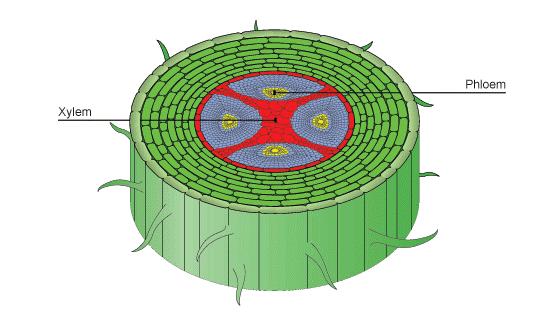
Xylem and Phloem are both __.
Transpiration
Absorption
Photosynthesis
Vascular tissue

What is this?
Monocot Root
Monocot Stem
Dicot Root
Dicot Stem

What is this?
Monocot Root
Monocot Stem
Dicot Root
Dicot Stem
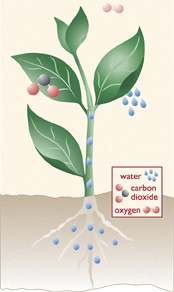
Where does sugar transport begin?
Roots
Leaves
Root hairs
Vascular bundles


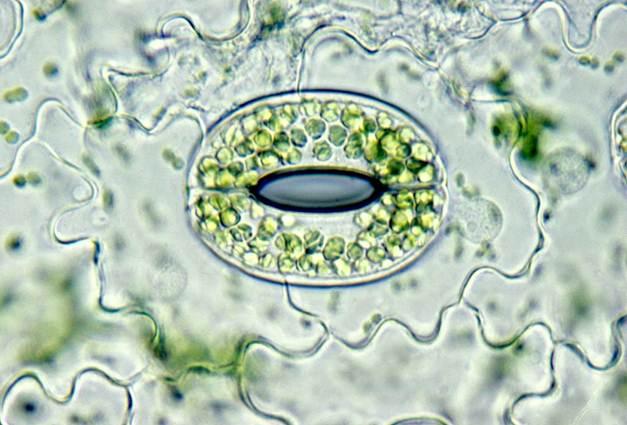
What do the guard cells do?
Control active transport
Control nutrients moving into the cell
Controls the rate of transpiration (loss of water through the leaf)

How is a plant root hair cell adapted for absorbing water from the soil efficiently?
It has many chloroplasts
It has lots of mitochondria
It has a large surface area
It has a large vacuole
Which of the following molecules is a quick source of energy?
carbohydrate
fat
protein
water
An example of simple sugar (monosaccharide).
glucose
sucrose
starch
glycogen
Which test is used to detect the presence of reducing sugars (i.e. small sugars like glucose)?
Biuret test
Benedict's test
Bartholomew's test
Bronchial test

The test tubes in the photo represent a negative and positive result for
Benedict's with glucose
Biuret with protein
Iodine with starch
Ethanol with fat

