wayground logo

Free Printable Worksheets

Font size

S
M
L
XL
Worksheets

BIO QUIZZIZ REVIEW CHAP 13 & 15

Total questions: 135

Worksheet time: 5hrs 32mins

Name
Class
Date
1.
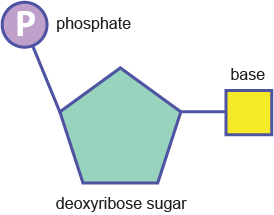
A nucleotide includes...?
a)
pentose sugar
b)
nitrogenous base
c)
phosphate group
d)
all of the above
2.
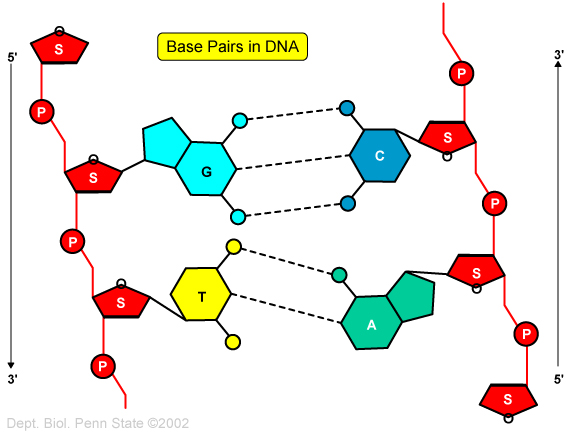
In DNA, Adenine bonds with ______________.
a)
Guanine
b)
Thymine
c)
Cytosine
d)
Adenine
3.
Guanine bonds with ______________.
a)
Adenine
b)
Guanine
c)
Cytosine
d)
Thymine
4.
What does DNA stand for?
a)
Deoxyribonucleic acid
b)
Denitrogenous acid
c)
Deribonucleic acid
d)
Diribonucleic acid
5.
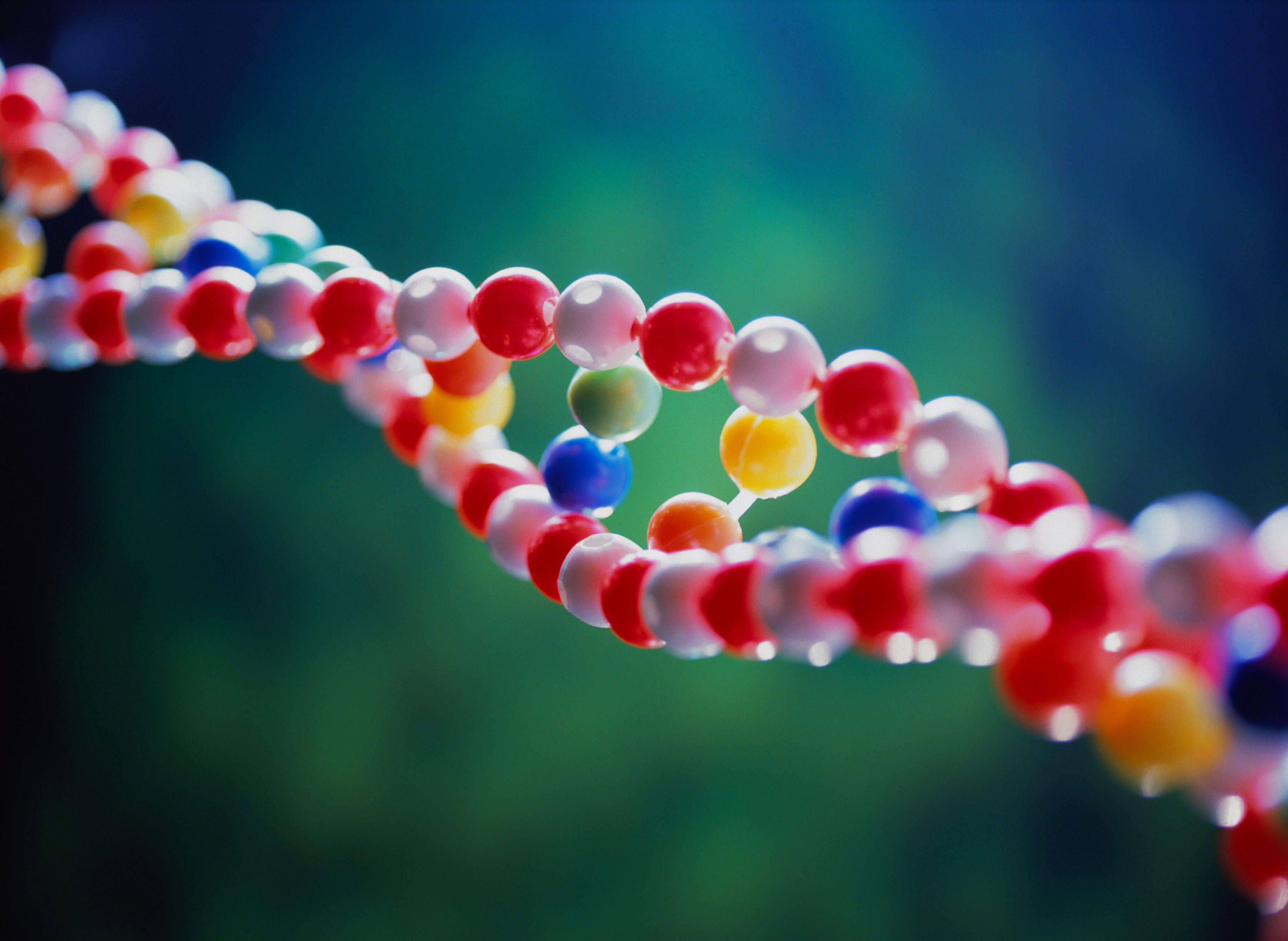
Name this structure
a)
double helix
b)
nucelotide
c)
twisted ladder
d)
hydrogen bond
6.
Which organelle is DNA usually found in?
a)
cell membrane
b)
vacuole
c)
ribosome
d)
nucleus
7.
Nucleotides are made up of a sugar, phosphate, and..?
a)
nitrogenous base
b)
nucleic acid
c)
cholesterol
d)
fatty acid
8.

Why is DNA important?

a)

it is very small and very complicated

b)

it's in everything

c)

it serves as the plan for traits of all living things

d)

because we eat it every day for energy

9.
What is this image showing?
a)
DNA
b)
Chromosome
c)
Alleles
d)
Phenotype
10.

a ______ codes for a particular trait. It is a distinct sequence of DNA forming part of a chromosome

a)

Gene

b)

Chromosome

c)

Pedigree

d)

Protein

11.

DNA is called the "blueprint of life" because

a)

it is like a fingerprint

b)

it has a blue color

c)

it contains the plans for building an organism

d)

it can relay messages to other molecules

12.

The fragments on the lagging strand that are made up of repeating segments of DNA and RNA Primers

a)

okazaki fragments

b)

Primase

c)

Polymerase

d)

unused DNA

13.

Which of the following best describes the arrangement of the sides of the DNA molecule

a)

Bonding

b)

Alternating

c)

Anitparallel

d)

Parallel

14.

DNA replication results in

a)

2 completely new DNA molecules

b)

2 DNA molecules that each contain a strand of the original

c)

1 new DNA molecule and 1 old

d)

1 new molecule of DNA

15.

DNA polymerase moves in the _________ to ____________ direction

a)

3' to 5'

b)

easiest

c)

5" to 3"

d)

9 to 5

16.

Enzyme that connects the DNA to the backbone (glues)

a)

Ligase

b)

Polymerase

c)

Helicase

d)

Primase

17.

Enzyme that breaks hydrogen bonds (unzips)

a)

Ligase

b)

Polymerase

c)

Primase

d)

Helicase

18.

DNA strand has the following bases AAGCCA what are the bases on the complementary strand

a)

GGCTTA

b)

TTGGGA

c)

CCAGGT

d)

TTCGGT

19.

Site where replication begins

a)

Polymerase action site

b)

Replication fork

c)

Replication Origin

d)

In the front

20.
If a strand reads:
3' A A A T T T C 5'
The matching strand would read...
a)
5' T T T A A A G 3'
b)
3' T T T A A A G 5'
c)
5' A A A T T T C 3'
d)
3' U U U A A A G 5'
21.
Polymerase is able to replicate the new DNA ______ along the leading strand.
a)
continuously
b)
only in short fragments
c)
very slowly
d)
prokaryotically
22.
Sometimes, DNA is called "semi-conservative." Why might this be?
a)
The old strand is "conserved" and used to make the new strands
b)
Uracil is "conserved" in that it is only used to make the new strands
c)
ATP is "conserved" via the usage of facilitated diffusion
d)
Ligase is "conserved" in that it is denatured by the process
23.

This enzyme helps helicase unzip DNA by relieving supercoiling

a)

Topoisomerase

b)

Exonuclease

c)

DNA Primase

d)

DNA Polymerase

24.
The enzyme that unzips the DNA to prepare for replication
a)
helicase
b)
replicase
c)
polymerase
d)
synthase
25.
DNA replication results in two DNA molecules,
a)
each one with two original strands
b)
each one with two new strands
c)
each one with one new strand and one original strand
d)
one with two new strands and the other with two original strands
26.
Okazaki fragments form on the:
a)
lagging strand
b)
leading strand
c)
base-pairs
d)
5' end
27.

Which enzyme is responsible for adding nucleotides to the free three prime end

a)

Helicase

b)

Topoisomerase

c)

DNA Polymersase 3

d)

DNA Polymersase 1

28.

Which enzyme is responsible for forming phosphodiester bonds between the Okazaki fragments?

a)

Ligase

b)

Helicase

c)

DNA Polymerase 1

d)

DNA Polymerase 3

29.

This structure is an Okazaki fragment.

a)

A

b)

D

c)

F

d)

G

30.
In a molecule of double-stranded DNA, the amount of Adenine present is always equal to the amount of
a)
cytosine
b)
guanine
c)
thymine
d)
uracil
31.
Which sequence of DNA bases would pair with this partial strand
ATG TGA CAG
a)
ATG TGA CAG
b)
TAC ACT GTC
c)
GTA AGT GAC
d)
CAT TCA CTG
32.
order of replication
a)
3, 2, 1, 4
b)
2, 1, 4, 3
c)
2, 3, 1, 4
d)
3, 4, 1, 2
33.
Nitrogenous bases are joined by which type of bond?
a)
polar bonds
b)
ionic bonds
c)
covalent bonds
d)
hydrogen bonds
34.
In what phase of the cell cycle does DNA replication take place?
a)
G1
b)
S
c)
G2
d)
M
35.
Determine the sex of the individual whose karyotype is displayed in the image.
a)
female
b)
male
36.
Determine the sex of the individual whose karyotype is displayed in the image.
a)
female
b)
male
37.
Nondisjunction can result in 
a)
trisomy conditions
b)
monosomy conditions
c)
additional sex chromosomes
d)
all of these
38.
A pair of identical chromosomes shown in a karyotype, one inherited from mom, and one inherited from dad are called
a)
sister chromotids
b)
centromeres
c)
homologous chromosomes
d)
autosomes
39.
A sperm contains
a)
Both an X and a Y chromosome
b)
Two X chromosomes
c)
An X OR a Y chromosome
d)
only a Y chromosome
40.
What makes this individual's karyotype not normal?
a)
An extra sex chromosome
b)
An extra autosome
c)
A missing sex chromosome
d)
A missing autosome
41.
Down's syndrome occurs because of a(n)
a)
missing sex chromosome
b)
extra sex chromosome
c)
additional 21st chromosome
d)
additional 18th chromosome
42.
Turner's Syndrome has a karyotype notation of
a)
47XX+21
b)
47XXY
c)
45XO
d)
44XX
43.
Klinefelter's Syndrome has the karyotype notation of 
a)
47XX+21
b)
47XXY
c)
45XO
d)
44XX
44.
Chromosome pairs 1-22 are referred to as
a)
sex chromosomes
b)
sister chromatids
c)
a karyotype
d)
autsomes
45.
How many PAIRS of chromosomes do humans have?
a)
23
b)
46
c)
1
d)
2
46.
How many PAIRS of sex chromosomes do humans have?
a)
23
b)
46
c)
1
d)
2
47.

Cell division in which the sister chromatids do not deperate correctly in gametes with an abnormal number if chromosomes.

a)

Telomere

b)

Epitasis

c)

Nondisjunction

d)

Autosome

48.

Protective cap made of DNA that is found on the DNA of a chromosome

a)

Nondisjunction

b)

Epitasis

c)

Telomere

d)

Sex Chromosome

49.

Standard arrangement of an organism's chromosomes during metaphase of Mitosis.

a)

Klinefelter's

b)

Karyotype

c)

Turner's

d)

Non-disjunction

50.

"Normal" human males have

a)

1 X chromosome and 1 Y chromosome

b)

2 X chromosomes

c)

2 Y chromosomes

51.

"Normal" human females have

a)

1 X chromosome and 1 Y chromosome

b)

2 X chromosomes

c)

2 Y chromosomes

52.

Karyotype Analysis

a)

45, X, -x/y

b)

46, XX

c)

46, XY

d)

Female with Trisomy X (Turner Syndrome)

e)

Female with Monosomy X (Turner Syndrome)

53.

Karyotype Analysis

a)

46, XX

b)

46, XY

c)

normal male

d)

normal female

e)

47, XX, +13

54.

Diagnosis

a)

46, XX

b)

46, XY

c)

normal male

d)

normal female

e)

47, XX, +13

55.

Karyotype Analysis

a)

47, XX, +13

b)

46, XX, +13

c)

47, XY, +13

d)

male with Trisomy 13 (Patau Syndrome)

e)

male with Trisomy 13 (Down Syndrome)

56.

Diagnosis

a)

47, XX, +13

b)

46, XX, +13

c)

47, XY, +13

d)

male with Trisomy 13 (Patau Syndrome)

e)

male with Trisomy 13 (Down Syndrome)

57.

Karyotype Analysis

a)

47, XX, +15

b)

47, XY, +15

c)

45, XY, -15

d)

male with Trisomy 15 (Jacob's Syndrome)

e)

male with Monosomy 15 (Down Syndrome)

58.

Karyotype Analysis

a)

47, XX, +21

b)

47, XY, +21

c)

46, XY, +21

d)

male with Down Syndrome

e)

male with Trisomy 21 (Down Syndrome)

59.

Diagnosis

a)

47, XX, +21

b)

47, XY, +21

c)

46, XY, +21

d)

male with Down Syndrome

e)

male with Trisomy 21 (Down Syndrome)

60.

Karyotype Analysis

a)

46, XX, +21

b)

47, XX, +21

c)

47, XY, +21

d)

female with Trisomy 21 (Down Syndrome)

e)

male with Down Syndrome

61.

Chromosomes in a karyotype are arranged from

a)

largest to smallest

b)

smallest to largest

c)

thickest to thinnest

d)

most genes to fewest genes

62.

Human autosomes are

a)

chromosomes X & Y

b)

chromosomes 1-22

c)

chromosomes 1-5

d)

chromosomes XYT

63.

Having three chromosomes, rather than the normal two, of a given number is called a

a)

Disomy

b)

Monosomy

c)

Trisomy

d)

Karyotype

64.

Having one chromosomes, rather than the normal two, of a given number is called a

a)

Disomy

b)

Monosomy

c)

Trisomy

d)

Karyotype

65.

What determines gender in humans?

a)

the X and Y chromosomes

b)

chromosome 21

c)

chromosome 5

d)

chromosome 3

66.
If a woman is a carrier for a sex linked recessive trait of hemophilia and her husband has hemophilia, which of the following is true? Make a punnett square!
a)
All sons will have hemophilia
b)
all daughters will have hemophilia
c)
50% of daughters and 50% of sons have hemophilia
d)
100% of sons have hemophilia and 100% of daughters are carriers
67.
Alleles that are inherited on the X or Y chromosomes:
a)
multiple alleles
b)
sex-linked genes
c)
codominance
d)
polygenic inheritance
68.
Hemophilia is an x-linked trait.  A normal man marries a woman that is a carrier.  What are their chances of having a child with the disorder?
a)
O%
b)
50%
c)
25%
d)
100%
69.
According to _______, genes that are closer together on a chromosome, have a higher chance of being inherited together.  
a)
Gene Linkage
b)
Polygenic
c)
Pleiotropy
d)
Epistasis
70.

A and B are linked genes. In a study of 100 offspring, 80 parental genotypes for A and B, while 20 were recombinants. What is the % of recombination?

a)

10

b)

5

c)

20

d)

30

71.
X-inactivation balances the inequality of genes between males and females. 
a)
True 
b)
False 
72.
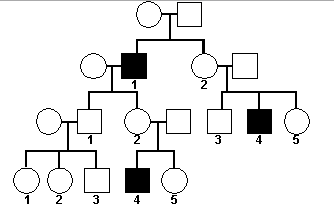
What type of heredity is shown in the pedigree?
a)
Sex-Linked Dominant
b)
Sex-Linked Recessive
c)
Autosomal Dominant
d)
Autosomal Recessive 
73.
Causes genes to not segregate independently. Causes genes to be more likely to be inherited together. Represents an exception to Mendel's Law of Independent assortment.
a)
Gene linkage
b)
Epistasis
c)
Polygenic traits
d)
Codominance
74.
the new combination of genes produced by crossing over and independent assortment.
a)
genetic recombination
b)
polygenic trait
c)
epistasis
d)
gene linkage
75.
The following are results of crossing a female fly (AaBb) with a male fly (aabb). 
AaBb 1005
aabb  1000
Aabb  200
aaBb  210
Which two genotypes are the recombinant offspring? 
a)
AaBb & Aabb
b)
AaBb & aaBb
c)
Aabb & aaBb
d)
AaBb & aabb 
76.
Genes that are closer to each other on a chromosome will have a higher recombination rate.  
a)
True 
b)
False 
77.
True or False: Men can NEVER be "carriers" for recessive sex-linked traits because they only have one X chromosome.
a)
True
b)
False
78.
A gene on the Y chromosome that determines maleness is called:  
a)
AB
b)
SRY
c)
ABC
d)
Barr Body 
79.
Colorblindness is a sex-linked recessive disorder. A normal woman whose father was colorblind marries a man with normal color vision. What percentage of their sons will be colorblind?
a)
0%
b)
25%
c)
50%
d)
100%
80.
Hemophilia is a sex-linked recessive disorder. A woman with hemophilia marries an unaffected man whose father had hemophilia. What percentage of their daughters will have hemophilia?
a)
0%
b)
25%
c)
50%
d)
100%
81.
Colorblindness is a sex-linked recessive disorder. If the daughter of a couple is colorblind, what are the two possible genotypes of her mother?
a)
XAXA and XAXa
b)
XAXA and XaXa
c)
XAXa and XaXa
d)
Cannot be determined
82.
If a trait shows up more commonly in men than women it is probably
a)
not inherited
b)
on the x chromosome and dominant
c)
on the x chromosome and recessive
d)
on a normal body chromosome
83.
What percentage of the female offspring will be a carrier for this recessive disease?
a)
0%
b)
50%
c)
100%
d)
25%
84.
Which of the following is NOT a sex-linked trait?
a)
Color-blindness
b)
Muscular Dystrophy
c)
Huntington disease
d)
Hemophilia
85.
Hemophilia is a recessive x-linked disorder.
Which genotype represents a female who is a carrier for hemophilia?
a)
XHXh
b)
XhXh
c)
XHXH
d)
XhY
86.
Hemophilia is a recessive x-linked disorder.
Which genotype represents a male with hemophilia?
a)
XHXh
b)
XhXh
c)
XHY
d)
XhY
87.
Colorblindness is a recessive x-linked disorder.
Which genotype represents a male with normal vision?
a)
XNXN
b)
XnXn
c)
XNY
d)
XnY
88.
Which of the following genotypes belongs in the red box in the Punnett square?
a)
XBXb
b)
XbXb
c)
XbY
d)
XBY
89.
Vitamin D resistant rickets (deformed bone formation) is a sex-linked DOMINANT trait.  According to the Punnett square, what percentage of female offspring will have the disorder?
a)
0%
b)
25%
c)
50%
d)
100%
90.

What mutation has occurred here?

T-G-A-C-C-A

T-G-A-G-C-A

a)

Substitution

b)

Deletion

c)

Insertion

d)

Frameshift

91.

DNA molecule segment is : TTACGCAAG

The mutated DNA segment is TTACGCAAC. This is an example of ___ mutation.

a)

Substitution

b)

Insertion

c)

Inversion

d)

Translocation

92.
Any change in the sequence of DNA is...
a)
transgenic shift
b)
Single Genotype
c)
Monohybrid Trait
d)
Mutation
93.

Which organelle is DNA usually found in?

a)

cell membrane

b)

vacuole

c)

chloroplast

d)

nucleus

94.

What are the building blocks of proteins called?

a)

DNA

b)

RNA

c)

Ribosomes

d)

Amino Acids

95.

ATT-TGA-GCC- Original

ATT-GAG-CC - Mutated

The example above is an example of a

a)

Insertion- Frameshift

b)

Deletion- Substitution

c)

Deletion -Frameshift

d)

All of the above

96.

DNA molecule segment is : TTA-CGC-AAG

The mutated DNA segment is TTC-GCA-AG. This is an example of ___ mutation.

a)

Substitution

b)

Deletion

c)

Insertion

d)

Inversion

97.

Original DNA: CAT GAT CCA

New DNA: CAT TGA TCC A

What mutation occurred?

a)

deletion

b)

substitution

c)

tranverse

d)

insertion

98.
Original: ATC CAT
Mutation: ATC GCAT
What mutation occurred?
a)
deletion
b)
insertion
c)
silent
d)
transverse
99.
Which of the following would result in a frameshift mutation?
a)
Insertions only
b)
Substitution only
c)
Deletion only
d)
Insertions and Deletions
100.

What type of gene mutation has occurred here? Normal-

AGA-TTC-ATA-GCG

Mutant-

AGA-TTC-AAT-AGC-G

a)

deletion frameshift

b)

insertion frameshift

c)

substitution

d)

nonsense

101.
Are all mutations bad?
a)
Yes
b)
No
c)
Maybe?
102.
Mutated DNA sequences that can be passed from parent to offspring --
a)
occur in somatic cells (body cells)
b)
occur in gametic cells (sex cells)
c)
are rejected by meiosis
d)
only occur if the parent is exposed to harmful substances
103.

Why are insertion and deletion mutations so harmful?

a)

They change all of the codons from the mutation on down the line, which changes the amino acid sequence

b)

They insert things that an organism doesn't need.

c)

They often delete things that organisms need.

d)

Insertion and deletions are not any more harmful than substitution mutations.

104.
Who is responsible for producing this image?
a)
Francis Crick
b)
James Watson
c)
Rosalind Franklin
d)
Watson and Crick
105.
What does this image show?
a)
Double helical structure of DNA
b)
Triple Helical Structure of DNA
c)
Double helical structure of RNA
d)
Triple Helical Structure of RNA
106.
How did Rosalind Franklin's photo 51 affect the work of Watson and Crick?
a)
It was used to determine the physical structure of DNA
b)
It was used to identify the four bases that make up DNA
c)
It was used to determine the theory of independent assortment
d)
It was used to show DNA was the molecule of inheritance
107.
What did Erwin Chargaff conclude from his experiments?
a)
Nitrogen bases are held together by peptide bonds
b)
A and T, C and G always occur in equal amounts
c)
Proteins are the carriers of genetic information
d)
C and G rarely occur in eukaryotic organisms
108.
What was Watson and Crick's main scientific accomplishment?
a)
Building the first accurate model of DNA
b)
Isolating strains of pneumonia causing bacteria
c)
Determining base pairing rules
d)
Discovering the process of genetic transformation
109.
From his work with mice and pneumonia-causing bacteria, Frederick Griffith discovered what?
a)
Replication
b)
Transcription
c)
Transformation
d)
Translation
110.
By using radioactive isotopes, Hershey and Chase were able to conclude that _____ is the carrier of genetic information.
a)
DNA
b)
Protein
c)
Carbohydrate
d)
Lipid
111.
The work of Erwin Chargaff allowed Watson and Crick to determine the rules of.......
a)
protein synthesis
b)
transcription
c)
hydrogen bonding
d)
nitrogen base pairing
112.
Rosalind Franklin's "Photo 51" allowed Watson and Crick to determine the _______ of DNA.
a)
Shape
b)
Backbone
c)
Nitrogen bases
d)
Hydrogen bonds
113.
The work of scientists including Griffin, Avery, Hershey & Chase, and Franklin helped us to determine that _______ are responsible for carrying genetic material.
a)
Amino Acids
b)
Proteins
c)
Nucleic Acids
d)
Carbohydrates
114.
Who was responsible for the experiment depicted by the image?
a)
Martha Chase
b)
Watson and Crick
c)
Frederick Griffith
d)
Rosalind Franklin
115.
Who was responsible for the model shown?
a)
Oswald Avery
b)
Watson and Crick
c)
Erwin Chargaff
d)
Rosalind Franklin
116.

Amount of A=T and G=C

a)

Chargaff

b)

Franklin

c)

Watson and Crick

d)

Hershey and Chase

117.

Came up with the term 'transforming principle'

a)

Mendel

b)

Griffith

c)

Avery

d)

Hershey and Chase

118.

Won the Nobel Prize

a)

Chargaff

b)

Franklin

c)

Watson and Crick

d)

Hershey and Chase

119.

Was the first to say that DNA was the 'transforming principle'

a)

Mendel

b)

Griffith

c)

Avery

d)

Hershey and Chase

120.

Compared S-bacteria extract with protein and saw that they had very little in common

a)

Mendel

b)

Griffith

c)

Avery

d)

Hershey and Chase

121.

Created models of DNA

a)

Chargaff

b)

Franklin

c)

Watson and Crick

d)

Hershey and Chase

122.

Studied bacteriophages

a)

Mendel

b)

Griffith

c)

Avery

d)

Hershey and Chase

123.

Used x-rays to take pictures of DNA

a)

Chargaff

b)

Franklin

c)

Watson and Crick

d)

Hershey and Chase

124.

Worked with pea plants

a)

Mendel

b)

Griffith

c)

Avery

d)

Hershey and Chase

125.

(Secretly) took a look at Franklin's image of DNA

a)

Chargaff

b)

Franklin

c)

Watson and Crick

d)

Hershey and Chase

126.

Figured out the amount of A, T, G, and C that many different organisms have

a)

Chargaff

b)

Franklin

c)

Watson and Crick

d)

Hershey and Chase

127.

Created radioactive viruses to see what their genetic material was made of

a)

Mendel

b)

Griffith

c)

Avery

d)

Hershey and Chase

128.

Known as the "Father of Genetics"

a)

Mendel

b)

Griffith

c)

Avery

d)

Hershey and Chase

129.

Conducted research on bacteria that cause pneumonia

a)

Mendel

b)

Griffith

c)

Avery

d)

Hershey and Chase

130.

Did NOT win the Nobel Prize, though her work was stolen and used to win it!

a)

Chargaff

b)

Franklin

c)

Watson and Crick

d)

Hershey and Chase

131.

The shape of DNA is a triple helix.

a)

true

b)

false

132.

Alone, R-bacteria caused pneumonia.

a)

true

b)

false

133.

Microscopic models were used to show DNA's structure to the world.

a)

true

b)

false

134.

Chargaff did NOT understand what his own data meant.

a)

true

b)

false

135.

Bacteria can steal genes from other bacteria.

a)

true

b)

false