
 Worksheets
1st 9 weeks Final Exam Review (23-24)
Total questions: 132
Worksheet time: 7hrs 36mins
Identify which characteristics of living things is BEST described in this statement: An amoeba is a unicellular organism.
All living things are made of cells
All living things contain DNA
All living things obtain and use energy
All living things are able to adapt and
evolve
Identify which characteristics of living things is being described in each of the statements below, some may have multiple answers.
As a sea worm is placed in fresh water, the pulse slows down in order for the worm to conserve energy
All living things are able to adapt and
evolve
All living things grow and develop
All living things respond to stimuli
All living things are able to maintain homeostasis
Identify which characteristics of living things is being described in each of the statements below: May have more than one answer.
The roots of a plant grow towards a source of ground water.
All living things obtain and use energy
All living things grow and
develop
All living things respond to stimuli
All living things are able to maintain
homeostasis
Identify which characteristics of living things is being described in each of the statements below. May have more than one answer.
The body begins to shiver to keepits temperature at 98.6 degrees.
All living things obtain and use energy
All living things are able to adapt and
evolve
All living things respond to stimuli
All living things are able to maintain
homeostasis
It is believed that the elephant and mammoth shared a common ancestor.
All living things are able to adapt and
evolve
All living things grow and
develop
All living things respond to stimuli
All living things are able to maintain
homeostasis
All cells come from (a) cells.
(a) are the basic unit of life.
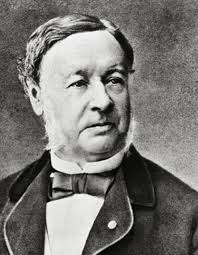
(a) concluded that all animals are made of cells.

Which of the following scientists was the first to observe bacteria in pond water?
A cell that has a true nucleus
Prokaryotic
Eukaryotic

The (a) is the smallest unit of life that can carry out all life functions.

(a) directs all cell activities through the DNA located there.

The (a) is the structure shown in the diagram where cellular respiration takes place. This organelle takes food and turns it into ENERGY for plant and animal cells. It is the powerhouse of the cell.

I am a protein packaging and shipping machine! I am the (a) .


The endoplasmic reticulum is made rough by (a) .


The organelle that allows certain things in and out of a plant and animal cell is (a) .


Name two organelles that are only found in plant cells.
Cell wall and chloroplasts
Cell wall and nucleus
Chloroplast and mitochondria
Cell membrane and ribosome

This organelle encloses, supports and provides structure in plant cells?
cell membrane
nucleus
cell wall
mitochondria

This is an image of a(n)
plant cell
animal cell

This is a picture of a(n)
animal cell
plant cell

All of these statements are part of cell theory, EXCEPT (a)

Storage bubbles found in cells. Plant cells have one big one.
vacuole
cell wall
cell membrane
mitochondria

This organelle absorbs sunlight and uses it to produce food for plant cells during photosynthesis.
Ribosomes
Endoplasmic Reticulum
Mitochondria
Chloroplasts
jelly-like substance that is located between the cell membrane and the nucleus that suspends all the organelles.
Which cell part is a specialized part of the cell with a specific job? It's name means "tiny organ".
Lysosome
Organelle
Chloroplast
Cytoplasm

The table compares some features of a virus with an animal cell.
Which statement best explains why viruses must use a host cell to reproduce?
Viruses need to use the nucleic acid material from the host cell.
Ribosomes in the viruses lack the ability to translate genetic information.
Genetic information in viruses gets damaged without protection from a host cell nucleus.
Animal cells have the organelle structures that viruses lack to replicate genetic material.

Viruses called bacteriophages use bacterial cells to replicate. The diagram shows a virus and a bacterium.
The Virus is NOT Considered to be living. The Bacterium is LIKE the virus because they both contain _________. However, the Bacterium is DIFFERENT from the Virus because it has ____________ required to make proteins.
Select the Best Answer to complete the blanks.
Ribosomes;
DNA
DNA;
Ribosomes
Cytoplasm;
Ribosomes
DNA;
Capsule
Select ALL of the answers choices used to support the following statement: Viruses are NOT alive because...
they can not Grow
they can Reproduce
they can not function without a host.
they can release energy for work
they can Evolve

The classification of viruses as living or nonliving entities has changed throughout history. Initially viruses were thought to be poisons. Today, viruses are said to be non-living.
Select BEST Answer Choices from the table that best supports that claim.
2 & 3
3 & 4
2 & 4
1 & 3

Correctly Complete the TimeLine by
selecting the Scientists associated with the Cell Theory in the correct order.
1. Hooke
2. Schwann
3. Schleiden
4. Virchow
1. Virchow
2. Schwann
3. Schleiden
4. Hooke
1. Hooke
2. Schleiden
3. Schwann
4. Virchow
1. Virchow
2. Hooke
3. Schwann
4. Schleiden

The diagram shown represents some events that take place in a plant cell.
In which organelle would these events likely occur?
Mitochondrion
Lysosome
Endoplasmic Reticulum
Chloroplast
Which of the following contains the most lipid?


Which is NOT a biomolecule?
Protein
Lard
Carbohydrates
Nucleic Acid

What type of biomolecule contains carbon, hydrogen, oxygen, and nitrogen?
carbohydrate
lipid
nucleic acid
protein

The biomolecule that holds an organism's genetic information is called ___________.
carbohydrate
lipid
nucleic acid
protein
Which of the following correctly pairs the biomocule to it's monomer?
Carbohydrate: Fatty Acids
Protein: Amino acid
Lipid: Nucleotide
Nucleic Acid: DNA

The following statement is NOT TRUE regarding lipids?
they store energy for later use
they are insoluble in water
they are composed of carbon, hydrogen, oxygen and phosphorus
they can be found in fats and oils
Cholesterol is a/an...
carbohydrate
lipid
protein
nucleic acid
Enzyme is a/an...
carbohydrate
lipid
protein
nucleic acid
What biomolecule serves as structural materials in hair, nails and connective tissues?
protein
lipid
carbohydrate
nucleic acid
Monosaccharides are the building blocks of which group of biomolecules?
protein
lipid
carbohydrate
nucleic acid
Which of the following sugars are the components of lactose?
glucose & galactose
fructose and galactose
glucose and glucose
glucose & fructose
Which of the following elements is present in Nucleic acid but not in other biomolecules?
Carbon
Phosphorus
Nitrogen
Hydrogen
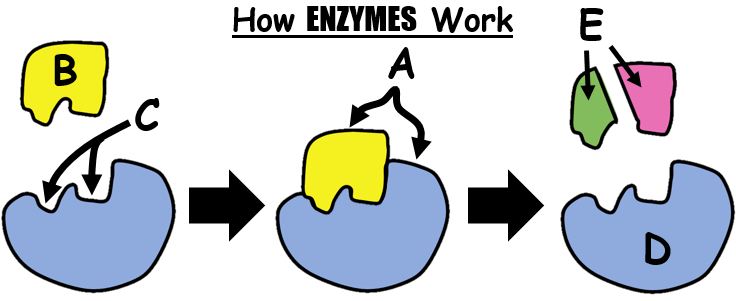
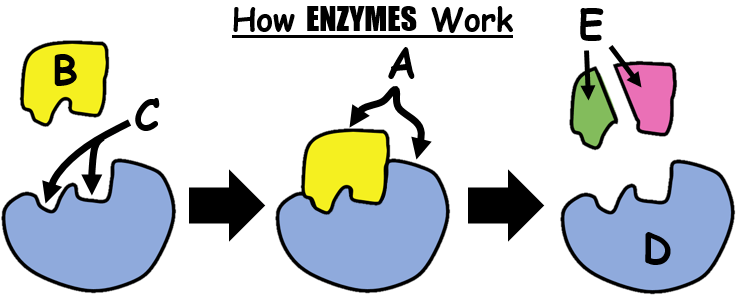
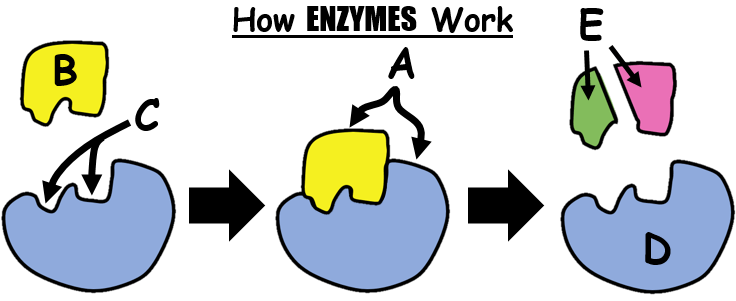
In a chemical reaction, ________ are what you have at the end
Products
Molecules
Reactants
Substances
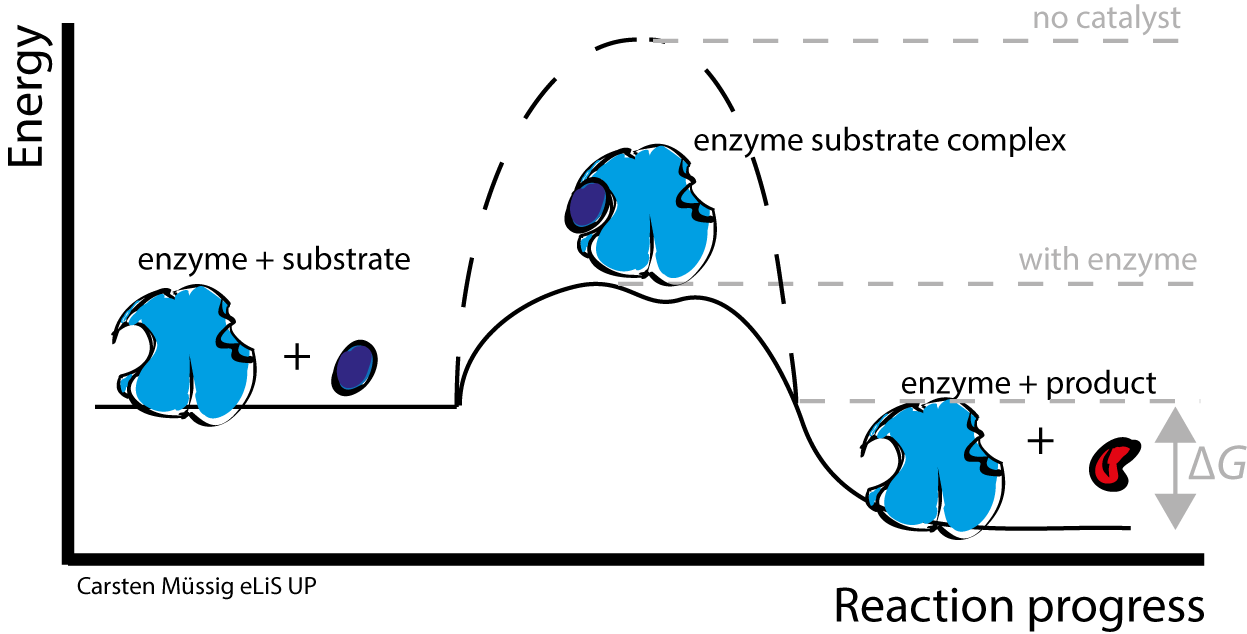
How does an enzymes shape relate to its function?
the shape of the enzyme has no relation to its function
the enzyme is shaped specially for certain substrates to perform a specific reaction...like a lock an key.
the enzyme shape acts as a receptor to certain products
the enzyme shape can fit into specific substrates to cease a reaction
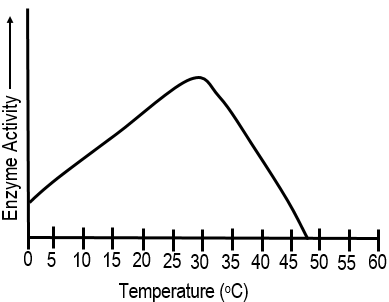
Changes in pH and temperature can ___________________ an enzyme which causes it to lose its shape and affects its function.
puncture
denature
double
delete
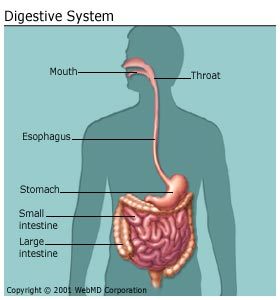
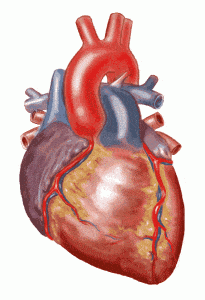
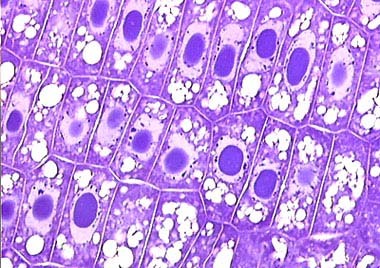

What are organs made out of?
cells
organisms
tissues
organ systems


This is a balance that organisms maintain by allowing things to ener and leave. Another name for it is equilibrium.
In a hypertonic solution, does water move into the cell, out of the cell, or in and out at an equal rate?
water moves into the cell
water moves out of the cell
water moves in and out equally
What are the two main types of cell transport?
Passive and Active
Endocytosis and Exocytosis
Simple and Facilitated Diffusion
Pinocytosis and Phagocytosis
What are the main types of passive transport?
Passive and Active
Endocytosis and Exocytosis
Simple Diffusion, Facilitated Diffusion and Osmosis
Pinocytosis and Phagocytosis
What are the two main types of active transport?
Passive and Active
Endocytosis and Exocytosis
Simple and Facilitated Diffusion
Photosynthesis and Cellular Respiration
There are many parts of the cell membrane (proteins, carbohydrates, cholesterol). They can move freely throughout the membrane. What term describes this statement?
Fluid Mosaic Model
Selectively Permeable
Concentration Gradient
Receptor Mediated Endocytosis
Which type of cell transport requires energy?
Passive
Active
Which type of cell transport does not require energy?
Passive
Active
Which type of passive transport allows small molecules linke carbon dioxide and oxygen to pass directly through the cell membrane?
Simple Diffusion
Facilitated Diffusion
Endocytosis
Exocytosis
Which type of passive transport requires large molecules like glucose to pass through a protein channel without requiring energy?
Simple Diffusion
Facilitated Diffusion
Endocytosis
Exocytosis
Which type of active transport brings substances/molecules into the cell?
(Think of the word "indoors").
Simple Diffusion
Facilitated Diffusion
Endocytosis
Exocytosis
Which type of active transport sends substances/molecules out of the cell?
(Think of the work "exit").
Simple Diffusion
Facilitated Diffusion
Endocytosis
Exocytosis
Which type of endocytosis pinches in to bring liquid into the cell? It is considered "cell drinking".
Pinocytosis
Phagocytosis
Receptor mediated Endocytosis
Exocytosis
Which type of endocytosis surrounds a particle/another cell to bring them into the cell? It is considered "cell eating".
Pinocytosis
Phagocytosis
Receptor mediated Endocytosis
Exocytosis

Identify the image as showing passive or active transport and explain why.
Passive because it does not require energy.
Active because it requires energy.
Passive because it requires energy.
Active because it does not require energy.

Identify the image as showing passive or active transport and explain why.
Passive because it does not require energy.
Active because it requires energy.
Passive because it requires energy.
Active because it does not require energy.
Identify the image as showing simple or facilitated diffusion and explain why.
Simple because the molecule can pass directly through the membrane.
Facilitated because the molecule requires a protein channel to pass through the membrane.
Simple because the molecule requires a protein channel to pass through the membrane.
Facilitated because the molecule can pass directly through the membrane.

Identify the image as showing simple or facilitated diffusion and explain why.
Simple because the molecule can pass directly through the membrane.
Facilitated because the molecule requires a protein channel to pass through the membrane.
Simple because the molecule requires a protein channel to pass through the membrane.
Facilitated because the molecule can pass directly through the membrane.
The process by which sugar and oxygen are converted into energy (ATP) by living organisms is called
What do plants need to perform photosynthesis?
Love
Soil with a high nitrogen (N) content
Water (H2O) + Carbon Dioxide (CO2) and Sunlight Energy
Pollinators such as bees and hummingbirds
What is created as a result of Photosynthesis
ATP Energy
Water (H2O) and Carbon Dioxide (CO2)
Proteins and lipids
Glucose (C6H12O6) + Oxygen (O2)
Identify the organelle responsible for photosynthesis.
mitochondira
chloroplast
cell wall
centriole
Identify the organelle responsible for cellular respiration.
mitochondria
centriole
chloroplast
cell wall
What type of organism makes its own food?
Autotroph
Heterotroph
Which category of organism cannot make its own food?
Autotroph
Heterotroph
Cell division in somatic (body) cells is...
The cytoplasm fully splits into two cells
To see if the cell has grown enough and is ready for DNA replication.


What is the next phase of mitosis?

What are the "X" shaped things in the drawing.
PMATs
Chromosomes
Ribosomes
Telophase

During what phase of Mitosis do the chromosomes line up in the Middle
Metaphase
Prophase
Telophase
Anaphase
In which phase of Mitosis do the Chromosomes pull Apart
Metaphase
Prophase
Anaphase
Telophase
What is the purpose of Mitosis?
Growth of an organism and Repair of damaged tissue
To help the body get rid of extra cells
To increase the amount of classwork you have to do
To get rid of the nucleus

In this phase of mitosis, DNA condenses into chromosomes, nucleus breaks down, and spindle fibers form
metaphase
prophase
anaphase
interphase

Cancer is __________.
uncontrollable cell division
a lack of cells reproducing
an abnormally large amount of cells migrating
a lack of cells migrating
Which treatment uses drugs that stop/kill rapidly dividing cells?
anti-angiogenic drugs
surgical removal
radiation therapy
chemotherapy

