wayground logo

Free Printable Worksheets

Font size

S
M
L
XL
Worksheets

Quiz Bowl Review (Biology)

Total questions: 140

Worksheet time: 3hrs 19mins

Name
Class
Date
1.

Which of the following is NOT TRUE about a hypothesis?

a)

May be based on prior knowledge, experience, or imagination

b)

Is a proposed explanation to a question or problem

c)

Must be testable

d)

Must always be accepted

2.

Living things do all of the following, EXCEPT:

a)

Respond to their environment

b)

Grow and develop

c)

Move

d)

Reproduce

3.

Which of the following characteristics is true for both viruses and bacteria?

a)

Both are made of at least one cell

b)

Both can be treated and cured with antibiotics

c)

Both contain genetic information

d)

Both are able to reproduce on their own

4.

Although __________ reproduce and contain genetic material, they are considered __________ because they lack __________.

a)

Bacteria / living / ability to

maintain homeostasis

b)

Viruses / living / and ability to respond to the environment

c)

Viruses / not living / the ability to evolve

d)

Viruses / not living / cells

5.

Water molecules have unique physical properties caused by:

a)

Protons in the nucleus

b)

Number of atoms

c)

Size of molecules

d)

Hydrogen bonds

6.

Water molecules can travel from the roots to the leaves of even the tallest plants because of:

a)

Cohesion and surface tension

b)

Adhesion and specific heat

c)

Cohesion and adhesion

d)

Dissociation

7.

Which of the following would you eat to obtain carbohydrates?

a)

A plate of spaghetti and bread

b)

A pork chop with gravy

c)

A bowl of ice cream with chocolate sauce

d)

Scrambled eggs and bacon

8.

The picture is of a:

a)

Protein

b)

Monosaccharide

c)

Carbohydrate

d)

Triglyceride (lipid)

9.

Which of the following correctly identifies the function of each macromolecule in your body?

a)

Protein - Long-term energy

Carbohydrate - Immediate energy

Lipid - Repair muscles

b)

Protein-Immediate energy

Carbohydrate - Repair muscles

Lipid - Long-term energy

c)

Protein -Repair muscles

Carbohydrate - Immediate energy

Lipid - Long-term energy

d)

Protein - Immediate energy

Carbohydrate - Long-term energy

Lipid - Repair muscles

10.

Which of the following are functions of proteins: (Select all that apply)

a)

Make up most structures in the body

b)

Repair and build your body's tissues

c)

Allows metabolic reactions to take place

d)

Energy Storage

11.
Jerry wants to perform an experiment but he is unsure on how to set it up. First, Jerry should change how variables should be change?
a)
1
b)
4
c)
7
d)
3
12.
This organic molecule is the main component of biological membranes.....
a)
carbohydrates
b)
lipids 
c)
proteins 
d)
nucleic acids
13.
Enzymes, hemoglobin and maltase are all considered to be which organic molecule?
a)
carbohydrates
b)
proteins
c)
nucleic acids
d)
lipids
14.
All carbohydrates end what letters?...
a)
tes
b)
glu
c)
ase
d)
ose
15.
Which main type of cell is large and complex with membrane bound organelles?
a)
prokaryote
b)
eukaryote
c)
plant
d)
animal
16.
This type of cell is thought to be the first organisms on the Earth...
a)
Prokaryote
b)
Eukaryote
c)
plant
d)
animal
17.
If you place a freshwater cell in a salt water solution, what happens to the cell?
a)
nothing
b)
stays the same
c)
swells
d)
shrinks
18.
Which direction does water move in a hypotonic solution?
a)
water moves out of the cell
b)
solutions moves into the cell
c)
water moves into the cell
d)
solution moves out of the cell
19.
Active transport requires the cell to move materials against the concentration gradient, what molecule is required for this to occur?
a)
ADP
b)
ATP
c)
carbohydrates
d)
lipids
20.
What reactant drives photosynthesis?
a)
carbon dioxide 
b)
oxygen 
c)
water 
d)
sunlight
21.
During the winter time many plants lose their leaves, what happens to the process of photosynthesis?
a)
stays the same
b)
decrease
c)
no effect 
d)
increase 
22.
Where in the cell does photosynthesis occur?
a)
chloroplast 
b)
mitochondria 
c)
plasma membrane
d)
none of these 
23.
This type of nutrition occurs when organisms make their own food...
a)
heterotroph
b)
autotroph
c)
consumer
d)
primary consumer
24.
The light dependent reaction of photosynthesis occurs where in the chloroplast?
a)
stomata
b)
stroma
c)
thylakoid 
d)
chloroplast membrane
25.
The Light independent reaction of photosynthesis occurs where in the cell?
a)
stroma
b)
thylakoid 
c)
stomata 
d)
none of these 
26.
This stage of cellular respiration does not require oxygen
a)
Kreb's cycle
b)
glycolysis
c)
ETC
d)
fermentation
27.
Which process generates the most amount of ATP?
a)
aerobic respiration
b)
anaerobic respiration
28.
This type of fermentation occurs in the presence of oxygen....
a)
aerobic respiration
b)
anaerobic respiration 
c)
fermentation
d)
lactic acid fermentation
29.
This molecule stores and transmits our genetic information and remains in the nucleus 
a)
rRNA
b)
trna 
c)
DNA
d)
mRNA
30.
Where in the cell does cell respiration occur?
a)
chloroplast 
b)
central vacuole 
c)
mitochondria
d)
cell membrane
31.
The flower of a plant is involved in reproduction.  Which parts are male and which are female?
a)
Male: style; female: filament
b)
Male: xylem; female: anther
c)
Male: stamen; female: pistil
d)
Male: ovary; female: stamen
32.
Which of the following is an example of a homozygous dominant genotype?
a)
BB
b)
Bb
c)
bB
d)
bb
33.
The original cell which gave rise to all other cells in evolution had which three parts?
a)
ribosomes, mitochondria, DNA
b)
nucleus, cell membrane, DNA 
c)
chloroplasts, mitochondria, DNA
d)
ribosomes, membrane, DNA
34.
In natural selection, one variation which is present in ALL members of a population is a called a - 
a)
genotype
b)
speciation
c)
adaptation
d)
diversity
35.
Which component of a nucleotide contains the information needed to make proteins?
a)
base
b)
deoxyribose sugar
c)
phosphate
d)
amino acid
36.
Which symbiotic relationship is described by one individual benefiting and the other being neither harmed nor benefited?
a)
Mutualism
b)
Commensalism
c)
Parasitism
d)
Competition
37.
Fill in the blanks: Proteins are made of different ____________ which are arranged in different orders, or _________________.
a)
ribosomes, tRNAs
b)
polymers, monomers
c)
mRNA, bases
d)
amino acids, sequences
38.
A change in DNA is called a __________________.
a)
Nucleotide
b)
Mutation
c)
Radiation
d)
Transcription
39.
What is the purpose of seed adaptations?
a)
To get seeds to new lands.
b)
To make seeds buried deeper underground.
c)
To provide nutrients to seeds.
d)
To prevent water loss through stomata.
40.
Which of the following is true about the kingdom Bacteria?
a)
Bacteria are not motile.
b)
Bacteria have a cell wall.
c)
Bacteria reproduce sexually.
d)
Some bacteria have a nucleus.
41.
What part of DNA holds the genetic information?
a)
the nitrogenous base
b)
the ribose sugar
c)
the phosphodiester bond
d)
the phosphate
42.
If a homozygous dominant (AA) individual is crossed to a homozygous recessive (aa) individual, what will the genotypes be of the offspring?
a)
50% AA, 50% aa
b)
25% AA, 50% Aa, 25% aa
c)
100% Aa
d)
50% AA, 50% Aa
43.
The human body has 23 homologous pairs of chromosomes.  How many chromosomes does a somatic cell have?
a)
12
b)
23
c)
46
d)
92
44.
What is meant by the term "genetic variation?"
a)
Some individuals have the same genes as others
b)
Some genes are multiplied in tetraploid organisms
c)
Some chromosomes are longer than others
d)
Some individuals have different genes than others
45.
How do molecules move during facilitated diffusion?
a)
With the concentration gradient, using energy
b)
Against the concentration gradient, without using energy
c)
With the concentration gradient, without using energy
d)
Against the concentration gradient, using energy
46.
Which organelle uses energy from sunlight to make sugar?
a)
mitochondria
b)
nucleus
c)
chloroplasts
d)
vacuoles
47.
Controls what enters/leaves a cell
a)
cell membrane
b)
Nuclear membrane
c)
cell wall
d)
cytoplasm
48.
A mite lives in the base of the eyelashes of people who use mascara. It feeds on the mascara; it does not seem to harm people. What type of symbiotic relationship is this?
a)
mutualism
b)
commensalism
c)
parasitism
d)
predation
49.
The flower of the yucca plant provides the only location where the yucca moth can lay her eggs. In the process, the moth pollinates the yucca flower. What type of symbiotic relationship is this?
a)
mutualism
b)
commensalism
c)
parasitism
d)
predation
50.
Which part of the cell is often called "the brain of the cell"?
a)
nuclear membrane
b)
endoplasmic reticulum
c)
nucleus
d)
mitochondria
51.
This organic molecule is the main component of biological membranes.....
a)
carbohydrates
b)
lipids 
c)
proteins 
d)
nucleic acids
52.
Where in the cell does cell respiration occur?
a)
chloroplast 
b)
central vacuole 
c)
mitochondria
d)
cell membrane
53.
Which symbiotic relationship is described by one individual benefiting and the other being neither harmed nor benefited?
a)
Mutualism
b)
Commensalism
c)
Parasitism
d)
Competition
54.
Which of the following is found in plant cells but not in animal cells? 
a)
Cytoplasm
b)
Mitochondria
c)
Cell Wall 
d)
Ribosomes 
55.
What plant organelle is used to make sugars?
a)
Cell wall 
b)
Mitochondria 
c)
Chloroplast 
d)
Vacuole
56.

True or False: Lipids are insoluble

a)

True

b)

False

57.

True or False: The main function of a lipid is to store energy.

a)

True

b)

False

58.

The cell theory is...

a)

All living organisms are composed of at least one cell.

b)

building blocks of life. All cells come from

c)

All of the above

d)

Cells arise only from previously existing cells.

59.

A prokaryotic cell is...

a)

Cells that don't contain a nucleus but do contain other membrane-bound organelles.

b)

Cells that contain a nucleus but no other membrane-bound organelles.

c)

Cells that contain a nucleus and other membrane-bound organelles.

d)

Cells that don't contain a nucleus or any other membrane-bound organelles.

60.

A Eukaryotic cell is...

a)

Cell that has no membrane.

b)

Cell with no membrane-bound organelles.

c)

A cell containing a nucleus and other membrane-bound organelles.

d)

A cell containing a nucleus and other nucleus-bound organelle.

61.

The cell membrane main purpose is...

a)

Selective Permeability

b)

Energy Production

c)

Locomotive

d)

Looking good

62.

The units of protein are

a)

Amino acids

b)

Glucose

c)

Fatty acid

d)

Peptides

63.

What is the outer most part of a cell?

a)

cell wall

b)

nucleus

c)

cell membrane

d)

cell skin

64.
How does a cell maintain homeostasis?
a)
Regulates what enters and leaves the cell
b)
Flexibility
c)
Protective barrier
d)
Structure and support
65.
Major organs of the nervous system
a)
Kidneys, nephrons
b)
Stomach, intestines, mouth
c)
Heart, blood vessels, blood
d)
Brain, spinal cord, nerve
66.
This system breaks down food into nutrients the body can absorb.
a)
digestive
b)
excretory
c)
reproductive
d)
immune
67.
maintaining a stable internal environment
a)
diffusion
b)
osmosis
c)
cellular respiration
d)
homeostasis
68.
Cells need oxygen for
a)
diffusion
b)
cellular respiration
c)
photosynthesis
d)
osmosis
69.
Which system absorbs oxygen and releases carbon dioxide?
a)
respiratory
b)
excretory
c)
endocrine
d)
immune
70.
What is the correct order of organization
a)
cells->tissue->organs->organ systems-> organism
b)
tissue->cells->organs->organ systems-> organism
c)
organs->organ systems-> organism->cells->tissue
d)
cells->tissue->organs->organism->organ system
71.
What is involuntary contractions of voluntary muscles to warm up?
a)
Shivering
b)
Sweating
c)
Vasodilation
d)
Vasoconstriction
72.
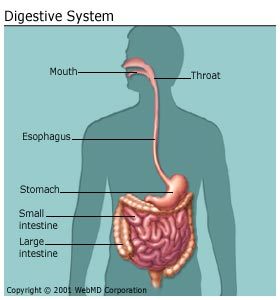
This is a example of........ 
a)
organ system
b)
cells
c)
organ
d)
tissue
73.
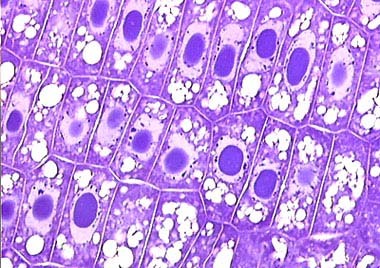
This is a example of ........
a)
cell
b)
tissue
c)
organ 
d)
organ system
74.
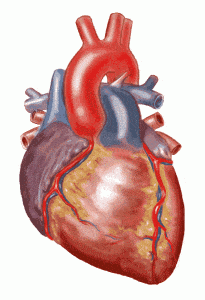
This is a example of ........
a)
cell
b)
organ system
c)
organ
d)
tissue
75.
When looking at a specimen on your slide, you should always start with the
a)
low objective lens
b)
medium objective lens
c)
high objective lens
d)
super extra high power lens
76.
Where is the DNA found in a eukaryotic cell? 
a)
floating around in the cytoplasm 
b)
in the nucleus 
77.
Which of the following structure can be found in a plant cell but NOT an animal cell?
a)
vacuole
b)
nucleus
c)
chloroplast
d)
mitochondria
78.
The basic unit of life is
a)
photon
b)
nutron
c)
organism
d)
cell
79.
Who was the person who used his microscope to observe a thin slice of cork, and concluded that the cork was made up of cells?
a)
Robert Hooke
b)
Bill Nye
c)
Matthias Schleiden
d)
Rudolf Virchow
80.
How does the body balance blood sugar levels when glucose gets too high?
a)
Sweating
b)
Shivering
c)
Filtering in the kidneys
d)
Producing more insulin
81.
How many types of body tissue are there
a)
1
b)
2
c)
3
d)
4
82.
What is the name of the genetic material that is inside the nucleus?
a)
ER
b)
ATP
c)
YOLO
d)
DNA
83.
Organisms contain DNA. What makes prokaryotic DNA different from eukaryotic DNA?
a)
the molecular shape
b)
the types of bases
c)
the sugar composition
d)
the presence of phosphates
84.
Which statement about viral reproduction is correct?
a)
A virus must complete interphase before entering mitosis
b)
A virus cannot repdouce on its own and depends on the host cell
c)
A virus can only use a host to reproduce if the host cell lacks a cell membrane
85.
Emma believes viruses are not living organisms while Kayla believes viruses are living organisms. Who is correct and why?
a)
Emma, because viruses cannot reproduce on their own.
b)
Emma, because viruses contain nucleic acid and proteins
c)
Kayla, because viruses are considered a type of living cell
d)
Kayla, because viruses grow and replicate
86.
A patient visits the doctor for a checkup and is diagnosed with skin cancer. Which of the following is the MOST likely cause of this disease?
a)
poor eating and sleeping habits
b)
exposure to ultraviolet rays
c)
a defect in the person's immune system
d)
working with plants and animals
87.
Which is MOST likely a cancer treatment?
a)
a drug that kills only very small cells
b)
a drug that kills only very large cells
c)
a drug that kills only slowly dividing cells
d)
a drug that kills only rapidly dividing cells
88.
Which of the following would be the RNA strand transcribed from the following DNA strand: ATTGGCTAG?
a)
UAAGGTTCA
b)
TTAGCCTTT
c)
UAACCGAUC
d)
TTAUUCCTU
89.
Which of the following is NOT found in the DNA of all organisms?
a)
Phosphate
b)
Guanine
c)
Deoxyribose
d)
Uracil
90.
In animals, sexual reproduction depends on the production of gametes. Which of the following processes produces gametes in animals? 
a)
Meiosis
b)
Binary fission
c)
Mitosis
d)
Fragmentation 
91.
Which of the following biomolecules contains the most energy?
a)
Lipids
b)
Carbohydrates
c)
Nucleic Acids
d)
Proteins
92.
Which of the following biomolecules provides energy the quickest?
a)
Lipids
b)
Carbohydrates
c)
Nucleic Acids
d)
Proteins
93.
Which of the following biomolecules carries genetic information?
a)
Lipids
b)
Carbohydrates
c)
Nucleic Acids
d)
Proteins
94.
Which statement describes how lipids and carbohydrates are similar?
a)
They are both made of fat
b)
They are both made of sugar
c)
They both are bad for you
d)
They both provide energy
95.
A DNA strand contains codons, which consist of a sequence of 3 nucleotides. Which BEST describes the importance of codons found in the sequence of DNA?
a)
They contain the code for mRNA
b)
They signal the start of mitotic cell division
c)
They ensure proper replication of the genetic code
d)
They are used to assemble amino acids for protein synthesis
96.
What happens in G1 of the cell cycle?
a)
cell divides
b)
DNA replicates
c)
cell multiplies
d)
cell grows
97.
What happens in G2 of the cell cycle?
a)
cell divides
b)
DNA replicates
c)
cell multiplies
d)
cell grows
98.
What happens in S-phase of the cell cycle?
a)
cell divides
b)
DNA replicates
c)
cell multiplies
d)
cell grows
99.
What happens in mitosis?
a)
cell divides
b)
DNA replicates
c)
cell multiplies
d)
cell grows
100.
What happens in cytokinesis?
a)
cytoplasm divides
b)
DNA replicates
c)
mitosis
d)
cell grows
101.
Which correctly places the stages of mitosis in order?
a)
metaphase, prophase, interphase, telophase
b)
metaphase, prophase, interphase, telophase
c)
prophase, metaphase, anaphase, telophase
d)
prophase, metaphase, anaphase, cytokinesis
102.
Where are the chromosomes located during metaphase?
a)
lined up around the nucleus
b)
lined up in the middle of the nucleus
c)
scattered around the nucleus
d)
outside the nucleus
103.
What is the primary function of the lysosome?
a)
Actively transport molecules across a plasma membrane
b)
Eliminate water from the cell
c)
Carry genetic information 
d)
Synthesize proteins
104.
If a cell has 50 chromosomes, how many chromosomes should it have after S-phase?
a)
25
b)
75
c)
100
d)
50
105.
The diffusion of water is called
a)
active transport 
b)
osmosis
c)
endocytosis
106.
Which of the following is found in plant cells but not in animal cells? 
a)
Cytoplasm
b)
Mitochondria
c)
Cell Wall 
d)
Ribosomes 
107.
What part of the cell membrane is the arrow pointing to? 
a)
phospholipid
b)
carbohydrate chain 
c)
protein channel 
d)
amino acid 
108.
What type of cells are pictured 
a)
Muscle Cells
b)
Cells of the Immune System 
c)
Human Cheek Cells
d)
Plant Cells 
109.
Which diagram best represents the cell membrane 
a)
a
b)
b
c)
c
d)
d
110.
What is a key role of lipids (phospholipids) within a cell?
a)
 They make proteins
b)
They cause DNA to replicate
c)
They are the main structual componet of membranes 
d)
They produce energy for the cell
111.
Why are most enzymes destroyed by high temperature? 
a)
Changes their shape 
b)
Changes their pH 
c)
Changes their amino acid sequence 
d)
Causes them to break into pieces 
112.
What plant organelle is used to make sugars?
a)
Cell wall 
b)
Mitochondria 
c)
Chloroplast 
d)
Vacuole
113.
What kind of molecule is the arrow pointing to? 
a)
Phospholipid
b)
Protein
c)
Sugar
d)
Nucleic Acid 
114.
What is the function of DNA?
a)
Use oxygen and sugar to produce energy
b)
Forms part of the nuclear membrane 
c)
Transport materials throughout the cell 
d)
Contains information to make proteins
115.
What process moves gases such as oxygen through the cell membrane as shown in the drawing? 
a)
Active Transport 
b)
Osmosis
c)
Diffusion
d)
Protein Channel 
116.
What cell function would be affected if the Golgi apparatus is damaged? 
a)
Exporting Proteins
b)
Storage of water and waste
c)
Production of Energy 
d)
Cell divison
117.
What structure in the cell contains most of the cells genetic information? 
a)
A. rough Endoplasmic Reticulum 
b)
B. mitochondria 
c)
C. nucleus 
d)
D. cytoplasm 
118.
What would happen to a saltwater protozoan if it is removed from its normal habitat and placed into a freshwater pool?
a)
Loss of water through active transport
b)
Loss of water through diffusion 
c)
Gain of water through protein channels 
d)
Gain of water through osmosis
119.
Paramecium and Euglena are both eukaryotes because 
a)
Both have a cell membrane
b)
Both have a nucleus 
c)
Both are single-celled organisms
d)
Both have ribosomes 
120.
Which organelle is responsible for the movement of molecules throughout the cell?
a)
Ribosomes
b)
Nucleus 
c)
Vesicle
d)
Mitochondria
121.
The cell membrane consists of mainly of 
a)
Phospholipids & proteins 
b)
Water & carbon dioxide 
c)
Carbohydrates & sugars 
d)
Cellulose & lactose 
122.
Which structure is not present in animal cells? 
a)
Chloroplast
b)
Cell membrane 
c)
Cytoplasm 
d)
Nucleus 
123.
What is the primary function of the cell's selectively permeable membrane? 
a)
Regulate energy production 
b)
Keeps the cell's shape
c)
Control what enters and leaves the cell
d)
Maintain a free flow of molecules
124.
What does this single-celled organism use to move? 
a)
Pseudopodia
b)
Flagella
c)
Cilia
d)
Mitochondria 
125.
Which is NOT true of MEIOSIS?
a)
Produces two cells
b)
Allows for genetic recombination
c)
Produces gametes
d)
Includes crossing over
126.
Which of the following is true of NUCLEIC ACIDS?
a)
Examples include enzymes and hormones
b)
Function is transmitting information
c)
Monomer is amino acid
d)
Used for long-term energy storage
127.
If the diploid number of an organism is 36, how many chromosomes are found in a gamete?
a)
36
b)
72
c)
18
d)
Not enough information
128.
Which process creates an identical copy of DNA?
a)
Mutation
b)
Replication
c)
Transcription
d)
Translation
129.
SPEED QUESTION!!  Who is the Father of Genetics?
a)
Gregor Mendel
b)
Charles Darwin
c)
Louis Pasteur
d)
Robert Hooke
130.
Which of the following DOES NOT require cell division?
a)
Growth
b)
Hunger
c)
Reproduction
d)
Cell repair
131.
Which is NOT a characteristic of all living things?
a)
Sleep
b)
Cells
c)
Reproduction
d)
Grow
132.
What do you call all of the chemical reactions of a living thing?
a)
Metabolism
b)
Homeostasis
c)
Energy
d)
Photosynthesis
133.
As you go to higher trophic levels....
a)
Amount of energy available decreases
b)
Amount of biomass increases
c)
Number of organisms increases
d)
Size of organisms decreases
134.
Reestablishing a damaged ecosystem where even the soil was destroyed...
a)
Secondary succession
b)
Primary succession
c)
Carrying capacity
d)
Homeostasis
135.
SPEED QUESTION!! Organisms that CANNOT make their own food.
a)
Autotrophs
b)
Heterotrophs
c)
Producers
d)
Prokaryotes
136.
Spiders are predators that trap insects such as mosquitoes.  What is this describing?
a)
Habitat
b)
Niche
c)
Metabolism
d)
Ecosystem
137.
SPEED QUESTION!!  The process of sunlight being used to make glucose.
a)
Respiration
b)
Photosynthesis
c)
Chemosynthesis
d)
Replication
138.
Cell membrane allows nutrients to enter the cell and wastes to leave but prevents unwanted materials from entering or needed things from leaving.  What does this describe?
a)
Selective permeability
b)
Metabolism
c)
Respiration
d)
Photosynthesis
139.
When Mendel crossed two green pea plants, some of the offspring produced yellow peas.  What does this tell us about the parent plants?
a)
They must have been homozygous dominant
b)
They must have been heterozygous
c)
They must have been homozygous recessive
d)
One was dominant and one was recessive
140.
What do you call a change in an organism's DNA?
a)
Replication
b)
Mutation
c)
Codon
d)
Phenotype