Wayground logo

Free Printable Worksheets

Font size

S
M
L
XL
Worksheets

9 Science Physics Review (Heat, Light, Electricity, Sound)

Total questions: 120

Worksheet time: 2hrs 53mins
Name
Class
Date
1.
What is the transfer of heat by movement of liquids or gases?
a)
Radiation
b)
Convection
c)
Conduction
d)
Heat
2.
What are waves that can transfer heat through the vacuum of empty space?
a)
Electromagnetic waves
b)
Convection
c)
Conduction
d)
Heat
3.
What is a transfer of heat energy by electromagnetic waves?
a)
Radiation
b)
Convection
c)
Conduction
d)
Heat
4.
What is the transfer of heat by direct contact?
a)
Convection
b)
Electromagnetic waves
c)
Radiation
d)
Conduction
5.
What is the measurement of the average kinetic energy of a substance?
a)
Kinetic energy
b)
Temperature
c)
Thermal energy
d)
Potential energy
6.
What is a substance that does NOT conduct heat well?
a)
Conductor
b)
Insulator
c)
Convector
d)
Radiator
7.
What is a substance that DOES conduct heat well?
a)
Conductor
b)
Insulator
c)
Convector
d)
Radiator
8.
Warm air rises and the cool air sinks. This is...
a)
conduction
b)
convection
c)
radiation
9.
Heat transfers from an area of ________temperature to an area of ______ temperature.
a)
high to low
b)
low to high
c)
high to high
10.
Warm water from the ocean moves to the north while cool waters moves to the south. This is an example of.. 
a)
Conduction
b)
Convection
c)
Radiation
11.
If an object has particles that are moving very quickly, the object 's temperature is probably _____.
a)
cold
b)
slow
c)
big
d)
hot
12.
When the temperature of matter decreases the particles ...
a)
speed up and move farther apart
b)
speed up and move closer together
c)
slow down and move farther apart
d)
slow down and move closer together
13.
You're holding hands with your best friend.  Your friend's hands are REALLY warm and yours are really cold.  After a few minutes, this has changed.  How might you explain what happened?
a)
The cold energy from your hand transferred to your friend's hand through conduction.
b)
The heat energy from your friend's hand transferred to your hand through conduction. 
c)
The cold energy from your hand transferred to your friend's hand through convection.
d)
The heat energy from your friend's hand transferred to your hand through convection.
14.
On a hot summer day, a student dropped an ice cube onto a park bench. Within minutes, the ice cube melted. Which method of heat transfer best describes the process the student observed?
a)
radiation
b)
melting
c)
conduction
d)
convection
15.
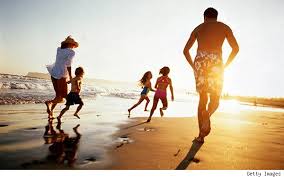
The sun shines down on this family as the play on the beach.
a)
conduction
b)
convection
c)
radiation
16.
Blow drying your wet hair.
a)
conduction
b)
convection
c)
radiation
17.
Which direction will the heat flow while this person holds a hot cup of tea?
a)
from the cup to her hand
b)
from her hand to the cup
c)
no heat is transferred
18.
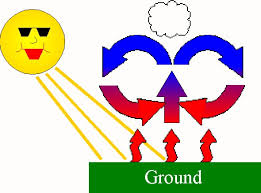
Warm air rises and the cool air sinks demonstrates this type of heat transfer. 
a)
conduction
b)
convection
c)
radiation
d)
Insolation 
19.
Ironing a shirt is an example of...
a)
condensation
b)
conduction
c)
convection
d)
radiation
20.
Transfer of thermal energy through "space"
a)
conduction
b)
convection
c)
radiation
21.
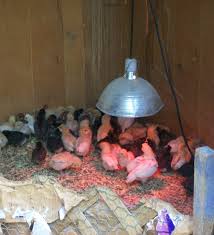
The baby chickens are kept warm from the heat lamps demonstrates this type of heat transfer. 
a)
conduction
b)
convection
c)
radiation
22.

What is white light?

a)

The type of light that is found in x-rays

b)

The type of light given off by the sun and light bulbs

c)

The type of light that is used in microwave ovens

d)

The type of light that makes up radio waves

23.

What color is an object that absorbs all the colors in the light spectrum?

a)

A rainbow

b)

White

c)

Black

d)

Invisible

24.

A leaf is green. What does this tell you about the light that is being absorbed?

a)

The light is a UV ray.

b)

The light is not a part of the light spectrum.

c)

All colors are reflected except green.

d)

All colors are absorbed except green

25.

What happens when light hits a shiny or smooth surface?

a)

It disappears.

b)

It is refracted.

c)

It is absorbed.

d)

It is reflected.

26.

What is the angle of reflection equal to?

a)

The angle of refraction

b)

The angle of incidence

c)

The angle of absorption

d)

The angle of light

27.

What is it called when light bends as it moves from one substance to another?

a)

Absorption

b)

Reflection

c)

Refraction

d)

Incidence

28.

What is the angle of incidence?

a)

The angle at which light bends in water.

b)

The angle at which light hits a surface.

c)

The angle at which light is absorbed by an object.

d)

The angle at which light bounces off a surface.

29.

When you look into a mirror, what is happening to the light?

a)

It is increasing in wavelengths.

b)

It is being refracted.

c)

It is being absorbed.

d)

It is being reflected.

30.

When light passes from air to water, what happens to the speed of the light?

a)

speeds up

b)

slows down

c)

stays the same

31.
What colours is white light made from?
a)
Orange, Green, Pink, Magenta, Peach, Rose, Lemon
b)
Red, Orange Yellow, Green, Black, Indigo, Violet
c)
Red, Orange, Yellow, Green, Blue, Indigo, Violet
d)
Red, Orange, Yellow, Grey, Blue, Indigo, Violet
32.
Which image correctly shows how light would interact with the t-shirt and shorts?
a)
A
b)
B
c)
C
d)
D
33.

What would you call this?

a)

Reflection

b)

Diffraction

c)

Refraction

d)

Friction

34.

What would you call this?

a)

Refraction

b)

Diffraction

c)

Bends

d)

Reflection

35.

Which types of waves travel from the sun?

a)

Gamma Rays

b)

Longitudinal Waves

c)

Ultraviolet Rays

d)

Infrared Rays

36.

What does convex lens do?

a)

Refract and come to a focus point

b)

Reflect and spread out

c)

Refract and spread out

d)

Reflect and come to a focus point

37.

What does the concave lens do?

a)

Reflect and spread out

b)

Refract and come to a focus point

c)

Reflect and come to a focus point

d)

Refract and spread out

38.

Why does the apple appear red?

a)

It reflects all the colors except red

b)

It diffracts all the colors except red

c)

It absorbs all the colors except red

d)

It refracts all the colors except red

39.

When light waves are captured in matter and transferred to a new form of energy we call this:

a)

Absorption

b)

Reflection

c)

Refraction

40.

When light waves bounce off of a rough object and are scattered in all directions we call this:

a)

Specular Reflection

b)

Specular Refraction

c)

Diffuse Reflection

d)

Diffuse Refraction

41.

The color that reflects all visible light waves is:

a)

White

b)

Black

c)

Green

d)

Yellow

42.

If you see the color orange, this means:

a)

The colors red, yellow, green, blue, indigo, and violet have been absorbed and orange has been refracted.

b)

The colors red, yellow, green, blue, indigo, and violet have been absorbed and orange has been reflected.

c)

The color orange has been absorbed and red, yellow, green, blue, indigo, and violet are refracted.

d)

The color orange has been absorbed and red, yellow, green, blue, indigo, and violet are reflected.

43.
Metal is used to make electrical wires because_______.
a)
It allows an electric current to freely flow.
b)
It slows electric currents from flowing.
c)
It is very cheap.
d)
It is very expensive.
44.
Which of these materials is a good insulator?
a)
Plastic and metal
b)
Metal and rubber
c)
Plastic and rubber
45.
What is the function of the light bulb in a circuit?
a)
It increases the strength of the electricity.
b)
It changes electricity to light energy.
c)
It provides electricity to the battery.
d)
It opens and closes the circuit.
46.
What type of circuit is used in your house?
a)
Light Circuits
b)
The best circuits
c)
Series Circuits
d)
Parallel Circuits
47.
What is the type of circuit that stops working when one bulb goes out?
a)
A broken circuit
b)
Parallel Circuit
c)
Series Circuit
d)
A metal circuit
48.
What are three things all circuits must have?
a)
Switch, conductor, light bulb
b)
Switch, conductor, power source
c)
Power source, conductor, load (light bulb)
d)
Conductor, resistor, switch
49.
What is the energy source for a circuit?
a)
Light bulb
b)
Battery
c)
Wire
d)
Switch
50.
What is it called when a circuit is complete?
a)
Closed circuit
b)
Light bulb circuit
c)
Open circuit
d)
Series circuit
51.

Volt meters are connected in.....

a)

series

b)

parallel

52.

Ammeters are connected in.....

a)

series

b)

parallel

53.

If this systems draws 10 amps of current, what would the ammeter read in this picture?

a)

0 amps

b)

5 amps

c)

10 amps

d)

20 amps

54.

How are these cells connected?

a)

series

b)

parallel

55.

If the voltage of a system triples, the current _____.

a)

drops

b)

stays the sames

c)

doubles

d)

triples

56.

In order for electricity to flow through a circuit, the circuit must be a closed, complete:

a)

Path, so that the electricity can make a complete circle.

b)

Donut, because circuits get hungry.

c)

Wire, made out of rubber.

d)

Solar panel, because circuits only work with the sun.

57.

The circuit on the left is not complete (the light is off) because:

a)

the switch is closed

b)

the switch is open

c)

the battery is missing

d)

the battery is in backwards

58.

A ____ circuit has only one path for electrons to flow and therefore, when one portion of the circuit is disrupted, the whole circuit shuts down.

a)

series

b)

complete

c)

incomplete

d)

parallel

59.

A ____ circuit has more than one path available for electrons to flow through, so if one portion of the circuit is not functioning, the whole circuit does not shut down

a)

series

b)

parallel

c)

incomplete

d)

complete

60.
An incomplete circuit is shown.
To complete the circuit, a wire should be placed from —
a)
Point D to Point C
b)
Point B to Point C
c)
Point A to Point D
d)
Point B to Point D
61.

What is missing from this circuit? Why would the light bulbs be off?

a)

The battery, there is no power for the circuit to work.

b)

The switch is open, so the circuit is broken.

c)

The third light bulb, that is needed to complete the circuit.

d)

The wires are not connected properly.

62.

This steel paperclip would allow electricity to flow through it because:

a)

it is a conductor

b)

it is an insulator

c)

it is friendly

d)

it breaks the circuit

63.

This rubber ducky would block the flow of electricity, because:

a)

it is a conductor

b)

it is an insulator

c)

it is yellow

d)

it completes the circuit

64.

What unit is used to measure current?

a)

Ohms

b)

Omega

c)

Volts

d)

Amps

65.

What unit is used to measure resistance?

a)

Ohms

b)

Omega

c)

Volts

d)

Amps

66.

What is the resistance of a lightbulb that experiences 9 Volts and 3 amps of current?

a)

1/3 ohms

b)

3 ohms

c)

27 ohms

d)

9 ohms

67.

What is the voltage of a circuit with 4 ohms of resistance and 3 amps of current?

a)

12 V

b)

21 V

c)

4/3 V

d)

3/4 V

68.
What is Resistance?
a)
The flow of electrons
b)
Electric potential difference
c)
A battery
d)
The ability to reduce the flow of electrons
69.
What is the Voltage of a circuit that has a resistance of 5 Ω and a current of 2 A?
a)
25 V
b)
10 V
c)
2.5 V
d)
0.4 V
70.
The mathematical relationship among Voltage, Current, and Resistance
a)
Faraday's Law
b)
Tesla's Law
c)
Edison's Law
d)
Ohm's Law
71.

What is the formula for ohms law?

a)

1+2=3

b)

R X E = I

c)

V =I x R

d)

E= MC squared

72.

What unit is used to measure the voltage?

a)

Ohms

b)

Omega

c)

Volts

d)

Amps

73.

What moves when we say that there is current?

a)

inductors

b)

conductors

c)

electrons

d)

atoms

74.

If the voltage is increased and the resistance stays the same, what will current do?

a)
Increase
b)
Decrease
c)
Stay the same
d)
X
75.

If the voltage stays the same and resistance is increased, what will current do? 

a)
Increase
b)
Decrease
c)
Stay the same
d)
X
76.

An alarm clock draws 0.5 A of current when connected to a 120 volt circuit. Calculate its resistance.

a)

60Ω

b)

120Ω

c)

180Ω

d)

240Ω

77.
Pick the correct sentence.
a)
This circuit will work because it is a closed circuit.
b)
Energy will freely flow in this circuit.
c)
This circuit will not work because there is no energy source.
d)
This circuit will not work because there is no switch.
78.
What will happen if one light bulb is removed from this circuit?
a)
The other bulbs will go out.
b)
The other bulbs will stay on
c)
The other bulbs will get dimmer.
d)
The battery will become stronger.
79.
When you remove a bulb from a three bulb circuit, and the other two bulbs go off, then the bulbs must have been connected in __________.
a)
parallel
b)
series
c)
open
d)
closed
80.
What kind of circuit is this?
a)
series
b)
parallel
81.
What kind of circuit is this?
a)
Series
b)
Consecutive
c)
Parallel
d)
Training
82.

From the diagram shown, given that PQ is a plane mirror, which is the normal?

a)

AX

b)

BX

c)

XC

d)

AC

83.

Which of the following is the mirror image of the word "EXAMPLE" when it is placed facing the plane mirror?

a)

A

b)

B

c)

C

d)

D

84.

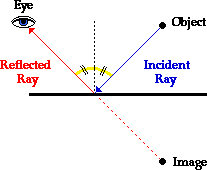
Which is the reflected ray?

a)

A

b)

B

c)

C

d)

D

85.

In the diagram, which letter represents the angle of incidence?

a)

A

b)

B

c)

C

d)

D

86.
Law of reflection state that - The angle of incidence is .................. to the angle of reflection.
a)
equal
b)
double
c)
half
87.
........... – the angle between the normal and the reflected ray.
a)
Angle of incidence
b)
Angle of reflection
c)
Angle of coincidence
d)
Angle of direction
88.
What form does light travel in?
a)
Curved line
b)
Zig-Zag
c)
Straight Line
89.
How does light behave as it enters these mediums?
a)
continue its path as straight line.
b)
bends toward the normal
c)
bends away from the normal
d)
reflects
90.
Light changes speed as it travels through various mediums.  What are examples of mediums that light can travel through.
a)
snow and ice
b)
air and water
c)
cloth and wood
d)
glass and wood
91.

Light passes into a glass block. Which is the angle of refraction?

a)

A

b)

B

c)

C

d)

D

92.

A ray of light is shone on a rectangular glass block as shown. Identify A, B and C.

a)

A = Refracted ray, B = Incident ray, C = Normal

b)

A = Incident ray, B = Refracted ray, C = Normal

c)

A = Normal, B = Refracted ray, C = Incident ray

d)

A = Refracted ray, B = Angle of incidence, C = Angle of refraction

93.

The best definition of refraction is ____.

a)

passing through a boundary

b)

changing direction when crossing a boundary

c)

changing speed at a boundary

d)

bouncing off a boundary

94.
A disturbance that travels through a medium as a longitudinal wave
a)
sound
b)
wavelength
c)
pitch
d)
frequency
95.
travels through solids fastest because the molecules are closer together
a)
speed of sound
b)
wavelength
c)
frequency
d)
amplitude
96.
The number of wavelengths that pass a point each second
a)
frequency
b)
wavelength
c)
pitch
d)
amplitude
97.
Material (matter) through which a wave travels
a)
medium
b)
Doppler Effect
c)
sound
d)
pitch
98.
If you want to change the pitch of a sound, you have to change the ___
a)
frequency
b)
amplitude
c)
speed
d)
volume
99.
This is the unit used to measure the volume of a sound. 
a)
Decibel
b)
Medium
c)
Vibration
d)
Oscilloscope
100.
This is what you get when sound waves are reflected, or bounce back, off of a hard surface.
a)
Amplitude
b)
Pitch
c)
Volume
d)
Echo
101.
The speed of a sound wave depends on
a)
the frequency
b)
the medium
c)
both air temperature and medium
d)
the air temperature
102.
What is a pitch?
a)
highness or lowness of a sound
b)
the intensity of a vibration
c)
the amplitude of the sound wave
d)
volume of sound
103.

Bats use ________ to locate mosquitoes in the air.

a)

solar

b)

ecology

c)

echolocation

d)

refraction

104.
The number of wavelengths that pass a point each second
a)
frequency
b)
wavelength
c)
pitch
d)
amplitude
105.
A part in a longitudinal wave where the particles are spread apart
a)
compression
b)
rarefaction
c)
crest
d)
trough
106.
The part of a longitudinal wave where the particles of the medium are close together.
a)
rarefaction
b)
compression
c)
crest
d)
trough
107.
When a sound is louder what measurement gets bigger?
a)
Frequency 
b)
Amplitude 
c)
Wavelength 
d)
Crest
108.
What is B?
a)
crest
b)
trough
c)
compression
d)
rarefaction
109.
Why is the school library covered with carpet?
a)
So everyone can make a lot of noise
b)
to help absorb sounds to keep it quiet
c)
because it looks good
d)
to help absorb sounds so it can stay noisy
110.

Sound waves travel as ________ waves.

a)

Transverse

b)

Longitudinal

c)

Surface

111.

Sound is made when a source of energy forces the matter around it to __________.

a)

Vibrate

b)

Amplitude

c)

Stay still

d)

Pitch

112.

Sound waves CANNOT travel through which of these:

a)

Paper

b)

Milk

c)

Outer space

113.

High frequency sounds have _______ pitch

a)

HIgh

b)

Low

114.
Low Amplitude = ______________
a)
Quieter Sounds
b)
Louder sounds
115.
In General Sound waves travel the fastest in __________
a)
solid
b)
liquid
c)
Gas
d)
plasma
116.
In General Sound waves travel the slowest in __________
a)
solid
b)
liquid
c)
Gas
d)
Plasma
117.
What problem of early electric cars is still a problem today?
a)
cost
b)
size
c)
noise
d)
all the reason listed
118.
How were car builders affected by the Clean Air Act?
a)
They looked for more oil.
b)
They were motivated to build better electric cars.
c)
They could no longer build gasoline-powered cars.
d)
They build more gasoline cars.
119.
What might be different today if people had been using electric cars for the past one hundred years, rather than gasoline-powered ones?
a)
We might not have imported as much oil.
b)
We might not have as much air pollution.
c)
We might need to generate more electricity.
d)
All of the reason listed.
120.
What is the benefit of electric cars over gasoline-powered cars?
a)
They are safer.
b)
They are sold at a cheaper cost.
c)
They can be powered by energy from renewable resources.
d)
They can go faster.