
 Worksheets
Physical Science T.1 Final Exam. Revision Quiz# 2
Total questions: 60
Worksheet time: 47mins
Choose all the items that are elements.
NaCl (table salt)
Sulfur
O2
Water
Air
Choose all of the items that are compounds.
NaCl (table salt)
Sulfur
O2
Water
Air
Choose all of the items that are mixtures
NaCl (table salt)
Sulfur
O2
water
Air
Which element is the least reactive?
Mg
Na
C
S
Which choice shows the elements in order from most reactive to least reactive. Sr, K, Cl, P
Sr, K, Cl, P
K, Cl, Sr, P
K,P, Sr, Cl
K, Sr, P, Cl
Students in Mrs. Clark's science class are investigating a substance that has the following properties
-shiny
-bends easily
-hard, not easily broken
Based on these properties how would you classify the substance?
metal
nonmetal
metalloid
Which best describes the sequence of the elements in Period 5 of the periodic table?
highly reactive gases, relatively nonreactive metals, metalloids, very nonreactive gases, nonreactive nonmetals
highly reactive metals, relatively nonreactive metals, metalloids, reactive nonmetals, nonreactive gases
nonreactive gases, metalloids, nonreactive metals, highly reactive metals, highly reactive gases
nonreactive gases, nonreactive metals, highly reactive metals, metalloids,
reactive nonmetals, reactive gases

The vertical (up and down) columns in the Periodic Table are called
groups
towers
periods
atomic numbers
An ion is
Also a compound
An atom that has gained or lost an electron
An atom that has only gained electrons
An atom where the number of protons=electrons
Which of the following elements will form a cation?
Arsenic
Copper
Bromine
Fluorine
Which of the following will form an anion?
Titanium
Iron
Calcium
Sulfur
Which of the following will form a cation?
Aluminum
Sulfur
Iodine
Nitrogen
Which of the following will form an anion?
Tin
Lead
Chlorine
Zinc
Which of the following will form a cation?
Barium
Phosphorous
Tellurium
Selenium
Which of the following elements will form an anion?
Calcium
Cobalt
Nickel
Iodine
Which of the following will form a cation?
Tellurium
Iodine
Nitrogen
Nickel
Which of the following will form an anion?
Oxygen
Cobalt
Strontium
Cesium
An ion is
Also a compound
An atom that has gained or lost an electron
An atom that has only gained electrons
An atom where the number of protons=electrons
Cations
Gain electrons, has an overall positive charge
Lose electrons, has an overall positive charge
Lose electrons, has an overall negative charge
Gain electrons, has an overall negative charge
Anions
Gain electrons, has an overall positive charge
Lose electrons, has an overall positive charge
Lose electrons, has an overall negative charge
Gain electrons, has an overall negative charge
Which of the following is an anion?
Lithium
Magnesium
Iodide
Silver
A Beryllium atom that has lost 2 electrons would look like
Be2+
B2-
B2+
Be2-
The cation Rb+ has
Had nothing happen to it
Gained 1 electron
Lost 1 electron
Become negative
Describe the anion S2-
Silicon that gained 2 electrons
Sulfide that gained 2 electrons
Sulfur that gained 2 electrons
Strontium that gained 2 electrons
A bond between a metal and a nonmetal is called a(n)
covalent bond
ionic bond
metallic bond
transfer bond
A bond between a nonmetal and a nonmetal is called a(n)
covalent bond
ionic bond
metallic bond
transfer bond
What type of bond involves the sharing of electrons between atoms?
covalent bond
ionic bond
metallic bond
transfer bond
Identify the following compound as ionic or covalent: MgO
ionic
covalent
Identify the following compound as ionic or covalent: Na2SO4
ionic
covalent
Identify the following compound as ionic or covalent: CF4
ionic
covalent
Identify the following compound as ionic or covalent: SO2
ionic
covalent
Identify the following compound as ionic or covalent: CO
ionic
covalent
Identify the following compound as ionic or covalent: Ca(OH)2
ionic
covalent
When naming covalent compounds...
You need roman numerals and no prefixes
You do not need roman numerals or prefixes
You need roman numerals and prefixes
You do not need roman numerals but you do need prefixes
This type of bonding can be described as "I give, I get"
ionic
covalent
metallic
This type of bonding can be described as a "cooperation"
ionic
covalent
metallic
Why do metallic compounds conduct electricity as solids?
core electrons are mobile, allowing electricity to flow through the metal
valence electrons are mobile, allowing electricity to flow through the metal
protons are mobile, allowing electricity to flow through the metal
the metal cations are mobile, allowing electricity to flow through the metal
Metallic bonding is...
a type of covalent bond.
a type of ionic bond.
an attraction between positive ions and a "sea" of delocalised electrons.


Water, H2O, is classified as what type of molecule?
a polar molecule
a nonpolar molecule
a coordinate covalent compound
an ionic compound

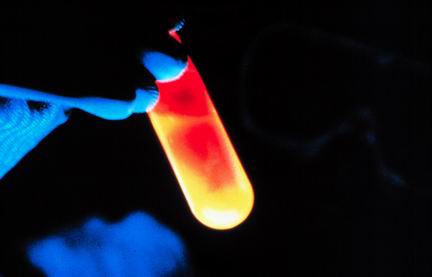

Is the following equation balanced?
4Fe + 3O2 ---> 2Fe2O3
YES
NO
Is the following equation balanced?
Al + O2 ---> 2Al2O3
YES
NO
What type of reaction is the following:
C11H24+17O2−> 11CO2 + 12H2O
Combination
Decomposition
Single Replacement
Double Replacement
Combustion

