wayground logo

Free Printable Worksheets

Font size

S
M
L
XL
Worksheets

Principles of chemistry revision quiz

Total questions: 85

Worksheet time: 2hrs 33mins
Name
Class
Date
1.
At higher temperatures
a)
particles in an object have less energy
b)
particles in an object move faster
c)
a gas contracts
2.
Which form of matter does not take the shape of its container?
a)
liquid
b)
gas
c)
solid
d)
air
3.
How is a gas defined?
a)
Indefinite shape, indefinite volume
b)
Definite shape, definite volume
c)
Found in stars
d)
Definite volume, indefinite shape
4.

Particles of a liquid

a)

are tightly packed together and stay in a fixed position.

b)

are free to move around one another but still touch.
5.
The phase change from water vapor to liquid water is known as...
a)
evaporation
b)
precipitation
c)
condensation
d)
sublimation
6.
When the temperature of matter increases the particles...
a)
speed up and move closer
b)
speed up and move farther apart
c)
slow down and move closer together
d)
slow down and move farther apart
7.

Evaporation is the change in state of a

a)

gas to a liquid

b)

gas to a solid

c)

solid to a liquid

d)

liquid to a gas

8.

The boiling point of a substance is the temperature at which it changes from

a)

a liquid to a gas

b)

a liquid to a solid

c)

a gas to a solid

d)

a solid to a liquid

9.

What are the positively charged particles in an atom called?

a)

Electrons

b)

Neutrons

c)

Protons

10.

Which particle in the atom is neutrally (neither positive or negative) charged?

a)

Proton

b)

Electron

c)

Neutron

d)

Negatron

11.

What two particles would you find in the nucleus of an atom?

a)

Protons and electrons

b)

Neutrons and electrons

c)

Protons and neutrons

d)

Electrons and negatrons

12.

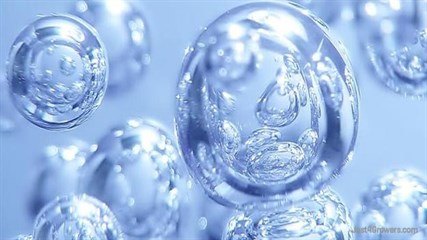
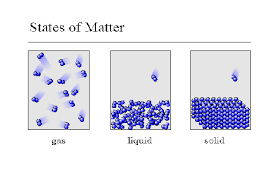
What is represented by the image shown?

a)

Gas

b)

Solid

c)

Liquid

d)

None of the ones listed

13.
Which is an example of a solute?
a)
Egg whites
b)
Sugar
c)
Water
d)
Acetone
14.
Which is an example of a solvent?
a)
Salt
b)
Egg whites
c)
Water
d)
Sugar
15.

What is a solvent

a)

A liquid that will dissolve a solid solute

b)

Another word for solution

c)

A thing that make drinks change colour

d)

Usually the solid about to be dissolved

16.

The ___ is the thing being dissolved.

a)

solute

b)

solvent

c)

mixture

d)

solution

17.

If I dissolve carbon dioxide in water, what is the solvent?

a)

Carbon Dioxide

b)

There is no solvent

c)

Oxygen

d)

Water

18.

Define the term insoluble.

a)

Can dissolve in water.

b)

Cannot dissolve in water.

c)

Partially dissolves in water.

19.
The amount of solute actually dissolved in a given amount of solvent.
a)
dilution
b)
concentration
c)
saturated solution
d)
supersaturated mixture
20.
When a solvent contains as much of the solute as it can hold, the solution is said to be
a)
supersaturated
b)
diluted
c)
saturated
d)
unsaturated
21.

At approximately what temperature does the solubility of sodium chloride, NaCl, match the solubility of potassium dichromate, K2Cr2O7?

a)

60 ºC

b)

30 ºC

c)

50 ºC

d)

83 ºC

22.
How many grams of K2Cr2O7, are soluble in 100 g of water at 95 ºC?
a)
83 grams
b)
75 grams
c)
40 grams
d)
12 grams
23.

25 grams of NaCl are dissolved in 100 mL of water at 60 C. How many more grams need to be dissolved for the solution to be saturated?

a)

13 grams

b)

25 grams

c)

6 grams

d)

38 grams

24.
Which substance is MOST soluble at 0 ºC?
a)
KI
b)
NaNO3
c)
NaCl
d)
Ce2(SO4)3
25.
Which of these solutes does not increase in solubility as temperature rises?
a)
NH3
b)
NaNO3
c)
KNO3
d)
NaCl
26.

How many grams of KClO3, are soluble in 200g of water at 30ºC?

a)

5 grams

b)

100 grams

c)

10 grams

d)

20 grams

27.

Which model represents a compound?

a)

Model 1

b)

Model 2

c)

Model 3

d)

Model 4

28.

Which model represents an element?

a)

Model 1

b)

Model 2

c)

Model 3

d)

Model 4

29.

Which diagram(s) are modeling pure substances?

a)

1 only

b)

1, 3, and 4

c)

2 only

d)

1 and 4

30.

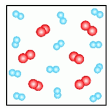
What type of substance is being modeled here?

a)

Element

b)

Compound

c)

Homogeneous Mixture

d)

Heterogeneous Mixture

31.

What type of substance is being modeled here?

a)

pure substance of one element

b)

mixture of two elements

c)

mixture of two compounds

d)

pure substance of one compound

32.

How many different types of compounds are pictured?

a)

1

b)

2

c)

4

d)

8

33.
This diagram represents a _____.
a)
pure substance that is a compound
b)
mixture of elements
c)
pure substance that is an element
d)
mixture of compounds
34.
What is gold?
a)
element
b)
compound
c)
mixture
35.
A(n) ___________________ shows the elements in a compound and the number of the atoms for each element.
a)
Chemical Symbol
b)
Compound
c)
Chemical Formula
d)
Chemical Date
36.
These can only be separated by chemical means. 
a)
element 
b)
compound 
c)
mixture 
d)
stuff 
37.
These contain only one kind of atom. 
a)
element 
b)
compound 
c)
mixture 
d)
water 
38.
The air is a _________. 
a)
element 
b)
mixture 
c)
compound 
d)
energy 
39.
Elements can be broken down into simpler substances. 
a)
false 
b)
true 
c)
sometimes 
40.

Used to separate an insoluble solid from liquid or soluble solid

a)

Filtration

b)

Distillation

c)

Crystallisation

d)

Evaporation

41.

Used to separate a dissolved solid from its solution

a)

Filtration

b)

Evaporation

c)

Crystallisation

d)

Sublimation

42.

Used to separate liquid from a solution

a)

Filtration

b)

Sublimation

c)

Distillation

d)

Fractional distillation

43.

Used to separate liquid mixtures for identification

a)

Filtration

b)

Distillation

c)

Fractional distillation

d)

Chromatography

44.

Which one of the following solids is insoluble in water?

a)

sugar

b)

copper sulfate

c)

sand

d)

salt

45.

A Leibeg condenser is used in

a)

filtration

b)

evaporation

c)

chromatography

d)

distillation

46.

In filtration, the solid that remained on the filter paper is called the

a)

solid

b)

solute

c)

filtrate

d)

residue

47.

In filtration, the clear liquid which passes through the filter paper is called

a)

filter paper

b)

filtrate

c)

filter

d)

filtration

48.

Dyes in water soluble markers may be separated by means of

a)

crystallisation

b)

chromatography

c)

filtration

d)

distillation

49.

To separate a mixture of soil and water, what separation method is used?

a)

filtration

b)

chromatography

c)

distillation

d)

evaporation

50.

Chromatography separate the mixture of dyes on the basis of their

a)

density

b)

solubility

c)

gravity

d)

boiling point

51.

Name the separation technique

a)

Centrifuge

b)

Bunsen burner

c)

Distillation

d)

Evaporation

52.

Name the separation technique

a)

Distillation

b)

Crystallisation

c)

Magnetic Separation

d)

Condensation

53.

Name the separation technique

a)

Filtration

b)

Evaporation

c)

Distillation

d)

Separation

54.

True or false: Filtration can be used to separate substances in a solution

a)

True

b)

False

55.

What are the subatomic particles?

a)

Protons, Electrons, Neutrons

b)

Molecules, and atoms

c)

Electrons, Protons, Nucleus

d)

Nucleus, and Electrons

56.

What is the smallest particle of an ELEMENT, and it has also all the properties of it?

a)

Molecules

b)

Nucleus

c)

Subatomic particle

d)

Atoms

57.
True or False - Protons and Neutrons have about the same mass.
a)
True - They have about the same mass
b)
False - They do not have about the same mass
58.
Where are the Electrons found in the structure of an atom?
a)
In the nucleus
b)
In spaces around the nucleus
59.
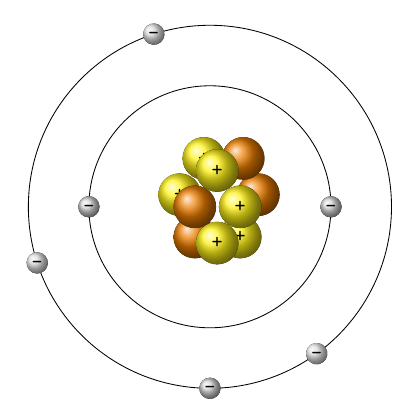
How many protons does this atom have?
a)
3
b)
6
c)
4
d)
2
60.

At what part of the atom is the arrow pointing?

a)

nucleus

b)

energy level

c)

electron

d)

proton

61.

The mass of an atom is

a)

equal to the number of protons

b)

the protons + electrons

c)

the protons + neutrons

d)

the protons + neutrons + electrons

62.

What is the atomic number?

a)

35

b)

18

c)

17

d)

52

63.
Referring to the table, what is the relative mass of a proton?
a)
10
b)
1
c)
0.1
d)
0.01
64.

Which element has the atomic symbol Hg?

a)

Hafnium

b)

Helium

c)

Hagart

d)

Mercury

65.

Which element has the atomic symbol of Ne?

a)

Nickel

b)

Sodium

c)

Xenon

d)

Neon

66.

What is the atomic symbol for Iron?

a)

I

b)

Ir

c)

Fe

d)

In

67.
What is an isotope? 
a)
A charged atom
b)
An atom with different amounts of neutrons
c)
An atom with different amounts of protons
d)
A neutral atom
68.
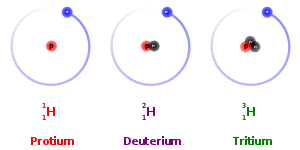
Different isotopes have...
a)
different masses
b)
different atomic numbers
c)
different electrons
d)
different protons
69.
How many neutrons does a Carbon 13 atom have?
a)
6
b)
5
c)
7
d)
8
70.
How many neutrons does an Oxygen-19 isotope have?
a)
19
b)
8
c)
11
d)
10
71.
How many neutrons does a Flourine-14 isotope have?
a)
4
b)
5
c)
9
d)
14
72.
What is the atomic mass of the pictured isotope?
a)
2
b)
4
c)
6
d)
Hehehehe
73.
What is the atomic mass of the pictured isotope?
a)
17
b)
35
c)
18
d)
What a "clorious" isotope!
74.
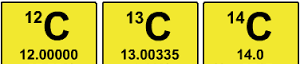
What do these isotopes of carbon all have in common?
a)
neutrons & mass number
b)
atomic number and neutrons
c)
atomic number and electrons
d)
protons, atomic number, and mass number
75.
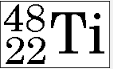
How many protons does this isotope of titanium have?
a)
48
b)
22
c)
26
d)
70
76.
In a correctly written symbol what would be located in the "A" position?
a)
number of neutrons
b)
atomic number
c)
number of electrons 
d)
mass number
77.
An atom is electrically neutral when
a)
protons and neutrons are the same
b)
protons and electrons are the same
c)
neutrons and electrons are the same
d)
neutrons balance the protons and electrons
78.
If a sulfur atom has 16 protons, 16 electrons, and 16 neutrons, its atomic mass is:
a)
16
b)
32
c)
48
d)
64
79.
If a hydrogen atom has 1 proton, 1 electron, and 1 neutron, its atomic number is:
a)
1
b)
2
c)
3
d)
4
80.

Each element is defined by the number of

a)

Atoms

b)

Isotopes

c)

Neutrons

d)

Protons

e)

Nuclei.

81.

One atomic mass unit is defined as weighing

a)

1/16 the mass of O-16

b)

1/12 the mass of C-12

c)

1/32 the mass of S-32

d)

1/10 the mass of B-10

82.

An element has the following natural abundances and isotopic masses: 90.92% abundance with 19.99 amu, 0.26% abundance with 20.99 amu, and 8.82% abundance with 21.99 amu. Calculate the average atomic mass of this element.

a)

45.34 amu

b)

19.02 amu

c)

20.16 amu

d)

20.5 amu

83.
24.1% of all the isotopes of a an element have a mass of 75.23 amu, 48.7% have a mass of 74.61 amu, and 27.2% have a mass of 75.20 amu.
What is the average mass of this element?
a)
74.92 amu
b)
24.97 amu
c)
75.01 amu
d)
74.51 amu
84.
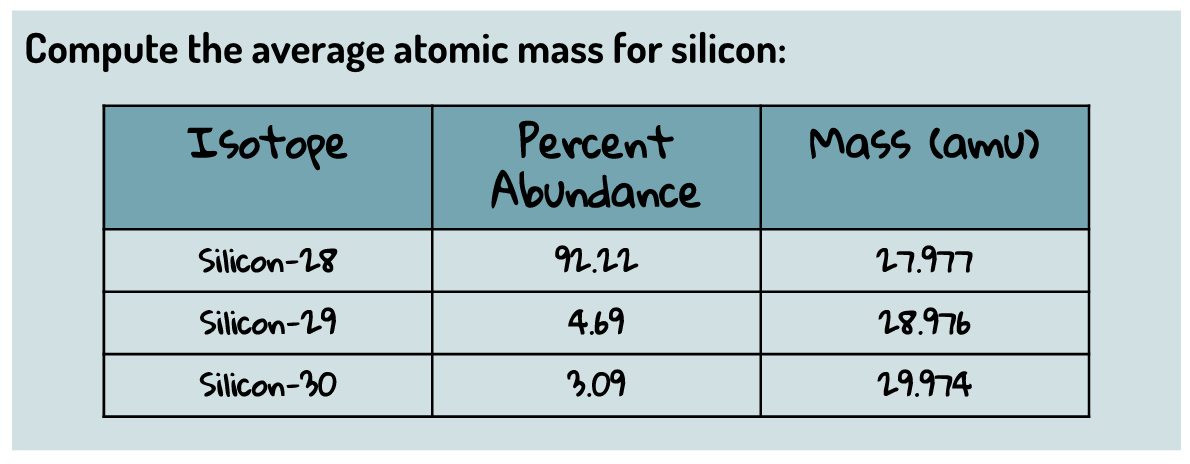
Compute the average atomic mass for silicon:
a)
27.977
b)
28.09
c)
28.976
d)
The average mass cannot be determined from provided information.
85.

Copper is made up of two isotopes, Cu-63 (62.9296 amu) and Cu-65 (64.9278 amu). Given copper's atomic weight of 63.546, what is the percent abundance of each isotope?

a)

Cu-63: 35.45% Cu-65: 64.55%

b)

Cu-63: 45.45% Cu-65: 54.55%

c)

Cu-63: 55.45% Cu-65: 44.55%

d)

Cu-63: 65.45% Cu-65: 34.55%