
 Worksheets
Chemistry Quiz
Total questions: 191
Worksheet time: 4hrs 58mins
Which model of the atom improved upon the Thomson (plum pudding) model?
Bohr model
Rutherford (nuclear) model
All of the above
Current quantum mechanical model
What subatomic particle identifies an element?
All of the above
Electron
Neutron
Proton

What is the atomic number of the element shown to the left?
39
23
19
11

How many protons and electrons are in a neutral atom of the element shown to the left?
11 protons, 11 electrons
11 protons, 19 electrons
19 protons, 11 electrons
19 protons, 19 electrons
How is the name of the most common isotope of an element determined when using the periodic table?
By looking at the number of protons plus the number of electrons
By looking at the number of neutrons
By looking at the mass number and rounding to the nearest whole number
By looking at the atomic number
How many neutrons does the most common isotope of potassium have?
19
18
20
21
How many protons does uranium-235 have?
238
235
143
92
Do all isotopes of uranium have the same number of neutrons?
No
Yes
Do all isotopes of uranium have the same number of protons?
No
Yes
Do all ions of uranium have the same number of protons?
No
Yes
Is U-239 the most common isotope of uranium?
Yes
No
What is the average atomic mass of uranium?
270
238
235
Unknown
The fundamental building block of matter is the
atom.
molecule.
cell.
proton.
A change in a substance that does not involve a change in the identity of the substance is called a(n)
chemical change.
physical change.
extensive property.
intensive property.
The vertical columns of the periodic table are called
periods.
rows.
groups.
chemicals.
Which of these describes noble gases?
massless
unreactive
good heat conductors
good electrical conductors
The number of significant figures in the measurement 0.000305 kg is
two.
three.
six.
seven.
Written in scientific notation, the measurement 0.000065 cm is
65 x 10-4 cm.
6.5 x 10⁻⁵ cm.
6.5 x 10⁻⁶ cm.
6.5 x 10⁻⁴ cm.
What is the correct notation for a sublevel within the first energy level?
1s
1p
1d
1f
What is the maximum number of electrons that a single orbital can hold?
1
2
3
4
How many electrons are present in an atom of calcium that has the electron configuration 1s22s22p63s23p64s2?
6
16
20
36
Ionic bonds form as a result of the electrostatic attraction between
dipoles.
electrons.
ions.
nuclei.
A single covalent bond involves the sharing of
only one electron.
two electrons.
three electrons.
a variable number of electrons, which depends on the bonding atoms.
You can estimate the degree to which a bond between two atoms is ionic or covalent by calculating the
distance between the atoms’ nuclei.
difference in the atoms’ electronegativities.
atoms’ atomic radii.
number of atoms in the compound.
The electrons involved in the formation of a covalent bond are
transferred from one atom to another.
found only in the s orbitals.
valence electrons.
in filled orbitals.
In a double covalent bond,
one atom has more than eight valence electrons.
one atom loses a pair of electrons.
two atoms share eight valence electrons.
two atoms share two pairs of electrons.
To draw a Lewis structure, it is not necessary to know
the length of the bonds.
the types of atoms in the molecule.
the number of valence electrons for each atom.
the number of atoms in the molecule.
Compared with solid ionic compounds, solid molecular compounds generally
have lower melting points.
are more brittle.
are harder.
conduct electricity as liquids.
A charged group of covalently bonded atoms is known as a(n)
anion.
polyatomic.
formula unit.
cation.
Because strong attractive forces hold the layers in an ionic crystal in relatively fixed positions, ionic compounds
are hard.
are brittle.
are not electrical conductors as solids.
All of the above
Particles in this state of matter are moving the fastest.
solid
liquid
gas
When a substance is heated, particles will
speed up and move apart
speed up and move closer together
slow down and move apart
slow down and move closer together
The process when a solid turns into a liquid
Evaporation
Sublimation
Freezing
Melting

Melting butter is an example of a
physical change
chemical change

Exploding fireworks are an example of a
physical change
chemical change

Rotting bananas are an example of a
physical change
chemical change

Burning wood is an example of a
physical change
chemical change

Sour milk is an example of a
physical change
chemical change
The space surrounding the nucleus of an atom contains which of the subatomic particles?
protons
electrons
neutrons
ions
all of the above.
When an atom loses electrons, it forms an ion of what charge?
negative
positive
neutral
it could be positive or negative.
The nucleus of an atom is composed of:
protons and electrons
protons and neutrons
neutrons and electrons
protons, neutrons and electrons.
A substance formed by the combination of two or more elements in a definite proportion is called a(n):
mixture
solution
compound
atom
ion.
Covalent bonds are formed when:
electrons are shared between two atoms
electrons are transferred from one atom to another atom
protons are shared between two atoms
protons are exchanged from one atom to another atom.
Which one of the following is true of the polarity of water?
The oxygen atom is slightly positive, and the hydrogen atom is slightly negative.
Both the oxygen and the hydrogen atoms are slightly positive.
Both the oxygen and the hydrogen atoms are slightly negative.
The oxygen atom is slightly negative, and the hydrogen atom is slightly positive.
A bond that is formed between the oxygen atom of one water molecule and the hydrogen atom of a different water molecule is called a(n):
ionic bond
covalent bond
hydrogen bond
metallic bond
it could be ionic or covalent.
A molecule composed of many repeating subunits is called:
a polymer
a monomer
an enzyme
a lipid
a functional group.
The subatomic particles differ from one another in charge, mass, and location in the atom. Which one of the following is FALSE about the subatomic particles?
Electrons are negative in charge and have very little mass in comparison to the protons and neutrons.
Protons have a mass nearly equal to neutrons.
Neutrons have a positive charge and are found in the nucleus of the atom.
Protons are always found in the nucleus of the atom and have a positive charge.
What type of bond is formed when electrons are shared equally between two atoms?
nonpolar covalent bond
polar covalent bond
polar ionic bond
nonpolar ionic bond.
The smallest particle of an element that has all of its properties.
compound
mixture
atom
electron
Matter is anything that has ________ and takes up space.
Volume
Mass
Energy
Weight
Which of the following is NOT an element?
Gold
Oxygen
Carbon
Water
Which of the following is an example of a physical change?
Phosphorous and Oxygen
Fire
Melting Ice
Vinegar and Baking Soda
A change in matter that makes one or more new substances is a chemical change.
True
False
The amount of matter in an object.
Mass
Atoms
Volume
Matter
Which of the following statements is NOT true?
protons are positively charged
neutrons have no charge
electrons are negatively charged
the first shell of an atom can hold 10 electrons
Water molecules have two oppositely charged ends, a positive hydrogen end and a negative oxygen end. These opposite ends are why water is called _____.
nonpolar
ionic
metallic
polar
Which of the following statements about FLUORINE is NOT TRUE?
It is atomic # 9 on the periodic table.
It has an atomic mass of 19.
An atom of fluorine has 9 protons.
An atom of fluorine has 9 neutrons.
Which element on the periodic table has 16 protons, 16 electrons, and 16 neutrons?
Oxygen
Sulfur
Magnesium
Calcium
A Lewis Dot structure for Boron would have how many dots?
2
3
4
5
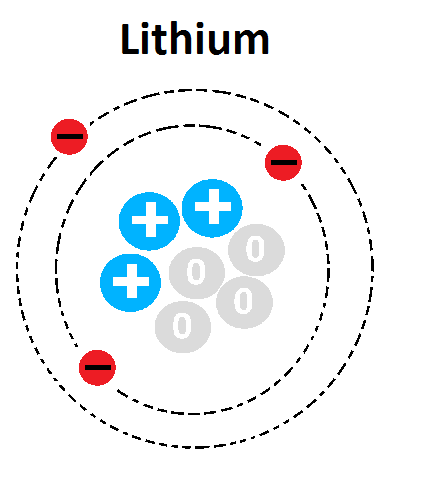
How many neutrons are in an atom of Lithium?
3
4
6
7




Valence electrons are located...
inside the nucleus
in outer space
on the outermost electron shell in an atom
on the electron shell closest to the nucleus.
What do you use to measure the mass of an object?


Adam and Owen are working on a physics project where they measure the air pressure in a football. They find the pressure to be 760 mmHg. How many significant figures are in Adam and Owen's measurement?
0
1
2
3

Amiel, Shannon, and Haadin are working in a jewelry shop. They came across a cube of metal with a volume of 1.73 cm3 and a mass of 33.3 grams. They are trying to identify the type of metal to price it correctly. Can you help them figure out what metal it is?
Gold
Nickel
Silver
Zinc
Sophie has a bag of calcium chloride for her chemistry project. The calcium chloride has a density of 2.50 g/cm3. If Sophie has 218 g of it, what volume of calcium chloride does she have in her bag?
87.2 cm3
545 cm3
87.2 g
545 g
During a science experiment, Haadin, Amiel, Shannon, Zane, and Hannah were examining a model of an atom. They all agreed on certain characteristics of the atom's nucleus EXCEPT that it
is positively charged.
contains nearly all of the atom’s mass.
is very dense.
contains nearly all of the atom’s volume.
During a science experiment, Shannon, Haadin, Zane, Hannah, and Sophie were studying an atom model. They observed that the electron cloud of the atom model has all of the following characteristics EXCEPT:
It is negatively charged.
It contains nearly all of the atom’s mass.
It is divided into energy levels.
It contains nearly all of the atom’s volume.
Adam, Shannon, Haadin, Amiel, and Kane are studying for their physics exam. They are discussing the behavior of electrons. Which of the following statements about electron behavior, that they discussed, is not true?
Adam suggested that electrons closer to the nucleus have more energy than electrons further from the nucleus.
Shannon mentioned that light can be emitted when an electron goes from an excited state to a ground state.
Haadin stated that electrons are always in constant motion.
Amiel argued that electrons need to absorb energy to move to an energy level away from the nucleus.
Haadin is studying chemistry and comes across an element with the electron configuration: 1s2 2s2 2p6 3s2 3p3. He asks Shannon to help him identify the number of valence electrons in this element. What should Shannon tell him?
3
5
11
15
Ethan is studying chemistry and comes across an element with the electron configuration: 1s2 2s2 2p6 3s2 3p3. He is curious to know how many energy levels this element has. Can you help Ethan?
1
2
3
5
Owen is conducting a science experiment in his lab. He is trying to remove one electron from a neutral atom of an element. What is the energy required for this process known as?
Ionization energy
Electronegativity
Quantum energy
Reactivity

During a chemistry class, Haadin was asked to identify the element with the following electron configuration: [Ar]4s2 3d10 4p3. He discussed it with Zane, Kane, Owen, and Adam. Can you guess what answer they came up with?
K
N
Ge
As
Owen, Haadin, Zane, and Adam are having a debate about chemistry. They are discussing which group of elements a hypothetical alien race would most likely use for their technology, assuming the aliens prefer elements with the least electronegativity. Which group of elements do you think they would choose?
Halogens
Alkali metals
Alkali earth metals
Transition metals

Shannon, Sophie, Haadin, and Ethan are in a chemistry class. They are given samples of different elements and asked to determine which one is likely to have the least electronegativity. The elements they have are:
Cs
Li
Br
F

During a chemistry class, Sophie, Adam, Hannah, Shannon, and Zane were discussing elements. They were curious to know which of the following elements has the lowest ionization energy. Can you help them?
Br
Li
Cs
F
Which of the following is an example of a chemical reaction?
Conversion of steam to water
Rusting of iron
Cutting of wood
Melting of ice candy
A chemical reaction involves ______________.
Breaking of bonds
Formation of bonds
Restructuring of bonds
None of these
When Lead Nitrate reacts with potassium iodide, a Yellow precipitate of ............. is formed.
PbI2
K2NO3
Pb(NO3)2
PbIO3
On moving from left to right in a period in the Periodic table, the size of atom
Increases
Decreases
Does not change appreciably
First decreases and then increases

How many bonds will a C atom form?
1
2
3
4

a way of expressing a value as the product of a number between 1 and 10 and a power of 10
scientific notation
accuracy
precision

Diagram shows the electron arrangement of a carbon dioxide molecule. Which of the following is true?
One carbon atom contributes four electrons to be shared by two oxygen atoms.
Four double covalent bonds are formed in a carbon dioxide molecule.
Each oxygen atom contributes one electron for sharing.
One carbon atom requires two electrons to achieve the octet electron arrangement.
All of these are physical properties except...
reactivity
malleability
solubility
density
This type of property can only be observed if you change the identity (structure) of the substance.
physical
chemical
All of the following are chemical properties except...
flammability
melting point
reactivity
pH
Every substance has a unique melting and boiling point. When a substance melts or boils they go through ...
a phase change
an awkward transition
metamorphosis
a red shift
FeCl3
Iron (III) Chloride
Which of the following combinations would need roman numerals in the name?
potassium + fluorine
silver + oxygen
boron + iodine
gold + oxygen
When naming ionic compounds with transition metals you need to include roman numerals to show the _____ of the metal..
atomic number
mass number
charge
ionization energy
What is meant by the term "sea of electrons"?
It's what we call all the free floating electrons in a metal.
It's what we call electrons that are floating in a liquid.
It's the total number of electrons in a metal atom.
It's the total number of electrons in the ocean.
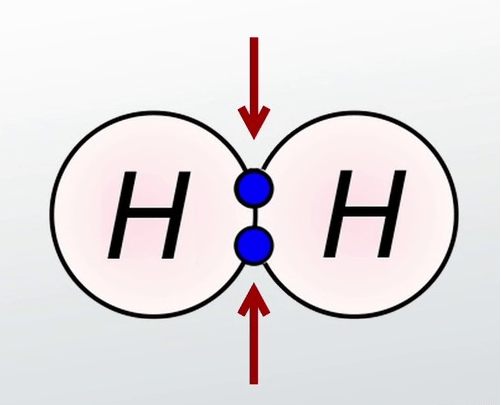
What type of bond is shown in this image?
0 to 0.5 = Non Polar Covalent
0.6 to 1.7 = Polar Covalent
1.7 or greater = Ionic
Which atom has the LOWER electronegativity?
Na
Li
Which of these atoms is the most electronegative?
Bromine
Fluorine
Hydrogen
Potassium
Why are noble gases non-reactive?
Their valence shell is incomplete
their valence shell is complete
they have 4 valence electrons
they have 2 valence electrons
All noble gases (except helium) has _____ valence electrons
2
4
6
8
how does an atom become an ion?
by sharing electrons
by sharing protons
by gaining or losing electrons
by gaining or losing protons
atoms in group 2 lose electrons to form ______ ions
1+
2+
1-
2-
ionic bond is form as ____________ and ______________ react to produce ionic compound
metals and metals
metals and non-metals
non-metals and non-metals
noble gases and metals
cation is _________ charged, and ___________ is always the cation in an ionic compound
positively ... metal
positively... non-metal
negatively... metal
negatively.. non-metal
the ionic compound is electrically _______ because cations and anions exist in a ratio that ________ the overall charge.
positive ... balances
positive ... disrupts
neutral ... balances
neutral ... disrupts
what are the properties of ionic compounds? (multiple answers)
crystalline as a solid
can dissolve in water
can conduct electricity as solid
can dissolve in oil
if there are two bonding pairs of electrons, it is a(n) _______ bond
ionic
single covalent
double covalent
triple covalent

Phase change from liquid to solid is called:
Melting
Freezing
Evaporation
Condensation
Is glass breaking a chemical or physical change?
All of the following a signs that a chemical reaction occurred except ___.
phase change
bubbles (release of a gas)
temperature change
color change

What is the volume of the rock?
35 mL
5 mL
30 mL
65 mL
Kent found 2 wood cubes (like the ones we used in class) and wanted to know if they were made of the same type of wood. Unlike, in class the 2 cubes are different sizes. How could Kent determine if the cubes are made of the same type of wood.
measure the mass of both cubes
measure the length, width, and height and calculate for volume
calculate density for both cubes
burn the wood cubes and observe how they change
Scientific principle #6 states: properties of a given substance are the same regardless of the amount of the substance. Based on this scientific principle, which options below will not change if the amount of a substance is increased?
mass of the substance
melting point of the substance
volume of the substance
solubility of the substance
density of the object
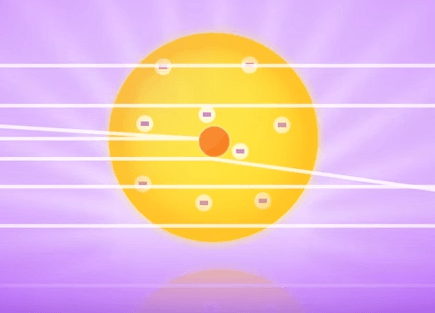


What is the name of the isotope pictured here?

How many neutrons?
36
17
18
19
How many electrons?
36
17
18
19

How many protons?
9
4
5
2
Which of the following models is considered the Plum Pudding Model?


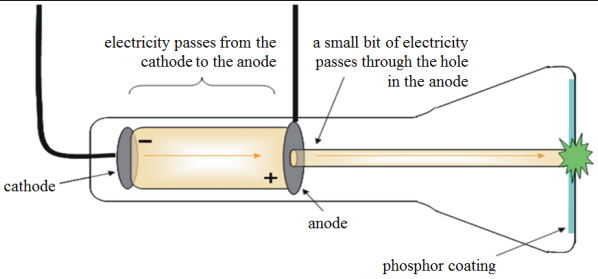
Which experiment listed below did Thomson use to discover electrons?
Cathode Ray Tube
Oil Drop Experiment
Cat Experiment
Gold Foil Experiment
The solid dissolves quickly in liquid A.
The solid remains unchanged with the addition of liquid B.
The white solid remains, but dissolves very slowly in liquid C.
When liquid D is added, fizzing occurs and the well becomes warmer.
In which well does a chemical change occur?
valence electron for halogens
1
2
7
8
two oppositely charge particles _____________ each others
attract
repel
attract and repel
do not attract nor repel
use to estimate the size of an atom
atomic radius
shielding effect
valence electron
effective nuclear charge
larger distance produces _______________ attraction between two oppositely-charged particles
bigger
smaller
same
trend of number of valence electrons from top to bottom
increase
decrease
do not change
trend of number of shells from top to bottom
increase
decrease
do not change
trend of ionization energy from left to right
increase
decrease
do not change
trend of ionization energy from top to bottom
increase
decrease
do not change
situation when valence electron of atoms are repelled by the core electrons
electron affinity
shielding effect
ionization energy
valence electron
the number of electrons at the highest energy level of shell
electron affinity
shielding effect
ionization energy
valence electron
an atom that gains one or more electron to form a particle with a net negative charge
anion
cation
anion is always ____________ than its parent atom and is usually formed by ___________ atom
bigger... ... metal
bigger ... ... non metal
smaller ... ... metal
smaller ... ... non metal
cation is always ____________ than its parent atom and is usually formed by ___________ atom
bigger... ... metal
bigger ... ... non metal
smaller ... ... metal
smaller ... ... non metal
When electrons fall back to the lower levels(group state), a _ of light is entitled
(a)
List which group this element is in: Sodium
(fun fact) sodium is a metal
Noble Gases
Noble Metal
Alkali
Alkaline
Halogen
William, Benjamin, and Ava are having a debate. William thinks Oxygen has the highest electronegativity, Benjamin believes it's Chlorine, and Ava is sure it's Nitrogen. But, they all are forgetting one element. Can you tell which element has the highest electronegativity that they missed?
Fluorine
Oxygen
Chlorine
Nitrogen
What is the correct formula for Li+ and O-2?
LiO
LiO2
Li2O
Li2O3
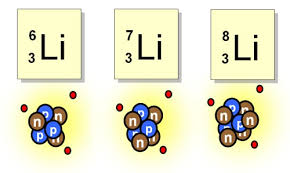

What will the net charge of this ion be if it achieves a noble gas configuration?
+2
-2
+6
-6
Which substance has the weakest intermolecular forces?
Substance A, boiling point of 75 °C
Substance B, boiling point of 105 °C
Substance C, boiling point of 25 °C
Substance d, boiling point of 45 °C
In a polar covalent bond, the electrons gather around...
Mostly the atom with the greatest electronegativity
The atom with the lowest electronegativity
Each atom equally
Only the atom with the greatest electronegativity
In a nonpolar covalent bond, the electrons gather around...
Mostly the atom with the greatest electronegativity
The atom with the lowest electronegativity
Each atom Equally
Only the atom with the greatest electronegativity
The polarity of a bond is determined by...
The sum of the electronegativities of the two atoms
The difference in the electronegativities of the two atoms
The charges of the atoms
The number of electrons shared in the bond
Rank these in order of strength:
covalent bond
London dispersion forces
hydrogen bond
dipole-dipole attraction
dipole-dipole>covalent bond>hydrogen bond>LDF
LDF>dipole-diple>hydrogen bond>covalent bond
covalent bond>hydrogen bond>dipole-dipole>LDF
hydrogen bond>dipole-dipole>LDF>covalent bond
What elements must be present for a Hydrogen Bond to occur? You can check more than one.
Nitrogen
Chlorine
Sulfur
Oxygen
Fluorine

Which is correct about this drawing? Choose 2 answers.
A is pointing to a covalent bond
B is pointing to a hydrogen bond
A is pointing to a hydrogen bond
B is pointing to a covalent bond
A would take more energy to break compared to B
B would take more energy to break compared to A

