
 Worksheets
Unit #2: Chemistry Test Review!
Total questions: 100
Worksheet time: 1hrs 20mins
What are the four states of Matter?
Solid, Liquid, Gas, Latent heat
Solid, Gas, Latent Heat, Plasma
Plasma, Solid, Liquid, Gas
Plama, Solid, Liquid, Vapor
Vaporization is the change from
Liquid to Gas
Solid to Liquid
Gas to Solid
Solid to Gas
Change from Solid to Gas
Condensation
Melting
Sublimation
Boiling
What changes for a phase to go through a phase change?
Temperature
Altitude
Location
Energy
Anything that takes up space and has mass
Matter
Energy
Gravity
Force
Heterogeneous Mixture
Particles are distributed non-uniformly (Chocolate chip cookie)
Particles are distributed uniformly (Milk, coffee)
Homogeneous Mixture
Particles are distributed non-uniformly (Chocolate chip cookie)
Particles are distributed uniformly (Milk, Coffee)
Match the following
Acidic pH
Less than 7 on the pH scale
Basic pH
Greater than 7 on the pH scale
Neutral pH
Equal to 7 on the pH scale
Substance that is dissolved in solution.
Solute
Solvent
Solution
Substance
Chemical substance that dissolves another chemical substance to form a solution.
Solute
Solvent
Solution
Substance
Match the following
Pure Substance
One element or one compound.
Mixture
Two or more substances not combined.
Element
Contains only one kind of atom.
Compound
Contains two or more kinds of atoms.

rain evaporates on the sidewalk

electricity separates water into Hydrogen and Oxygen

sodium metal is cut with a knife

recycling used aluminum cans to make new aluminum cans

aluminum combining with oxygen to from aluminum oxide

cooking an egg

baking cookies

a nail rusting

burning wood

glucose dissolves in water
All matter is made of _________.


Atoms are made up of ________________
energy
electrons
subatomic particles
gasses

The subatomic particles that make up an atom.
solid, liquid, gas
electrons, protons, nucleus
energy, protons, nucleus
electrons, protons, neutrons

__________ are negatively charged particles that are in the orbitals around the nucleus.
protons
nucleus
neutrons
electrons

A proton has a ___________ charge.
positive
negative
neutral
massive.
An electron has a _________ charge
positive
neutral
negative
massive
A neutron has _________ charge or is ________.
negative ... neutral
positive .... neutral
no .... negative
no ... neutral

How many atoms of Hydrogen are in H2O
1
2
3
more than 3
contains only 1 type of atom
element
compound
mixture
contains 2 or more elements that are chemically combined
element
compound
mixture
contains 2 or more substances that are physically combined
element
compound
mixture
carbon dioxide, CO2, is an example of a(n)
element
compound
mixture
gold, Au, is an example of a(n)
element
compound
mixture
chlorine gas, Cl2, is an example of a(n)
element
compound
mixture
Kool-aid is a example of a(n)
element
compound
mixture
Semiconductors, or metalloids, can be described as...
same as nonmetals
bad conductors
characteristics of metals and nonmetals
same as metals
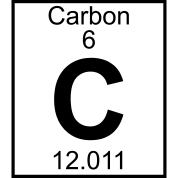
one or two letters that represent the name of an element
element name
element symbol
atomic number
atomic mass
a grouping of elements based on similar properties, arranged by columns in the periodic table; also known as a group
family
period
row
isotope
a row on the Periodic Table of Elements
family
period
row
isotope


Which color on the image of the periodic table corresponds with the metalloids.
bright yellow
gold
teal
light blue

Which elements are colored red?
nonmetals
metals
metalloids
________ are good conductors of electricity; they are often shiny solids at room temperature.
Non-metals
Metalloids
Metals
Noble gases
What element is represented as Cl?
Carbon Iodine
Cadmium
Cobalt
Chlorine
How do scientists represent the element Cobalt?
C
Cb
CO
Co
Identify Sodium (Na) as a metal, non metal or a metalloid.
Metal
Nonmetal
Metalloid

Name this element.
Neon
Magnesium
Sodium
Manganese
An element will always have the same number of
What is the maximum number of electrons that can be found in the first shell (energy level)?
2
8
18

What is the atomic number of this element?
17
18
35
35.453

Which element is this?
Calcium
Chlorine
Silicon
Potassium

Which element is this?
Nickel
Neon
Sodium
Nitrogen
Who came up with the first atomic theory?
Dalton
Socrates
Thomas
Rutherford
What did Bohr's atomic theory model look like?
A ring with gold foil in the middle.
Electrons orbiting the nucleus like the planets around the sun.
A cloud of electrons floating around the nucleus.
A scoop of chocolate chip ice cream. It had electrons scattered within a ball of positive charge.
Who first came up with the idea of an atom and called them "atomos"?
o Democritus
o Thomson
o Rutherford
o Bohr

He discovered neutrons.
Thomson
Which scientist discovered the electrons?
Dalton
Thomson
Atristotle
Bohr
Identify which images are PURE SUBSTANCES! (Check all that apply) : )


Elements and Subatomic Particles
Protons and Electrons
Atoms and Compounds
Homogenous and Heterogeneous
Ms. Powers made Kool-Aid for her classes. The sugar and powder mixture was the (a) . The water was the (b) . The Kool-Aid was the (c)
What is another name for a homogeneous mixture?
Solute
Solution
Heterogeneous mixture
Solvent
Which of the following mixtures can be separated with a magnet?
sand and salt
sand and iron filings
sugar and water
saltwater
Which mixture can be separated using a filter?
sand and iron filings
saltwater
sand and water
none of the above

Which method(s) below is suitable to obtain salt from a salt solution?
distillation
dissolving
filtration
evaporation
True or False: Mixtures can be separated by physical processes.
True
False

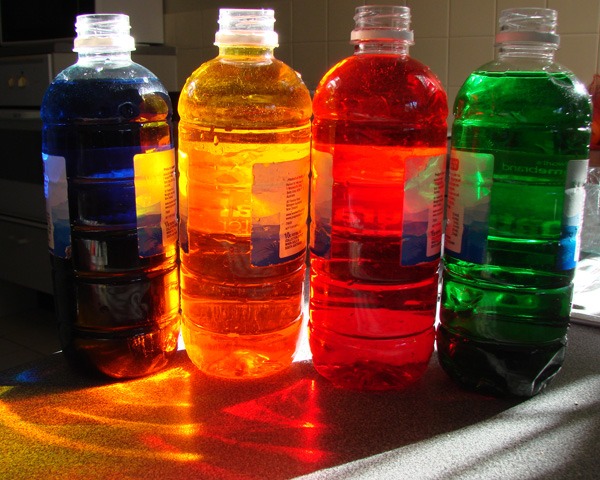
A type of mixture where the particles are larger than those in a solution but not heavy enough to settle out.
Homogeneous mixture
Colloid
Suspension
Compound


