wayground logo

Free Printable Worksheets

NEW

Font size

S
M
L
XL
Worksheets

Module 2 Dynamic Earth

Total questions: 54

Worksheet time: 1hrs 7mins

Name
Class
Date
1.

Alfred Wegener's hypothesis that the continents were once joined together in a supercontinent named Pangea.

a)

seafloor spreading

b)

continental drift

c)

plate tectonics

d)

continental crust

2.

Theory that states that Earth's surface is made of rigid slabs of rock that move with respect to each other.

a)

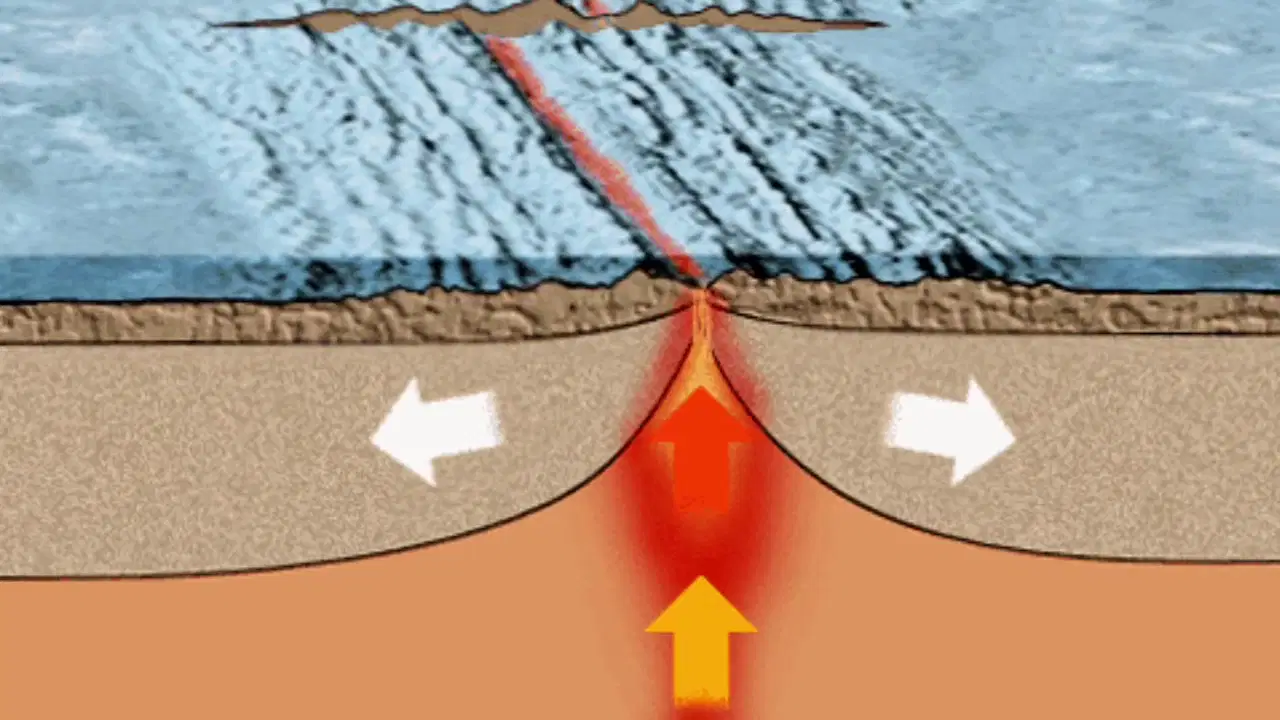
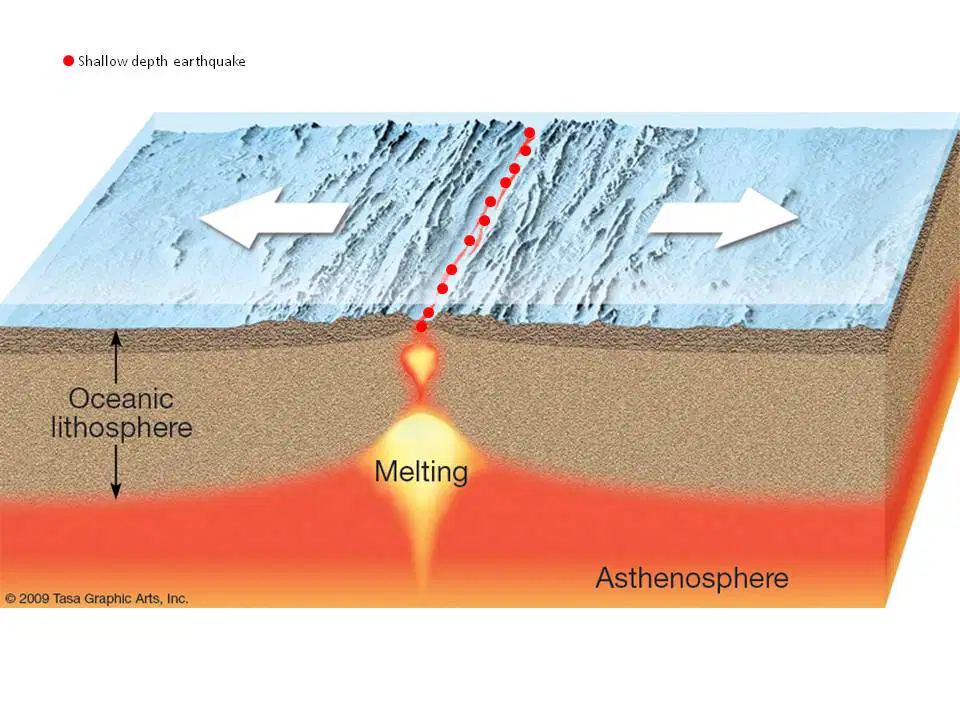
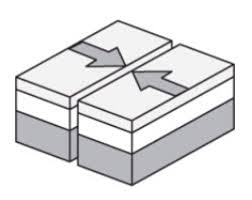
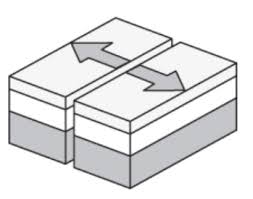
continental drift

b)

convection currents

c)

seafloor spreading

d)

plate tectonics

3.

The process by which new oceanic crust forms along mid-ocean ridges.

a)

subduction

b)

seafloor spreading

c)

convection currents

d)

plate tectonics

4.

The process that occurs when one tectonic plate moves under another tectonic plate.

a)

seafloor spreading

b)

convection currents

c)

continental drift

d)

subduction

5.

Long, narrow mountain range on the ocean floor; formed by magma at divergent plate boundaries.

a)

mid-ocean ridge

b)

subduction

c)

convection currents

d)

plate tectonics

6.

Material in the mantle constantly rises as it is heated becomes less dense and falls as it cools and becomes more dense.

a)

convergent boundary

b)

convection currents

c)

continental drift

d)

plate tectonics

7.

Where is new lithosphere (crust) formed?

a)

subduction zones

b)

fold mountains

c)

mid-ocean ridges

d)

outer core

8.

This type of boundary has tectonic plates that slide past each other and often cause earthquakes.

a)

Convergent

b)

Divergent

c)

Continental

d)

Transform

9.

Where is old lithosphere (crust) returned to the mantle?

a)

mid-ocean ridges

b)

subduction zones

c)

convection currents

d)

volcanic mountains

10.

The boundary between two plates that move away from each other.

a)

convergent

b)

divergent

c)

continental

d)

transform

11.

The boundary between two plates that move toward each other.

a)

transform

b)

oceanic

c)

convergent

d)

divergent

12.

What factor(s) change a mountain's shape from jagged and high to round and lower over long periods of time?

a)

deposition

b)

weather and erosion

c)

movement of continents

d)

collisions between continental plantes

13.

This principle states that younger rocks lie above older rocks if the layers have not been disturbed.

a)

Index Fossils

b)

Compaction & Cementation

c)

The Law of Superposition

d)

The Law of Crosscutting Relationship

14.

True or False: Because we rarely witness dramatic changes to the Earth, we can conclude that the Earth is not changing very much.

a)

True

b)

False

15.

The processes involved in the rock cycle include all of the following except:

a)

Condensation

b)

Erosion

c)

Weathering

d)

Compaction

16.

What happens to magma that is heated by the core?

a)

It rises.

b)

It sinks.

c)

Plate Tectonics

d)

It becomes part of the inner core.

17.

True or False: Fossils found in the same layer of rock are from the same time period.

a)

True

b)

False

18.

True or False: Disturbances, such as an intrusion or fault, are older than the rock surrounding them.

a)

True

b)

False

19.

Which of the following is considered a slow geologic change?

a)

Tsunami

b)

Weathering

c)

Earthquake

d)

Volcanic Eruption

20.

What processes create sedimentary rock?

a)

Compaction and Cementation

b)

Weather and Erosion

c)

Melting and Cooling

d)

Heat and Pressure

21.

What processes create igneous rock?

a)

Compaction & Cementation

b)

Heat & Pressure

c)

Weather & Erosion

d)

Melting & Cooling

22.
What can cause a chain of volcanic islands to form far from plate boundaries?
a)
Rifting
b)
Folding
c)
Hotspot
d)
Subduction
23.
Hawke started to create a flow chart to show how one kind of rock can change into metamorphic rock. Which of these rock types could Hawke include in the top box?
a)
Igneous rock only
b)
Sedimentary rock only
c)
Either igneous or sedimentary rock
d)
Neither igneous or sedimentary rock
24.
What is represented by the picture? 
a)
Sea-floor spreading
b)
Pangea
c)
How the continents are arranged today
d)
Volcanoes
25.
What does the theory of Continental Drift state?
a)
The continents were once joined in a super-continent and have moved over time
b)
Continents are stationary and do not move
c)
The Earth is broken into lithospheric plates that move due to convection currents
d)
none of the above
26.
Who is the person credited with developing the Theory of Continental Drift?
a)
Harry Hess
b)
Galileo
c)
Alfred Wegener
d)
Newton
27.
Which of the following was evidence of Pangaea?
a)
continents do not fit together
b)
no fossils were found
c)
same mountain ranges on different continents 
d)
tectonic plates are static 
28.
Name the boundary
a)
convergent boundary
b)
divergent boundary
c)
transform boundary
d)
sergent boundary
29.
Name the boundary
a)
convergent boundary
b)
divergent boundary
c)
transform boundary
d)
sergent boundary
30.

Name this plate boundary

a)

convergent boundary

b)

divergent boundary

c)

transform boundary

d)

sergent boundary

31.
Look at the image. The South American and Nazca plates are moving together. Which type of boundary is this? 
a)
divergent
b)
convergent
c)
transform fault
32.
How is Earth dynamic?
a)
never chagnes
b)
constantly changes
c)
only changes during even years
33.
If heat and pressure is added to an igneous rock what will it become?
a)
Magma
b)
Sedimentary
c)
Metamorphic
d)
It will stay igneous
34.
What is the breaking down of rock by wind, water, ice, or gravity called?
a)
Weathering
b)
Erosion
c)
Deposition
d)
Cementation
35.
What is it called when a river transports sediment?
a)
Weathering
b)
Depostion
c)
Erosion
d)
Cementation
36.
What is it called when Sediment is packed together  by a natural force? 
a)
Weathering 
b)
Compaction
c)
Erosion
d)
Deposition
37.
What type of rock is formed when magma or lava cools?
a)
Sedimentary
b)
Metamorphic
c)
Igneous
d)
Clastic
38.
If an igneous rock erodes, deposits, compacts, and cements, then goes under heat and pressure, then melts into magma, then cools, then goes under heat and pressure again what type of rock has the rock become?
a)
Clastic
b)
Sedimentary
c)
Igneous
d)
Metamorphic
39.
This is a diagram of a transform boundary which of the following things do transform boundaries create?
a)
Deep ocean Trench
b)
Volcano
c)
Mountain
d)
Earthquakes
40.
A rock formed from fragments of other rocks is a(n)
a)
Metamorphic Rock
b)
Sedimentary Rock
c)
Extrusive Rock
d)
Igneous Rock
41.
This rock was another type of rock that was heated and compressed over time. What type of rock is this?
a)
Sedimentary
b)
Igneous
c)
Metamorphic
42.
This rock started as molten magma. What type of rock is this?
a)
Sedimentary
b)
Igneous
c)
Metamorphic
43.
This rock was formed by smaller pieces of rock that settled at the bottom of a lake millions of years ago. What type of rock is this?
a)
Sedimentary
b)
Igneous
c)
Metamorphic
44.
The process when rocks break into smaller pieces due to exposure to natural elements is called
a)
erosion
b)
weathering
c)
sediments
45.
What are the 3 major types of rocks?
a)
Igneous, Metamorphic, Sedimentary
b)
Metamorphic, Igneous, Cementation
c)
magma, lava, crystals
46.
The name rock is given when it is broken down into smaller pieces.
a)
texture
b)
weathering
c)
sediment
d)
erosion
47.

This is the continuous process of rock changing from one type to another.

a)

Igneous rocks

b)

Sedimentary rocks

c)

Metamorphic rocks

d)

Rock Cycle

48.

Which of the following lists the steps a rock undergoes in order to become sedimentary rock, in the correct order?

a)

Deposition, erosion, melting, cooling

b)

Erosion, weathering, eruption, cooling

c)

Dissolving, deposition, cooling, fracture

d)

Weathering, erosion, deposition, compaction

49.

This rock formed when lava cooled very quickly on Earth's Surface. What type of rock is this?

a)

Sedimentary

b)

Extrusive Igneous

c)

Intrusive Igneous

d)

Metamorphic

50.

Using your understanding of the Rock Cycle, what would the label A represent?

a)

Metamorphic

b)

Igneous

c)

Sedimentary

51.

Using your understanding of the Rock Cycle, what would the label B represent?

a)

Metamorphic

b)

Igneous

c)

Sedimentary

52.

Using your understanding of the Rock Cycle, what would the label C?

a)

Metamorphic

b)

Igneous

c)

Sedimentary

53.

Which two natural forces cause sediment to form?

a)

Compaction and cementation

b)

Weathering and erosion

c)

Melting and cooling magma

54.

Which two forces cause a sedimentary rock to form?

a)

Melting and cooling of sediment.

b)

Compaction and cementation of sediment.

c)

Weathering and erosion of sediment.