
 Worksheets
permit test (purple)
Total questions: 70
Worksheet time: 35mins
Traffic fatalities are _____________ at night compared to daytime.
about the same
about three to four times as high
about twice as high
about five to six times as high
Other drivers are not making room for you to merge onto a freeway with heavy traffic. if it is absolutely necessary, you may:
Make room by forcing your way into a small gap
Drive onto a freeway shoulder until a gap appears
Stop before merging with freeway traffic
To avoid getting rear-ended by another vehicle in an emergency, you should:
Start braking early as a signal to the driver behind you
Turn your head and look over your shoulder
Check your rearview mirror often
Drive with your left foot on the brake pedal at all times
If you are driving on a road with only one lane in each direction and you want to pass, but a curve ahead blocks your view, you must:
Signal longer than five seconds to pass safely
Not pass the other vehicle
Increase your speed to pass safely
When you are driving in the left of two traffic lanes, and many cars are passing on your right, you should:
Move over into the right lane when it is safe
Pull onto the left shoulder to let the other vehicles pass
Stay in your lane so you will not impede the traffic flow
Checking traffic behind you:
Will help if you're being followed
Is not a good idea—always keep your eyes straight ahead
Is only useful if you're slowing down
You are driving 55 mph in the far left (fast) lane of a freeway posted for 65 mph. you should be cited for driving too slowly:
If you block the normal and reasonable flow of traffic
If the road or weather conditions warrant driving this slowly
Under no circumstances because it is always safer to drive slower than other traffic
If your vehicle breaks down, you should:
Pull off of the road as far as possible, while still visible
All choices are correct
Turn on four-way flashers and open your hood (if not wet out)
Place emergency flares/signs 100 feet around your vehicle
Your driving lane is next to a bicycle lane. you want to make a right turn at the upcoming intersection. you:
Must merge into the bicycle lane before making your turn
May not enter the bicycle lane before making your turn
Should only merge into the bicycle lane if you stop before turning
If there is a double solid yellow line dividing opposite lanes of traffic, you may:
Cross over the lines to make left turn from or into a side street
Cross over the lines to pass another vehicle unless there is a "No Passing " sign posted
Not cross over these lines for any reason
If there is a double solid yellow line dividing opposite lanes of traffic, you may:
Cross over the lines to pass another vehicle unless there is a "No Passing " sign posted
Cross over the lines to make left turn from or into a side street
Not cross over these lines for any reason
You are at a red traffic signal. the traffic light turns green, but there are still other vehicles in the intersection. you should:
Wait until the vehicles clear the intersection before entering
Move ahead only if you can go around the other vehicles safely
Enter the intersection and wait for traffic to clear
If a car ahead of you has stopped at a crosswalk, you should:
Change lanes, look carefully, and pass
Stop and then proceed when safe
Slow down, look both ways, and proceed
Drive to the right edge of the road and stop
You must not cross a solid double yellow line in the center of the roadway to:
Overtake another vehicle
Make a left turn
Make a right turn
All choices are correct
When a car with bright headlights comes toward you at night, you should:
Look toward the right edge of your lane
Move toward the right edge of your lane
Look above the oncoming headlights
Look below the oncoming headlights
Where should you stop your vehicle when there is no limit line?
Twenty feet before the intersection
Just past the corner
At the corner
Which of the following is not a safe driving practice?
Staring at the road ahead of your vehicle
Keeping your low-beam lights on during bad weather
Maintaining a three-second following distance
Drivers about to pass others should be especially careful of pedestrians and vehicles entering the road at:
Crossroads, intersections and junctions
Railroad crossings and stations
All choices are correct
Shopping center entrances and exits
If you think a driver is going to pull out in front of you, the safest thing to do is:
Slow or stop your car
Honk your horn and maintain your speed
Use your horn and swerve into the next lane
The maximum speed limit for ideal driving condition is:
The posted speed for the road or freeway you are using
The speed of other vehicles traveling in your direction
Whatever speed you feel for you and your vehicle
When you enter traffic from a stop (ex: pulling away from the curb), you:
Need a large enough gap to get up to the speed of traffic
Should drive slower than other traffic for 200 feet
Should wait for the first vehicle to pass, then pull into the lane
What should you do when an emergency vehicle with a siren and flashing lights approaches while you are crossing an intersection?
Stop immediately in the intersection until it passes
Continue through the intersection, then pull to the right and stop
Pull to the right in the intersection and stop
U-turns in residential districts are legal:
Across two sets of solid double yellow lines
When there are no vehicles approaching nearby
On a one-way street at a green arrow
Pedestrians crossing at corners have the right-of-way:
Whether or not a crosswalk is marked
Only at controlled intersections
Only when a crosswalk is painted on the street
You must yield the right-of-way at an intersection to:
The car in the intersection
The car on your right
The car in the opposite lane of traffic
The car on your left
Which of the following is true about double parking?
It is illegal unless you wait in the vehicle
It is allowed if you are making a delivery
The car on your right
When backing out of an angled parking space, you should always move slowly and:
Look over your right shoulder
Look at your rearview mirror
Have someone outside of the vehicle direct you
If you are driving on a highway when a tire blows out on your vehicle, what should you do?
Brake hard and steer to the right
Pump your brakes and slow to a stop on the roadway
Do not apply the brake until the vehicle has almost stopped
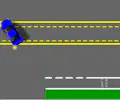
If you want to turn left from a driveway onto a road with a lane marked as shown below, you:
May turn into this lane before merging into regular traffic
Must use this lane before merging into regular traffic
May not turn into this lane while making your left turn
You are waiting at a red light to turn right, and a pedestrian on your right is waiting to cross the street you want to enter. Who has the right-of-way when your light turns green?
You have the right-of-way because your light is green
You have the right-of-way only if the crosswalk is not marked
The pedestrian has the right-of-way
If a car ahead of you has stopped at a crosswalk, you should:
Change lanes, look carefully and pass
Stop, then proceed when safe
Slow down, look both ways and proceed
Go to the right edge of the road and stop
On a green arrow, you must:
Speed up to get through the intersection
Yield to any vehicle, bicycle, or pedestrian in the intersection
Yield only to pedestrians in the intersection
In the first 12 months after licensing, a driver under 18 years of age may:
Transport a passenger under age 20
Drive between 11 p.m. and 5 a.m. alone
Drive at any time when accompanied by a licensed driver at least 25 years of age
Unless prohibited by a sign, you may legally make a u-turn:
In front of a fire station
At an intersection on a one-way street
At an intersection with a green light
If you are stopped at an intersection and the traffic light turns green, can you go immediately?
Yes, other traffic or pedestrians must yield to you
Yes, you now have the right-of-way
Yes, but yield to any vehicle or person still in the intersection
Animals may be transported in the back of a pickup truck only if:
They are properly secured
The tailgate of the truck is closed
The sides of the truck bed are at least 18 inches high
If you are driving on a road with only one lane in each direction and you want to pass, but a curve ahead blocks your view, you must:
Signal longer than five seconds to pass safely
Not pass the other vehicle
Increase your speed to pass safely
When passing another vehicle, it is safe to return to your lane if you:
See the vehicle's headlights in your rearview mirror
Cannot see the vehicle directly to your right
Have passed the other vehicle's front bumper
Which of these is true about other drivers?
Drivers always obey traffic signs and signals
Drivers using turn signals always turn in the direction indicated
Never assume other drivers will give you the right-of-way
When approaching a curve or hilltop and you cannot see the road ahead, you should:
Use your high beam lights to be more visible
Slow down so you can stop if necessary
Pull over and wait for conditions to improve
If you are driving on a road with only one lane in each direction and you want to pass, but a curve ahead blocks your view, you must:
Signal longer than five seconds to pass safely
Not pass the other vehicle
Increase your speed to pass safely
When you change lanes or merge with another lane, you:
Should stop first and check for cross traffic
Have a right-of-way
Need at least a four-second gap in traffic
You must yield the right-of-way at an intersection to:
The car on your right
The car in the opposite lane of traffic
The car on your left
The car in the intersection
If you approach an uncontrolled intersection, you:
Should slow down and be ready to stop, if necessary
Must yield the right-of-way to all vehicles
Should always stop before driving through
Where should you stop your vehicle when there is no limit line?
Just past the corner
At the corner
Twenty feet before the intersection
Parking is never permitted:
Within 20 ft from a railroad track
In a bicycle lane, unless otherwise posted
In the crosshatched area next to a disabled person parking space
Which of these vehicles must stop before crossing railroad tracks?
Tank trucks marked with hazardous materials placards
Motorhomes or pickup trucks towing a trailer
Sport utility vehicles carrying four or more persons
If there are double solid yellow lines in the center of the roadway, you:
Are on a two-lane one-way street
May cross the lines to turn left into a private driveway
Should treat the lines as a solid wall and not cross for any reason
Which of these vehicles must stop before crossing railroad tracks?
Tank trucks marked with hazardous materials placards
Motorhomes or pickup trucks towing a trailer
Sport utility vehicles carrying four or more persons
If there are double solid yellow lines in the center of the roadway, you:
Should treat the lines as a solid wall and not cross for any reason
Are on a two-lane one-way street
May cross the lines to turn left into a private driveway
You see a pedestrian with a white cane at the corner ready to cross the street. the person takes a step back and pulls in his cane. you should:
Honk your horn to let the person know when to cross the street
Stop your car a minimum of six feet from the crosswalk and wait for the person to cross the street
Proceed across the street because the person is not ready to cross
If you are towing another vehicle or trailer on a four-lane freeway, you must travel in:
The far right lane only
Any of the traffic lanes in your direction
Either of the two right lanes
If you drive 55 mph in a 55 mph zone, you can be given a speeding ticket:
Under no circumstances because it is always illegal
Only if you are approaching a sharp curve in the road
If road and weather conditions require a slower speed
When passing another vehicle, it is safe to return to your lane if you:
Cannot see the vehicle directly to your right
See the vehicle's headlights in your rearview mirror
Have passed the other vehicle's front bumper
If you are driving on a highway when a tire blows out on your vehicle, what should you do?
Brake hard and steer to the right
Pump your brakes and slow to a stop on the roadway
Do not apply the brake until the vehicle has almost stopped
When a yellow arrow appears as you wait in a dedicated right turn lane, you should:
Check for pedestrians and then turn with caution
Be prepared to obey the next signal that appears
Stop and do not make the turn under any circumstances
When driving in traffic at night on a dimly lit street, you should:
Drive slowly enough so you can stop within the area lighted by your headlights
Keep instrument lights bright to be more visible to other drivers
Turn on your high-beam headlights to better see the vehicles directly ahead of you
During the first 12 months after you are licensed, you may:
Drive unaccompanied at any time
Transport minors unaccompanied at any time
Not transport passengers under age 20 between p.m. and 5 a.m. unaccompanied
all the above
You should not pass another vehicle:
On a multilane one-way street
When a broken yellow line is on the left side of your lane
Where someone is likely to enter or cross the road
What is the difference between traffic lights with red arrows and those with solid red lights?
You cannot turn against a red arrow, even if you stop first
Red arrows are only used for protected turn lanes
Red arrows are only used to stop traffic that is turning left
You should not enter an intersection with limited space, knowing you will block the intersection:
Under any circumstances
Unless some of the cross traffic can get around you
Unless you have the right-of-way
When driving, you should stay at least:
One car length for each 10 mph of speed behind the vehicle in front of you
20 feet behind the vehicle in front of you
Three seconds behind the vehicle in front of you
Two sets of solid double yellow lines two feet or more apart:
Should be treated like a solid wall and not be crossed
May only be crossed to enter a private driveway
Denote a lane for beginning or ending left-hand turns
Which of the following children requires a child passenger restraint system?
A six-year old weighing 60 pounds
A five-year old weighing 65 pounds
A five-year old weighing 55 pounds
Blocking an intersection during "rush hour " traffic is:
Not permitted unless you have the right-of-way
Not permitted unless some of the cross traffic can get around you
Not permitted under any circumstances
When a yellow arrow appears as you are about to turn from a dedicated left turn lane, you should:
Speed up to get through the intersection
Stop and not turn under any circumstances
Be prepared to obey the next signal that appears
Be prepared to obey the next signal that appears
Drive with your left foot on the brake pedal at all times
Check your rearview mirror often
Turn your head and look over your shoulder
Start braking early as a signal to the driver behind you
Which of these is a safe driving practice?
Using your high-beam lights in the fog
Staring at the road ahead of your vehicle
Checking your rearview mirrors frequently
When should you use your headlights?
Any time you have trouble seeing other cars
One hour after sunset
Any time you can't see at least one mile ahead
Braking studies have shown that a tractor-trailer traveling at 55 mph needs ____ the distance to stop as an automobile.
two times
the same
three times
four times

