wayground logo

Free Printable Worksheets

Font size

S
M
L
XL
Worksheets

SB 3 abc Mega Review

Total questions: 86

Worksheet time: 2hrs 0mins

Name
Class
Date
1.

Who is Gregor Mendel

a)

an Austrian Monk from the mid 1800s who contributed to the study of Genetics

b)

The scientist who discovered the structure of DNA

c)

a British scientist who discovered penicillin

d)

The scientist who used X-Ray Crystallography to shed light on the structure of DNA

2.

Which of the following is heterozygous?

a)

MM

b)

Mm

c)

mm

3.

Which of the following is homozygous dominant?

a)

RR

b)

Rr

c)

rr

4.

Which of the following is homozygous recessive?

a)

PP

b)

Pp

c)

pp

5.

What term denotes the physical expression of a gene?

a)

genotype

b)

phenotype

c)

appearance

d)

homologous

6.

Which term denotes the combination of genes an organism has?

a)

genotpye

b)

phenotype

c)

heterozygous

d)

homozygous

7.

Which of the following would produce a recessive phenotype?

a)

hh

b)

Rr

c)

Ww

d)

BB

8.

What organism did Mendel study?

a)

pea plants

b)

onions

c)

mice

d)

cats

9.

If Y (yellow) is the dominant allele for pea plant seed color, which of the following would produce green seeds?

a)

yy

b)

Yy

c)

YY

d)

gg

10.

What are the chances that two white flower (pp) pea plants could produce a purple flower pea plant?

a)

0%

b)

25%

c)

50%

d)

75%

11.

If Y (yellow) is the dominant allele for pea plant seed color, which of the following would produce green seeds?

a)

yy

b)

Yy

c)

YY

d)

gg

12.

What observation did Mendel make about certain traits that led him to conclude that some traits were dominant to other traits?

a)

Some traits appeared once every 10 generations.

b)

Some traits appeared twice every 10 generations.

c)

Some traits never appeared.

d)

Some traits appeared in most or all of the generations.

13.

Which of the following best describes Mendel's law of dominance?

a)

When an organism has two different alleles of the same gene, both genes will be expressed equally.

b)

When an organism has two alleles, one of genes will be expressed and the other will be hidden.

c)

When an organism has two different alleles of the same gene, one will always be dominant.

d)

The stronger of the two genes will be expressed.

14.

What is Mendel's Law of Independent Assortment?

a)

If the recessive allele is passed for one trait, then it is more likely that the recessive allele will be passed for the other trait.

b)

The passing of allele of one trait does not affect the passing of allele of another trait.

c)

If the dominant allele is passed for one trait, then it is more likely that the dominant allele will be passed for the other trait.

d)

If the dominant allele is passed for one trait, then it is more likely that the recessive allele will be passed for the other trait.

15.

Mendel's Law of Segregation means?

a)

Every person has two alleles for each trait, they segregate from each other and the dominant is passed more often.

b)

Every person has two alleles for each trait, Where two traits are being passed, they do not effect each other.

c)

Every person has two alleles for each trait, they segregate from each other and are passed down at random.

d)

Every person has two alleles for each trait, they segregate from each other and the recessive is passed more often.

16.
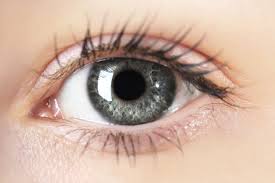
Which is a true statements about this picture?
a)
Brown is recessive
b)
Brown is dominant
c)
Blue is dominant
d)
Blue is codominant
17.
The different forms of genes are known as
a)
environment
b)
probability
c)
traits
d)
alleles
18.

In a trait with a dominant/recessive relationship, how frequently do we expect to find the dominant phenotype compared to the recessive phenotype?

a)

1:1

b)

3:1

c)

2:2

d)

5:4

19.
What are the possible genotypes for this cross?
a)
TT = 25% Tt= 50% tt=25%
b)
all tall
c)
TT= 75% tt = 25%
d)
Tt = 100%
20.

A calico cat shows both the traits for orange fur and black fur. What kind of allele expression is this?

a)

Incomplete Dominance

b)

Codominance

c)

Independent assortment

d)

Recessive inheritance

21.
A red flowered plant (RR) breeds with a White flowered plant (WW). The gene for petal color in these plants expresses incomplete dominance.  What percentage of the offspring will have pink (RW) flowers?
a)
0%
b)
25%
c)
50%
d)
100%
22.

This type of inheritance pattern shows BOTH traits in possible offspring

a)

complete dominance

b)

incomplete dominance

c)

codominance

d)

dominant pattern

23.
A green pea plant (Gg) is crossed with a yellow pea plant (gg). Describe the genotype of the offspring. (Be sure to remember that the capital letter is dominant).
a)
50% heterozygous and 25% homozygous recessive
b)
50% heterozygous and 50% homozygous recessive
c)
100% homozygous recessive
d)
25% heterozygous and 50% homozygous
24.

The physical appearance of a trait is known as the-

a)

genotype

b)

phenotype

c)

Homozygous

d)

intelligence

25.

What is the probability of heterozygous offspring?

a)

25%

b)

50%

c)

0%

d)

100%

26.

In plants, tall (T) is dominant to short (t).


Draw a punnett square and perform the following cross: Tt x Tt


What is the probability of producing a short plant?

a)

0%

b)

25%

c)

50%

d)

75%

27.

What genotype would go in box 2? And is it Homozygous or Heterozygous?

a)

BB Heterozygous

b)

Bb Heterozygous

c)

bb Homozygous

d)

Bb Homozygous

28.

Kyree is heterozygous. If (W) is for waves, and (w) if for no waves.


What is Kyree’s genotype & phenotype?

a)

WW : waves

b)

ww : waves

c)

Ww : no waves

d)

Ww : Waves

29.
In certain species of plants, purple flowers (P) are dominant to white flowers (p). If two heterozygous plants are crossed, what will be the phenotype of the offspring?
a)
100% purple flowers
b)
100% white flowers
c)
75% white flowers, 25% purple flowers
d)
25% white flowers, 75% purple flowers
30.
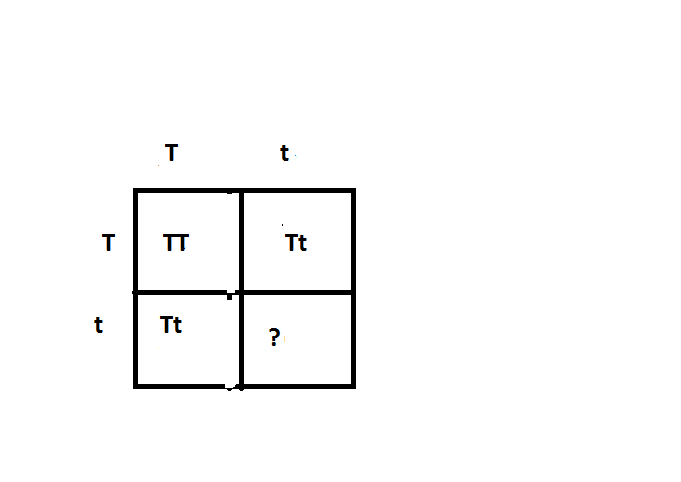
T - tall and t = short
In the punnett square below, what belongs in the missing square
a)
tt
b)
Tt
c)
Bb
d)
TT
31.
In a pedigree, what shape represents a male?
a)
circle
b)
square
c)
triangle
d)
diamond
32.
What does an open circle represent?
a)
Not Affected Male
b)
Not Affected Female
c)
Affected Male
d)
Affected Female
33.
What does a filled in square represent?
a)
Not affected Female
b)
Not affected Male
c)
Affected Male
d)
Affected Female
34.
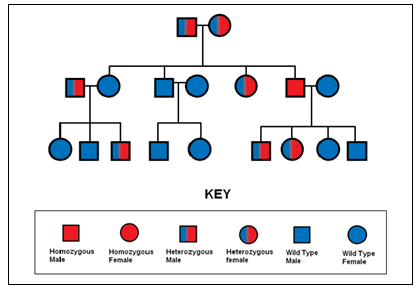
What do half colored symbols represent?
a)
The individual is a carrier (heterozygous).
b)
The individual expresses the trait.
c)
The individual has both recessive alleles.
d)
The individual has both dominant alleles.
35.
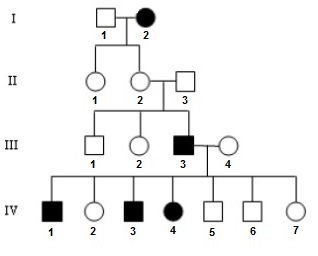
How many individuals are there in the 3rd generation?
a)
2
b)
3
c)
4
d)
6
36.
Give the genotype for person III-3
a)
GG
b)
Gg
c)
gg
37.
How many kids did the mother and father from the first generation have?
a)
2
b)
4
c)
5
d)
6
38.
This pedigree represents the inheritance of hemophilia in this family. How many of the females have the hemophilia trait?
a)
8
b)
5
c)
2
d)
3
39.

If this pedigree shows a recessive disorder, what MUST the genotype of individual 4 be?

a)

HH

b)

Hh

c)

hh

40.

the failure of chromosomes to separate properly during meiosis

a)

crossing over

b)

nondisjunction

c)

CT-ME-HI

d)

substitution

41.
In flowers, a red (RR) flower and a white flower (WW) are crossed. What are the genotypes and phenotypes of their offspring?
a)
100% pink (RW)
b)
50% red (RR); 50% white (WW)
c)
75% pink (RW); 25% white (WW)
d)
100% red (RR)
42.
In flowers, 2 pink (RW) flowers are crossed. What are the genotypes and phenotypes of their offspring?
a)
100% pink (RW)
b)
50% pink (RW); 25% white (WW); 25% red (RR)
c)
75% pink (RW); 25% white (WW)
d)
100% red (RR)
43.
A father that is heterozygous blood type A is crossed with a heterozygous blood type B mother. What will be the genotype of the offspring?
a)
50% AB; 50% OO
b)
25% AB,  25% AO, 25% BO, 25% OO
c)
25% AA, 25% BB, 25% AB, 25% OO
d)
100% AB
44.
A father that has blood type O is crossed with a blood type O mother. What will be the genotype of the offspring?
a)
50% AB; 50% OO
b)
25% AB,  25% AO, 25% BO, 25% OO
c)
25% AA, 25% BB, 25% AB, 25% OO
d)
100% OO
45.
In chickens feather color is controlled by codominance.
If a black chicken (BB) is crossed with a speckled (black and white) chicken (BW) what will be the phenotypes of the offspring?
a)
100% speckled (black and white)
b)
50% speckled (black and white); 50% black
c)
75% white; 25% speckled (black and white)
d)
50% white; 50% black
46.
Having two of the SAME alleles for a trait (example HH or hh):
a)
homozygous
b)
heterozygous
c)
recessive
d)
whack, dawg.
47.
This type of inheritance pattern is a MIXTURE of both traits, like the old theory of blending
a)
incomplete dominance
b)
co-dominance
c)
complete dominance
d)
recessive pattern
48.
This type of inheritance pattern shows BOTH traits in possible offspring:
a)
complete dominance
b)
incomplete dominance
c)
co-dominance
d)
Indomitable 
49.
The Father of Genetics is:
a)
Mike the Barber
b)
Howie Mendel
c)
George Mandible
d)
Gregor Mendel
50.
In this Punnett Square, bb is crossed with BB. What is the probability of a resulting Bb?
a)
0%
b)
25%
c)
50%
d)
100%
51.
Which of the following is a phenotype?
a)
Aa
b)
red hair
c)
heterozygous
d)
BB
52.

What you see, or the visible result of heredity.

a)

Genotype

b)

Phenotype

c)

Homozygous

d)

Heterozygous

53.
G = green, g = yellow
The genotype for a yellow plant is...
a)
GG
b)
Gg
c)
gg
d)
all of the choices result in yellow
54.
In the punnett square shown, what must the genotype of the missing parent be?
a)
BB
b)
Bb
c)
bb
d)
Tt
55.

In a pedigree, which shape represents a male?

a)

circle

b)

square

56.
What do we use pedigrees for?
a)
To look at families
b)
To make determinations about the offspring
c)
To track traits in families
d)
Nothing
57.
This is an example of ___________?
a)
Incomplete dominance
b)
Co-Dominance
58.
This is an example of ___________.
a)
 Incomplete Dominance
b)
 Codominance
59.
A calico cat shows both the traits for orange fur and black fur. What kind of allele expression is this?
a)
Incomplete Dominance
b)
Co dominance
60.
What type of inheritance do two alleles have if their traits blend together? 
a)
Incomplete Dominance
b)
Co-Dominance
61.
This is an example of ___________.
a)
Incomplete Dominance
b)
Codominance
62.

Incomplete dominance occurs in cats, which allows them to be Black, White, or gray as shown on this Punnett square. What percentage of the offspring will be gray?

a)

25

b)

50

c)

75

d)

100

63.

A brown rooster and a white chicken produced this speckled offspring:

a)

Incomplete dominance

b)

Codominance

c)

Complete dominance

64.

What type of inheritance pattern is shown here?

a)

Codominance

b)

Incomplete dominance

65.

A woman with curly hair and a man with straight hair produced a child with wavy hair:

a)

Incomplete dominance

b)

Codominance

c)

Complete dominance

66.

The process used for asexual reproduction is

a)

meiosis

b)

mitosis

67.

Offspring that are produced by only one parent are

a)

genetically diverse

b)

clones

c)

gametes

68.

A type of organism that reproduces using binary fission is

a)

humans

b)

insects

c)

bacteria

d)

sharks

69.

Sexual reproduction requires two

a)

gametes

b)

blastocysts

c)

embryos

70.

A benefit of sexual reproduction is

a)

less energy is used

b)

greater genetic diversity in the species

c)

it is more efficient than asexual reproduction

71.

Processes that happen during meiosis to increase genetic diversity include (choose 2)

a)

nondisjunction

b)

crossing over

c)

fertilization

d)

independent assortment of chromosomes

72.

A disadvantage of sexual reproduction is that it is

a)

more time consuming than asexual reproduction

b)

creates less diversity than asexual reproduction

c)

uses less energy than asexual reproduction

73.

Why is greater genetic diversity important for a species?

a)

the species is more likely to survive disasters

b)

the population of the species will never get too large

c)

there will be less competition with other species

74.
If an organism reproduces asexually, its offspring will most likely be:
a)
produced as a result of fertilization
b)
Genetically identical to the parent
c)
Genetically different from each other
d)
Produced from specialized cells known as gametes
75.
Which statement below is correct about asexual reproduction and sexual reproduction?
a)
Asexual reproduction and sexual reproduction both involve one parent
b)
Sexual reproduction involves making clones and asexual reproduction creates unique offspring
c)
Asexual reproduction creates clones and sexual reproduction creates unique offspring
76.
Genetic Variation means
a)
genetic differences in a population or species
b)
genetic similarities between a population or species
77.
What are some of the facts about asexual reproduction?
a)
Takes only one mate to reproduce and takes a longer time to reproduce
b)
Takes a shorter amount of time to reproduce and it takes two mates to reproduce
c)
Reproduces diverse offspring and takes a longer time to reproduce
d)
Takes only one mate to reproduce and takes a shorter time to reproduce
78.
When a starfish grows a new body off a broken arm, what kind of reproduction is this?
a)
Sexual
b)
Differentiation
c)
Asexual 
d)
Specialization
79.

What kind of reproduction is pictured?

a)

spore reproduction

b)

fragmentation

c)

parthenogenesis

d)

budding

e)

runner

80.

What kind of reproduction is pictured?

a)

spore reproduction

b)

fragmentation

c)

parthenogenesis

d)

budding

e)

runner

81.

A fertilized egg is called a ____.

a)

baby

b)

sperm

c)

egg

d)

zygote

82.

What is a gamete?

a)

sex cell

b)

human cells

c)

plant cells

d)

plant and animal cells

83.

The male gamete is a ______. The female gamete is a _____. When the two gametes come together, it's called _____.

a)

egg, sperm, offspring

b)

sperm, egg, offspring

c)

sperm, egg, gamete

d)

sperm, egg, asexual reproduction

e)

sperm, egg, fertilization

84.

How many parents are required for asexual reproduction?

a)

none

b)

1

c)

2

d)

4

85.

Asexual reproduction happens quicker than sexual reproduction.

a)

true

b)

false

86.

How many parents are involved with sexual reproduction?

a)

none

b)

1

c)

2

d)

4