
Font size
 Worksheets
HS Mid-Term Review Part 2
Total questions: 76
Worksheet time: 2hrs 6mins
Choose all the items that are elements.
NaCl (table salt)
Sulfur
O2
Water
Air
Choose all of the items that are compounds.
NaCl (table salt)
Sulfur
O2
Water
Air
Which element is similar to Li?
Be
K
Which element is similar to Mg?
Ca
B
Which element is the least reactive?
Li
Ne
B
C
Which choice shows the elements in order from most reactive to least reactive. Sr, K, Cl, P
Sr, K, Cl, P
K, Cl, Sr, P
K,P, Sr, Cl
K, Sr, P, Cl
Students in Mrs. Clark's science class are investigating a substance that has the following properties
-shiny
-bends easily
-hard, not easily broken
Based on these properties how would you classify the substance?
metal
nonmetal
metalloid
What is the name of group number 1?
halogens
noble gases
alkali metals
alkaline earth metals
Periodic law states that the elements are arranged according to their atomic ________ so that elements with similar chemical properties are in the same ________ and properties repeat periodically.
numbers, rows
masses, rows
masses, column
numbers, column
A grouping of elements based on similar chemical properties, arranged by columns in the periodic table; also known as a group
family
period
row
isotope
A row on the Periodic Table of Elements
family
period
row
isotope

Which element is found in group 2, period 6?
Oxygen (O)
Barium (Ba)
Selenium (Se)
Carbon (C)
Which halogen is found in period 4?
Krypton (Kr)
Xenon (Xe)
Bromine (Br)
Iodine (I)
Which element has similar chemical properties as sodium but has 7 energy levels?
Francium (Fr)
Cesium (Cs)
Rubidium (Rb)
Potassium (K)

How many protons are in one carbon atom?
1
6
12.01
12
How many electrons are in one carbon atom?
1
6
12.01
12
How many electrons are in one carbon atom?
1
6
12.01
12

What is the atomic mass of Neon?
10
20.18
10.18
20

4
9
5
2

What is the atomic mass of Gold?
79
196.97
79.97
275
Group 18
Noble Gases
Group 1
Alkali Metals
Group 2
Alkaline Earth Metals
Groups 3-12
Transition metals
Group 17
Halogens
Elements
Contain only one type of atom
Molecules
at least 2 atoms combined together
Compounds
At least 2 DIFFERENT atoms combined together
Mixture
2 or more substances that are NOT chemically combined
Located in the nucleus; have a positive charge; and a mass of 1 amu
Protons
Located outside of the nucleus; have a negative charge; and a mass of 1/2000th of an amu
electrons
located in the nucleus; have no charge; and no charge
neutrons
Elements with similar qualities are located in the same
(a)


What is the name of this ion?
oxide
oxygen

Why are ions formed?
To make our lives difficult
Because atoms want to be stable with 8 valence electrons
Because atoms have the same number of protons and electrons
Because atoms gained neutrons

How many protons, neutrons, and electrons?
proton = 6, neutron = 4, electron = 1
proton = 4, neutron = 4, electron = 5
proton = 1, neutron = 6, electron = 10
proton = 4, neutron = 2, electron = 3
A Bromine ion gains 1 electron, which of the following is the correct symbol for a Bromine ion?
Br-1
Br+1
Br+7
Br-7
What is an ion?
an atom in which the number of protons equals the number of electrons.
an atom in which the number of protons is not equal to the number of electrons.
an atom with a charge
an atom created when an atom gains or lose electrons
What is the ion formed from Sulfur? If it has 6 valence electrons.
S+2
S-2
S+6
S-6
How many electrons would a Calcium ion gain/lose? If it has 2 valence electrons.
lose 1
gain 1
lose 2
gain 2
A Bromine ion gains 1 electron, which of the following is the correct symbol for a Bromine ion?
Br-1
Br+1
Br+7
Br-7
If an element has 3 valence electrons, what charge will likely form on its ion ?
+3
+5
-3
-5
Be has 2 valence electron. It will have a charge of _______
+1
+2
-1
-2
Al has 3 valence electron. It will have a charge of _______
+3
-3
+2
-2
P has 5 valence electron. It will have a charge of _______
+3
-3
+2
-2
In which process does a heavy nucleus split into two lighter nuclei?
freezing
condensation
fission
fusion
Which phrase describes a risk associated with producing energy in a nuclear power plant?
depletion of atmospheric hydrogen
depletion of atmospheric carbon dioxide
production of wastes needing long-term storage
production of wastes that cool surrounding water supplies
Which reaction represents fusion?




Which reaction represents fission?




Which risk is associated with using nuclear fission to produce energy in a power plant?
depletion of hydrocarbons
depletion of atmospheric oxygen
exposure of workers to radiation
exposure of workers to sulfur dioxide
A serious risk factor associated with the operation of a nuclear power plant is the production of
acid rain
helium gas
greenhouse gases, such as CO2
radioisotopes with long half-lives
What is a problem commonly associated with nuclear power facilities?
A small quantity of energy is produced.
Reaction products contribute to acid rain
It is impossible to control nuclear fission.
It is difficult to dispose of wastes.
The operation of a commercial nuclear reactor requires an isotope that will undergo
fission and a controlled chain reaction
fission and an uncontrolled chain reaction
fusion and a controlled chain reaction
fusion and an uncontrolled chain reaction
The purpose of the high-density concrete used in some nuclear reactors is to
shield the reactor walls from radiation damage
shield the reactor personnel from radiation exposure
control the rate of the nuclear reaction
control the speed of the neutrons
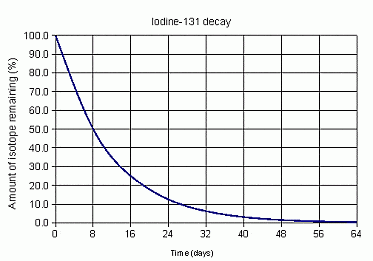
The % of the parent isotope remaining after 1 Half Life.
50%
25%
12.5%
6.25%
The % of the parent isotope remaining after 2 Half Lives.
50%
25%
12.5%
6.25%
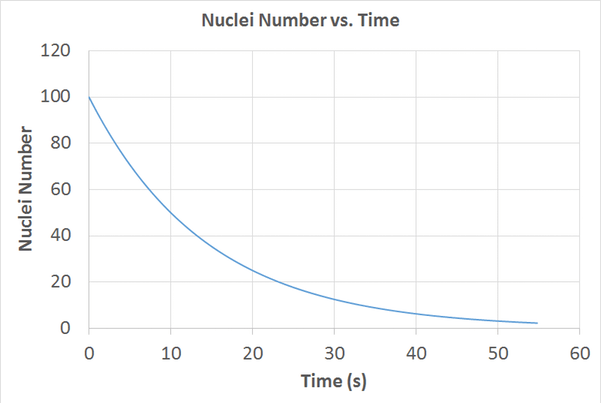
What is the Half life of this isotope?
5 seconds
10 seconds
15 seconds
20 seconds
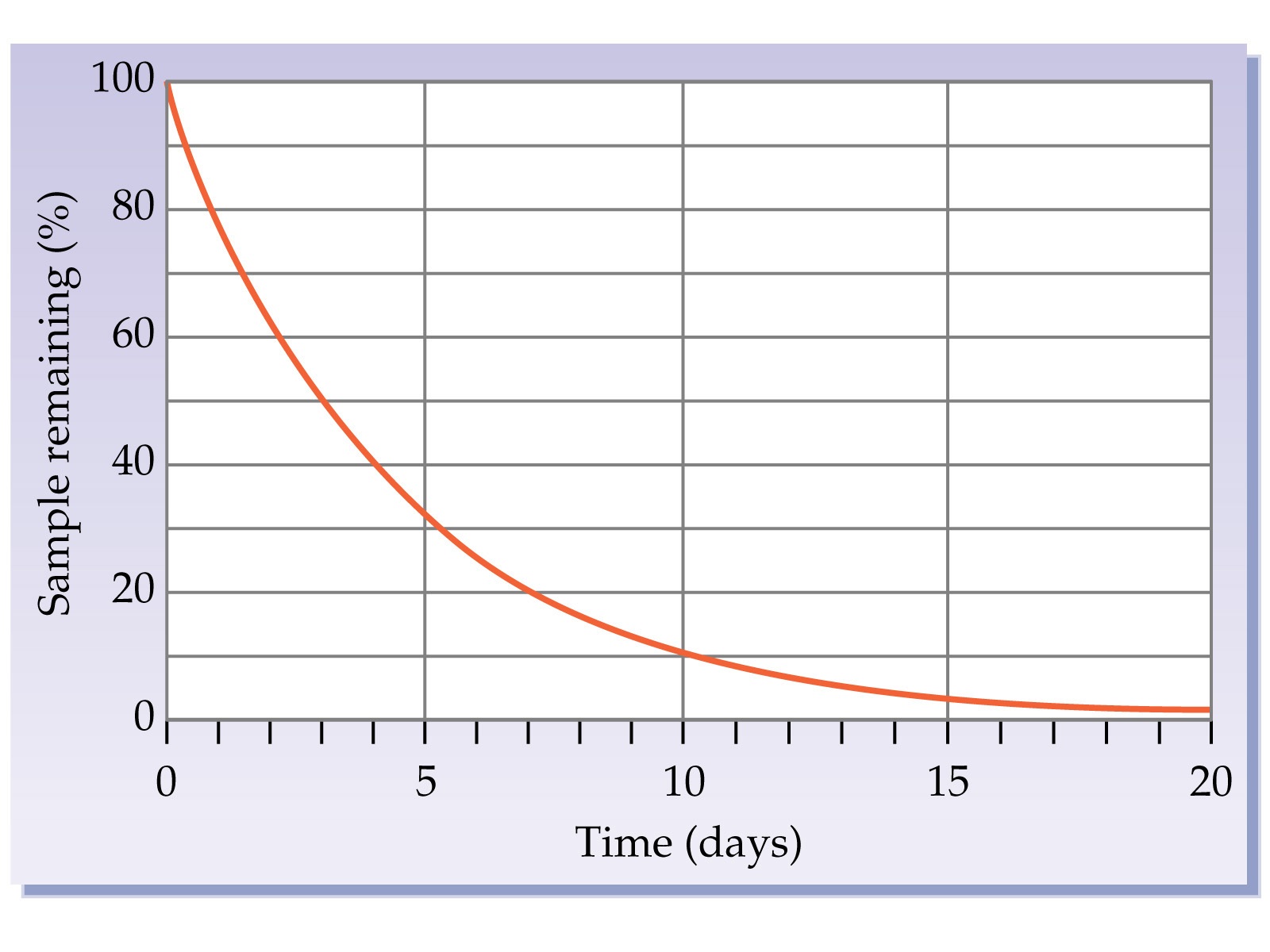
What is the Half Life of this isotope?
3 days
5 days
8 days
10 days

Why do some elements have half-lives?
they radioactively decay
half of their atom gets stolen
They are Twizzlers that break in half
What is the only difference between two different isotopes of the same element?
Number of neutrons
Number of protons
Number of electrons
Size of atom

After the third half-life, how much of the sample is left?
1/2
1/3
1/16
1/8
The % of the parent isotope remaining after 2 Half Lives.
50%
25%
12.5%
6.25%
The % of the parent isotope remaining after 1 Half Life.
50%
25%
12.5%
6.25%
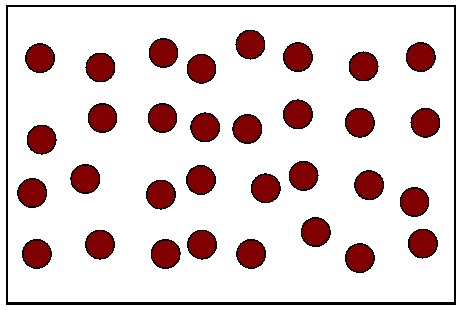
The diagram shows 32 atoms
32 of the Red are the parent isotope
0 of the atoms are daughter isotopes
How many half-lives have occurred?
0
1
2
3

