
Font size
 Worksheets
SCIENCE 7 AARON - INVENTORY EXAM 23-24
Total questions: 91
Worksheet time: 45mins
It is a simple statement that presents the possible solution to the problem.
hypothesis
experiment
conclusion
variables
It is also called as the constant variables, in which the variables are kept constant.
Independent variables
controlled variables
dependent variables
variables
It is a forecast of future events based on past observation. And sometimes interchangeable to hypothesis.
hypothesis
fair testing
prediction
experiment
Anything that can change in an experiment is called a ________.
measurement
variable
obeservation
hypothesis
In the set experiment about "does the fertilizer affect the growth of plants", the amount of fertilzer is what kind of variable?
independent variable
dependent variable
controlled variable
It is the fifth step in scientific method, that states the summary of the results of the experiment and here is the statement of how the results match up to the hypothesis.
Reporting findings
Analyzing data and Presenting Data
Creating a conclusion
It is an orderly process of empirical investigation that is focused on solving a problem.
(a)
What type of mixture is a solution?
Homogeneous
Heterogeneous
Immiscible
Saturated
The substance being dissolved in a solution is called the _________.
Solvent
Solute
Solid
Solvute
The universal solvent is ________.
sodium
acid
salt
water

In the above picture, a powder is about to be poured into the liquid. Which of the following should be done to make this powder dissolve faster?
stir the powder in the liquid
add more powder to the liquid
freeze the mixture
store the mixture in a dark place
Powdered juice, sugar, and water. Which is the solvent?
powdered juice
sugar
water
powdered juice and sugar

In this mixture, which of the following will be the solute?
The water in the glass.
The solution containing both powder and water.
The glass that holds the mixture.
The powder on the spoon.
You were given a 40 mL solution in a beaker. You added solute to the beaker and you observed some particles did not dissolve. What solution is it?
Saturated
Unsaturated
Concentrated
Supersaturated
What do you call a solution that contains the maximum amount of solute dissolved by a given amount of solvent?
Dilute solution
Concentrated solution
Saturated solution
Unsaturated solution
Which of the following refers to the solution that contains less solute than can dissolve at a given temperature?
Dilute solution
Concentrated solution
Saturated solution
Unsaturated solution
An unsaturated solution contains less solute than required.
True
False
What do you called a group of molecules are mixed and evenly distributed in a system and appears as one composition but composed of two substances?
Solution
Solute
Solvent
Mixtures
The following are properties of solution except one.
Particles are not visible to the unaided eye.
Particles cannot be filtered.
It is a one-phased system.
Particles scatter light.
Give one reason why people stir coffee or juice in water after they have added sugar?
Stirring will make the solution sweeter.
Stirring will help sugar mix evenly in
water.
Stirring will make the taste of the
solution good.
Stirring will allow faster spreading of
solute particles in the solvent.
How do you classify alloy as a substance?
Solid Solution
Manufactured Solution
Homogenous Mixture
All of the given choices
A solution is made by mixing coffee and sugar in a cup of hot water. Which of the following is the solvent in the solution?
coffee
hot water
sugar
cup
When no more solute dissolves the solution is _________
supersaturated
unsaturated
saturated
supercalifragilisticexpialidocious
The substance being dissolved is called the ________
solvent
solid
solute
solvate

A student is preparing solutions for a laboratory experiment by dissolving solid solutes in liquid solvents. Which action will increase the rate of solubility
lowering the temperature of the solvent
stirring the solute in the solution
increasing the pressure on the solution
increasing the particle size of the solute
What is the percent by mass of a sugar solution where 10 grams of sugar is added to 100 grams of water?
.10%
0.091%
9.1%

What element is present in this necklace?
A. Iron
B. Neon
C. Gold

What element is this tray made of?
Aluminum
Silver
Nickel

What are the two elements present in water?
Hydrogen and nitrogen
Hydrogen and oxygen
Oxygen and Nitrogen

What element is this wire made of?
Copper
Gold
Silver

What element is present in this?
Platinum
Iron
Germanium

What is the red liquid that rise when you get your temperature?
Sulfur
Lithium
Mercury

What element is the diamond made of?
Oxygen
Carbon
Nitrogen

What element is present in this can?
Titanium
Boron
Tin

What element is present in the match stick?
Potassium
Phosphorus
Chlorine

What is the symbol of iron?
Fe
FE
I
Ir
The symbol for Potassium is
P
K
Po
Ka
(a) is the symbol for Gold.
Silver derived its symbol from the Latin word (a) .
(a) is used to conduct heat in a thermometer.
What is the symbol for the element which is considered as fool's gold?
Co
Ca
C
Cu
What is the lightest element?
Helium
Neon
Oxygen
Hydrogen
What is the symbol of the element which is considered as the wonder metal?
Cu
Ni
Fe
Al
The complete list of the names of the elements together with their symbols and other characteristics is found in the (a) .
Which among the following is not a metallic element?
gold
silver
mercury
carbon

What is Kr?
Potassium
Krypton
Chlorine
Krapti.

Atomic number of Ga?
31
12
4
45
30-29= what element?
Lawrence
Lead
Hydrogen
Mercury
3rd element?
Potassium
Arsenic
Xenon
Lithium
How many periods or rows on the periodic table?
5
8
7
9
Who invented the periodic table?
Dmitri Mendeleev
Rosa Parks
Thomas Edison
Albert Ghisoro
Which element has the highest electronegativity
Flourine
Copper
Nitrogen
Silver
Positive partical?
Neutrons
Electrons
Protons
Pizza
Most of the mass of an atom is found it its?
house
The Modern Periodic Table of Elements is arranged by
atomic mass
atomic number
valence electrons
number of isotopes
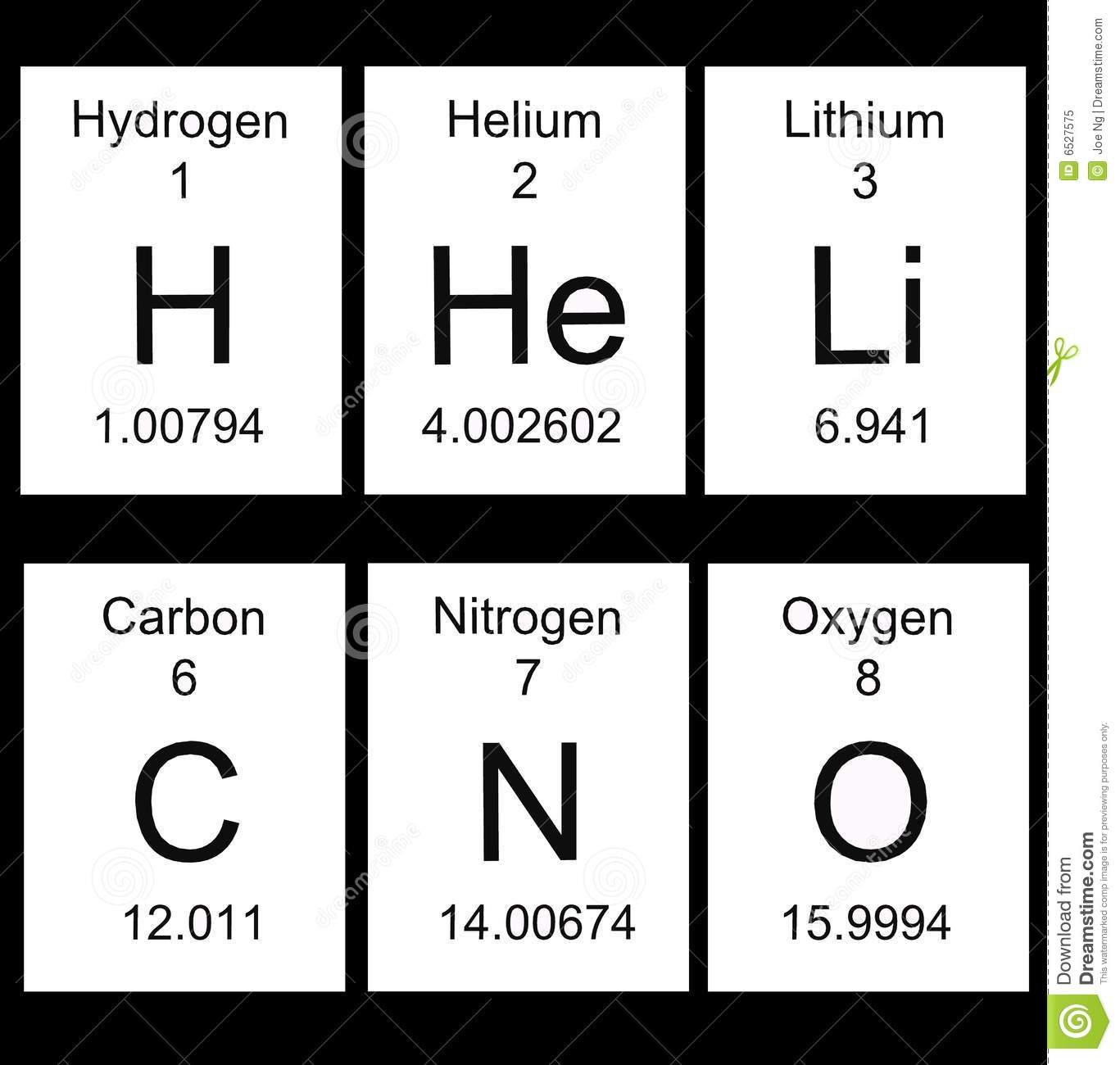
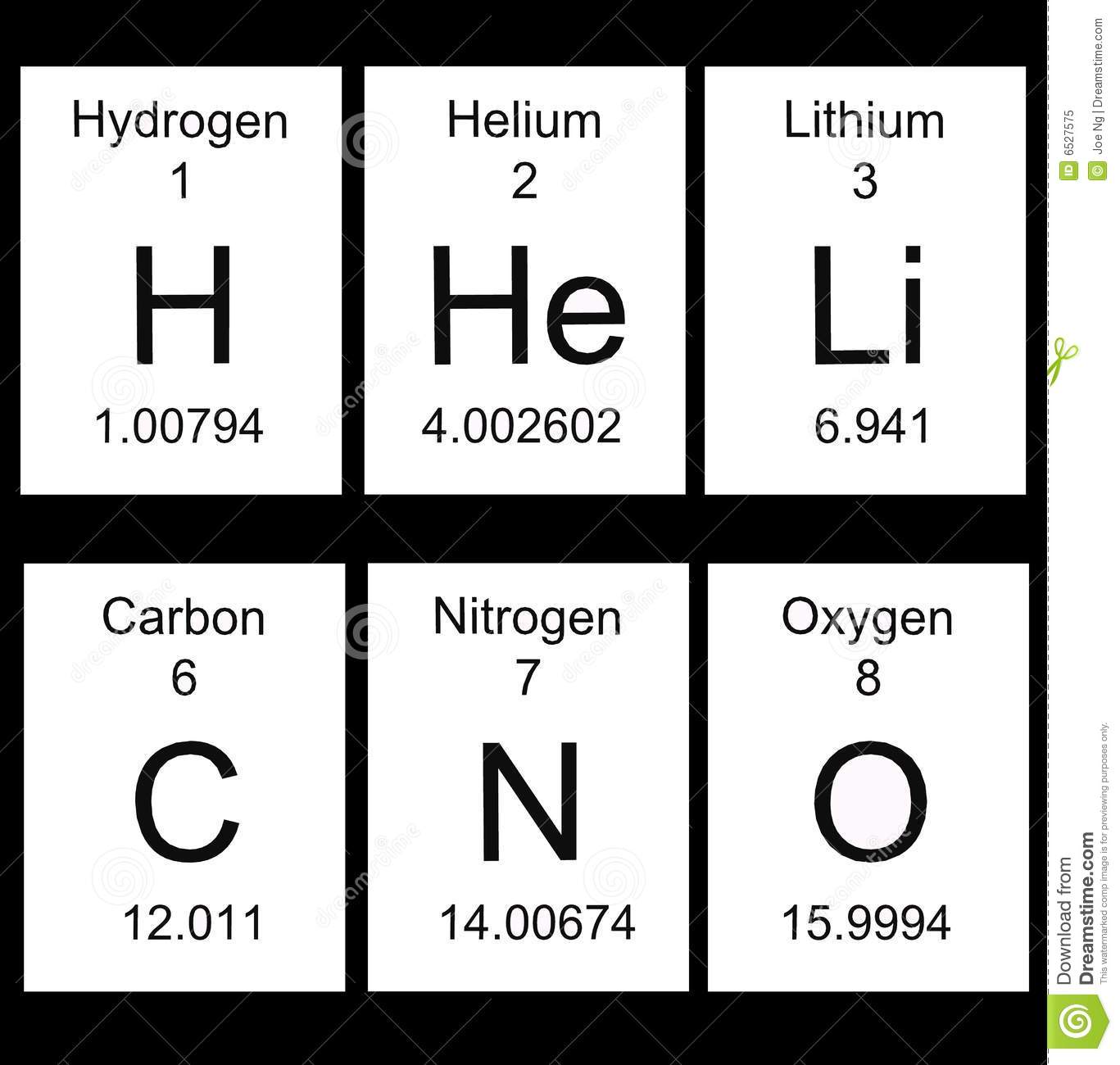
In each square of the periodic table, the number at the bottom is the:
atomic number
atomic mass
chemical symbol
element name

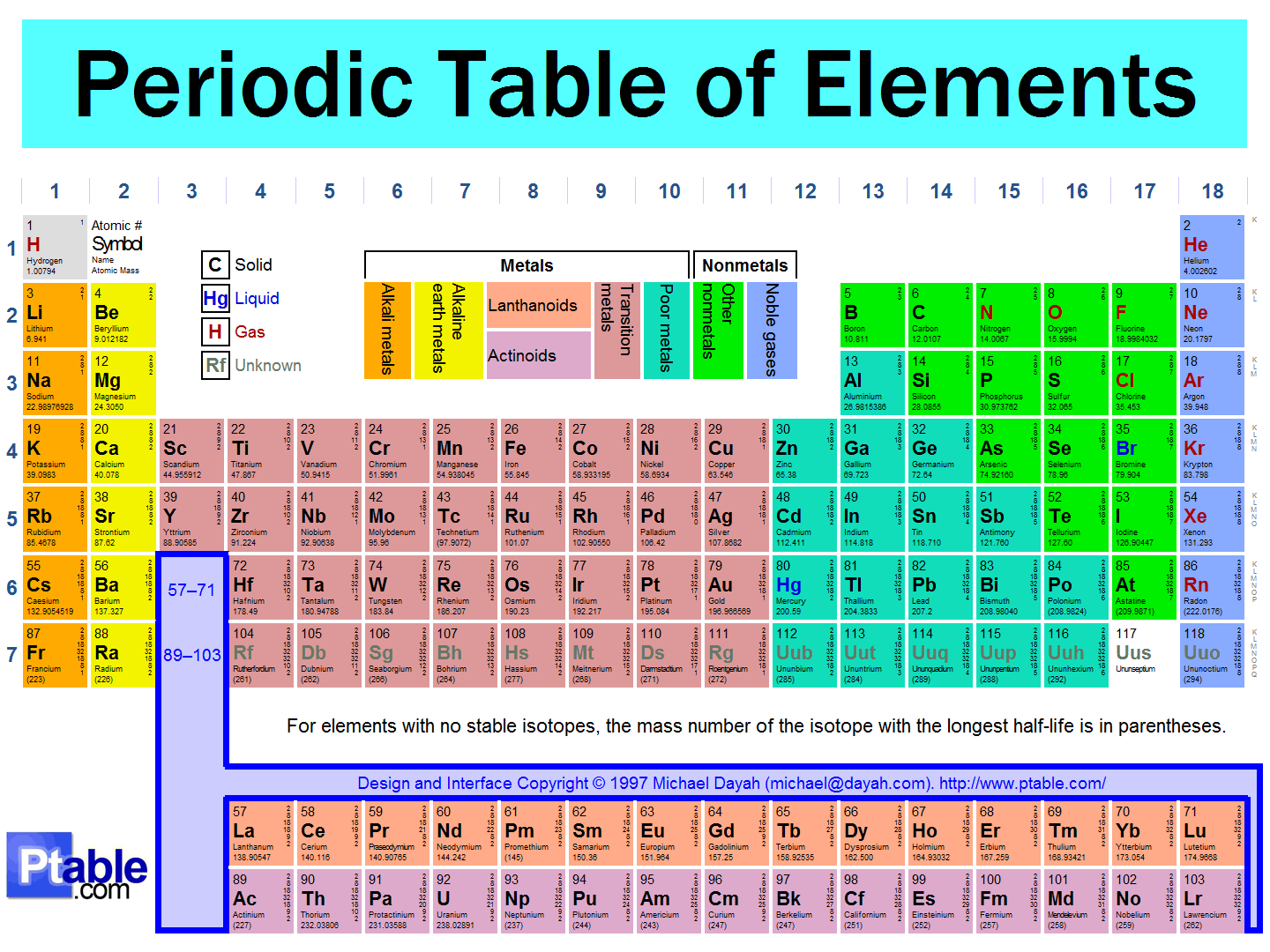
The horizontal rows on the periodic table are called
groups
families
periods
atomic numbers

On the periodic table, elements on the right side of the "stair-step" line are classified as:
nonmetals
metals
gases
Halogens
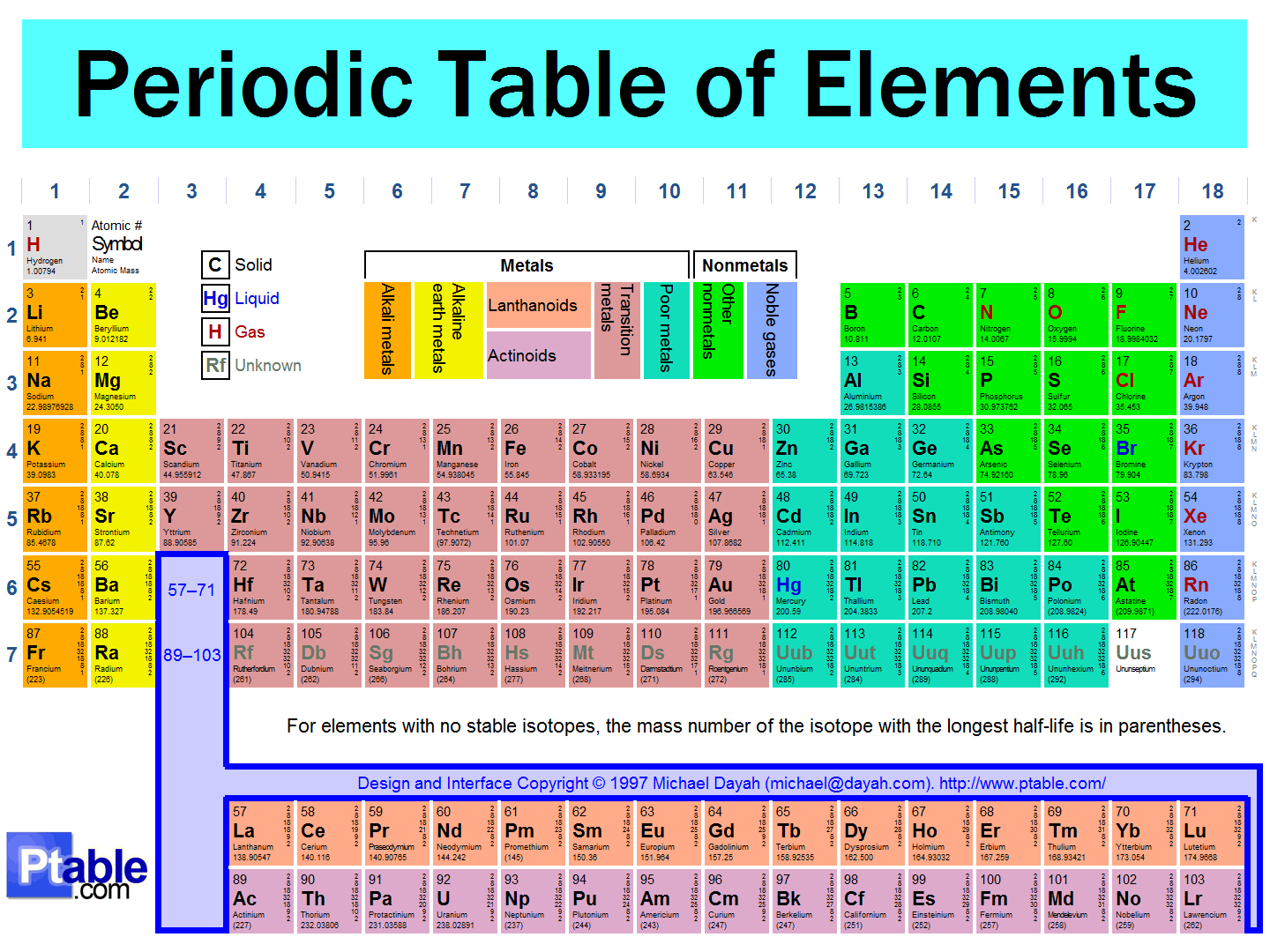
These elements located on the "stair-step" line are sometimes called "semiconductors."
Metals
Nonmetals
Metalloids
Groups


noble gases


Halogens (Group 17)
gas at room temperature, low boiling point.
most reactive nonmetals
The electrons in the outermost shell (main energy level) of an atom; these are the electrons involved in forming bonds
Number of protons and neutrons
an organism

