Worksheets
bb Mitosis and Meiosis
Total questions: 103
Worksheet time: 1hrs 14mins
The purpose of cell division in eukaryotes is to
repair
replace
reproduce
grow
Cells are capable of growing, reproducing, and programmed cell death. Therefore they have their own life spans called the
cell cycle
mitosis
meiosis
cancer
If genes are mutated in some way cell division can become out of control leading to
meiosis
mitosis
cancer
DNA
Cells require _ which is transported across the membrane.
oxygen
water
food
volume
Ideally cells need to be _ so they are more efficient.
small
large
medium
animal
A parent cell divides to form
daughter cells.
son cells.
skin cells.
nucleus.
In order for a cell to divide it must first
eat other cells.
make lipids.
grow large enough.
replicate its DNA.
DNA (many genes) and proteins (such as histones) make up
nuclei.
chromosomes.
cancer.
nutrients
The cell's DNA is in this form most of its life (loosely dispersed DNA)
chromatin.
chromatid.
chromosome.
ball.
The center of a chromosome that attaches sister chromatids is called the
chromatin.
nucleus.
centromere.
cytokinesis.
The cell spends the majority of its time (90%) in this phase.
telophase
prophase
anaphase
interphase
The splitting in half to form two new cells is called
cytokinesis.
mitosis.
meiosis.
cancer.
When you cut your skin _ speeds up to repair it.
mitosis
meiosis
cytokinesis
chromatin
What is the process of cell division in which one cell divides into two identical cells?
Meiosis
Mitosis
Cytokinesis
Chromatin
What is the term for the two identical copies of a chromosome that are joined at the centromere?
Chromatid
Chromatin
Centromere
Nucleus
What is the phase of the cell cycle in which the cell grows and DNA is replicated?
Interphase
Prophase
Metaphase
Anaphase

During which phase of the cell cycle does the cell spend the most time?
Mitosis
Cytokinesis
Interphase
Match the image to the correct answer

Prophase

Metaphase

Anaphase

Telophase

Cytokinesis
Label the parts of the Cell Cycle
G1
S phase
G2
Mitosis
Mitosis is the division of the (a)
Click where DNA replication takes place
Cytokinesis is the division of the (a)
How many phases does Mitosis have?
3
6
4
5
Match each phase with its correct description
Cell grows rapidly while carrying out normal functions.
G1 Phase
Cells must replicate their DNA before cell division to ensure that identical genetic information is passed to the next generation.
S Phase
FINISHES GROWING
Errors in DNA replication are checked- if something is wrong, cell needs to fix its errors before it divides!
G2 Phase
What are the THREE MAIN events in cell division
INTERPHASE
CYTOKINESIS
PHOTOSYNTHESIS
MITOSIS
What type of cells do we have the most of?
(a)
Put the Cell Cycle phases in order

Prophase

Metaphase

Anaphase

Telophase

Cytokinesis
What happens during G1 phase
Cell grows rapidly
DNA replication
Checks for errors in DNA
Cell divides
What happens during G2 phase
Cell grows rapidly
DNA replication
Checks for errors in DNA
Cell divides
Label the picture
Interphase
Prophase
Metaphase
Anaphase
Telophase
Cytokinesis
The first phase of Mitosis is called ________
Prophase
Anaphase
Interphase
Telophase
Which is NOT a phase of the cell cycle
Interphase
Monophase
Anaphase
Telophase
Put the Cell Cycle events in order
Cell grows
DNA replicates
Cell prepares for Mitosis
Cell divides
(a) is the uncontrolled growth of cells, often resulting in a tumor or mass of abnormal cells
In which stage of the cell cycle is protein and organelle synthesis
G1
S phase
G2
Cytokinesis
What is the result of the cell cycle?
Three cells
Four daughter cells
2 identical cells
1 clone cell
During which phase of the cell cycle does the cell spend the most time?
Mitosis
Cytokinesis
Interphase
Match the image to the correct answer
Prophase
Metaphase
Anaphase
Telophase
Cytokinesis
Label the parts of the Cell Cycle
G1
S phase
G2
Mitosis
Mitosis is the division of the (a)
Click where DNA replication takes place
Cytokinesis is the division of the (a)
How many phases does Mitosis have?
3
6
4
5
Match each phase with its correct description
Cell grows rapidly while carrying out normal functions.
G1 Phase
Cells must replicate their DNA before cell division to ensure that identical genetic information is passed to the next generation.
S Phase
FINISHES GROWING
Errors in DNA replication are checked- if something is wrong, cell needs to fix its errors before it divides!
G2 Phase
What are the THREE MAIN events in cell division
INTERPHASE
CYTOKINESIS
PHOTOSYNTHESIS
MITOSIS
What type of cells do we have the most of?
(a)
Put the Cell Cycle phases in order
Prophase
Metaphase
Anaphase
Telophase
Cytokinesis
What happens during G1 phase
Cell grows rapidly
DNA replication
Checks for errors in DNA
Cell divides
What happens during G2 phase
Cell grows rapidly
DNA replication
Checks for errors in DNA
Cell divides
Label the picture
Interphase
Prophase
Metaphase
Anaphase
Telophase
Cytokinesis
The first phase of Mitosis is called ________
Prophase
Anaphase
Interphase
Telophase
Which is NOT a phase of the cell cycle
Interphase
Monophase
Anaphase
Telophase
Put the Cell Cycle events in order
Cell grows
DNA replicates
Cell prepares for Mitosis
Cell divides
(a) is the uncontrolled growth of cells, often resulting in a tumor or mass of abnormal cells
In which stage of the cell cycle is protein and organelle synthesis
G1
S phase
G2
Cytokinesis
What is the result of the cell cycle?
Three cells
Four daughter cells
2 identical cells
1 clone cell
In which phase of the cell cycle is DNA replicated? (a)


What stage of mitosis is pictured? (a)

Match the following descriptions to the appropriate stage of the cell cycle:
growth of cell organelles
G1
DNA replication
S phase
synthesis of structures for cell division
G2
division of the nucleus/chromatids
mitosis
division of the cytoplasm
cytokinesis

What is the scientific term that refers to sex cells?
autosome
gamete
karyotype
chromosome

This term refers to half the normal chromosome number
haploid
2N
diploid
3N

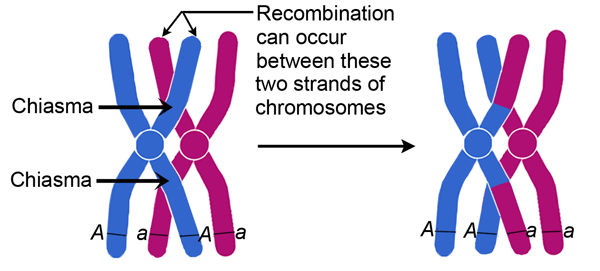
The stage of meiosis where crossing over or the exchange of genetic information happens between pairs of chromosomes
Prophase II
Telophase I
Metaphase II
Prophase I

This term refers to the production of gametes by organisms that reproduce sexually
mitosis
binary fission
meiosis
cloning

The exchange of genetic information that insures that every gamete is unique is referred to as
mitosis
meiosis
reduction division
crossing over

All sperm and egg cells are genetically identical.
TRUE
FALSE

The term that refers to a cell that has its full or complete number of chromosomes is
diploid
N
gamete
haplpoid

How many times does a sex cell undergo mitosis?
1
2
3
4

At the end of meiosis, how many complete/operational sex cells are created for each original cell?
2 for males; 2 for females
1 for males; 4 for females
4 for males; one for females
1 for males; 1 for females

How many TOTAL steps are there in the process of meiosis?
2
4
8
16

Crossing over happens when part of the genetic information of one chromosome switches places with the genetic information from another chromosome. Another term for this process is
genetic recombination
genetic reduction
a mutation
nondisjunction

Name the stage: Chromosomes line up in the middle of the cell.
Prophase
Metaphase
Anaphase
Telophase

Name the stage: two nuclei are formed enclosed by nuclear membranes
prophase
metaphase
anaphase
telophase

Name the stage: chromosomes condense and become visible
prophase
metaphase
anaphase
telophase

Name the stage: Chromosomes pull away from each other and move to opposite sides of the cell
Prophase
Metaphase
Anaphase
Telophase

Sea turtles have 56 chromosome in their somatic cells. How many chromosomes are in their gametes?
28
56
112
46

What is another term for body cells?
somatic cells
gamete
stem cell
neural cell

What phase is shown here? Hint: you are starting to see the nuclear membrane again!
Metaphase II
Telophase I
Telophase II
Metaphase I

What phase is this?
Hint: membrane is disappearing
Interphase II
Prophase I
Metaphase I
Anaphase II


CROSSING OVER INCREASES
LIFE SPAN
GENETIC VARIATION
THE NUMBER OF OFF-SPRING
ALL ARE TRUE


What phase of Meiosis is this?
Telophase I
Anaphase I
Anaphase II
Telophase II