
 Worksheets
End of semester quiz
Total questions: 115
Worksheet time: 2hrs 41mins


(Why do I need this before a workout?)
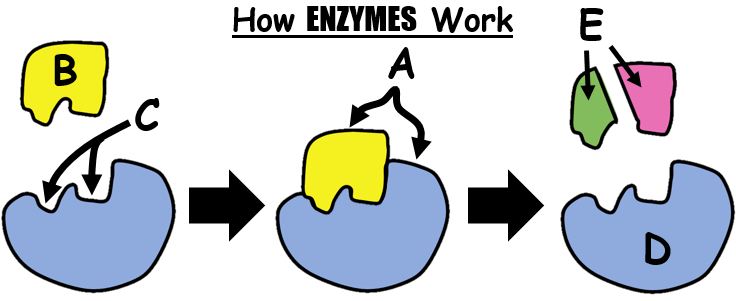



Which 2 factors can affect the rate of enzyme activity?
Light intensity
Temperature
pH
Oxygen concentration
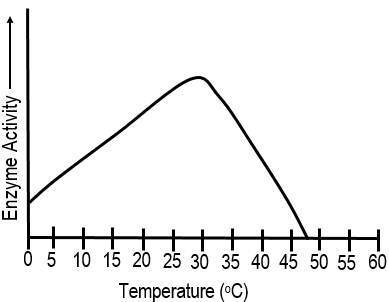
Based on the graph, what temperature does this enzyme work best?
15 C
40 C
30 C
50 C
What happens when enzymes are heated to a high temperature?
The enzymes die
The shape of the enzyme changes as it denatures
The enzymes become more active
The enzymes remain the same

A mode of transport that does not require energy
Passive Transport
Facilitated Diffusion
Selectively Permeable
Slightly Permeable

The type of transport that requires the use of transport proteins
Passive Transport
Facilitated Diffusion
Active Transport
Vesicular Transport

The passage of a substance from an area of high concentration to an area of low concentration
Active Transport
Diffusion
Vesicular Transport
Exocytosis

Another name for the cell membrane
Vesicular Barrier
Plasma Membrane
Cell Wall
Insane in the Membrane

The head of a phospholipid is:
Hydrophobic
Hydrophilic
Polar
Nonpolar

Active Transport __________ require energy and uses the help of __________.
does, protein pumps
does, cytoplasm
does not, transport proteins
does not, sodium pumps

A cell that is missing lysosomes would have a difficulty doing what?
Storing Energy
Packaging Proteins
Digesting Food
Moving Cytoplasm

Some cells move large particles out of the cell through the process of:
Protein Synthesis
Endocytosis
Exocytosis
Cytoplasmic Streaming

Which mode(s) of transport require energy?
Passive Transport
Facilitated Diffusion
Active Transport
Vesicular Transport

Transport proteins for water are called:
Glu-T
Sodium-Potassium Pump
Aquaporins
Cohesive Channels

The energy molecule that powers some modes of transport
ADP
ATP
AGP
ABP
Starch, cellulose an glycogen belong to the class of
proteins
lipids
sugars
Polysachharides

Galactose

Identify the stage in mitosis
Anaphase
Telophase
Metaphase
Interphase
Which phase of mitosis follows anaphase?
Telophase
Prophase
Metaphase
Cytokinesis
When in the cell cycle does DNA replication occur?
G1
S phase
G2
Prophase

Identify the structure in the image
Sister pair of chromatids
Bivalent
Integral protein
Large circular chromosome
What is the basic unit of life?
Organ
Cell
Nucleus
Ribosome
What is the function of the Golgi apparatus?
Gives energy to the cell
Are the site of protein synthesis
It packaged proteins and send them off
It regulates what goes In and out
What organelle produces ATP
mitochondria
Lysosome
Cytoplasm
Golgi Apparatus
Where are the proteins made?
Ribosome
Endoplasmic Reticulum
Vacuole
Organisms whose cells do not have a nucleus are called _____.
Prokaryotes
Unicellular
Eukaryotes
Multicellular
What fluid can be found in cells that holds organelles?
Cytoplasm
Chlorine
Blood
Plasma
What are the small structures inside of cells that carry out specific functions called?
Tissues
Organelles
Organs
example of a prokaryote cell is
Animal Cell
Plant Cell
Virus
Bacteria
The function of the rough ER is to
Produce and folding proteins
Produce and folding carbohydrates
Produce and folding lipids
Produce and folding Nucleic acids
The function of the smooth ER is to
Make lipids
Make proteins
Make carbohydrates
Make nucleic acids
Cell organelle that breaks down lipids, carbohydrates, and proteins into small molecules that can be used by the rest of the cell
Vacuole
Chloroplast
Lysosome
Golgi apparatus
Network of protein filaments in a eukaryotic cell that gives the cell its shape and internal organization and is involved in movement
Cytoskeleton
Golgi apparatus
Ribosome
Endoplasmic reticulum
Structure in an animal cell that helps to organize cell division
Nucleus
Nucleolus
Endoplasmic reticulum
Centriole
Cell organelle consisting of RNA and protein found throughout the cytoplasm in a cell; the site of protein synthesis
Endoplasmic reticulum
Ribosome
Nucleus
Nucleolus
Internal membrane system found in eukaryotic cells; place where lipid components of the cell membrane are assembled
Golgi apparatus
Endoplasmic reticulum
Cytoskeleton
Organelle
Organelle in cells that modifies, sorts, and packages proteins and other materials from the endoplasmic reticulum for storage in the cell or release outside the cell
Golgi apparatus
Ribosome
Vacuole
Lysosome

In the punnett square below, what belongs in the missing square

In the punnett square, what is the probability for white fur?
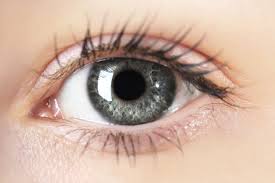
b = blue eyes
What is true about these two brothers that have brown eyes?
One has genotype BB the other Bb.

Long tongues (T) are dominant to short tongues (t) in green tree frogs. What is the probability that two frogs that are heterozygous (Tt) for long tongues could produce offspring with short tongues?
100%
75%
50%
25%

In cats, short tails are dominant (S) and brown fur is dominant (B). Cross two heterozygous cats. What will the offspring look like?
4 Short Tails Brown Fur
4 Short Tails White Fur
4 Long Tails Brown Fur
4 Long Tails White Fur
8 Short Tails Brown Fur
4 Short Tails White Fur
4 Long Tails Brown Fur
0 Long Tails White Fur
9 Short Tails Brown Fur
3 Short Tails White Fur
3 Long Tails Brown Fur
1 Long Tails White Fur
4 Short Tails Brown Fur
4 Short Tails White Fur
4 Long Tails Brown Fur
4 Long Tails White Fur
A personal with type AB blood has which genotype?
type A
AA
IAIA
IAIB
What are the blood types of the possible children that a woman (type O) and man (type AB) can have?
O and AB
O and A
O and B
A and B
If a person has type B blood, the phenotype is B. What can the genotype be?
IBIB or IBi
IAIA or IAi
IAIB
ii
If a person has type A blood, the phenotype is A. What can the genotype be?
IBIB or IBi
IAIA or IAi
IAIB
ii

What is the end result of DNA replication?
2 semi-conservative strands of DNA
1 semi-conservative strand of DNA
Half of a semi-conservative strand.
Nothing is created
If the left side of DNA contains the following bases: ATCGATCG, what would the right side contain?
CGATCGAT
TAGGTAGG
TAGCTAGC
ATCGATCG
Chargaff's rules state that....
The amount of A's always = the amount of C's and the amount of T's always = the amount of G's.
The amount of A's always = the amount of A's and the amount of C's always = the amount of C's.
The amount of A's always = the amount of G's and the amount of C's always = the amount of T's.
The amount of A's always = the amount of T's and the amount of C's always = the amount of G's.
What bases are considered Purines?
A & G
A & T
C & G
C & A
What bases are considered Pyrimidines?
A&G
A&T
C&T
C&G
What does DNA Polymerase do?
It helps breakdown the new strand in DNA replication and it proofreads the strands.
It helps build the new strand in DNA replication and it proofreads the strands.
It helps unwind the double helix.
It forms bonds
What are the steps in order of DNA replication?
Unwind the double helix, bond and proofread with DNA polymerase, pair new nucleotides with each old template strand, end result is 2 semi-conservative strands of DNA.
Unwind the double helix, pair new nucleotides with each old template strand, bond and proofread with DNA polymerase, end result is 2 semi-conservative strands of DNA.
Pair new nucleotides with each old template strand, bond and proofread with DNA polymerase, end result is 2 semi-conservative strands of DNA, unwind the double helix,
Bond and proofread with DNA polymerase,unwind the double helix, pair new nucleotides with each old template strand, end result is 2 semi-conservative strands of DNA.

Look at the image of DNA, what do the circles represent?
Sugars
Phosphates
Bases
Covalent Bonds

Look at the image of DNA, what do the pentagons represent?
Sugar
Phosphate
Nitrogen Containing Base
Covalent bond

Starting with 15N15N (heavy) DNA, and after TWO generations in the 14N medium, Escherichia coli cells will contain
25% 15N15N DNA, 50% 15N14N DNA, and 25% 14N14N DNA.
50% 15N15N DNA and 50% 14N14N DNA.
50% 15N15N DNA and 50% 15N14N DNA.
50% 15N14N DNA and 50% 14N14N DNA.
25% 15N14N DNA and 75% 14N14N DNA.
What determines the sequence of amino acids to build a protein?
DNA
Glucose
Fatty Acids
Enyzme

What is the sequence of events that occurs in your cells to make a trait, also known as the Central Dogma?
Transcription > Translation > Expression
Translation > Expression > Transcription
Expression > Transcription > Translation
Translation > Transcription > Expression

Where does Transcription occur?
Nucleus
Ribosome
Cytoplasm
Mitochondria

What is the purpose of transcription?
To copy DNA into a molecule of mRNA.
To read a copy of mRNA to build a protien.
What is the enzyme that copies DNA into mRNA?
DNA Polymerase
RNA Polymerase
Reverse Transcriptase
Protease
Where can mRNA be found in the cell?
Nucleus
Cytoplasm
Both Nucleus and Cytoplasm
Neither the Nucleus or the Cytoplasm
After transcription mRNA goes from the nucleus to the _________.
Ribosome
Mitochondria
Endoplasmic Reticulum
Vacuoles
If the mRNA codon is AUG, what would the matching tRNA anticodon be?
UAC
AUG
TAC
GUA

If the mRNA codon is AUG, what amino acid would the tRNA bring?
Met
GLu
Ala
Phe

