
 Worksheets
Unit 1: Biomolecules
Total questions: 60
Worksheet time: 1hrs 16mins
Which biomolecules provide quick energy for the cell and also provide materials to build the cell membrane/wall?
Carbohydrates
Proteins
Lipids
Nucleic Acids
Which biomolecules contains your genetic information?
Proteins
Lipids
Carbohydrates
Nucleic Acids
Amino Acids are the monomers of __________.
Nucleic Acids
Proteins
Carbohydrates
Lipids
The monomer of carbohydrates is known as _______.
Amino Acid
Fatty Acid
Nucleotide
monosaccharide
Glycerol and fatty acids are the monomers of _________.
Lipids
Carbohydrates
Proteins
Nucleic Acids
Which biomolecules act as energy storage for the cell and also cushions and insulates organs?
Carbohyrdates
Lipids
Proteins
Nucleic Acids
The monomer of Nucleic Acids is known as _________.
Amino Acid
Fatty Acid
Nucleotide
Saccharide
Which of the following is the correct pair of biomolecules and their monomers?
Carbohydrate: Fatty Acids
Protein: Amino acid
Lipid: Nucleotide
Nucleic Acid: DNA
Enzyme is a/an...
carbohydrate
lipid
protein
nucleic acid
What biomolecule serves as structural materials in hair, nails and connective tissues?
protein
lipid
carbohydrate
nucleic acid
Just under an orca's skin lies a thick layer of blubber. Blubber helps insulate a whale from heat loss. Based on this information, which biomolecule is blubber primarily made of?
Lipids
Nucleic Acids
Proteins
Carbohydrates
How do animals store complex sugars?
In the form of glycogen
In the form of cellulose
In the form of amylose
None of the above

Which are examples of lipids?
glucose, pasta, bread
fats, oils, waxes
meats, enzyme, lactase, eggs
DNA, RNA
Which are examples of a carbohydrate?
glucose, pasta, bread
fats, oils, waxes
meats, enzyme, lactase, eggs
DNA, RNA
Which are examples of proteins?
glucose, pasta, bread
fats, oils, waxes
meats, enzyme, lactase, eggs
DNA, RNA
Which are examples of Nucleic Acids?
glucose, pasta, bread
fats, oils, waxes
meats, enzyme, lactase, eggs
DNA, RNA

Building blocks of polymers.
monomer
polypeptide
monosaccharide
glycerol

This reaction is known as a __________________ reaction.
Dehydration Synthesis
Hydrolysis


Fats and oils: a major source of food providing long term energy and other functions.
Sugars
Carbohydrates
Lipids
Proteins
Fats and oils: a major source of food providing long term energy and other functions.
Sugars
Carbohydrates
Lipids
Proteins
What part of a phospholipid attracts water?
Hydrophobic (fatty acid)
Hydrophilic (phosphate group)
type of lipid used mainly as a waterproof covering
wax
steriod
lipid
phospholipid
type of lipid used to make cetain hormones
wax
steriod
lipid
phospholipid

Saturated
Unsaturated

saturated
unsaturated
Lipids are made of...
CHO
CHON
CHONP
CHONS
Which of the following is a main function of a lipid?
source of quick energy
stores energy, insulates us, and makes up the cell membrane
transport substances in and out of the cell
stores genetic information
Saturated fats are __________ at room temperature.
liquid
solid
All amino acids have the same basic structure. Which part of the amino acid makes each each one unique?
amino group
carboxyl group
R-group (side chain)
Proteins are made of many ____ bonded together.
amino acids
enzymes
polypeptides
Dehydration synthesis is the reaction that occurs, allowing amino acids to bond. What happens during this process?
add water to build a bond
add water to break a bond
remove water to build a bond
remove water to break a bond
The protein structure that results from a sequence of amino acids is:
primary structure
secondary structure
tertiary structure
quaternary structure
What does an enzyme do?
slows down chemical reactions
speeds up chemical reactions
increases the temperature of the reaction

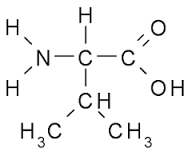
The molecule shown is a
carbohydrate
protein
lipid
nucleic acid

The molecule shown is a
lipid
carbohydrate
protein
nucleic acid
What's the monomer of a nucleic acid?
fatty acid
monosaccharides
nucleotide
amino acid
An example of a nucleic acid is
amino acid
DNA
sugar
wax
What is the function of nucleic acids?
provide energy
move substances in and out of cells
build skin, hair, nails, muscles
store genetic information
Nucleic Acids are made of
C, H, O
C, H, O, N
C, H, O, N, P
Which food is high in protein?
Strawberries
Steak
Pasta
Butter

All of the following are functions of proteins except which one?
Transport oxygen
Speed up chemical reactions
Provide immunity
Short term energy
All of the following are examples of proteins except which one?
Hemoglobin
Wax
Antibodies
Enzymes
Which organic molecule is passed from parents to offspring?
carbohydrates
lipids
proteins
nucleic acids
What could be an issue if I do not consume enough protein regularly?
Lead to a break down of muscle and tissue in the body
Increase the amount of energy
Dehydration of the body's cells
Weight gain which can lead to heart disease
Both A and D are correct
Enzymes belong to which category of organic molecule?
Proteins
Lipids
Carbohydrates
Nucleic acids

Which describes the functions of proteins in living things?
structural, transport, signaling, catalysts, etc.
stores and transmits genetic information
stores energy and makes up cell membranes
quick energy and forming cell structure

All proteins
have a unique structure that determines their unique function.
are exactly the same in function but different in structure.
are exactly the same in structure but different in function.
are enzymes.
Which of the following are examples of protein?
cutin, waxes, fats, oils
Collagen, enzymes, hemoglobin, insulin, and antibodies
DNA& RNA
Glucose, sucrose, glycogen, and cellulose
What are the elements found in proteins?
CHO
CHO(P)
CHON(S)
CHONP

