Worksheets
U.S. Government Final Exam Review
Total questions: 63
Worksheet time: 32mins
Where did the original concept of citizenship and rights for citizens begin?
America
Ancient Greece & Rome
Medieval Europe
Ancient China
Which part of the Constitution states that the laws made by Congress are the supreme law of the land?
the Preamble
Article I
the 14th Amendment
Article VI
What are U.S. citizens practicing when they elect members of Congress?
representative democracy
direct democracy
authoritarianism
totalitarianism
What is a form of democracy?
totalitarianism
dictatorship
absolute monarchy
constitutional monarchy
What is a legal requirement for voting in the U.S.?
property ownership
18 or older
reading skills
high school diploma
What do a monarchy and an autocracy have in common?
single ruler
written constitution
national court
single legislative body
What was the Mayflower Compact?
A letter to King George III.
A pamphlet by Thomas Paine.
A document limiting monarchy power.
A written plan for government.
In the Declaration of Independence, the colonists -
stated their rights.
bargained with the King.
protested the Acts.
listed grievances against the King

What part of the Declaration of Independence does the second half of this passage represent?
list of grievances
statement about rights of men
official claim of independence
argument for right to revolt

Why list complaints against the king?
to need a new king
to justify independence
to persuade king to fix problems
to prove colonists needed a role in government

What inspired the first paragraph of the excerpt?
common law
Triangluar Trade
French and Indian War
The Enlightenment
When did the Constitution become the supreme law?
Nine states ratified it.
A bill of rights was added.
Delegates signed it.
The Supreme Court approved it.
What was the original purpose of the Constitutional Convention?
Review state constitutions.
Draft a national bill of rights.
Revise the Articles of Confederation.
Limit excessive state taxing.
What provision resolves conflicts between state and federal laws?
Supremacy Clause
Bill of Rights
Necessary and Proper Clause
Concurrent Powers Clause
An amendment to the Constitution becomes law when ratified by
the Supreme Court.
3/4's of the States
a national election
the U.S House and Senate
What is Congress described as in the Constitution?
Legislative Branch
Judicial Branch
President's arm
Civil rights defender
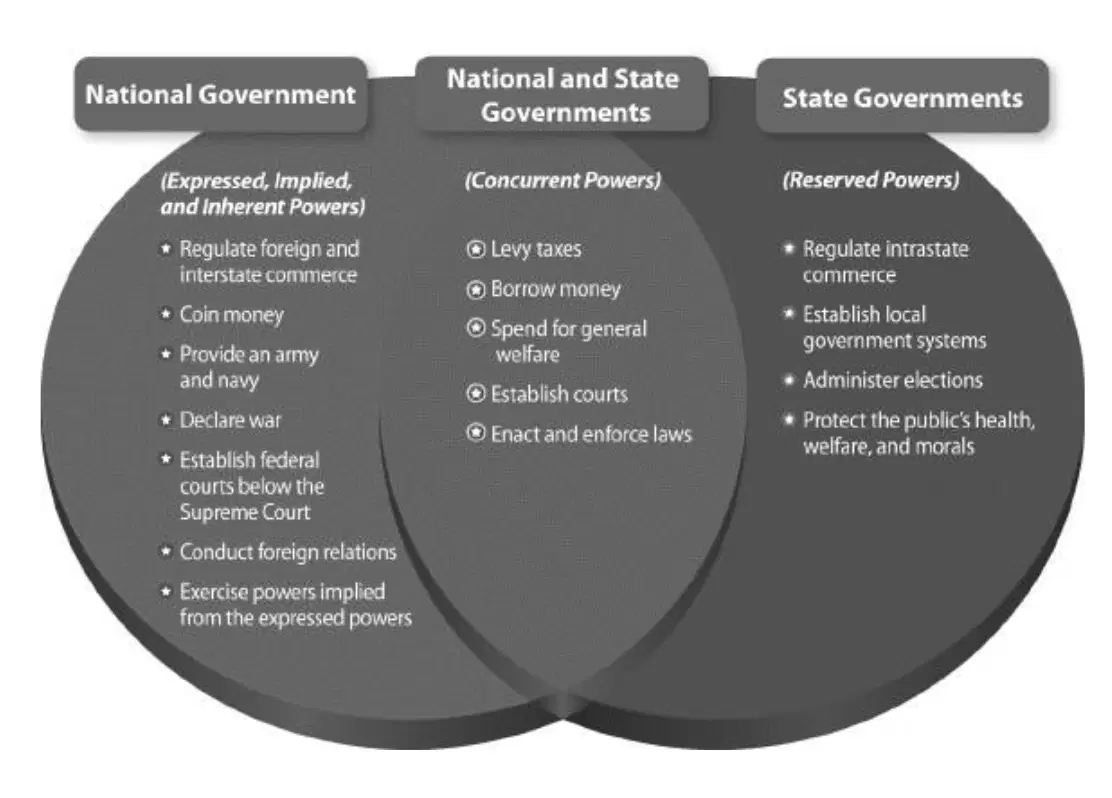
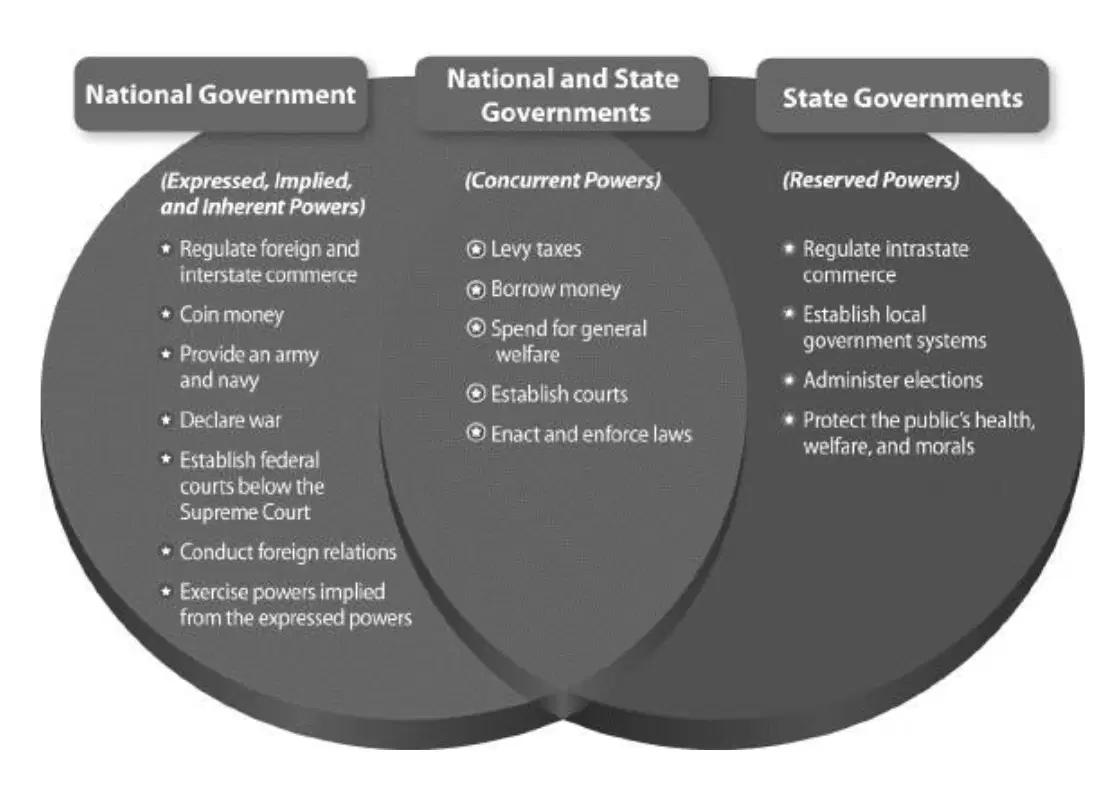
What does the system of checks and balances allow the executive branch to do?
veto laws
disapprove treaties
impeach judges
declare laws unconstitutional

What power is exclusive to the federal government?
enforce laws
declare war
collect taxes
regulate state trade
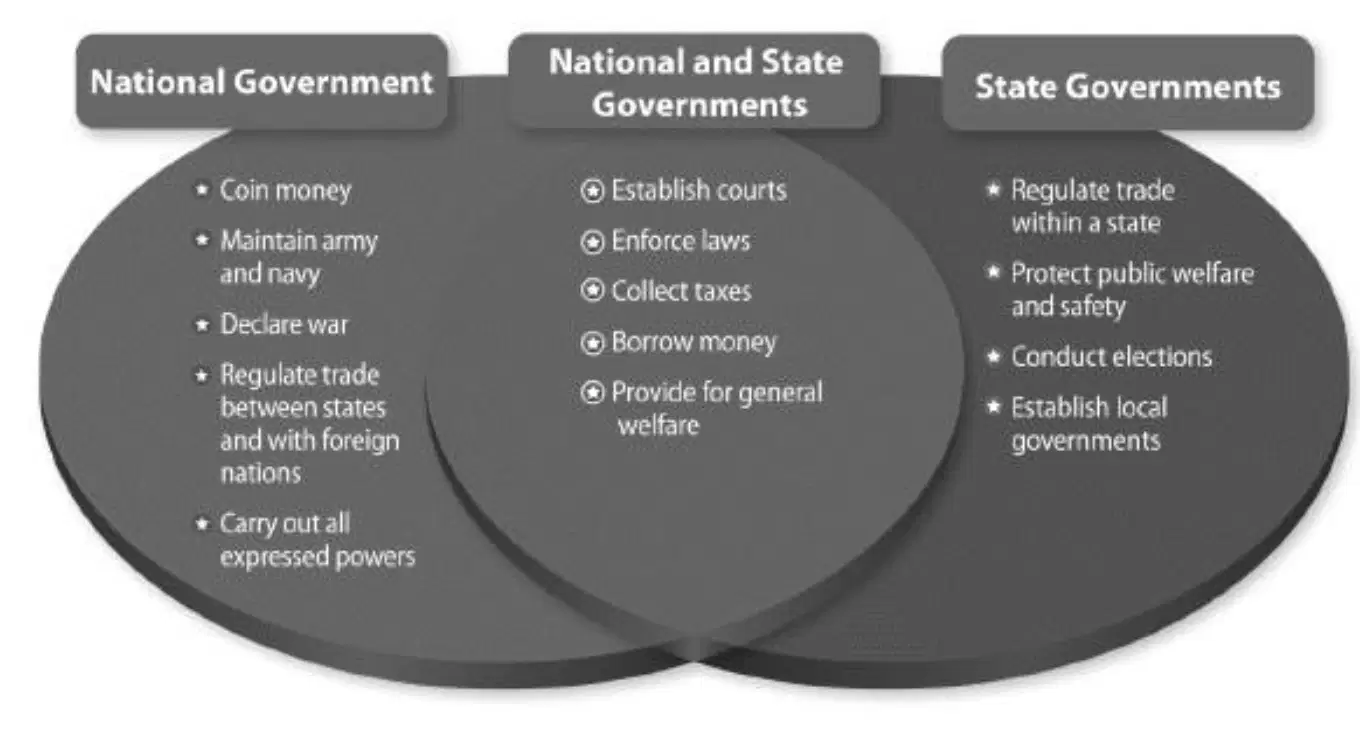
What power is only given to state governments?
coin money
establish courts
establish local governments
borrow money

What power is shared by federal and state governments?
Regulating trade with foreign nations
Maintaining an army
Regulating trade within a state
Borrowing money
What does the 9th Amendment state about rights not listed in the Constitution?
forfeited
subject to change
protected
suspended during wars
What is protected by the First Amendment?
Censoring news for public safety
Criticizing government policy on a blog
Registering before voting
Banning objectionable materials
Why were the 14th and 15th Amendments written and ratified?
The NAACP insisted on ending discrimination against African Americans.
The 13th Amendment didn't fully guarantee the rights of former slaves.
The 13th Amendment overly supported “Jim Crow laws.”
African American soldiers weren't paid for their military service.
What speech is protected by the First Amendment?
lying about someone
criticizing government
silence when arrested
inciting a riot
The Bill of Rights secures fair, legal treatment for citizens by protecting them from?
Bail
Double Jeopardy
Speedy Trials
Grand Jury
The rights to have a trial by jury and to call witnesses are examples of
affirmative action.
constitutional reforms.
13th Amendment freedoms.
due process

Which two amendments were ratified closest together?
19th and 23rd
15th and 19th
19th and 26th
16th and 23rd

In 1960, who didn't have the right to vote in national elections if they were 21 years old?
African American.
Congress member.
Resident of Washington, D.C.
Female

What event increased interest in lowering the voting age to 18?
Civil Rights Movement
Vietnam War
Civil War
Persian Gulf War
If freedom of assembly were not protected, Americans would be unable to:
join political groups promoting new policies.
give public speeches condemning the president.
trust newspapers to print the truth about the government.
write letters criticizing government policies.
Who did the Nineteenth Amendment grant suffrage to?
teenagers
African Americans
Hispanic Americans
women

Which amendment was ratified by the states the fastest?
13th
15th
17th
24th
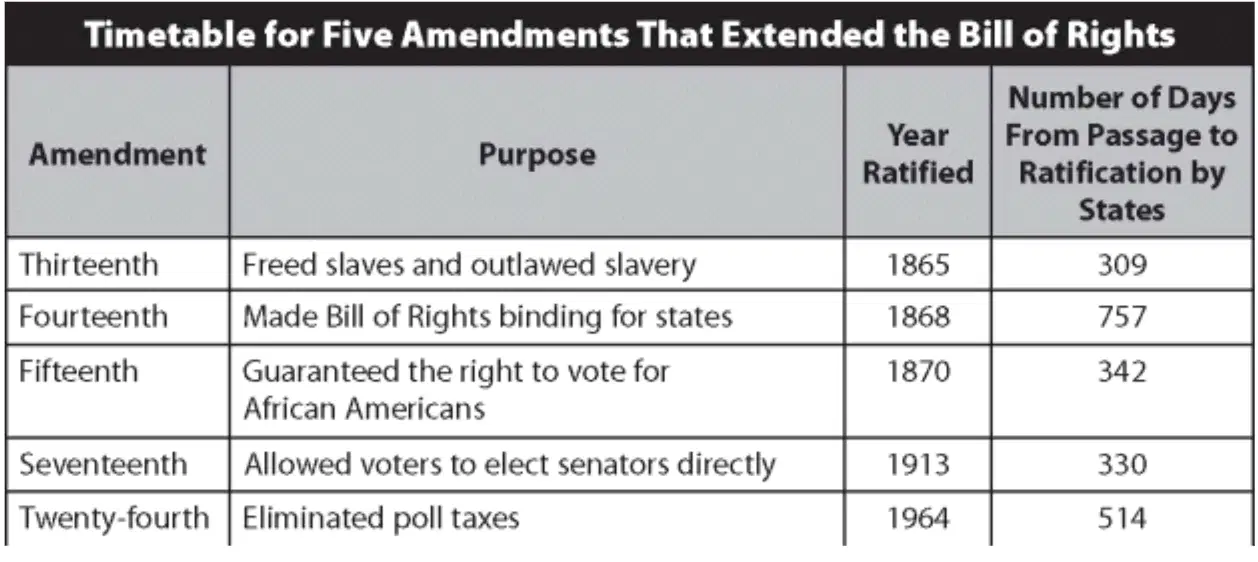
What did Congress do 50 years after the 17th Amendment?
Replaced it with the Twenty-fourth Amendment.
Granted voting rights to women and minorities.
Welcomed the first African American senator.
Eliminated poll taxes.

Which amendment took the longest to ratify?
Eliminate poll taxes.
Make the Bill of Rights binding for states.
Guarantee African Americans the right to vote.
Free slaves and outlaw slavery.
Why is Congress bicameral?
Legislative branch needed 3 houses
To make it the most powerful branch
Compromise on state representation
535 members would be too many
What does the elastic clause allow Congress to do?
Regulate trade between states.
Tax citizens in economic crisis.
Stretch its powers to meet needs.
Make temporary treaties with foreign countries.
Congress cannot -
impeach judges
monitor executive branch
control interstate commerce
favor one state
What is the correct order of actions on congressional bills?
floor action → committee action → conference action
conference action → floor action → committee action
committee action → floor action → conference action
floor action → conference action → committee action
What is a part of the lawmaking process?
checking president's power
debating bills in Congress
approving presidential appointments
performing case work
Where does a bill go after being introduced on the floor?
floor debate
the appropriate standing committee
a roll-call vote
the president's desk
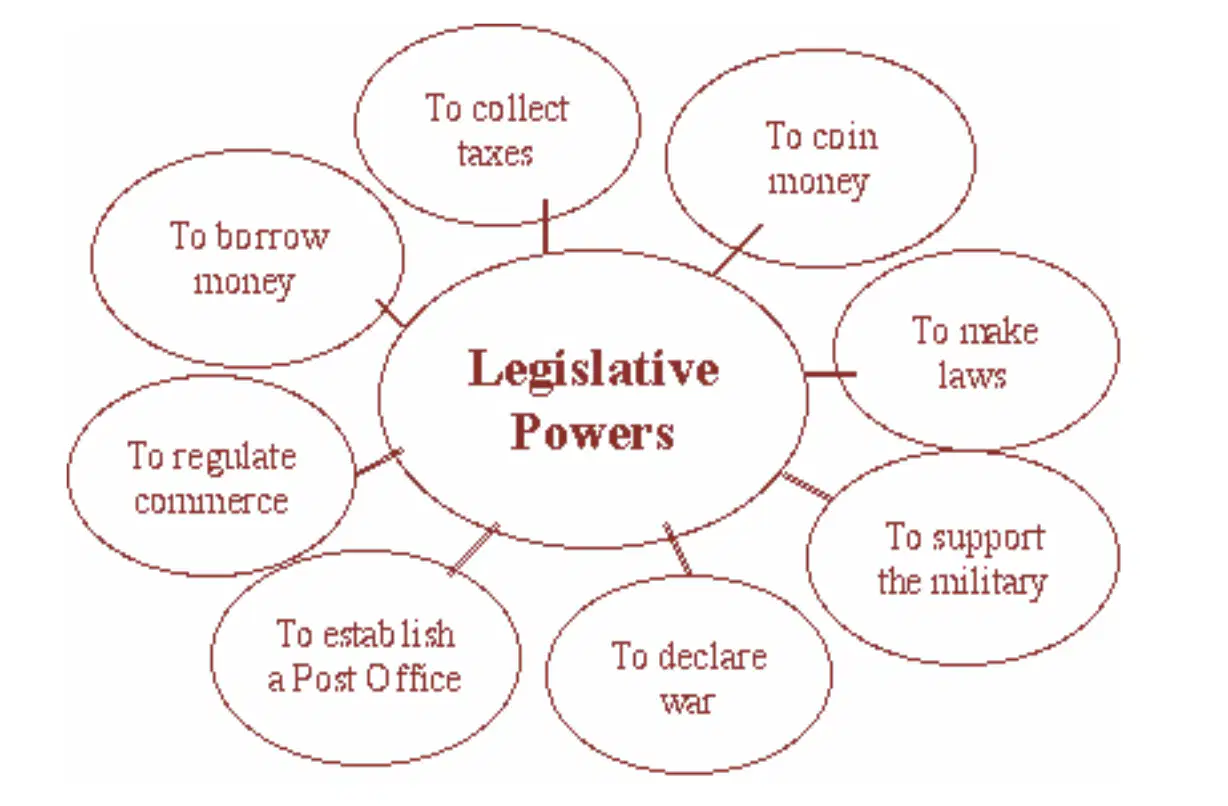
What power does Congress have regarding currency?
make laws
establish post offices
regulate commerce
coin money
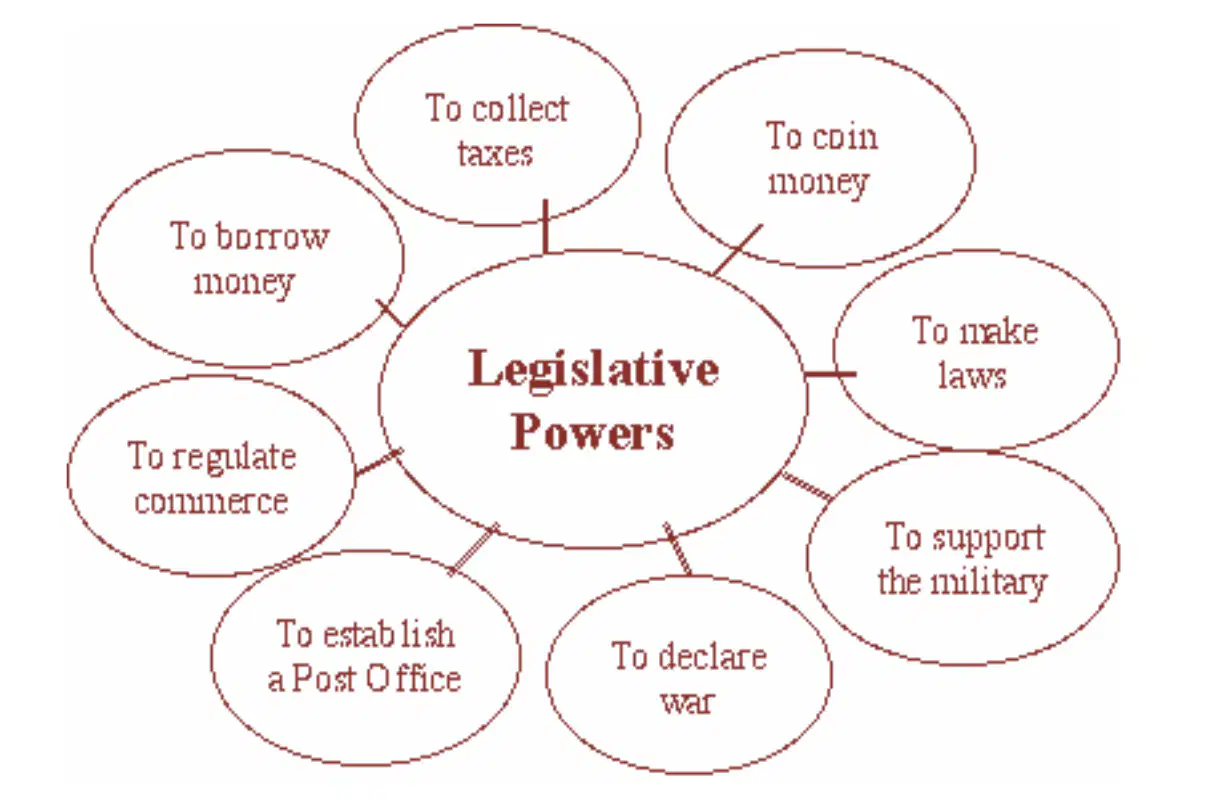
What is considered Congress’ most important power?
making laws
collecting taxes
regulating commerce
borrowing money
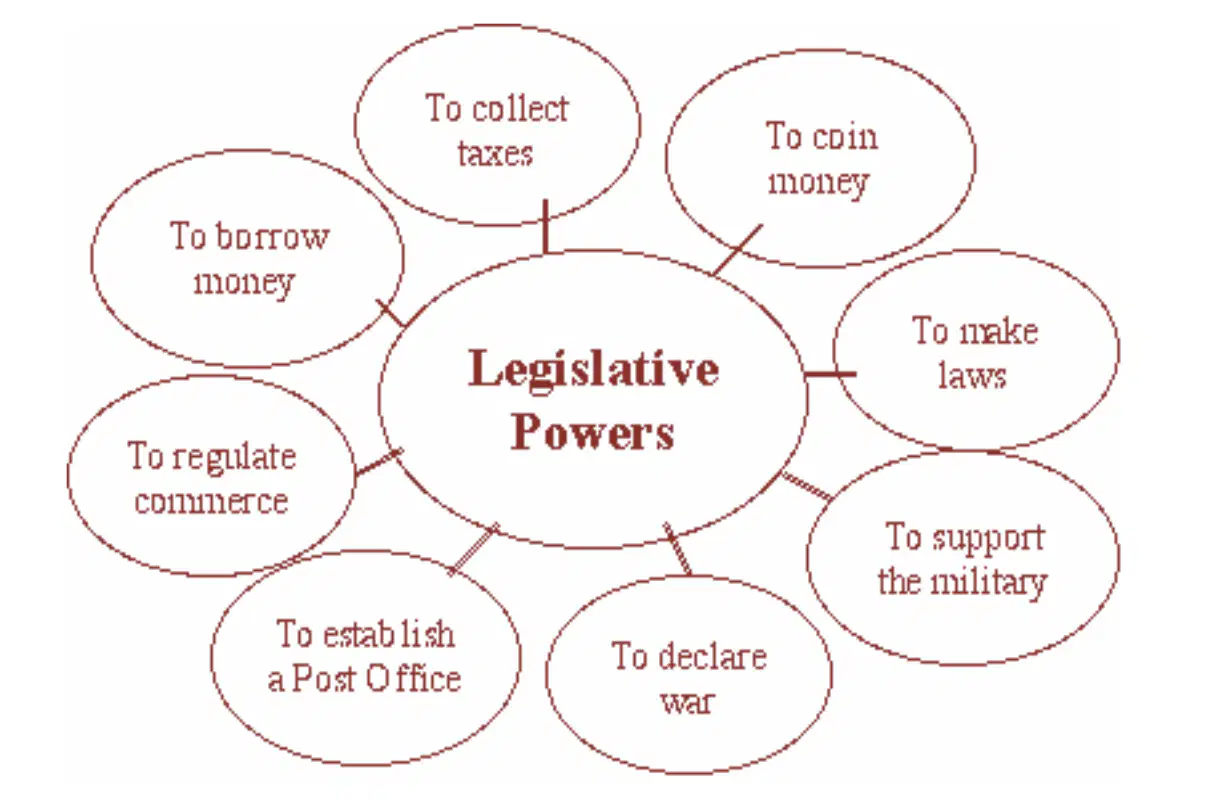
What power helps Congress manage the federal budget?
Coining money
Organizing the military
Borrowing money
Declaring war

A 28-year-old citizen could be elected:
to the House or the Senate
only to the House
only to the Senate
to neither house

What common qualification do both houses of Congress have?
Must be born in the U.S.
Must be at least 30 years old
Must have a college degree
Must live in the state they represent

What is a constitutional requirement for becoming U.S. president?
political experience
35 years old or older
naturalized citizen
resident for 25 years
Who must approve presidential appointees to head cabinet departments and other top government offices?
Vice president
Congress
Supreme Court
Senate
Who can cast a tie-breaking vote in the Senate?
Vice President
Secretary of State
Speaker
Attorney General
When would federal courts have jurisdiction?
disputes between two citizens of the same state
violations of local ordinances
disputes between two states
violations of state laws