
 Worksheets
Unit One Retest
Total questions: 53
Worksheet time: 28mins
The knee joint can complete which movements
Extension and Adduction
Flexion and Abduction
Flexion and Circumduction
Flexion and Extension
The shoulder joint can complete which movements
Extension
Abduction
Circumduction
Rotation
Doris-Flexion and Plantar-flexion is a movement completed at which joint
Ankle
Shoulder
Hip
Wrist
Dorsi-flexion is defined as...
...moving the foot in an upward movement; pointing the toes to the sky
...moving the foot in a downward movement; pointing the toes to the floor

Flexion means to
Increase the angle of a joint
Decrease the angle of a joint
Take a limb away from the body
Return a limb towards the body
Adduction means
Increase the angle of a joint
Decrease the angle of a joint
Take a limb away from the body
Return a limb towards the body
When kicking a football the knee
Flexes
Extends
Abducts
Adducts


Blood vessels carrying blood back to the heart are...
Arteries
Veins
Capilaries
Blood vessels carrying blood away from the heart are called...
Capillaries
Veins
Arteries
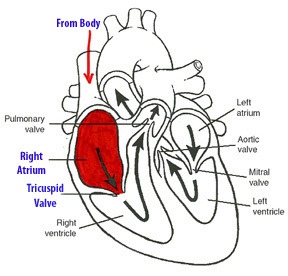

the pulmonary artery
to the pulmonary vein
the the vena cava
I to the aorta

What blood vessel delivers deoxygenated blood to the lungs?
Pulmonary artery
Pulmonary vein
Aorta
Left ventricle
What muscles are used in breathing in
diaphragm and intercostals
diaphragm and lungs
Abdominals
What equipment is used to measure air being inspired and expired?
breathalyzer
spirometer
inspirometer
expirometer
During forced inhalation, what other muscles are used?
The abdominals
The sternocleidomastoid
The pectoralis major
The deltoids
When we want to inhale the ribs have to move
Upwards and outwards
Inwards and downwards
When we want to exhale, the rib cage has to move
Upwards and outwards
Inwards and downwards
When we want to inhale the intercostal muscles
relax
contact
In order to exhale the intercostal musles need to:
contract
relax
To inhale the diaphragm
contracts
relaxes
To enable exhalation, the diaphragm
contracts
relaxes
The correct word equation for aerobic respiration is
carbon dioxide + water (+ energy) → glucose + oxygen
water + oxygen → carbon dioxide + glucose (+ energy)
glucose + oxygen → carbon dioxide + water (+ energy)
glucose + water → carbon dioxide + water (+ energy)
The correct word equation for Anaerobic respiration is
glucose → lactic acid + oxygen
glucose → lactic acid (+ energy released)
glucose + oxygen → lactic acid (+ energy released)
lactic acid → energy released
Fatigue can be defined as 'muscle tiredness when the body has a lack of energy'.
True
False
Short term effects of exercise begin to occur
Immediately
Half an hour after exercise
An hour after exercise
24 hours after exercise
Increased size and strength of muscles is known as muscle (a)
Which of these is a immediate effect of physical exercise?
Increased Heart Rate
Increase in aerobic fitness
Improvement in stamina
Which of these is a immediate effect of physical exercise?
Increased Breathing Rate
Lower resting Heart Rate
Lower Breathing Rate
Bigger and stronger Muscles
Sweating is an example of what type of effect of exercise?
Immediate
Short Term
Long Term
All of these answers
Short term effects of exercise are
immediate and long lasting
immediate and temporary
Over a period of time and long lasting
Over a period of time and temporary
Which of the following is NOT a short term effect of exercise?
Fatigue
DOMS (Delayed Onset Muscle Soreness)
Light headedness
Hypertrophy
Which one of the following is a short-term effect of exercise on the muscular system?
Decrease in stroke volume
Increase in the temperature of the muscles
Decrease in blood flow from the heart
Increase in muscle mass
What do the effects of Lactic acid result in?
Fatigue
Energy
Muscular pain
Muscular growth
What are the short term effects of exercise?
Cramp, Fatigue, Increased heart rate
Cramp, DOMS, Nausea
DOMS, Nausea, Muscle Strain
DOMS, Nausea, Increased heart rate
Your heart becomes stronger and bigger as a result of long term exercise this is known as?
Left Ventricle
Muscular Hypertrophy
Cardiac Hypertrophy
Cardiac Atrophy
What is the primary function of EPOC?
To increase heart rate
To decrease heart rate
To replenish oxygen levels in the body

