Worksheets
Photosynthesis
Total questions: 50
Worksheet time: 29mins
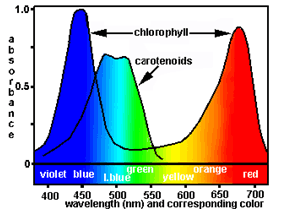
Red and blue light support the highest rates of photosynthesis because
Only wavelength that carotenoid cannot absorb
Chlorophylls absorb light of these wavelengths more then other wavelengths
Light of these wavelengths have the highest energy in the visible spectrum
Light of these wavelengths activate ATP synthase enzyme
Cyclic photophosphorylation differs from non-cyclic photophosphorylation in that ___________ is not made from the process
ATP
PGAL
NADH
NADPH
The role of water molecule in light dependent reaction is to
Hydrolyse NADP+ at the end of the ETC
Involve directly in the production of ATP
Replace the excited electron of reaction centre molecule in photosystem II
Involve directly in Calvin Cycle
Which of the following molecule below is fixed during light dependent reaction?
Oxygen
Carbon dioxide
ATP
NADPH
Which of the following plants fixes carbon dioxide at night?
Sugarcane
Cactus
Oryza sativa
Hibiscus rosa-sinensis
How many carbon dioxide molecule must be added to RuBP to make a single molecule of glucose?
3
4
5
6
In C4 plants, reactions that fix CO2 into four carbon compounds occur in
Guard cells
Epidermal cells
Mesophyll cells
Bundle-sheath cells
The main function of the light dependent reactions is
Produce glucose from CO2 and water
Produce ATP and NADPH
Produce NADPH only
Convert light energy to chemical energy
Calvin cycle takes place in
Stroma
Thylakoid membrane
Cytoplasm
Chlorophyll
Why C4 plants are able to carry out photosynthesis efficiently?
They do not involve in Calvin cycle
They use PEP carboxylase to fix carbon dioxide
They are adapted to cold climates
They conserve water efficiently
Photorespiration lowers the efficiency of photosynthesis by preventing the formation of
Carbon dioxide molecules
3-phosphoglycerate molecules
ATP molecules
Ribulose bisphosphate molecules
In the Hatch Slack pathway, the first carbon dioxide acceptor is
malate
oxaloacetate
phosphoenolpyruvate
ribulose bisphosphate
CAM plants keep stomata closed in daytime, thus reducing the loss of water. They can do this because
fix CO2 into organic acids during the night
fix CO2 into sugars in the bundle-sheath cells
fix CO2 into pyruvate in the mesophyll cells
use the enzyme phosphofructokinase, which outcompetes rubisco for CO2
The reaction- center chlorophyll of photosystem is known as P700 because
there are 700 chlorophyll molecules in the center
the pigment best at absorbing light with a wavelength of 700 nm
there are 700 photosystem I components to each chloroplast
it absorbs 700 photons per microsecond
Oxygen produced by photosynthesis comes directly from
Light
Carbon dioxide
Glucose
Water
Light independent reaction involves …
I O2 fixation.
II Endergonic reaction.
III Reduction and regeneration of RuBP.
I only.
III only.
I and II.
II and III.
The overall reactions of photosynthesis are best summarized as …
12 CO2 + 6 H2O → C6H12O6 + 12 O2 + 6 H2O.
C6H12O6 + 6 O2 + 6 H2O → 6 CO2 + 12 H2O.
6 CO2 + 12 H2O → C6H12O6 + 6 O2 + 6 H2O.
6 CO2 + 12 H2O → C6H12O6 + 12 O2.
Which statement is FALSE?
Thylakoid membranes contain the photosynthetic pigments.
The oxygen released during photosynthesis comes from water.
RuBP is produced during cyclic photophosphorylation in the light dependent reactions.
The light dependent reactions provide the energy for the Calvin cycle.
In the thylakoid membranes, what is the main role of the antenna pigment molecules?
To synthesise ATP from ADP and Pi.
To concentrate photons inside the stroma.
To pass electrons to ferredoxin and then NADPH
To harvest photons and transfer light energy to the reaction-center chlorophyll.
Why are C4 plants able to photosynthesise with no apparent photorespiration?
They use PEP carboxylase to initially fix CO2
They conserve CO2 more efficiently.
They exclude oxygen from their tissues.
They do not participate in Calvin cycle.
Which of the following is NOT a product of the light reactions?
Oxygen
ATP
NADPH
Glucose
ATP gets formed in the light dependent reaction by which process?
Chemiosmosis
electro transport chain
photosmosis
active transport
What are the products of the light independent reaction?
hexose sugar
triose phosphate
carbon dioxide
RuBP
What happens to the remaining G3P molecules in the last step of the dark reactions?
They are used to make glucose.
They exit the cycle.
They are reshuffled to make CO2 by adding ATP.
They are reshuffled to make RuBP by adding ATP.
Why are plants usually green?
Because the chlorophyll reflects green light
Because the accessory pigments combine to make green
Because the chlorophyll absorbs green light
Because the accessory pigments only absorb green light
Excess glucose is stored in the form of
starch
glucose
carbohydrate
fat
Select ALL the reactants of Photosynthesis. *clue: 3*
H2O (Water)
CO2 (Carbon Dioxide)
O2 (Oxygen)
Sunlight (Light Energy)
C6H12O6 (Glucose)

Which lettered graph represents the affect of light intensity on photosynthetic rate?
A
B
C
D

Which lettered graph represents the effect of temperature on photosynthetic rate?
A
B
C
D

Main products of the Calvin Cycle
Oxygen, NADP+, ADP
Glucose, CO2, ADP
ADP, NADP+, Glucose
ATP, NADPH, Oxygen
Which of the following is true of the Calvin Cycle?
carbon dioxide and energy (ATP and NADPH) are used to make organic compounds
energy is absorbed from sunlight and converted to chemical energy stored in ATP and NADPH
Occurs in the thylakoid
Occurs in the cytoplasm


PGA
Rubisco


What is the first stage of the Calvin Cycle?
Carbon fixation
Reduction
Regeneration of RUBP
Primary
As a research scientist, you measure the amount of ATP and NADPH consumed by the Calvin cycle in 1 hour. You find 30,000 molecules of ATP consumed, but only 20,000 molecules of NADPH. Where did the extra ATP molecules come from?
photosystem I
photosystem II
cyclic electron flow
non-cyclic electron flow
The alternative pathways of photosynthesis using the C4 or CAM systems are said to be compromises. Why?
C4 compromises on water loss and CAM compromises on photorespiration.
Both minimize photorespiration but expend more ATP during carbon fixation.
CAM plants allow more water loss, whereas C4 plants allow less CO2 into the plant.
C4 plants allow less water loss but CAM plants allow more water loss.
In C4 plants, the Calvin cycle....
Takes place at night
Only occurs when the stomata are closed
Takes place in the mesophyll
Takes place in the bundle-sheath cells